Corporate video production is the end-to-end process of planning, filming, editing, and delivering professional video built around a company's business objectives. It covers strategy, scripting, the shoot, post-production, and distribution, and it exists to accomplish something specific, whether that is training a team, recruiting talent, explaining a product, or building buyer trust.
If your company has ever needed a video and you were not sure where to start, you have run into the question every marketing leader eventually asks: what does corporate video production actually involve, and what should it deliver? Corporate video is one of the most-requested and least-understood services in marketing. It gets used as a catch-all for everything from a CEO message to a product explainer to a recruiting reel, which means buyers often pay for the wrong thing, or hold the right thing to the wrong standard.
This guide fixes that. It is the complete, practical breakdown of corporate video production in 2026: what it is, how it differs from brand and marketing video, what it costs, what goes into producing it, and how to choose a partner who builds video that moves your business forward instead of sitting unwatched on an internal drive. INDIRAP has produced more than 20,000 videos for over 900 brands since 2013, from Fortune 500 enterprises to fast-growing companies, and this is the framework we use with every client.

Corporate video production is the end-to-end process of planning, filming, editing, and delivering professional video built around a company's business objectives. The defining word is objectives. A corporate video is not made to look impressive for its own sake. It is made to accomplish something specific: explain a product, train a team, recruit talent, build trust with buyers, communicate a change, or move a prospect closer to a decision.
That distinction matters because it changes how every decision in the production gets made. When the objective is clear, the creative choices, the script, the shot list, the length, the call to action, and the distribution plan all line up behind it. When the objective is fuzzy, you get a polished video that nobody can quite explain the purpose of. Full-service corporate video production, the kind we deliver on our corporate video production service, starts with the business goal and works backward from there.
In practical terms, corporate video production covers the entire lifecycle: strategy and creative direction, scripting and storyboarding, casting and location scouting, the shoot itself with a professional crew and cinema-grade equipment, post-production editing, motion graphics, sound design, and finally the platform-ready cutdowns and distribution that get the finished video in front of the right audience.
These three terms get used interchangeably, and the confusion costs companies money. Here is the clean distinction.
Corporate video is built around internal and operational business objectives. Think executive communications, training and onboarding, recruitment, internal culture content, event coverage, and investor or stakeholder updates. The audience is often employees, candidates, partners, or shareholders, and the goal is clarity, alignment, and trust.
Brand video is built for external audiences and emotional connection. Brand films, founder stories, product launch videos, and campaign content are designed to shape how a customer or prospect feels about your company before they decide to buy, follow, or believe. If you want to go deeper on the emotional, audience-facing side, our brand and corporate work shows how the two overlap on a single page.
Marketing video is the performance layer: paid social ad creative, conversion-focused explainers, and funnel content engineered to drive a measurable action. Marketing video lives or dies on metrics, and it is usually cut into many platform-native variations.
Most growing companies need all three, which is exactly why we built INDIRAP as a full-funnel video production company rather than a single-format shop. The strongest video strategies do not treat these as separate purchases. They build them as one connected content system, so a single production day can feed corporate, brand, and marketing needs at once.
Video stopped being optional years ago. What changed recently is where attention lives and how buyers make decisions. A few realities now shape every corporate content strategy.
First, your buyers and candidates are watching video before they ever talk to you. The modern B2B buying process is mostly self-directed research, and a large share of that research happens on video. If a prospect cannot find clear, credible video about who you are and what you do, a competitor who has it wins the consideration phase by default.
Second, AI search and answer engines now surface video and structured content directly. Appearing in those answers requires content that is genuinely useful and well-produced, not thin or generic. Corporate video that explains, demonstrates, and proves becomes a durable asset that earns visibility across Google, YouTube, and AI platforms alike.
Third, internal communication has gone distributed and asynchronous. Training, onboarding, and company updates delivered on video reach a hybrid workforce far more effectively than a document or a meeting nobody remembers. For more on how that strategy extends across every channel, see our deep dive on B2B video marketing strategy.
Corporate video is not one format. It is a toolkit, and the right tool depends on the job. The most common and highest-impact types include brand hero videos, executive and thought-leadership profiles, recruitment and culture videos, customer testimonials and case studies, product and explainer videos, training and onboarding series, event coverage, and internal communications.
Each of these serves a different stage of the customer or employee journey, and most companies need a mix rather than a single piece. We break down all of them, with examples and the business goal each one serves, in our companion guide on the 11 types of corporate video every brand needs.
A professional corporate video is the product of a repeatable process, not luck. While the specifics flex by project, every strong production moves through the same five stages.
Discovery and strategy. Before anything is filmed, the production team learns your business, your audience, and the exact job the video has to do. This is where the objective gets locked and the scope gets defined, so there are no surprises later.
Pre-production and creative. Concept, script, storyboard, shot list, casting, locations, and music direction. By the time the crew arrives, everyone knows what the finished piece looks like.
Production. The shoot day, with a full crew, professional lighting, cinema cameras, and sound. This is where preparation pays off and where experienced creative direction makes the difference between footage and a story.
Post-production. Editing, color grading, sound design, motion graphics, captions, and the platform-ready cutdowns that let one shoot become many assets.
Distribution. Optimizing the video for search and the platforms where your audience actually is, and, when it is a marketing asset, amplifying it with paid media. We walk through every stage in detail in our guide to the corporate video production process.
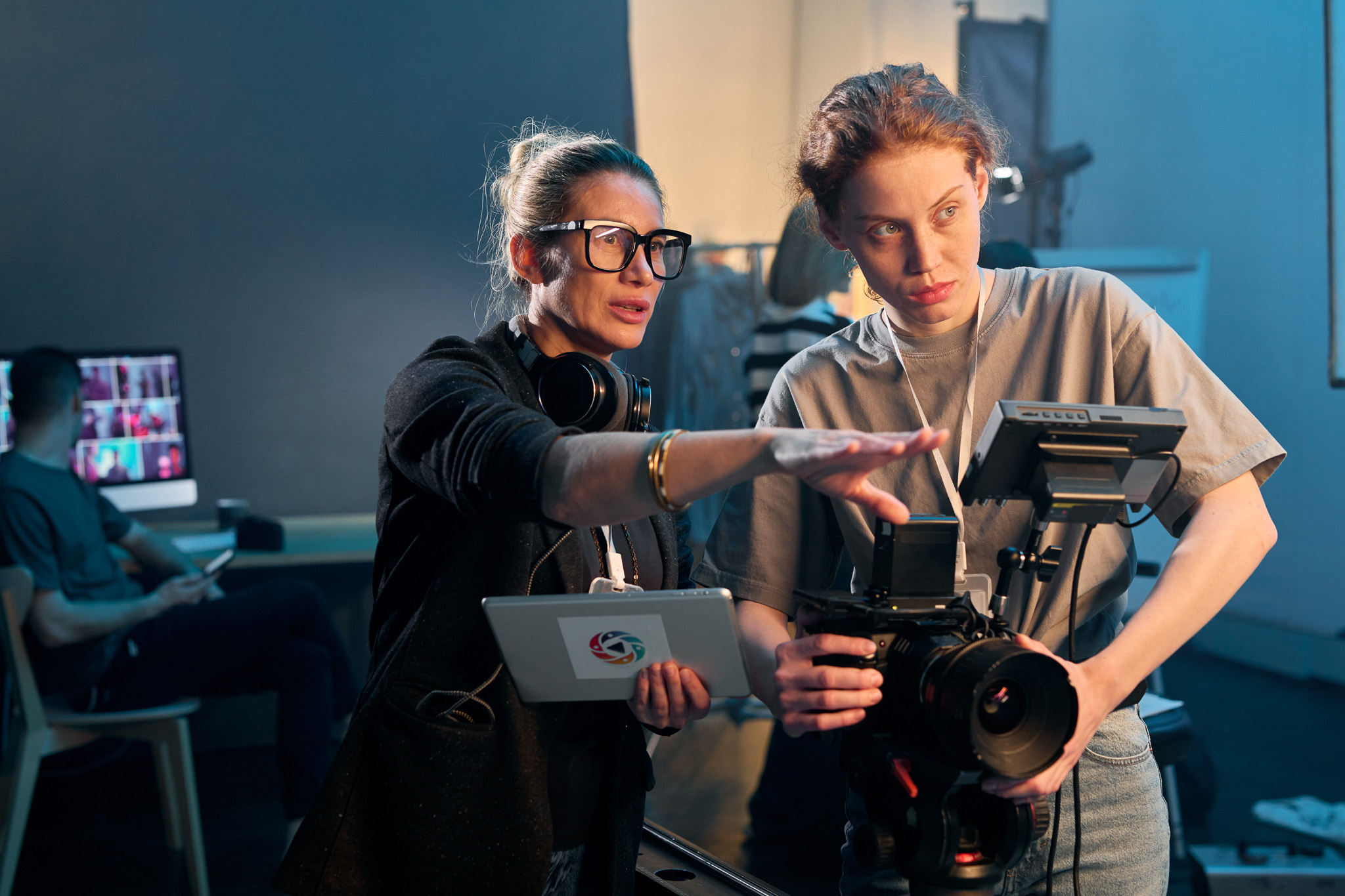
This is the question every buyer wants answered first, and the honest answer is that it depends on scope: the number of videos, shoot days, locations, on-camera talent, and how much animation and design are involved. As a general guide, a focused 60 to 90 second corporate or brand video typically falls in the $4,000 to $15,000 range, a high-end animated explainer runs $5,000 to $17,500, and a multi-day campaign or commercial production can run $12,500 to $25,000 and up.
The smarter way to think about cost, though, is not per video. It is per content system. Producing a full library of assets in a single, well-planned sprint dramatically lowers the per-deliverable cost, which is the whole idea behind our Content Kit: a complete, campaign-ready video library captured in one to three production days, starting at $16,500. For a full breakdown of pricing, drivers, and packages, read our dedicated guide on how much corporate video production costs in 2026.
The agency you choose shapes the result more than any other decision. A few criteria separate a true partner from a camera-for-hire.
Strategy first, not just production. The best partners start with your objective and build the creative to serve it. If the first conversation is about gear and day rates rather than goals, keep looking.
Full-funnel capability. A partner who can produce corporate, brand, and social media content under one roof keeps your content cohesive and your costs down, instead of stitching together three vendors.
Distribution, not just delivery. Production without distribution is half the job. Look for a team that optimizes for video SEO and AI search and can amplify your content where it matters.
Proof. Ask for results, not just reels. The right partner can point to measurable outcomes for real clients. You can see ours on our client success stories page, and a curated set of work in our roundup of corporate video examples that drove real results.
Corporate video earns its budget when it is tied to outcomes. A recruitment video shortens time-to-hire and raises candidate quality. A training series cuts onboarding time and reduces support load. A customer testimonial shortens the sales cycle by doing the trust-building your sales team cannot do alone. A product explainer reduces demo requests for unqualified leads while increasing them from qualified ones.
The brands that get the most from video treat every piece as an asset mapped to a goal and a stage of the funnel, then measure it. That is the difference between video as an expense and video as infrastructure. When the strategy is right, a single library of corporate content keeps working across your website, sales process, social channels, and recruiting for years.
Corporate video production, done right, is one of the highest-leverage investments a growing company can make. The key is to start with the objective, build a system rather than a one-off, and partner with a team that owns the full lifecycle from strategy through distribution.
If you want to see what that looks like for your brand, the fastest way to start is a free content strategy review, or explore how a complete library comes together in a single sprint with the INDIRAP Content Kit.
Watch + Learn
See how INDIRAP turns a single production into a full library of corporate video assets built around real business objectives.
▶ Subscribe on YouTube for behind-the-scenes breakdowns of corporate video shoots
▶ Instagram Reels for short, practical takes on corporate video strategy
▶ YouTube Shorts for 60-second answers to the corporate video questions buyers ask most
Corporate video production is the end-to-end process of planning, filming, editing, and delivering professional video built around a company's business objectives, such as training, recruitment, executive communications, product explainers, or customer testimonials. Full-service production covers strategy, scripting, the shoot, post-production, and distribution.
Corporate video is built around internal and operational objectives like training, recruitment, and executive communications, with audiences such as employees, candidates, and stakeholders. Brand video is built for external audiences and emotional connection, shaping how customers feel about a company. Most growing brands need both, produced as one connected system.
It depends on scope, but a focused 60 to 90 second corporate video typically runs $4,000 to $15,000, an animated explainer $5,000 to $17,500, and a multi-day campaign $12,500 to $25,000 and up. Producing a full library in one sprint, as with the INDIRAP Content Kit starting at $16,500, lowers the per-video cost significantly.
Length follows the objective and the platform. Executive messages and brand films often run 60 to 120 seconds, product explainers 60 to 90 seconds, training videos as long as the lesson requires, and social cutdowns 15 to 60 seconds. The right answer is the shortest length that accomplishes the goal without cutting clarity.
Choose a partner that starts with your business objective rather than gear, can produce corporate, brand, and social content under one roof, optimizes for distribution and not just delivery, and can show measurable results for real clients. Strategy-first, full-funnel partners deliver more value than single-format vendors.
This is Post 1 in INDIRAP's Corporate Video series.


Julian Tillotson is the Founder & CEO of INDIRAP, a full-service video production and creative strategy agency based in Chicago, IL. With 10+ years of experience, INDIRAP has delivered 20,000+ videos to 900+ clients across 40+ industries, making it one of North America's leading digital creative agencies.


.png)
.png)