
The best way to understand what corporate video can do for your business is to see what it has done for others. Examples turn an abstract budget line into a concrete decision: this is the kind of video, this is why it worked, and this is the result it produced. Below are 20 corporate video examples, grouped by format, each with a note on what made it effective and the business outcome it drove.
As you read, notice the pattern: the videos that work are never the ones that simply look impressive. They are the ones built around a clear objective and a specific audience. If you want the framework behind these examples, start with our guide to the types of corporate video, and see the breadth of our work on the corporate video production page.
1. The homepage brand film. A 90-second cinematic introduction to a growing company, anchoring the homepage. By giving visitors an instant, credible sense of who the company is, it lifted on-page engagement and gave the sales team a polished opener for every pitch.
2. The founder story. A founder explaining why the company exists, in their own words. Authentic founder content consistently outperforms scripted corporate messaging because buyers connect with people, not logos. It became the brand's most-shared and most-cited asset.
3. The hospitality brand campaign. For a luxury resort brand, a story-led campaign tied directly to bookings. The kind of measurable lift this format produces is visible in our own work, where a hospitality client saw a 157 percent increase in group arrivals and a 112 percent increase in website traffic to the campaign pages.
4. The single-customer testimonial. One client, on camera, describing a specific result. Placed on a landing page, it raised conversion by doing the trust-building a sales rep cannot do alone.
5. The enterprise case study. A full story, the challenge, the approach, and the measurable outcome, built for a buying committee. It became the asset reps sent to stalled deals to rebuild momentum.
6. The customer montage. Several clients edited into a fast, high-energy reel of proof. Ideal for the homepage and trade shows, it delivers social proof at a glance.
7. The vertical testimonial cut. The same customer interview re-cut for LinkedIn and Reels. Repurposing one shoot into platform-native social proof extended its reach without new production. See more outcomes on our client success stories page.
8. The software product demo. A clear, screen-based walkthrough answering exactly what the product does and how. It reduced unqualified demo requests while increasing qualified ones, because prospects arrived already understanding the value.
9. The animated explainer. A complex, abstract concept made instantly understandable through animation. It earned top-of-funnel attention and clarified the offer everywhere it appeared, from the website to sales decks.
10. The physical product showcase. A cinematic look at a tangible product, shot to make it look its best. It gave the brand premium creative for both e-commerce and paid campaigns.
11. The how-it-works series. A set of short videos each answering one common customer question. Together they reduced support volume and improved onboarding.
12. The employer brand film. A look at what it is actually like to work at the company, the people, the culture, the mission. It raised candidate quality and shortened time-to-hire by helping the right people self-select in.
13. The team spotlight series. Short profiles of real employees. Authentic and easy to produce in batches, this content humanized the brand for candidates and customers alike and fueled a steady stream of social media content.
14. The day-in-the-life video. A behind-the-scenes look at a typical day on the team. It set accurate expectations for candidates and reduced early attrition.
15. The onboarding series. A structured set of training videos that turned tribal knowledge into a scalable asset. It cut the time new hires took to become productive and reduced the load on managers, paying off with every new employee.
16. The internal communications update. Leadership communicating a strategy shift to the whole company on video. It delivered the message with a clarity and humanity email could not match, and it aligned a distributed workforce.
17. The event highlight reel. A fast, energetic recap of a conference or launch. It built momentum, generated FOMO for next year, and gave the marketing team months of content from a single day.
18. The captured session library. Filmed talks and panels turned into evergreen, searchable content. Long after the event, these videos kept attracting and educating the right audience.
19. The short-form thought-leadership series. Executive insights cut into 30 to 60 second clips for LinkedIn and Shorts. Consistent, credible, and cheap to produce from a single sit-down, it kept the brand visible to decision-makers between buying cycles. This is exactly the kind of B2B distribution we cover in our guide to B2B video marketing strategy.
20. The paid social ad set. Conversion-focused video creative built in multiple variations for testing. Engineered for performance and optimized against results, it turned creative into a measurable growth channel rather than a cost.
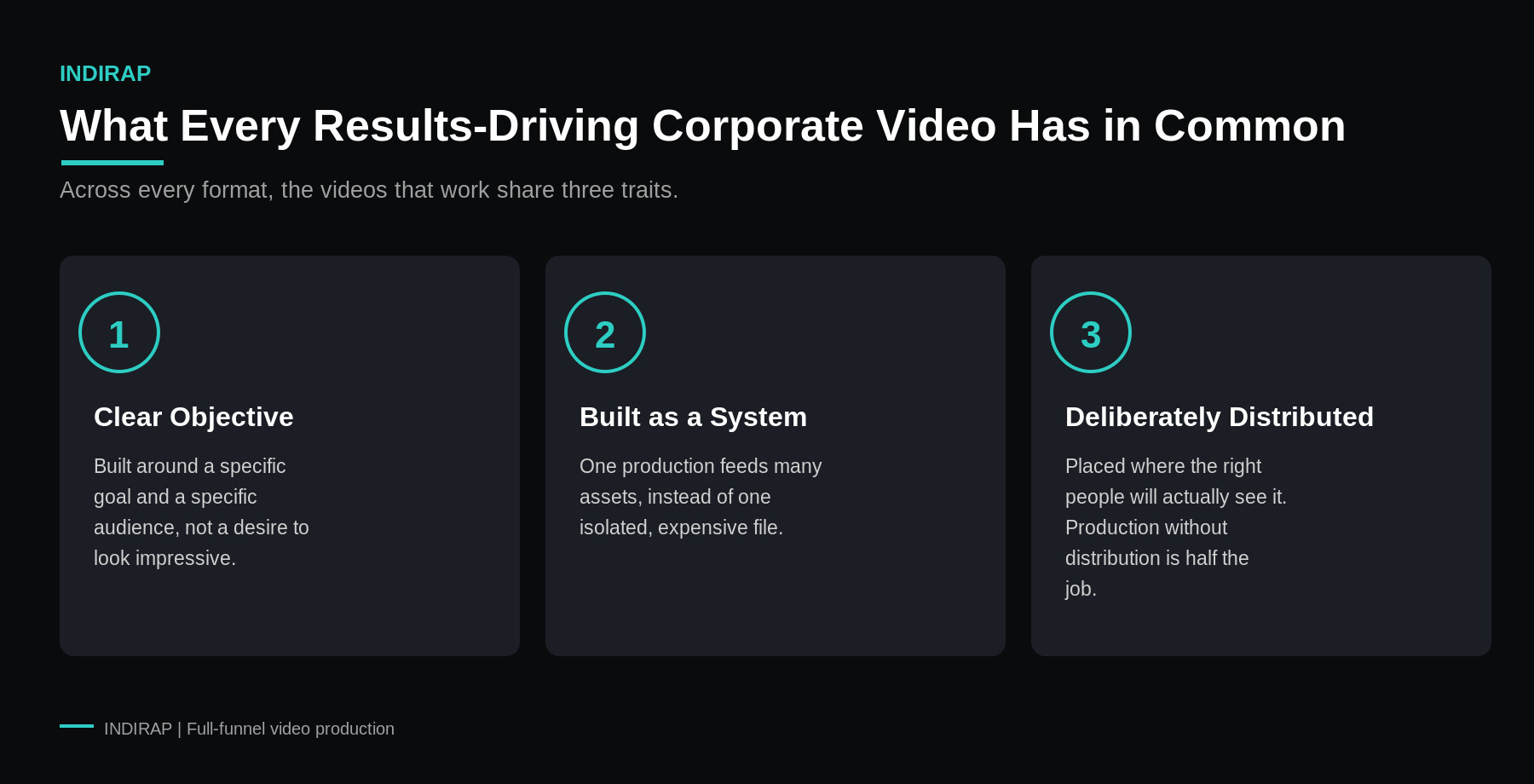
Across every category, the videos that drove results share three traits. They started with a clear objective and a specific audience, not a desire to look impressive. They were produced as part of a system, where one shoot fed many assets rather than a single isolated file. And they were distributed deliberately, placed where the right people would actually see them. That is the difference between video as an expense and video as infrastructure, the idea at the center of what corporate video production is really for.
The most efficient way to build a set of assets like these is to capture them together. A single Content Kit sprint can produce a brand film, testimonials, product content, and a library of social cuts in one to three days, all cohesive because they came from the same creative direction. It is how you get a results-driving content library without commissioning twenty separate projects.
If any of these examples maps to a goal you have, the next step is to scope it against your objectives and budget. A free content strategy review will turn the example that caught your eye into a concrete plan, and you can explore the full range of what one production can deliver on our video production page.
Watch + Learn
Watch full versions of these corporate video examples and see the results they produced for real brands.
▶ Subscribe on YouTube for full-length corporate video examples and case studies
▶ Instagram Reels for short-form versions of standout corporate videos
▶ YouTube Shorts for 60-second breakdowns of what made each example work
Strong corporate video examples include homepage brand films, founder stories, customer testimonials and case studies, software demos and animated explainers, recruitment and employer brand films, training and onboarding series, event highlight reels, executive thought-leadership clips, and conversion-focused paid social ads. The common thread is a clear objective and a specific audience.
A successful corporate video starts with a defined business objective and a specific audience, is produced as part of a system so one shoot yields many assets, and is distributed deliberately so the right people actually see it. Production value matters, but objective, system, and distribution matter more.
It depends on the goal, but customer testimonial and case study videos are among the most effective for driving conversions, because peer proof reduces buyer risk more than any other format. Brand films and founder stories are most effective for first impressions and trust, while explainers excel at clarifying complex offerings.
Most companies do not need a single video, they need a small library mapped to their goals, typically a brand film, two or three testimonials, and a product or explainer video to start, expanding into recruitment, training, and social content over time. Capturing several in one production sprint is the most cost-effective approach.
Yes. Corporate video drives measurable outcomes when it is tied to a goal: recruitment videos shorten time-to-hire, testimonials shorten sales cycles, product explainers improve lead quality, and campaign video lifts bookings and traffic. The key is mapping each video to an objective and measuring it against that objective rather than against view counts.
This is Post 6 in INDIRAP's Corporate Video series.
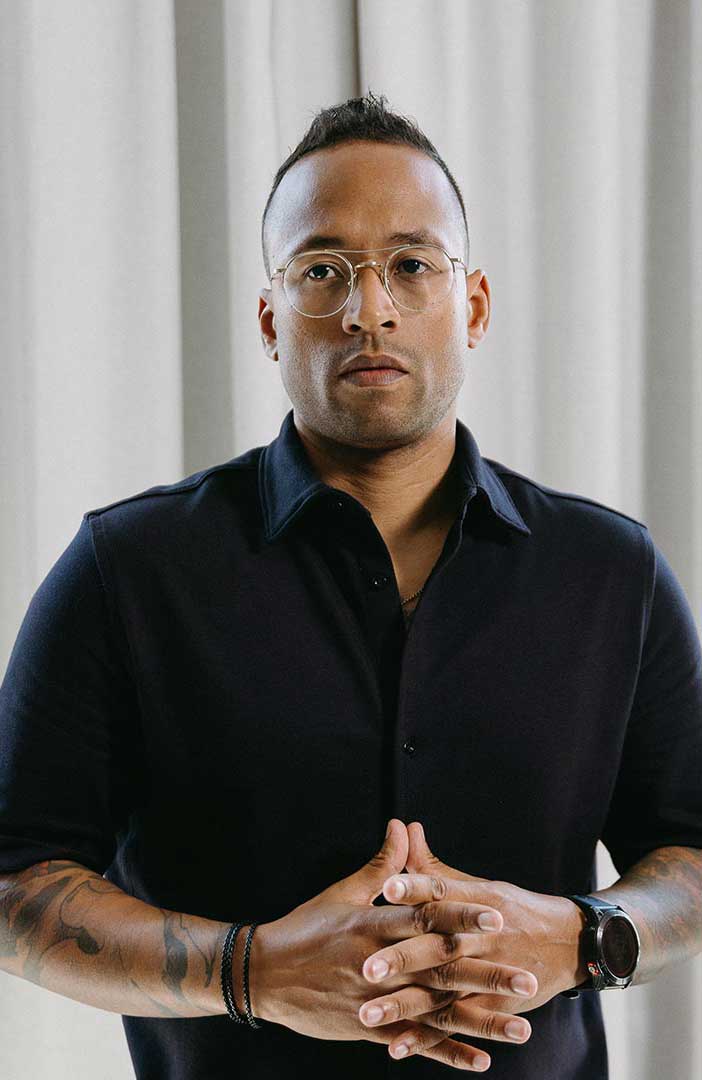

Julian Tillotson is the Founder & CEO of INDIRAP, a full-service video production and creative strategy agency based in Chicago, IL. With 10+ years of experience, INDIRAP has delivered 20,000+ videos to 900+ clients across 40+ industries, making it one of North America's leading digital creative agencies.


.png)
.png)