Brand storytelling is the strategic use of narrative to communicate who your company is, what you stand for, and why it matters to the people you serve. Instead of leading with product features or price points, brand storytelling builds an emotional bridge between your business and your audience. Done well, it turns a company into something people root for.
At its core, brand storytelling is the practice of using narrative structure to shape how the world understands your business. That means going beyond taglines and feature lists and instead answering the questions your audience is actually asking: Why does this company exist? Who built it and why? What problem are they solving, and who does it help?
A strong brand story is not a polished press release. It is a living, recurring thread that runs through every piece of content your company produces, from your website's about page to your pitch deck to your social posts. The best brand stories follow a recognizable arc: there is a hero (usually your customer), a challenge they face, a transformation they experience, and a set of values that make your company the right guide for that journey.
Brand storytelling is distinct from advertising. Advertising says "buy this." Brand storytelling says "here is what we believe, here is who we are, and here is why people like you trust us." One triggers a transaction. The other builds a relationship.
In 2026, with attention spans compressed and buyers more skeptical than ever, the companies that win are the ones that give people a reason to care before they ask for a sale.

Startups face a specific credibility problem. You are asking people to trust you before you have years of proof, a household name, or a massive client list behind you. Brand storytelling is how you earn that trust early.
When a startup leads with its story rather than its spec sheet, several things happen:
Not every brand story looks the same, but the most effective ones share a set of structural elements. Think of these as the components you need to work through before your story can consistently land.
This is the single most common mistake founders make: they make themselves the hero of their own brand story. In the most effective brand narratives, the customer is the protagonist. They have a goal, they face a problem, and your company is the guide that helps them succeed.
This shift in perspective -- from "here is how great we are" to "here is who you are and what we understand about your challenge" -- is what makes audiences feel seen rather than sold to.
Every story needs tension. For a brand story, the conflict is usually the problem your customer faces: the operational inefficiency, the creative block, the missed opportunity, the fear of falling behind. Naming the conflict clearly and specifically is what makes your story feel true rather than generic.
Vague conflicts produce vague stories. "Businesses struggle to grow" is not a conflict. "Early-stage founders lose months of momentum because they can't communicate what makes them different" is a conflict.
The transformation is the proof. It is the before-and-after that shows your audience what life looks like once the problem is solved. Strong brand stories do not just describe what you do -- they describe the change your customer experiences after working with you.
Values are what give a brand story consistency over time. They are the principles that explain why you do things the way you do, what you will and will not compromise on, and what makes your approach distinct. When your values are embedded in your story, every piece of content you create reinforces the same core identity.
Traditional marketing is optimized for conversion. Brand storytelling is optimized for connection. Both matter, but they operate differently and should not be confused.
Traditional marketing asks: what do we want the customer to do? Brand storytelling asks: what do we want the customer to feel and believe?
A product page, a promo email, a retargeting ad -- these are traditional marketing tools. They have their place. But they work far better when they sit on top of a foundation of brand story. When someone already understands who you are and what you stand for, the conversion content does not have to work as hard.
Think of brand storytelling as infrastructure. You build it once, you maintain it over time, and everything else you do in marketing operates more efficiently because of it.
Because the term gets used loosely, it is worth being direct about what brand storytelling is not:
Most founders already have the raw material for a strong brand story. The challenge is not inventing something -- it is excavating what is already there and structuring it so it communicates clearly.
Start with these questions:
The answers to these questions are the foundation of your brand story. From there, the work is about shaping that material into something that is honest, specific, and repeatable.
If you want a structured process for doing that, the next post in this series walks through a five-step framework for building a brand story your whole team can use.
The best way to understand brand storytelling is to see it in action. Some of the most recognized brands in the world built their position not on advertising spend alone but on a story that people chose to repeat.
None of these examples required massive budgets at launch. They required clarity about who they were, who they were talking to, and what they believed.
This article is the pillar post for INDIRAP's Brand Storytelling Series -- a collection of six posts designed to help startup founders and marketing leads build, articulate, and deploy a brand story across formats.
The series covers:
Each post stands on its own, but they are designed to build on each other. If you are starting from scratch, reading them in order gives you a complete foundation.
Content marketing is a distribution strategy. Brand storytelling is the narrative foundation that makes content worth distributing. Content marketing asks "what should we publish?" Brand storytelling answers "what should everything we publish say about who we are?" The strongest content programs have both: a clear brand story and a disciplined system for expressing it across channels.
A working brand story -- one that is specific enough to be useful and flexible enough to apply across formats -- can be developed in a few concentrated sessions. Most founders already have the raw material. The work is excavation and structure, not invention. Expect to spend a few hours drafting, refining, and testing it with real audience feedback before it feels right.
Yes -- and smaller companies often have an advantage here. A solo founder or small team can communicate with a authenticity and specificity that larger organizations struggle to replicate. The constraints of being small often produce sharper stories: you know exactly who you serve, why you started, and what you are trying to prove. Those are the ingredients of a compelling narrative.
Specificity. Vague stories feel manufactured because they could apply to anyone. Authentic brand stories name real problems, real decisions, real tradeoffs, and real beliefs. They do not try to appeal to everyone. Authenticity in brand storytelling is not about being emotional or vulnerable -- it is about being precise and honest about what you actually do and why you actually do it.
Brand storytelling does not produce instant conversion metrics, which is why many companies underinvest in it. The indicators to track over time include: organic search growth from story-driven content, improvements in time-on-page and return visit rates, increases in inbound inquiries that reference your brand by name, stronger close rates when prospects already understand your positioning, and qualitative feedback from clients about why they chose you. These signals compound over time rather than appearing in a single campaign report.
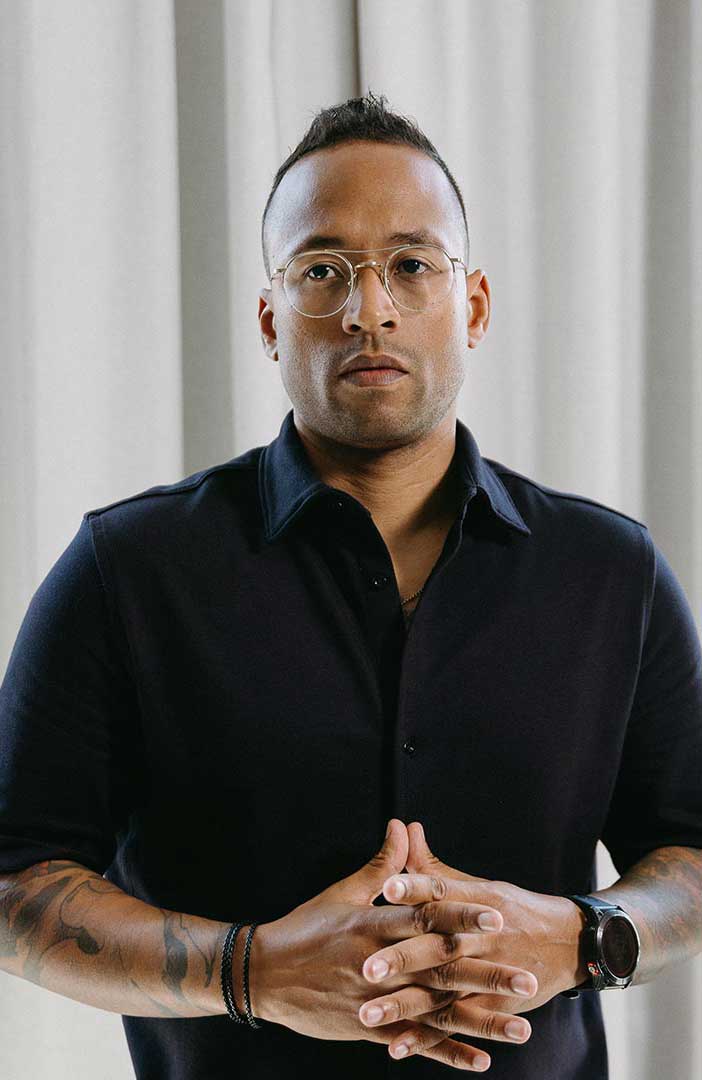

Julian Tillotson is the Founder & CEO of INDIRAP, a full-service video production and creative strategy agency based in Chicago, IL. With 10+ years of experience, INDIRAP has delivered 20,000+ videos to 900+ clients across 40+ industries, making it one of North America's leading digital creative agencies.


.png)
.png)