Theory only gets you so far. You can read every framework for brand storytelling and still walk away unsure what a great brand story actually feels like in practice. The fastest path to clarity is looking at real examples, pulling them apart, and identifying the specific moves that make them work. That's exactly what this post does.
Below are seven well-documented startup and brand stories, each broken down for the storytelling techniques behind them. Whether you're writing your first brand narrative or refining one that isn't landing, these examples give you something concrete to model.

In 2008, Brian Chesky and Joe Gebbia couldn't afford rent on their San Francisco apartment. They bought three air mattresses, set up a makeshift bed-and-breakfast, and charged guests $80 a night. Every major investor they pitched turned them down. One partner famously said the idea was "crazy." The founders kept going, expanding the concept from spare rooms to a global platform built around a single idea: travel should feel like belonging, not just lodging.
The transformation wasn't just financial. Airbnb reframed the entire travel industry by arguing that staying in a stranger's home was more human than staying in a hotel. That pivot from "cheap rooms" to "belonging" is what turned a survival experiment into a global brand.
The Lesson: Ground your brand story in a real, specific moment of constraint. That's where the emotional resonance lives.
Warby Parker was founded by four MBA students at Wharton, but the story starts with one very relatable problem. One of the co-founders, Dave Gilboa, lost his $700 glasses on a backpacking trip and couldn't afford to replace them before starting school. He went an entire semester squinting, using his phone to read, and wondering why prescription eyewear cost as much as a smartphone. The answer was market consolidation. A single company controlled most of the eyewear industry, and prices had climbed far beyond what manufacturing actually justified.
Warby Parker launched direct-to-consumer in 2010 with glasses starting at $95, a home try-on program, and a give-one-give-one model that paired every purchase with a donation to vision programs in low-income countries. Values weren't added to the brand later. They were baked into the business model from the start.
The Lesson: One specific, concrete detail does more storytelling work than three paragraphs of general problem description.
Yvon Chouinard started making climbing gear in the 1960s because the gear available to him was destroying the mountain faces he loved to climb. He built reusable pitons in a blacksmith shop in Ventura, California. The company that grew from that workshop eventually became one of the most recognized outdoor brands in the world, but more importantly, it became a brand defined by a specific tension: how do you run a profitable business without contributing to the destruction of the planet you're trying to help people enjoy?
Patagonia has never resolved that tension. They've leaned into it. They've run ads telling people not to buy their jackets. They've donated 1% of revenue to environmental causes since 1986. Their 2022 ownership restructure transferred the company to a trust dedicated to fighting climate change. The brand story is inseparable from those choices.
The Lesson: The most durable brand stories are ones where the founder's actual values drive actual business decisions. You can't fake consistency at that level.
In March 2012, Dollar Shave Club launched with a 90-second video that opened with founder Michael Dubin walking through a warehouse saying, "Hi, I'm Mike, and I'm the founder of DollarShaveClub.com. Our blades are f***ing great." The video had a bear mascot, a non-sequitur reference to a "big f***ing machine," and a toddler shaving an old man's head. It went viral in hours. The site crashed from traffic. By the end of the day they had 12,000 orders. By 2016, Unilever acquired them for $1 billion.
The brand story was simple: razors are overpriced and overcomplicated, and you shouldn't have to think about them. The video didn't just communicate that story. It embodied it. The production was cheap, the humor was dry, and the founder looked like someone who actually gave the speech off the top of his head.
The Lesson: Authenticity in voice is worth more than production polish when the story requires the audience to trust you.
Blake Mycoskie was traveling in Argentina in 2006 when he met a group of volunteers distributing shoes to children in a small village. He saw that many of the children were walking barefoot, and that shoes were the difference between being able to attend school and being kept home by foot injuries and infections. He had no shoe manufacturing background. He went back to the U.S. and started a company: for every pair of shoes a customer bought, TOMS would donate a pair to a child in need. The name stood for "Shoes for Tomorrow," later shortened to TOMS.
The one-for-one model became a template that dozens of brands have copied. But TOMS was the first company to make the purchase itself feel like an act of participation in something larger. You weren't just buying shoes. You were part of the story.
The Lesson: When you give customers a role in your brand story, you transform a transaction into a relationship.
Notion's early years were not a straight line to success. The team spent years building a product that never quite found traction, burned through money, and relocated to Kyoto, Japan to cut costs and rebuild from scratch with a smaller team. They rewrote the entire product. When they relaunched, growth came almost entirely from word of mouth. Notion didn't tell the story of their scrappy near-failure loudly in their marketing. They let the product and the community tell it.
The brand story that emerged wasn't about the founders. It was about the users: writers, engineers, students, and builders who were tired of juggling ten different tools and wanted one place for everything. Notion became the tool people felt ownership over because they could build it to look and work exactly the way they thought.
The Lesson: Sometimes the most powerful brand storytelling puts the founder in the background and makes the audience the protagonist.
Emily Weiss spent years working in fashion and beauty, observing how the industry talked to women about their appearance. In 2010 she started a blog called Into the Gloss, which treated beauty as a conversation rather than a lecture. She interviewed women about their actual routines, their medicine cabinets, the products they actually used versus the ones they were told to use. The blog built an audience of hundreds of thousands before a single Glossier product existed.
When Weiss launched Glossier in 2014, the community came with it. Customers weren't just buying products. They were co-authoring the story of a beauty brand that looked and sounded like the women buying it. Reviews, photos, and customer testimonials became the primary marketing engine. The brand didn't talk at its audience. It built a space where the audience talked to each other.
The Lesson: If you can build a community around a point of view before you launch a product, you have a head start that no ad budget can replicate.
Across all seven examples, a few patterns repeat:
Specificity, a clear hero (usually the customer), and an honest conflict. The brand storytelling examples that endure -- Airbnb, Warby Parker, Dollar Shave Club, Patagonia -- all named a real problem their audience recognized, offered a specific solution, and backed it with genuine values. Generic claims do not survive in memory. Specific stories do.
Yes -- and often more effective. Startups have more authentic raw material: a founder who genuinely lived the problem, a real reason for existing, and a specific audience they actually know. Large brands often produce polished storytelling that feels manufactured. Early-stage companies that tell their real story, including the struggle, tend to create stronger emotional connections with exactly the audience they need.
Video is the most effective format because it combines voice, face, environment, and music in a way no other medium can. A 60-90 second origin video or founder interview outperforms almost any written equivalent. Beyond video, case studies, customer testimonials, and founder-written long-form content are all high-performing formats for startups working within tighter production budgets.
The results compound over time: increased direct traffic (people searching for the brand by name), higher conversion rates from content (because visitors feel understood before they are asked to act), shorter sales cycles, and stronger word-of-mouth. Brand storytelling is a six to eighteen month investment that changes the trajectory and shape of growth rather than producing an immediate spike.
Look in adjacent industries rather than at direct competitors. If you model your storytelling on a competitor's approach, you will always be derivative. Companies that serve a similar audience in a different category often provide fresher, more differentiated inspiration that you can translate into your own context without the risk of sounding like a copy.
Reading examples is step one. The next step is building a brand story that works for your company specifically, then putting it on video in a format people will actually watch and remember. That's what INDIRAP does for founders and marketing teams across Chicago and beyond.
If your brand story isn't clear yet, or if it's clear but not on video, book a strategy call with INDIRAP to talk through what that process looks like for your business.
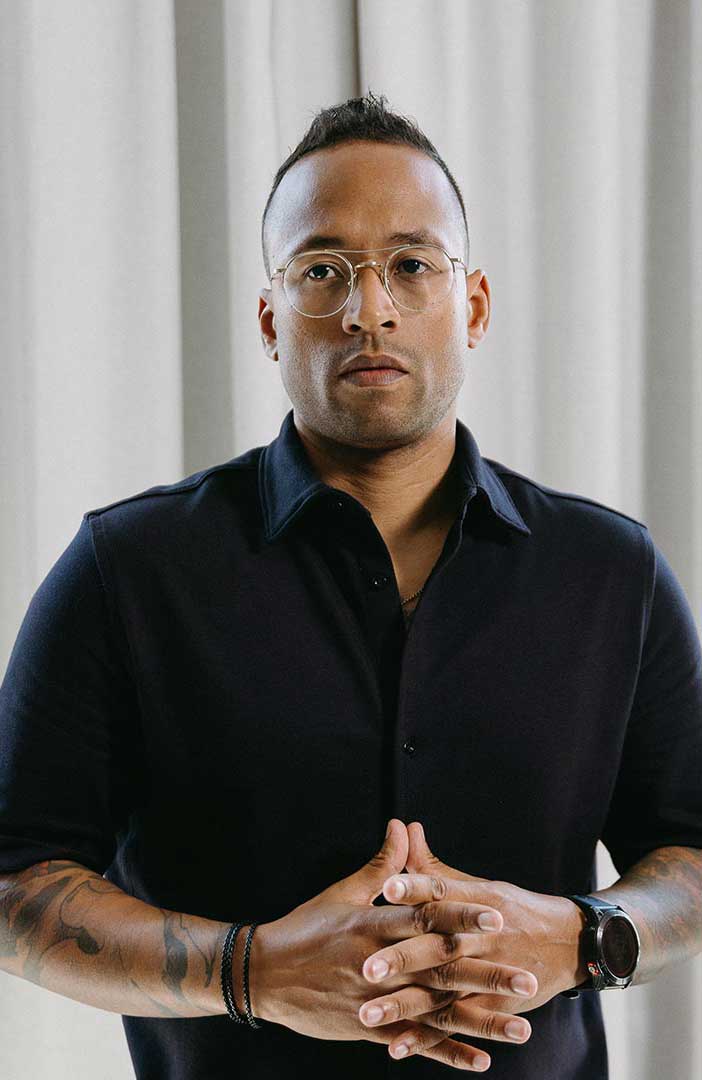

Julian Tillotson is the Founder & CEO of INDIRAP, a full-service video production and creative strategy agency based in Chicago, IL. With 10+ years of experience, INDIRAP has delivered 20,000+ videos to 900+ clients across 40+ industries, making it one of North America's leading digital creative agencies.


.png)
.png)