A founder story is the narrative account of why you started your company, what you saw that others missed, and what drove you to take the risk. Done well, it is one of the most persuasive marketing assets a startup can have, because it does what no product feature list ever can: it makes people root for you before they have ever opened their wallet.
Most founders have a version of this story in their head. Very few have articulated it in a way that works strategically across their website, pitch deck, investor conversations, and content. This post is about the gap between those two things, and how to close it.
A founder story is not a biography. It is not a timeline of milestones. It is not a LinkedIn summary dressed up in paragraph form.
A founder story is a narrative built around a specific moment of insight, frustration, or decision that explains why this company had to exist. It centers on a problem the founder experienced or witnessed firsthand, a realization that no good solution existed, and the choice to do something about it.
The best founder stories are specific to the point of discomfort. They name real situations, real stakes, and real emotions. They are not carefully polished to appeal to everyone. They are honest enough that the right people feel an immediate connection, and honest enough that the wrong people self-select out.
That selectivity is not a weakness. It is a feature. A founder story that resonates deeply with a defined audience is worth more than one that tries to appeal to everyone and ends up connecting with no one.
There is a reason investors consistently say they bet on founders, not just ideas. The founder story is why.
When you understand why someone started a company, you understand something about their judgment, their conviction, and their likelihood to keep going when things get hard. Those qualities are not visible in a product demo or a financial model. They only emerge through narrative.
For customers, the same principle applies at a different scale. When your customer understands your origin story, they understand your values by implication. They know what you care about, what tradeoffs you are willing to make, and whether your priorities align with theirs. That alignment is the foundation of loyalty.
For recruits, a compelling founder story answers the question every talented candidate is actually asking: is this worth betting my career on? A story that conveys genuine conviction and a meaningful mission does more recruiting work than any job description or compensation package.
The founder story works because it is fundamentally human in a business environment that defaults to transactional. It stands out not by being louder but by being real.

Every founder story that holds up under scrutiny contains some version of these five elements. They do not have to appear in this exact order, but they all need to be present.
Where does this story come from? What did you live through, witness, or work inside that gave you the raw material for this company?
The personal experience is the anchor of your founder story. It is what separates your origin from a generic market opportunity narrative. Anyone can identify a large addressable market. Only you had this specific experience that revealed this specific problem in this specific way.
The details matter here. Not "I worked in the industry for years" but "I spent four years managing a content team that missed deadline after deadline because our video production process was completely broken." Specificity creates credibility. Credibility creates trust.
What did you see that others around you were not seeing? What was the insight that made you believe a different approach was possible?
The insight is the intellectual heart of your founder story. It shows your thinking, your pattern recognition, and your conviction. It is also the part of the story that gives your audience a framework for understanding why your solution is different from what already exists.
A weak insight sounds like: "I realized there was a market opportunity." A strong insight sounds like: "I realized that every agency in our space was optimizing for production speed at the expense of story quality, and that the clients who actually wanted their brand to stand for something had no one building for them."
What made you actually do it? What was the moment you chose to start this company rather than keep doing what you were doing?
The decision point is where your story gains emotional weight. Every founder had a moment where they crossed from interested to committed. Naming that moment, even briefly, makes your story feel real rather than retrospectively constructed.
It does not have to be dramatic. Sometimes the decision point is simply: "I realized I had been talking about this for two years, and the problem was still there, and if I was not going to do something about it, no one was."
What does this company exist to do, and what does it believe? What are the principles that will guide how you operate even when it would be easier to compromise?
The mission and values are what transform a personal story into an organizational one. They answer the question your audience is implicitly asking: "This is interesting about you, but why should I care?" The answer is that the mission connects your personal experience to a broader purpose that your customer or investor or recruit can see themselves as part of.
Values, in this context, are not aspirational. They are demonstrated. The most effective founder stories do not list values. They show them in action through the decisions the founder made and the ones they refused to make.
Where does your audience fit into this story? What are you asking them to do, believe, or become?
Every strong founder story ends with some version of an invitation. Not a hard sell. An opening. A reason for the right person to step forward and say "I am in." Whether that means buying your product, investing in your company, joining your team, or simply subscribing to your newsletter, the invitation is the moment your story becomes their story.
The invitation should feel like a natural consequence of the story rather than a pivot into sales mode. If you have done the first four elements well, the invitation writes itself.
Most founders stall on their founder story not because they lack material but because they do not know where to start. Here is a process that works.
Set a timer for 20 minutes and answer these questions in writing, without editing:
Do not write for an audience. Write to get the raw material out of your head and onto paper. You can shape it into a narrative after.
Read back through what you wrote and look for the thread that connects everything. There is usually one central tension at the heart of every founder story: the gap between how things were and how they could be. Find that gap. It is the spine of your narrative.
Using your raw material, draft a version of the story that includes each of the five elements: personal experience, specific insight, decision point, mission and values, invitation. Do not worry about length at this stage. Most founder stories end up somewhere between 200 and 500 words when they are used on a website, but the draft can be longer.
Before you publish it anywhere, tell it out loud. To a friend, a colleague, a mentor. Watch their reaction. The parts that make them lean in are working. The parts where their eyes drift are not. Edit accordingly.
Your founder story is not a single piece of content. It is source material that gets adapted for different contexts:
The core story stays consistent. The emphasis and format shift based on the audience and the goal of the conversation.
Knowing what not to do is as important as knowing the framework. Here are the most common ways founder stories fail.
Listing credentials and career milestones is not a founder story. Credentials establish authority. Stories create connection. You need both, but in a founder story, the narrative should carry the weight. Credentials can be woven in as context, not as the central feature.
A founder story without a real conflict is just a company profile. The conflict is where the audience finds themselves. "I saw an opportunity" is not a conflict. "I spent three years inside a broken system that was costing the people I worked with real money and real credibility, and no one was willing to name it" is a conflict.
"I realized there was a better way" is not an insight. The insight needs to be specific enough that your audience can evaluate it. Specific insights signal specific thinking, which signals the kind of judgment investors and customers are actually looking for.
A founder story works when it is delivered in the right context. In a pitch, it usually belongs early, before the product details, to give the investor a reason to care about what they are about to see. On a website, it belongs on the About page and in your brand video. In a cold email, a one-sentence version might be appropriate. Knowing when to tell which version is as important as writing it well.
Your founder story should evolve as your company does. The core elements stay the same, but the emphasis shifts as you accumulate proof points, as your understanding of your customer deepens, and as your mission becomes clearer through the experience of actually running the business. Review it annually and refine it with what you have learned.
Of all the formats for delivering a founder story, video is the most powerful. Here is why.
When you tell your story on camera, your audience gets something they cannot get from text: they see your face, they hear your voice, they pick up on the small signals of conviction and authenticity that no written version can replicate. The founder story on video is the closest thing to a one-on-one conversation at scale.
It is also the most portable asset you can create. A well-produced founder story video can live on your About page, be shared in sales emails, be embedded in pitch decks, repurposed across social channels, and clipped into shorter formats for specific use cases. One production investment serves dozens of distribution channels.
The format does not need to be elaborate. Some of the most effective founder story videos are shot in a single location, with the founder speaking directly to camera for 90 to 180 seconds. What matters is not production complexity but clarity, conviction, and authenticity.
A founder story is the narrative account of why you started your company, what you saw or experienced that made the problem real, and what drove you to take the risk of building a solution. It is distinct from a company history or a biography. It is structured around a specific insight, a decision point, and a mission that invites others to join the journey.
Because trust is the primary resource a startup needs and the one it has the least of. A founder story is how you build trust before you have years of track record, a long client list, or a household name. It lets investors, customers, and recruits understand your judgment and conviction directly, which is often more persuasive than any product feature or data point.
It depends on the format. For a website About page, 300 to 500 words is typical. For a pitch deck, you want the core narrative in 3 to 4 slides or about 2 minutes of speaking time. For video, 90 to 180 seconds is the target. For a LinkedIn bio, one strong paragraph. The same story gets adapted to fit each context without losing the essential elements.
A brand story is the broader narrative about your company: who you serve, what problem you solve, and the transformation your customer experiences. A founder story is a subset of that -- it specifically focuses on the person who started the company, the insight that drove them, and the decision they made to act. The two overlap, but the founder story is more personal and often serves as the emotional core that the broader brand story is built around.
Both, but the struggle is usually what makes it compelling. Audiences are skeptical of narratives that are all triumph. The moments of doubt, the hard decisions, the things that almost did not work -- these are the parts that make a founder story feel real. Success without struggle is just a press release. Struggle that leads to conviction is a story worth remembering.
If you have been carrying your founder story in your head, it is time to get it on screen. A well-produced founder story video is one of the highest-leverage content investments a startup can make. It builds trust, earns attention, and works across every channel where you show up.
INDIRAP is a Chicago-based video production company that helps founders turn their story into content that converts. We have built founder story videos for startups across industries, and we know how to create an environment where your story comes out clearly and authentically on camera.
Connect with our team to talk through what your founder story video could look like.
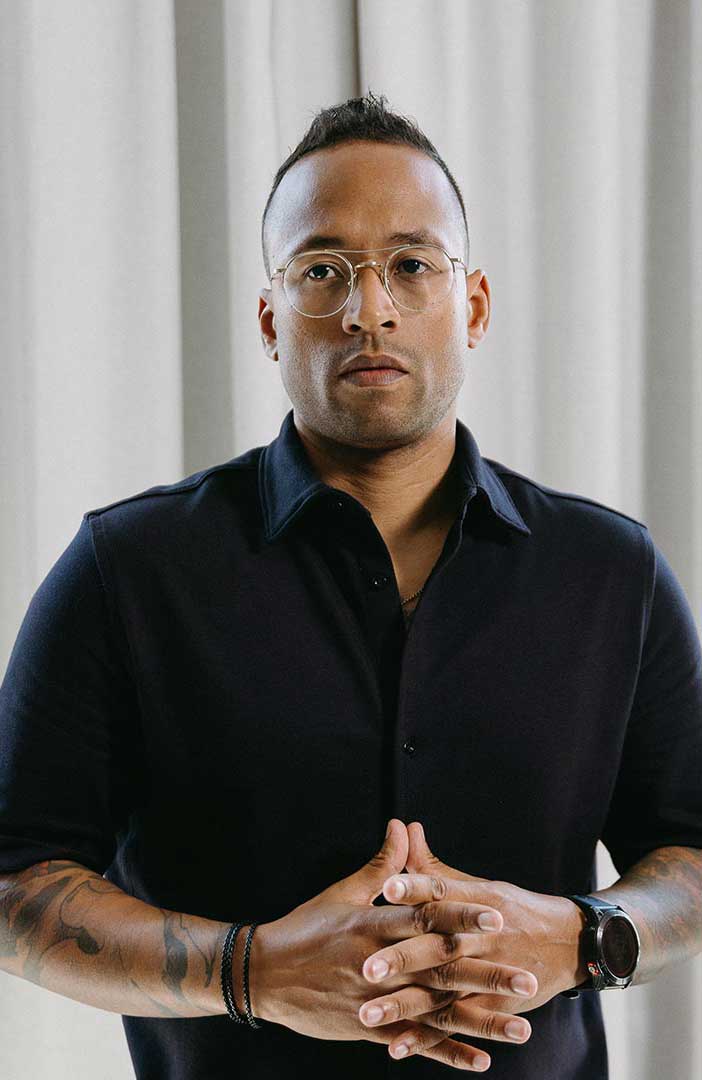

Julian Tillotson is the Founder & CEO of INDIRAP, a full-service video production and creative strategy agency based in Chicago, IL. With 10+ years of experience, INDIRAP has delivered 20,000+ videos to 900+ clients across 40+ industries, making it one of North America's leading digital creative agencies.


.png)
.png)