Viewers retain 95% of a message delivered through video. They retain about 10% of the same message delivered through text. That single stat explains why video has become the default format for brand storytelling, and why brands that still rely on written copy alone are fighting with one hand tied behind their back. Video doesn't just communicate your story. It lets people feel it.
If you've built a brand story worth telling, video is how you make it land. This guide walks through the formats that work, the workflow that produces them, and the mistakes that waste production budgets on content that goes nowhere.
The retention gap between video and text is the starting point, but it doesn't fully explain what makes video so effective for brand stories specifically. A few things are happening at once:
For startups and growth-stage companies deciding where to put storytelling budget, video has the highest return across distribution contexts. It's not the cheapest format to produce. It is the most versatile format to own.
Not every brand video is a brand story. Product demos, explainer animations, and tutorial content are valuable, but they're not what we're talking about here. Brand storytelling video is content that answers a different question: who are you and why does that matter? Here are the five formats that answer it.
The origin film is the most direct form of brand storytelling video. It follows a narrative arc: the founder saw something broken or missing, decided to do something about it, and built the company that followed. Done well, it combines interview footage with b-roll to show the journey rather than just describe it.
Example origin film: Steve Jobs' 2005 Stanford commencement -- a perfect demonstration of narrative arc on camera:
The best origin films are specific. They name real moments, real doubts, and real turning points. Vague inspiration stories ("I wanted to make a difference") don't work on camera any better than they do on paper. A specific story about one conversation, one failure, or one early customer is what gives the film something to hold onto.
Origin films are the right choice when the founder's story is genuinely compelling and when the company's "why" is central to how it differentiates from competitors. They're a natural fit for mission-driven brands and early-stage companies establishing credibility.
A manifesto video is less about the founder's personal journey and more about what the company stands for. It makes a declaration. Patagonia's "We're in business to save our home planet" is a manifesto. It states a belief, invites an audience to share it, and implicitly challenges anyone who doesn't.
Example brand manifesto: Nike Dream Crazy -- a declaration of values that invites alignment or challenges it:
Manifesto videos tend to be shorter, more cinematic, and more scripted than origin films. The writing carries the weight. They work best when a brand has a point of view that's strong enough to polarize, and when the goal is to attract the right audience rather than appeal to everyone.
In a customer success video, the brand steps out of the spotlight and puts a real customer or client at the center of the story. The customer is the hero. The company's product or service is the tool that helped them get somewhere they couldn't get to on their own.
Example customer success story: Dove Real Beauty Sketches -- the audience as hero, the brand as guide:
This format does a specific job that origin films can't: it answers the question "what could this do for me?" in terms the viewer can recognize themselves in. A B2B company showing how a specific client doubled their output is doing more sales work than any founder interview.
Customer success videos work especially well for companies with complex or high-consideration offerings, where buyers need proof of outcome before they'll engage.
Culture videos are brand storytelling aimed at a specific audience: talent. They answer the question "what is it actually like to work there?" through real team members, real environments, and honest conversation rather than polished PR talking points.
The risk with culture videos is inauthenticity. Scripted-feeling enthusiasm from employees reads as exactly that. The best culture videos give people room to be specific and personal. They show the texture of daily work rather than just the mission statement on the wall.
The product story video is the origin film applied to a specific product rather than the company as a whole. It answers: what problem was this built to solve, and why did you build it this way? This format is especially effective for product launches and for companies with a strong engineering or craft identity.
Example product story: Dollar Shave Club's launch video -- raw, specific, and built entirely around the product's origin:
Product story videos are different from demos. They don't walk through features. They explain the reasoning and the values that shaped the product decisions. Think of it as the "making of" for something that actually matters to buyers.
A well-executed brand video doesn't start on set. It starts with a clear brief. Companies that skip the pre-production work tend to end up with footage that looks professional but doesn't say anything. The workflow below is what INDIRAP uses with every client to make sure the final film earns its place on your homepage and in your sales cycle.
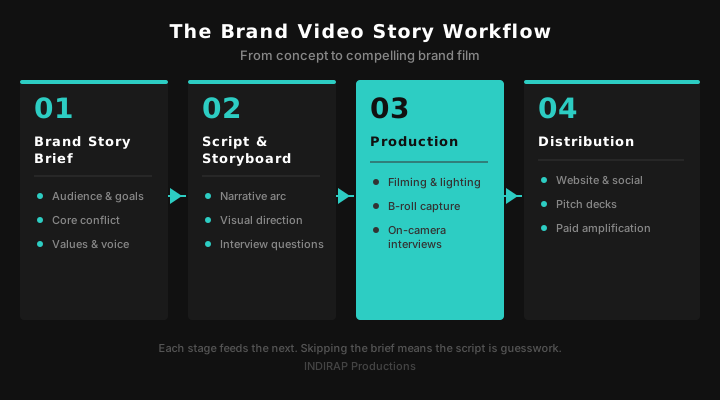
The four stages are sequential for a reason. Each one creates the conditions for the next. Skipping the brief makes scripting guesswork. Skipping the storyboard makes production inefficient. Skipping distribution planning means the video lives on your homepage and nowhere else.
You can see examples of this workflow applied to real client projects in INDIRAP's corporate video production portfolio.
The brief is the most important document in the production process. If you hand a production team a clear, detailed brief, everything downstream gets easier. Here's what it needs to cover:
Most production mistakes are brief mistakes in disguise. Here are the patterns that show up most often:
The answer depends on where the video lives and what it's supposed to do. There is no universal right length, but there are useful guidelines:
The practical rule: cut to the length that holds the specific audience you're targeting in the specific context where they'll watch it. Longer is never safer. Shorter is almost always an improvement.
INDIRAP's team has produced brand videos for companies across a range of industries and budgets. The corporate video production portfolio shows how different lengths and formats serve different storytelling goals.
This post is part of a complete guide to brand storytelling. Read the full series:
The most effective format depends on your goal. Origin films and founder interviews work best for building trust with new audiences. Customer success stories work best for mid-funnel audiences evaluating whether to buy. Culture videos work best for recruiting and partner communications. If you can only produce one, a 60-90 second origin film that explains why your company exists will work across more contexts than any other format.
Entry-level brand story videos produced by a local videographer typically range from $2,500 to $5,000. Mid-range productions with a dedicated director, crew, and full post-production typically run $8,000 to $25,000. Enterprise-level campaigns with multiple deliverables often start at $30,000 and scale from there. The biggest driver of cost is scope: how many locations, interview subjects, and final deliverables the project requires.
Not always -- but production quality signals credibility. A well-lit, clearly recorded video shot on an iPhone can outperform a poorly-planned professional production. What matters most is having something real to say and saying it specifically. That said, for high-stakes contexts like investor presentations or flagship website content, professional production is worth the investment in quality signal.
From briefing to delivery, a typical brand story video takes four to eight weeks with a professional production team. This includes pre-production (scripting, scheduling, location scouting), shoot day or days, and post-production (edit, color, sound, graphics, revisions). Rush timelines are possible but usually increase cost and reduce quality. Build the production timeline into your marketing calendar rather than treating it as an afterthought.
Start with your website (homepage and about page), then seed it across every relevant channel: LinkedIn, YouTube, and Instagram. Include it in pitch decks and new business email sequences. Send it to existing clients with a personal note. A well-produced brand story video should be in active rotation for 18-24 months before you need to refresh it -- most companies under-distribute their video content significantly.
Brand storytelling in video form is what INDIRAP was built to produce. Whether you have a clear story and need a team to film it, or you're starting from scratch and need help building the narrative before a camera ever turns on, that's the work we do.
INDIRAP is a Chicago-based video production company working with founders and marketing teams across corporate video, brand film, and real estate. If you're ready to put your brand story on screen, book a strategy call with INDIRAP and let's figure out what format makes sense for your goals.
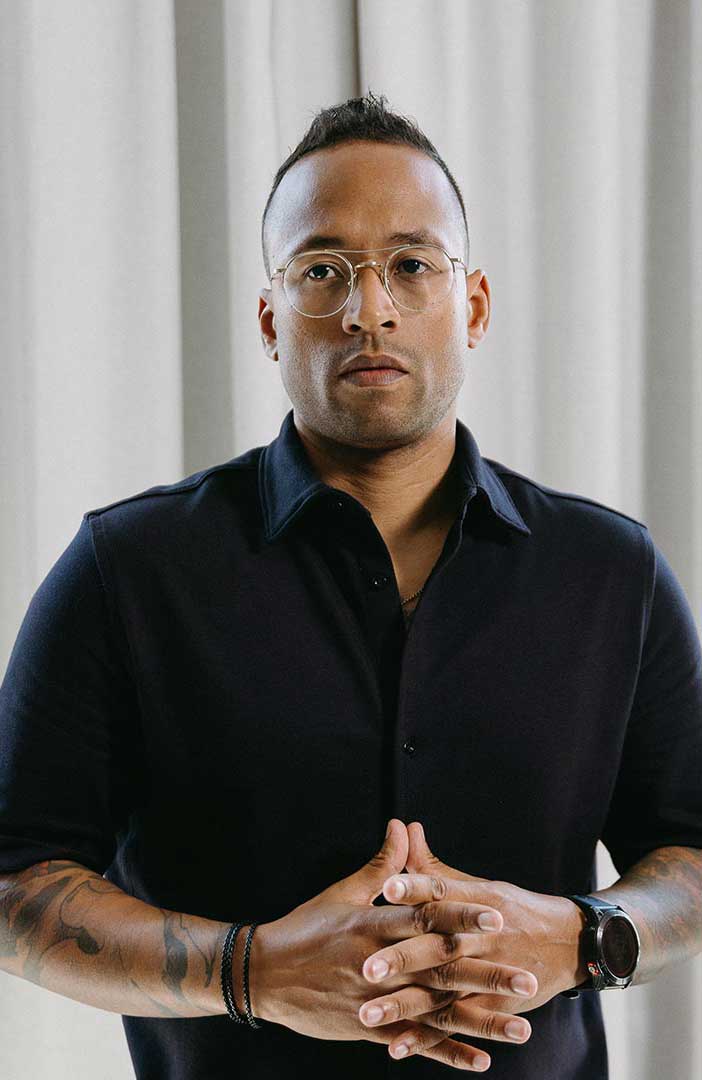

Julian Tillotson is the Founder & CEO of INDIRAP, a full-service video production and creative strategy agency based in Chicago, IL. With 10+ years of experience, INDIRAP has delivered 20,000+ videos to 900+ clients across 40+ industries, making it one of North America's leading digital creative agencies.


.png)
.png)