
Most executives build their professional profile backwards. They list what they have done -- titles held, companies built, credentials earned -- and assume that a strong track record speaks for itself. In many rooms, it does. But in a world where buyers research vendors before any conversation begins, a track record they cannot find does nothing. A track record with no story does almost as little.
The executives who generate consistent inbound attention are not necessarily the most accomplished in their market. They are the ones who have learned to communicate what makes them worth choosing -- clearly, specifically, and in a form that is findable before the first conversation.

An executive brand narrative is the throughline that connects your history, your expertise, and your point of view -- told in a way that resonates with the specific buyers and partners you want to reach. It is not a biography. It is not a mission statement. It is the story that explains how you got here, what you believe, and why that matters to the person reading it.
The most effective executive brand narratives follow a recognizable structure. There is a before: the problem you faced, the gap you saw in your industry, the approach you rejected because it did not work. There is a turning point: the insight, the experience, or the decision that changed how you operate. And there is a now: what you built, what you know, and who you help because of it. That arc is what makes a story memorable -- and what makes you memorable alongside it.
In a competitive B2B market, credentials are table stakes. Most of the executives your buyers could hire have comparable experience, comparable results, and comparable professional presentations. What separates the ones who get chosen from the ones who get passed over is rarely capability -- it is how clearly they communicate what they stand for and who they serve.
Executive brand storytelling creates three outcomes that credentials alone cannot produce:
There are dozens of executives who do what you do. There is only one with your specific combination of experience, perspective, and approach. Your story is the only differentiator that is genuinely unique to you. A buyer reading two equally credentialed LinkedIn profiles will choose the one whose story resonates -- not the one with the longer list of past titles.
B2B buyers make trust decisions before they agree to a first conversation. They read your LinkedIn profile. They watch your videos. They search your name. A specific, well-told executive brand narrative creates a sense of "I know this person" that no capability deck or company overview can replicate. When the meeting finally happens, the relationship is already partially built.
The executives with the strongest personal brands do not only win more of the deals they pursue -- they attract deals they never pitched. A visible, well-positioned executive brand generates introductions, referrals, and inbound inquiries from buyers who found them through content, search, or peer recommendation. That is the compounding return of a built narrative versus a managed profile.
A strong executive brand storytelling library is not a single origin story. It is a portfolio of four interconnected narratives, each answering a different question a buyer is silently asking:
Why did you start doing what you do? Not the polished LinkedIn version -- the real answer. The moment of frustration, the gap in the market nobody else was addressing, the decision that redirected your career. Founder stories are the most powerful form of executive content because they answer the question every buyer asks before engaging: why should I trust this specific person with this specific problem?
What do you believe that most people in your industry get wrong? This is the belief story -- the stake in the ground that separates your approach from the conventional wisdom. A clear, specific point of view attracts buyers who agree with it and pre-qualifies the ones who do not. It is also the most algorithmically amplified content format on LinkedIn, because a genuine opinion generates engagement that generic expertise posts do not.
What happened when a client trusted you with a real problem? Case studies are not just proof -- they are stories. The most effective ones follow the same arc as all great narratives: a client facing a specific challenge, your approach to solving it, and a result that was better than they expected. When told with specificity and honesty, a client result story does more to advance a deal than any capabilities presentation.
How do you actually work? What does it feel like to be your client? Process stories build credibility and manage expectations simultaneously. They answer the question every buyer is asking before they sign a contract: what will this experience actually be like, and is this executive's way of working compatible with how we operate?
The medium determines how much of your story gets told and to whom:
On LinkedIn, the most effective executive content starts with a specific moment or observation -- not a generalization, not a question, not a hollow hook. Long-form posts work well for point of view and process stories. Short posts work for client wins and micro-moments of expertise. The goal on LinkedIn is not reach -- it is reaching the right people with content specific enough to self-select your ideal buyer.
On video -- LinkedIn video, YouTube, or Instagram Reels -- the talking-head format outperforms everything else for executive personal brand building. Watching someone speak builds trust in a way that reading their profile cannot. You do not need a production crew to start. Professional brand video production elevates the format when you are ready to invest in it -- but the habit of speaking on camera about what you know matters more than production quality at the start.
In your visual presence, your brand photography carries your story before a single word is read. The images a prospective client sees when they look you up -- the context you are photographed in, how you carry yourself, the environments that show up -- communicate your professional identity faster than any bio.
In 2026, executive personal branding is not only about impression -- it is about discoverability. When a prospective client Googles your name, searches for an expert in your category, or asks an AI assistant who to recommend in your space, your story needs to be findable. Executive brand SEO and AEO strategy is how you ensure that your narrative shows up in the moments that matter, not just when someone already knows to search for you specifically.
This is Post 2 in INDIRAP's Executive Personal Branding series. Start with what executive personal branding actually is, or continue to the executive content bucket system.
Watch + Learn
See how founders and executives tell their brand stories through video -- real examples of origin stories, client results, and POV content that wins business.
▶ Subscribe on YouTube -- watch founder stories and executive brand storytelling examples from real business owners and CEOs
▶ Instagram Reels -- see how founders and executives use video to tell their brand story and attract clients
▶ YouTube Shorts -- quick-cut brand storytelling breakdowns -- executive examples, what works and why
An executive brand narrative is the throughline that connects your history, expertise, and point of view -- told in a way that resonates with the buyers and partners you want to reach. It includes your origin story, your point of view, your client results, and your process, structured to make you memorable and trustworthy before the first conversation.
In a competitive B2B market, credentials are table stakes. What separates executives who get chosen from those who get passed over is not capability -- it is how clearly they communicate what they stand for. Brand storytelling creates differentiation, trust before the meeting, and inbound deal flow that credential lists alone cannot generate.
The four stories every executive needs are: the origin story (why you started and what you risked), the point of view story (what your industry gets wrong and what you believe instead), the client result story (a specific transformation you created), and the process story (what it actually feels like to work with you).
Thought leadership is a category of content. Executive brand storytelling is the narrative architecture that makes thought leadership coherent and compelling. You can publish thought leadership indefinitely without a brand narrative and remain forgettable. With a clear narrative, every piece of thought leadership content reinforces the same impression -- and that impression compounds into authority.
LinkedIn is the primary platform for B2B executive brand storytelling. Video -- LinkedIn video, YouTube, and Instagram Reels -- is the highest-trust format for establishing credibility before the first meeting. Brand photography provides the visual layer that carries your story across every platform simultaneously.
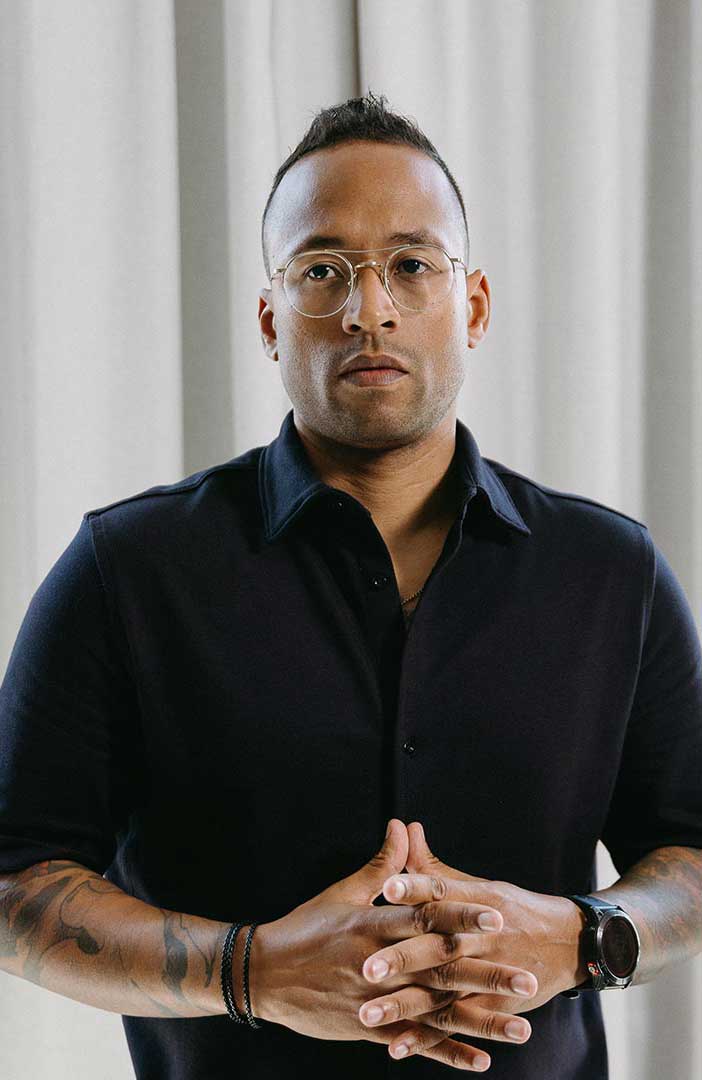

Julian Tillotson is the Founder & CEO of INDIRAP, a full-service video production and creative strategy agency based in Chicago, IL. With 10+ years of experience, INDIRAP has delivered 20,000+ videos to 900+ clients across 40+ industries, making it one of North America's leading digital creative agencies.


.png)
.png)