
Executive personal branding is not about becoming famous. It is not about building a following, going viral, or chasing a blue checkmark. It is about making sure that when a prospective client, board member, or strategic partner looks you up -- and they will -- what they find tells a story compelling enough to start a conversation.
This guide is written specifically for founders, CEOs, and executives who want their name to open doors and win business. If that is what you are building, this is how it works.

Executive personal branding is the deliberate effort to shape how the right people perceive you professionally. It is the combination of your reputation, your visual identity, your content, and your positioning -- packaged in a way that makes it easy for the right buyers and partners to find you, trust you, and choose you.
Your personal brand already exists. Every time a prospective client Googles you, reads your LinkedIn profile, or watches you speak at an industry event, they are forming an impression. Executive personal branding is the act of making that impression intentional rather than accidental.
For business owners and executives, a strong personal brand is a direct business development asset. In 2026, personal profiles on LinkedIn generate eight times more engagement than company pages. Seventy-three percent of B2B buyers research vendors on LinkedIn before reaching out. Your personal brand is frequently the first sales touchpoint -- and the one you have the least control over if you leave it unmanaged.
Company branding represents your organization -- its values, visual identity, and market reputation. Executive personal branding represents you as an individual -- your expertise, perspective, and credibility as a leader and decision-maker.
Company pages have declining organic reach on every major platform. LinkedIn company pages have seen organic reach drop by over 60% since 2024. Personal profiles, by contrast, are being actively amplified by the algorithm. The platform rewards individuals -- their opinions, their expertise, their stories -- far more than it rewards corporate announcements. A well-maintained executive profile consistently outperforms the company page in driving qualified inbound activity.
A credible executive personal brand is not just a profile photo and a LinkedIn bio. It is built across five interconnected pillars:
What do you want to be known for -- specifically? Executive personal branding starts with a clear, narrow answer to that question. Not "I help businesses grow" but something like "I help mid-market manufacturing companies systematize their sales process for repeatable revenue." Specific positioning attracts the right buyers and repels the wrong ones. Generalist positioning attracts nobody. The more precisely you define your niche, the more authority you accumulate within it.
Your photos and videos are the first thing buyers see -- before they read a word of your bio or a single post. A weak headshot, an outdated LinkedIn photo, or no video presence at all signals to a prospective client that you do not invest in how you show up. Professional brand photography -- not just a corporate headshot, but a full library of images that show you in context -- is the foundation of a credible executive identity. Environmental portraits, working shots, and candid professional imagery tell a story a headshot alone cannot.
Your personal brand is only as visible as the content you produce. In 2026, LinkedIn video and written posts are the primary vehicles for executive thought leadership. Brand video content -- from talking-head perspective clips to produced client case study videos -- gives you a consistent way to demonstrate your expertise to buyers who have never met you. Video is how decision-makers decide whether they trust you before the first call.
An executive personal brand is not built in one post or one photoshoot. It is built through showing up consistently with a clear point of view, over months and years. The executives who own their category in search and in social are the ones with a repeatable content rhythm -- not necessarily the ones with the most posts, but the ones who never disappear.
Not every platform deserves your time. For B2B executives, LinkedIn is the non-negotiable platform -- it is where your buyers research vendors, where your content has the highest commercial intent reach, and where a strong profile directly supports deal flow. Secondary platforms (YouTube for long-form authority, Instagram for visual industries) add reach when they serve the buyer, not the algorithm. A focused social media content strategy targets your buyers specifically -- not the broadest possible audience.
Executive personal branding delivers the highest ROI for founders and CEOs who are the face of their company, professional services providers and consultants whose expertise is the product, business development leaders who win work through relationships and reputation, and executives building a market profile that supports deal flow, board positioning, or a future transition. If buyers would Google your name before agreeing to a meeting, you need a personal brand -- and you need it to say the right things when they do.
Your executive personal brand is not your resume. It is not a list of credentials and company logos. It is the story of how you think, what you have built, and why your perspective is worth paying attention to. That is why executive personal branding and brand storytelling are inseparable -- and why the most effective brands are built on specific narratives, not generic positioning statements.
A well-built executive personal brand in 2026 includes: a professional brand photography session producing 30 to 50 images across multiple environments -- office, studio, working contexts. A library of short-form video content: 60- to 90-second thought leadership clips published consistently on LinkedIn. A content rhythm of two to three posts per week, built around a defined set of content buckets tied to buyer acquisition. Regular external visibility through speaking engagements, podcast appearances, guest articles, and press. And structured content designed to be found by AI search engines and Google -- not just seen by existing connections.
Most executives treat their personal brand as something to get to eventually. The ones who invest in it consistently -- even imperfectly -- are the ones who own their category when the market looks for someone like them.
This is Post 1 in INDIRAP's Executive Personal Branding series. Continue with how to build an executive brand narrative that wins clients.
Watch + Learn
INDIRAP publishes practical guides on executive personal branding, brand photography, and content strategy for business owners and founders.
▶ Subscribe on YouTube -- full-length guides on executive personal branding, brand photography, and video production for business leaders
▶ Instagram Reels -- see real INDIRAP executive brand photography sessions and what a professional brand day looks like
▶ YouTube Shorts -- 60-second breakdowns of what makes an executive personal brand work -- and what kills it
Executive personal branding is the deliberate effort to shape how buyers, partners, and decision-makers perceive a business leader professionally. It includes niche authority positioning, visual identity (brand photography and video), thought leadership content, consistent publishing cadence, and strategic channel presence -- all designed to generate inbound deal flow, not vanity metrics.
In 2026, 73% of B2B buyers research vendors on LinkedIn before engaging. Personal profiles generate 8x more engagement than company pages. When a prospective client looks up your CEO before a meeting, what they find either opens the door or closes it. Executive personal branding is about controlling that outcome.
Company branding represents the organization. Executive personal branding represents the leader. Company pages have declining organic reach. Executive profiles are being amplified. The strongest market positioning occurs when both reinforce each other -- with the executive as the visible authority and the company as the delivery vehicle.
Executive personal branding is a business development tool. The goal is not fame, followers, or viral content -- it is generating qualified inbound attention from buyers, partners, and decision-makers. The metrics that matter are discovery calls booked, deals influenced, and opportunities created -- not likes or follower counts.
Start with niche authority positioning: define precisely who you help and the outcome you deliver. Then build your visual foundation with professional brand photography. From there, develop a content strategy built around your buyers' questions and publish consistently on LinkedIn. A structured 90-day content plan removes the guesswork from execution.
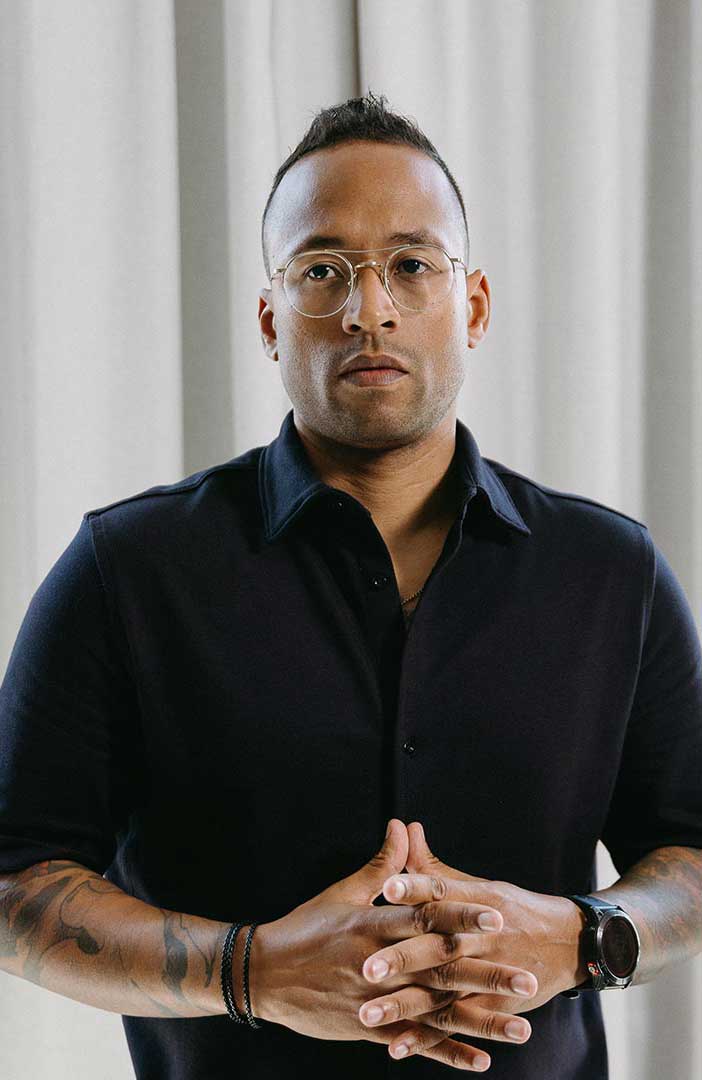

Julian Tillotson is the Founder & CEO of INDIRAP, a full-service video production and creative strategy agency based in Chicago, IL. With 10+ years of experience, INDIRAP has delivered 20,000+ videos to 900+ clients across 40+ industries, making it one of North America's leading digital creative agencies.


.png)
.png)