
Most executives think of their personal brand as a social presence -- LinkedIn posts, maybe some video, a polished profile. That is half the picture. In 2026, an executive personal brand is also a search asset. The founders and CEOs who understand this are building something that generates inbound attention not just from people who already follow them, but from prospective buyers who are actively searching for someone like them on Google, ChatGPT, and AI Overviews -- without knowing your name.
This is what Answer Engine Optimization means for executives. And it is one of the most underused advantages available right now.

AEO stands for Answer Engine Optimization. Where SEO focuses on getting pages to rank in Google's search results, AEO focuses on getting your content pulled directly into AI-generated answers -- the responses ChatGPT, Google's AI Overviews, Gemini, and Perplexity surface when someone asks a question.
In 2025 and 2026, the shift from "search and click" to "ask and receive" accelerated significantly. A growing share of searches now end without a click -- the AI answers the question directly, sometimes citing sources. For executives, this creates a new form of visibility: showing up in AI-generated answers to the questions your prospective buyers are asking. A buyer who asks "who are the best executive video production companies in Chicago" or "how do I find a founder who specializes in B2B content strategy" is looking for someone. The executives who show up in those answers are the ones who structured their content to be findable.
AI answer engines do not rank pages the way Google's traditional algorithm does. They look for structured, specific, authoritative responses to questions. The content they favor is direct -- it answers the question in the first sentence, not the fifth paragraph. It is specific, with named examples, real figures, and concrete context rather than generalities. It is structured with clear headers that signal what each section covers. And it comes from a source that has demonstrated consistent expertise on the topic across multiple pieces of content -- not just one well-optimized page.
For executives, this means the more consistently and specifically you publish about your area of expertise, the stronger the signal you give AI systems that you are a credible, reliable source. That signal compounds: each piece of content you publish in a coherent topical cluster adds authority to every other piece in that cluster.
The most valuable AEO move for an executive is identifying the exact questions prospective buyers search for and writing clear, direct answers to each one. Not content that circles around the question or saves the answer for the conclusion -- content that opens with the answer in the first sentence and then expands on it with context, examples, and nuance.
Practical sources for buyer questions: the questions your sales team hears most often in discovery calls, the "People Also Ask" boxes in Google search results for your category, and the queries your existing clients tell you they searched before finding you. An executive who has answered 20 of these questions clearly and published them as structured content is searchable in a way that an executive with a polished profile and no written content is not.
A structured FAQ section at the end of a long-form article is one of the most reliable ways to get pulled into Google's "People Also Ask" boxes and AI-generated answers. Each question should be written as a complete, specific question -- not a keyword phrase -- and each answer should be 40 to 80 words: substantive enough to be useful, concise enough to be extracted cleanly by an AI system.
Every post in this executive personal branding series includes a structured FAQ section backed by FAQPage JSON-LD schema -- a technical markup layer that tells Google and AI systems explicitly that this section contains structured answers to specific questions. That combination of human-readable content and machine-readable structure is exactly what AI answer engines look for when selecting sources to cite.
Schema markup is code added to a webpage that explicitly tells search engines and AI systems what type of content is on the page. For executives, the highest-priority schema types are FAQPage (on any content with question-and-answer sections), Person (on your about page and professional bio pages), Article (on your published thought leadership content), and LocalBusiness (if you serve a specific geographic market and want local search visibility).
Adding schema is a technical task that most executives do not handle themselves -- but it is also one of the highest-leverage improvements available for search visibility. The executives who add schema to their existing content make that content structurally easier for AI systems to parse and cite, without changing a word of what they have already written.
AI systems favor sources that have demonstrated depth on a topic -- not one well-written article, but a coherent body of work. An executive who has published six interconnected pieces on a specific topic, all cross-linking to each other and to relevant service or portfolio pages, signals topical authority in a way that a single strong post cannot.
This is the strategy behind INDIRAP's content series approach. The brand storytelling series and this executive personal branding series are both designed to establish topical authority across a cluster of related keywords and buyer questions. Each post supports the others. Each one adds a signal. Together, they create the kind of depth that search engines and AI systems associate with genuine expertise from a credible source.
In AI search, being named and cited on authoritative external sites carries significant weight. Guest articles in trade publications, podcast appearances that generate published transcripts, speaking engagements that produce press mentions, and interviews in respected industry outlets -- all of these create external validation that tells AI systems "this executive is recognized by other credible sources as an authority in this area."
The guest post campaign INDIRAP has executed -- placing articles on b2bnn.com, offthemrkt.com, thepinnaclelist.com, and packagingrevolution.net -- is this strategy applied at the organizational level. For individual executives, the equivalent is bylined articles in trade publications your buyers actually read, podcast appearances on shows your buyers actually listen to, and profile mentions in business press your buyers encounter.
LinkedIn content is increasingly indexed and surfaced by AI systems. Posts that use clear, structured language and contain genuinely useful information are being pulled into AI answers alongside traditional web content. This means every substantive LinkedIn post an executive publishes is contributing to a searchable body of work, not just reaching their existing connections.
The same applies to YouTube. YouTube is owned by Google and deeply integrated into AI search results. An executive who publishes consistently on YouTube about topics relevant to their buyers builds organic search visibility that compounds over time. Structuring your social and video content for discoverability -- not just for algorithmic engagement -- is the shift that separates executives who are found by buyers from executives who are only seen by followers.
Your name returns strong, accurate results on the first page of Google. Your LinkedIn profile ranks in the top results for searches on your name. You have published bylined content on at least two external sites with authority scores above 30. Your content has been cited in at least one AI-generated answer. You have FAQ schema on your key content pages. You have a consistent YouTube or video presence that contributes to your search footprint. You publish topically consistent content that covers your area of expertise from multiple angles over time.
If you can check all of these, your executive personal brand is well-positioned for AI-era search. If you can check three or four, you have a clear path forward. If fewer than three apply, there is significant inbound deal flow available from relatively straightforward content and technical investments.
This is Post 6 in INDIRAP's Executive Personal Branding series. Start at the beginning with what executive personal branding is, or explore how executive brand storytelling generates inbound deals.
Watch + Learn
Watch INDIRAP break down how executives get found on Google, ChatGPT, and AI Overviews -- practical tactics for founders and CEOs who want inbound deal flow, not vanity metrics.
▶ Subscribe on YouTube -- watch deep dives on executive personal brand SEO, AEO, and AI search -- how decision-makers find you
▶ Instagram Reels -- see how INDIRAP structures executive content for Google AI Overviews and People Also Ask
▶ YouTube Shorts -- quick breakdowns of AEO tactics that get executives found in AI search results before outreach
AEO stands for Answer Engine Optimization -- structuring content so AI systems like ChatGPT, Google AI Overviews, and Gemini surface it in direct answers to buyer questions. For executives, AEO means publishing clear, structured, question-answering content that signals topical authority to AI systems, generating visibility from prospective buyers who search for expertise rather than searching for your name specifically.
Publish content that directly and specifically answers the questions your prospective buyers are searching. Use structured FAQ sections with 40- to 80-word answers. Add FAQPage and Article schema markup to your key content pages. Build topical authority by publishing consistently on a focused set of topics in a coherent content series. Earn external citations through bylined articles, podcast appearances, and press mentions on authoritative sites.
Yes. LinkedIn posts are indexed by Google and increasingly pulled into AI-generated answers. Structured, specific, well-written LinkedIn content contributes to an executive's searchable body of work. Executives who publish consistently on LinkedIn about a focused area of expertise build search visibility from that content over time -- not just social reach in the moment of publishing.
YouTube is the second-largest search engine in the world and deeply integrated into Google AI search results. An executive who publishes consistently on YouTube about topics relevant to their buyers builds organic search visibility that compounds over time. Video content is increasingly cited in AI Overviews and voice search results, making it one of the highest-leverage formats for executive search-focused personal branding.
The highest-priority schema types for executive personal brands are FAQPage (on any content with structured question-and-answer sections), Person (on about pages and professional bio pages), Article (on published thought leadership and blog content), and LocalBusiness (for executives who serve a specific market and want local search visibility). Schema markup makes existing content structurally easier for AI systems to parse and cite without changing the content itself.
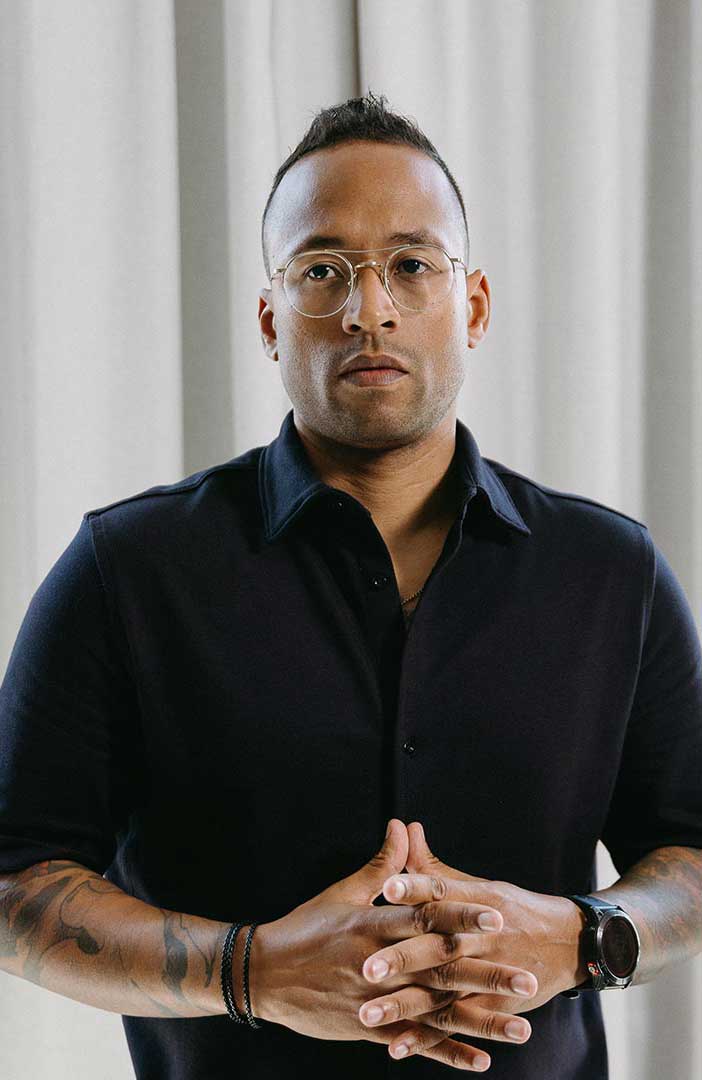

Julian Tillotson is the Founder & CEO of INDIRAP, a full-service video production and creative strategy agency based in Chicago, IL. With 10+ years of experience, INDIRAP has delivered 20,000+ videos to 900+ clients across 40+ industries, making it one of North America's leading digital creative agencies.


.png)
.png)