A paid media strategy is a written plan that connects ad spend to revenue: it defines who you are targeting, which channels you will use, how much you will spend, what creative you will run, and how you will measure results. Building one in 2026 means leaning on AI for targeting and bidding while keeping tight control over the parts AI cannot do for you: goals, audience definition, budget discipline, and creative.
The channel landscape has changed faster than most marketing plans have kept up with. Google Performance Max and AI Max for Search now handle much of the bidding, placement, and keyword matching that media buyers used to manage by hand. Meta's Advantage+ campaigns do something similar across Facebook and Instagram. That shift does not make strategy less important. It makes it more important, because the parts of the plan that AI cannot automate (what you are trying to achieve, who you are trying to reach, and what you show them) are now where most of the competitive advantage lives.
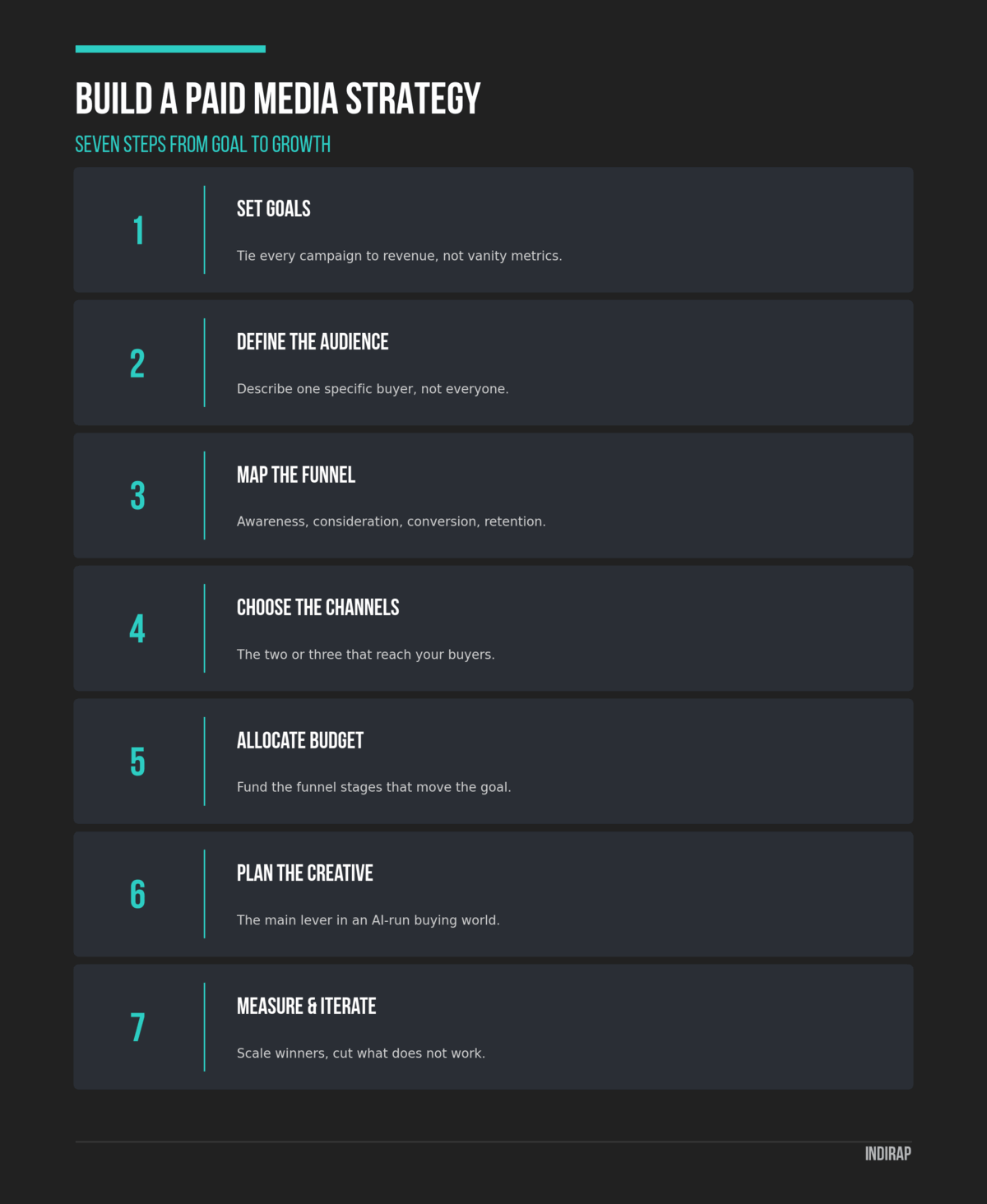
This guide walks through the eight steps of building a paid media plan for 2026, in order, with the reasoning behind each one.
A paid media strategy is the plan that ties every dollar of ad spend to a business outcome. It includes your goals, your target audience, your funnel stages, your channel mix, your budget allocation, your creative approach, and your measurement framework. Without it, paid media becomes a collection of disconnected campaigns instead of a system that compounds over time.
Teams that skip the strategy step tend to chase whatever channel or tactic is trending that quarter. Teams that build the strategy first tend to make steadier, more defensible decisions, because every choice traces back to a goal.
Start with the business outcome, not the marketing metric. "Increase brand awareness" is a starting point, but it is not a goal you can build a media plan around. A goal like "generate 150 qualified leads per month at a cost per lead under $120, supporting $40,000 in new monthly revenue" gives you something to plan against.
Work backward from revenue. Ask what the average deal or order size is, what percentage of leads convert to customers, and what percentage of clicks convert to leads. That math tells you how many leads you need, which tells you how many clicks you need, which tells you roughly how much budget you need. This is the foundation the rest of the strategy sits on.
Different goals call for different structures. A demand generation goal (filling the top of the funnel) looks different from a demand capture goal (winning people who are already searching). Most paid media plans in 2026 need both, and step 3 covers how to balance them.
"Business owners" is not an audience. "Owners of home services businesses with 10 to 50 employees who are frustrated with inconsistent lead flow from referrals" is an audience. The more specific the definition, the easier every downstream decision becomes, from channel selection to creative concepts.
Build the audience definition from a few inputs:
Because privacy changes have reduced how much a platform can infer about an individual, first-party data (your own CRM, your email list, your customer records) has become one of the most reliable ways to build and refine audiences. Feeding accurate first-party signals back into ad platforms tends to improve targeting more than manual audience settings alone.
A paid media plan works best when it accounts for every stage of the buyer journey, not just the moment someone is ready to buy.
Mapping the funnel prevents a common mistake: spending the entire budget chasing bottom-funnel conversions while starving the awareness stage that feeds the funnel in the first place. A healthy plan invests at every stage, even if the ratios shift based on the goal from step 1.
Channel choice should follow the audience and funnel map, not the other way around. A few starting principles:
Most paid media plans in 2026 use two to four channels rather than spreading thin across everything available. A tighter mix gives the algorithms on each platform enough volume and signal to optimize well, which is where AI Max, Performance Max, and Advantage+ perform best. Layering in too many small channels tends to starve each one of the data it needs.
For a full breakdown of channel strengths and how to weigh them, see Best Paid Advertising Platforms.
Budget allocation should map directly to the funnel stages from step 3. A reasonable starting split for a business balancing growth and efficiency looks like:
These ratios shift based on business maturity. A newer brand with little recognition should weight more heavily toward awareness. An established brand with strong demand already flowing in should weight more toward conversion and retention.
Budget should also account for testing. Setting aside 10 to 15 percent of spend for new creative, new audiences, or new placements keeps the plan from stagnating and gives you the data needed for step 8. For a deeper look at what realistic budgets look like across channels and business sizes, see How Much Does Paid Advertising Cost?.
Creative is the biggest lever advertisers still control directly. As AI systems take on more of the targeting, bidding, and placement decisions, the message and the format you put in front of people is where strategy and craft still make the difference between a campaign that performs and one that does not.
A few patterns are consistently working across platforms in 2026:
Because targeting has become more automated and more privacy-conscious, the creative itself now carries more of the signal that used to come from granular audience settings. A message that resonates enough to earn a click, a comment, or a completed view teaches the algorithm who to show it to next. That makes creative production a strategic input, not just an execution detail.
For a closer look at what strong ad creative looks like in practice, see Best Ad Creative.
A paid media plan is only as good as the ability to measure whether it is working. Build the measurement framework before campaigns launch, not after.
Set KPIs at each funnel stage, not just at the bottom:
Tie every KPI back to the revenue goal from step 1. A strong click-through rate means little if it never turns into a lead or a sale. Set up conversion tracking, connect ad platforms to a CRM where possible, and review first-party conversion data regularly, since it tends to be more reliable than platform-reported numbers alone in a privacy-conscious environment.
No paid media plan is finished at launch. Build a regular cadence for reviewing performance and testing new variables:
Paid media and organic content perform best as a connected system rather than two separate efforts. Organic content (blog posts, social posts, SEO-optimized pages) builds authority and trust over time, and paid media can accelerate the reach of that content while it earns organic traction. Search campaigns often work best when paid and organic listings appear together, since a strong organic presence adds credibility to a paid click.
Content built for organic reach can also become creative for paid campaigns. A well-performing organic video or post often makes a strong paid ad, since it has already proven it resonates with the audience. Running paid support behind proven organic content is frequently more efficient than starting a paid concept from nothing.
First-party data collected through both channels (site visitors, email subscribers, CRM contacts) strengthens both channels. Audiences built from organic traffic can feed paid retargeting, and paid campaigns can drive traffic that builds the organic audience for retention efforts.
A paid media strategy is a written plan connecting ad spend to business goals. It defines your target audience, funnel stages, channel mix, budget allocation, creative approach, and measurement framework, so every dollar spent traces back to a revenue outcome.
Budget depends on the goal, the industry, and the channel mix, and it varies widely from a few thousand dollars a month for a local business to six figures a month for a national brand. A useful starting point is working backward from the number of leads or sales needed to hit a revenue target, then calculating the spend required to generate that volume at a realistic cost per result. See How Much Does Paid Advertising Cost? for detailed benchmarks.
Start with the channel that matches where your audience already has intent. Search tends to work well for capturing people actively looking for a solution, while social platforms work well for building awareness and reaching people earlier in the funnel. Most effective plans use two to four channels rather than spreading a budget thin across many.
AI now runs much of the targeting, bidding, and placement through tools like Google Performance Max, AI Max for Search, and Meta Advantage+. That shifts the strategic focus toward the inputs AI cannot generate on its own: clear goals, a specific audience definition, sound budget allocation, and strong creative, since creative has become the primary lever advertisers still control directly.
Review creative performance weekly, review budget allocation and channel mix monthly, and revisit the full strategy, including goals and audience definition, at least once a quarter. Faster-moving businesses or newer campaigns often benefit from a tighter review cadence in the first few months.
No. The steps in this guide (setting goals, defining an audience, mapping the funnel, and building strong creative) apply at any budget level. Smaller budgets simply call for a tighter channel focus and a higher bar for creative quality, since there is less room to spread spend across tests.
Keep reading: Paid Advertising: The Complete 2026 Guide · Best Paid Advertising Platforms · Best Ad Creative · How Much Does Paid Advertising Cost?
Work with us: Video Production · Content Strategy · Content Kit · Book a strategy call
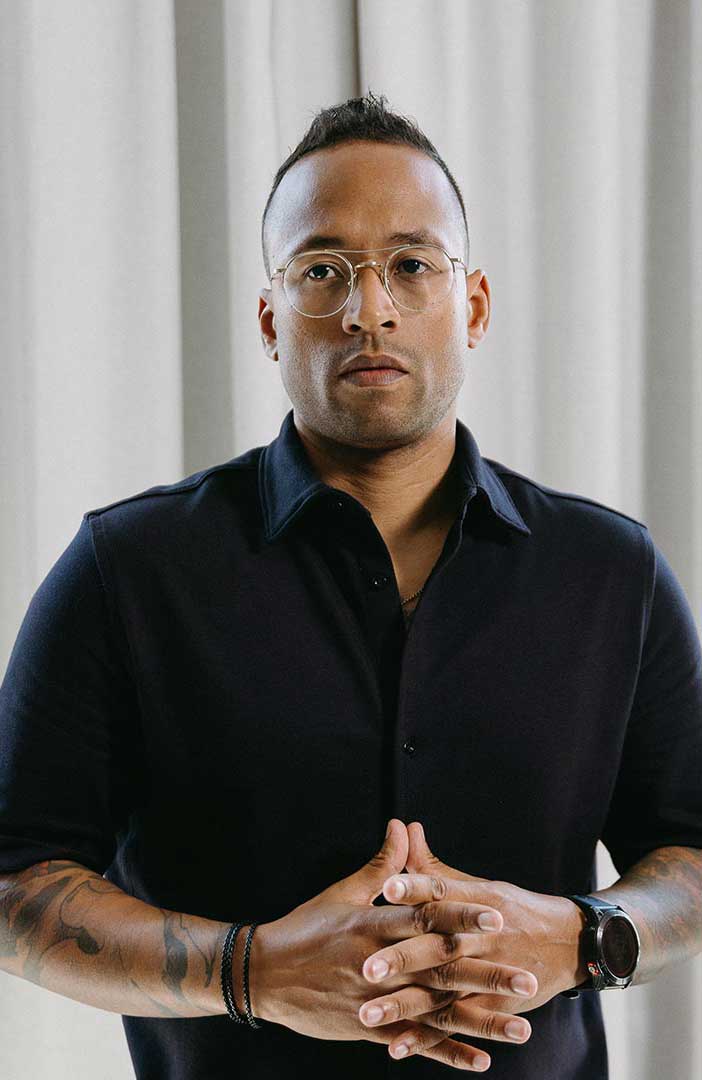

Julian Tillotson is the Founder & CEO of INDIRAP, a full-service video production and creative strategy agency based in Chicago, IL. With 10+ years of experience, INDIRAP has delivered 20,000+ videos to 900+ clients across 40+ industries, making it one of North America's leading digital creative agencies.


.png)
.png)