The best paid advertising platforms in 2026 are Google Ads, Meta (Facebook and Instagram), LinkedIn, YouTube, and Microsoft Advertising, with Amazon and other retail media networks, programmatic display, Pinterest, and Reddit rounding out the list for specific goals. No single platform is "best" for every business. The right answer depends on your goal, your audience, and your budget, which is exactly what this guide walks through.
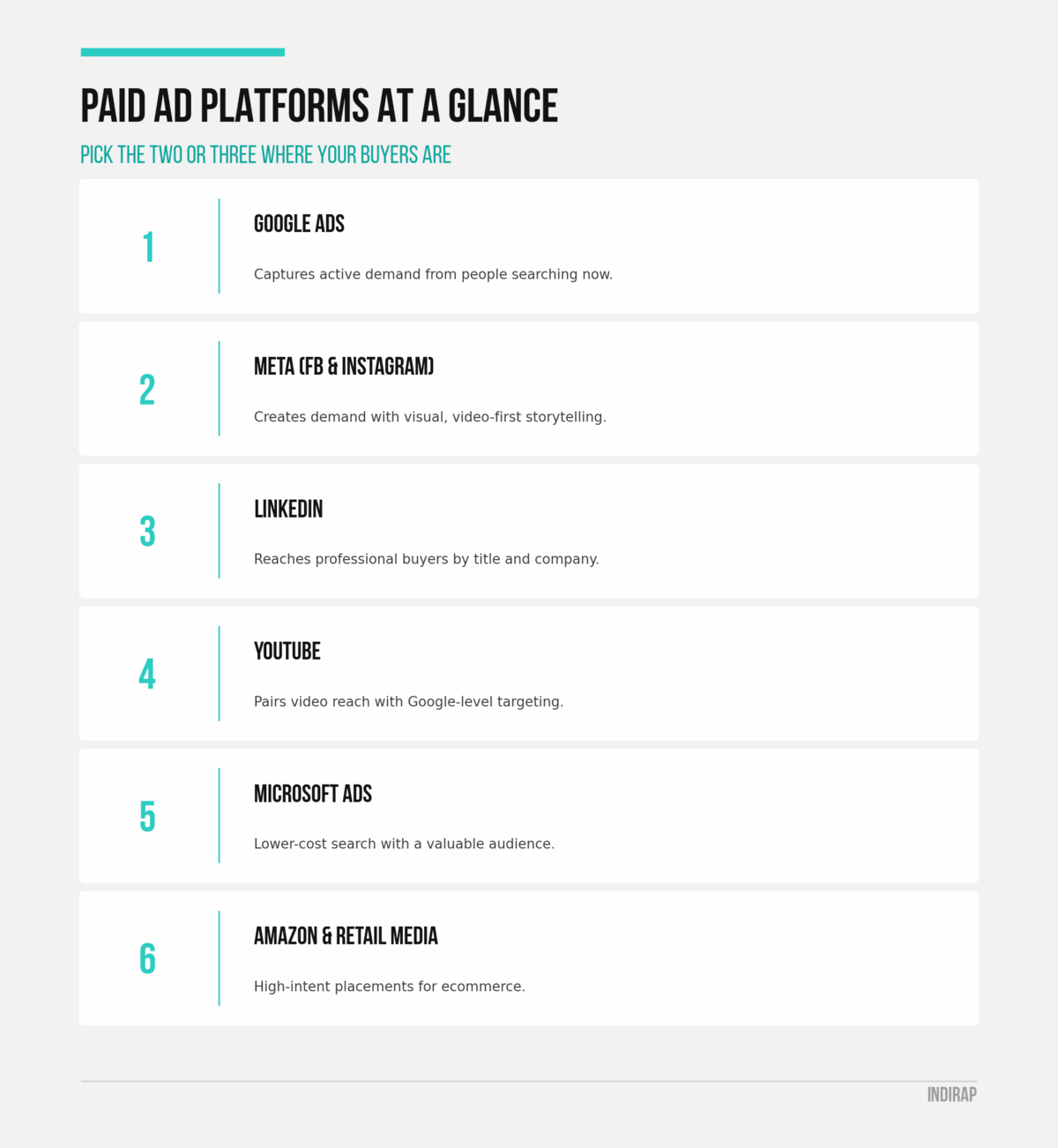
A platform earns a spot in your media mix when it reaches your actual buyers, matches your budget's intent level, and gives its AI systems enough signal to optimize well. In 2026, nearly every major platform runs on some form of automated bidding and placement, so the "best" platform is really the one where your audience already spends time and where your creative can shine. Cost, competition, and campaign objective all shift the answer, which is why most advertisers run two or three platforms rather than one.
Google Ads is best for capturing demand from people who are already searching, comparing, or ready to buy. It suits nearly any business with a clear product or service and a defined service area, from local contractors to national SaaS companies. Cost per click varies widely by industry, but intent tends to run higher here than on social platforms because people are actively typing what they want.
Two shifts define Google Ads in 2026. First, AI Max for Search has replaced Dynamic Search Ads, using AI to expand match types, headlines, and landing page targeting from a single set of inputs. Second, Performance Max (PMax) now pulls in Search, Display, YouTube, Gmail, and Maps inventory from one campaign, letting Google's AI decide where a given impression performs best. For advertisers, this means less manual placement control and more emphasis on feeding the system strong creative assets, clear conversion signals, and accurate audience data.
Meta is best for reaching broad consumer audiences with scroll-stopping video and building demand people did not know they had. It suits e-commerce brands, local services, consumer apps, and any business that can produce authentic, native-feeling video content. Cost per result tends to be moderate, and intent is lower than search because you are interrupting a feed rather than answering a query, though retargeting and lookalike audiences narrow that gap quickly.
Meta's Advantage+ suite now handles targeting, budget allocation, and even creative variation testing automatically across Facebook and Instagram placements. That shift moves the advertiser's real job from picking interests and demographics to supplying a strong library of creative. Short-form vertical video with a hook in the first three seconds performs best, and since most social video is watched with the sound off, on-screen captions and visual storytelling carry the message.
LinkedIn is best for reaching business decision-makers by job title, company size, industry, or seniority, which makes it the strongest platform for B2B lead generation and account-based marketing. It suits companies selling software, professional services, consulting, or anything with a longer sales cycle and a higher deal value. Cost per click runs higher than most other platforms, but the precision of professional targeting often justifies the premium when the buyer pool is narrow and well defined.
LinkedIn works best as a complement to Google Ads rather than a replacement, since search still captures active buying intent while LinkedIn builds awareness and nurtures the specific audience you are trying to reach. For a deeper breakdown of budgets, formats, and targeting tactics built specifically for B2B, see the B2B Paid Advertising guide.
YouTube is best for building brand awareness at scale with video, and for retargeting viewers who have already watched your content. It suits any business with strong video assets, since YouTube ads run through the Google Ads platform and can tap the same search and audience data that powers Search and Display campaigns. Cost per view is generally low, and while top-of-funnel YouTube intent starts broad, in-market and custom audience targeting can sharpen it considerably.
Skippable in-stream ads, non-skippable bumpers, and in-feed placements each serve a different goal, from awareness to consideration to direct response. Because YouTube inventory now flows through Performance Max as well as standalone Video campaigns, advertisers get the most value by producing several video lengths and formats rather than a single 30-second spot repurposed everywhere.
Microsoft Advertising is best for capturing additional search volume at a lower cost per click than Google, particularly from an older, higher-income demographic that skews toward desktop use at work. It suits B2B companies, financial services, and any advertiser already running Google Ads who wants incremental reach without a heavy lift, since campaigns can often be imported directly from an existing Google Ads account. Competition is lighter here, which tends to translate into a lower cost per acquisition for the same keywords.
Microsoft has followed the same AI-driven playbook as Google, layering automated bidding and Copilot-assisted campaign creation on top of traditional search and audience network placements. For most advertisers, Microsoft plays a supporting role rather than an anchor platform, adding efficient reach once the primary channels are performing well.
Amazon and retail media networks are best for reaching shoppers at the exact moment of purchase decision, which makes them a strong fit for consumer packaged goods, retail brands, and any product sold directly through a retailer's marketplace. They suit businesses with existing retail distribution more than pure service businesses, since the ad experience is built around product listings and purchase pages. Intent here is the highest of any channel on this list, because the shopper already has a credit card in hand, though costs can climb quickly in competitive categories.
Retail media has expanded well beyond Amazon, with major grocery, home improvement, and big-box retailers now running their own ad networks using first-party purchase data. For brands that sell through these retailers, that data offers targeting precision that is difficult to match anywhere else.
Programmatic display is best for retargeting website visitors and building broad brand awareness across the open web at a low cost per impression. It suits advertisers who already have healthy traffic to retarget, or who want to extend reach beyond the walled gardens of search and social. Cost per impression is typically the lowest of any channel here, but so is intent, which means programmatic performs best as a supporting layer rather than a primary demand driver.
Native advertising, which blends ad units into the look and feel of the surrounding content, tends to outperform traditional banner display in both attention and click-through rate. Both formats increasingly rely on AI-driven real-time bidding, so the advertiser's main lever, once again, comes down to the creative assets and audience segments fed into the system.
Pinterest is best for reaching people in a planning or discovery mindset, which makes it a strong fit for home goods, fashion, food, weddings, and other visually driven categories with longer purchase timelines. Reddit is best for reaching highly engaged niche communities and works well for brands with a specific, well-defined audience that gathers around particular interests or topics. Both platforms suit advertisers who have already established their core channels and are looking for situational, incremental reach rather than a primary growth engine.
Costs on both platforms tend to run lower than the major players, and competition is lighter, which can make them efficient testing grounds for new creative before scaling a winning concept elsewhere.
AI now runs the mechanics of buying media across nearly every major platform, handling targeting, bidding, and placement decisions in real time. Google's Performance Max and AI Max for Search, along with Meta's Advantage+, have shifted the advertiser's job away from manual audience building and toward supplying the system with strong signals: clean conversion data, well-organized product feeds, and a deep library of creative variations.
Because the AI layer increasingly determines where and to whom an ad shows, creative has become the primary lever advertisers still control directly. Short-form vertical video, authentic and creator-style content, a hook in the first three seconds, and captions built for sound-off viewing now separate winning campaigns from average ones, regardless of which platform is running them. Platform selection still matters, but creative quality has become the bigger differentiator inside each platform.
Start with the goal. Demand capture (someone actively searching) points toward Google Ads and Microsoft Advertising. Demand generation (introducing your brand to people who are not yet looking) points toward Meta, YouTube, Pinterest, or Reddit. Purchase-moment targeting points toward Amazon and retail media. Business decision-maker targeting points toward LinkedIn.
Next, match the platform to where your audience actually spends attention. A consumer brand selling visually driven products will likely lean on Meta, Pinterest, and YouTube. A B2B software company will likely lean on LinkedIn and Google Ads. A local service business will likely lean on Google Ads and Meta, with Microsoft Advertising layered in for incremental reach.
Finally, size the budget to the platform's minimum effective spend. Search and shopping platforms need enough budget to gather conversion data for the AI to optimize against, typically a steady daily spend sustained over several weeks. Social platforms need enough budget to test multiple creative variations before Advantage+ or similar tools can identify winners. Spreading a modest budget across five or six platforms usually starves every one of them of the signal they need to perform, which is why focus beats breadth.
Concentrating budget across two or three platforms gives each one enough volume to optimize properly, gives your team enough bandwidth to produce platform-specific creative well, and gives you clean enough data to know what is actually working. A common, effective starting combination pairs one demand-capture platform (Google Ads or Microsoft Advertising) with one demand-generation platform (Meta or YouTube), then adds a third channel, such as LinkedIn for B2B or retail media for e-commerce, once the first two are proven out.
Expanding to a fourth or fifth platform makes sense once budget, creative capacity, and measurement are all solid, not before. A pillar overview of paid advertising strategy covers how to sequence that growth in more detail, and a side-by-side comparison of Google Ads and Facebook Ads is a useful next read for anyone choosing between the two most common starting points. Businesses building a social-first strategy across Meta, Pinterest, and Reddit will also want the Paid Social Advertising Playbook for platform-specific creative guidance.
For most small businesses, Google Ads and Meta together cover the two biggest needs: capturing people already searching for what you offer and building awareness with people who are not searching yet. Local service businesses often see the fastest results from Google Ads alone before adding Meta for broader reach.
Microsoft Advertising and Pinterest generally offer lower costs per click than Google Ads or LinkedIn, largely because of lighter competition for the same audiences. Actual costs vary significantly by industry and keyword, so the lowest-cost platform is not always the most cost-effective once conversion rates are factored in.
LinkedIn's cost per click runs higher than most platforms, but its precision in reaching specific job titles, industries, and company sizes often makes it worth the premium for B2B companies with a higher average deal value. It performs best alongside Google Ads rather than as a standalone channel.
Two or three platforms is the sweet spot for most companies, since it provides enough volume for each platform's AI systems to optimize while keeping creative production and budget management manageable. Running five or more platforms with a limited budget typically dilutes results across all of them.
Yes, and arguably more than ever. AI systems handle targeting and bidding, but they still depend on the creative assets and audience signals an advertiser provides, which means strong, varied video and image creative has become the main differentiator between campaigns that succeed and campaigns that stall.
Brands with existing distribution on Amazon or another retailer typically see the fastest return from retail media, since shopper intent is highest at the point of purchase. Brands building their own direct-to-consumer audience often see stronger long-term value starting with Meta, then layering in retail media as distribution grows.
Keep reading: Paid Advertising: The Complete 2026 Guide · Google Ads vs Facebook Ads · Paid Social Advertising Playbook · B2B Paid Advertising
Work with us: Video Production · Content Strategy · Content Kit · Book a strategy call
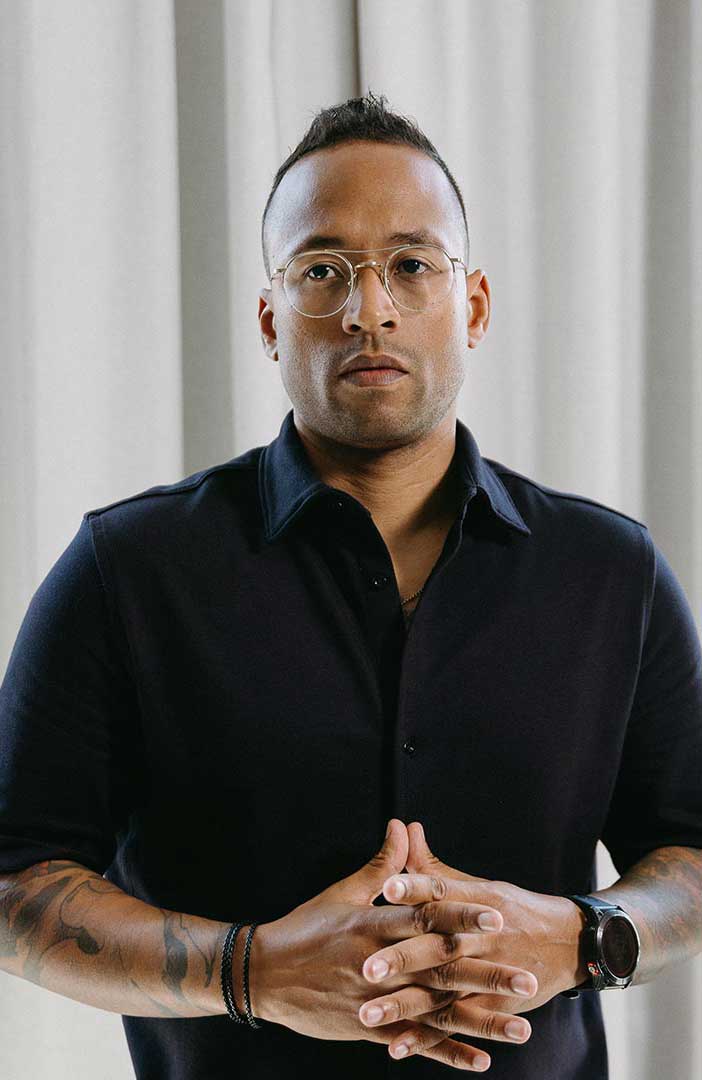

Julian Tillotson is the Founder & CEO of INDIRAP, a full-service video production and creative strategy agency based in Chicago, IL. With 10+ years of experience, INDIRAP has delivered 20,000+ videos to 900+ clients across 40+ industries, making it one of North America's leading digital creative agencies.


.png)
.png)