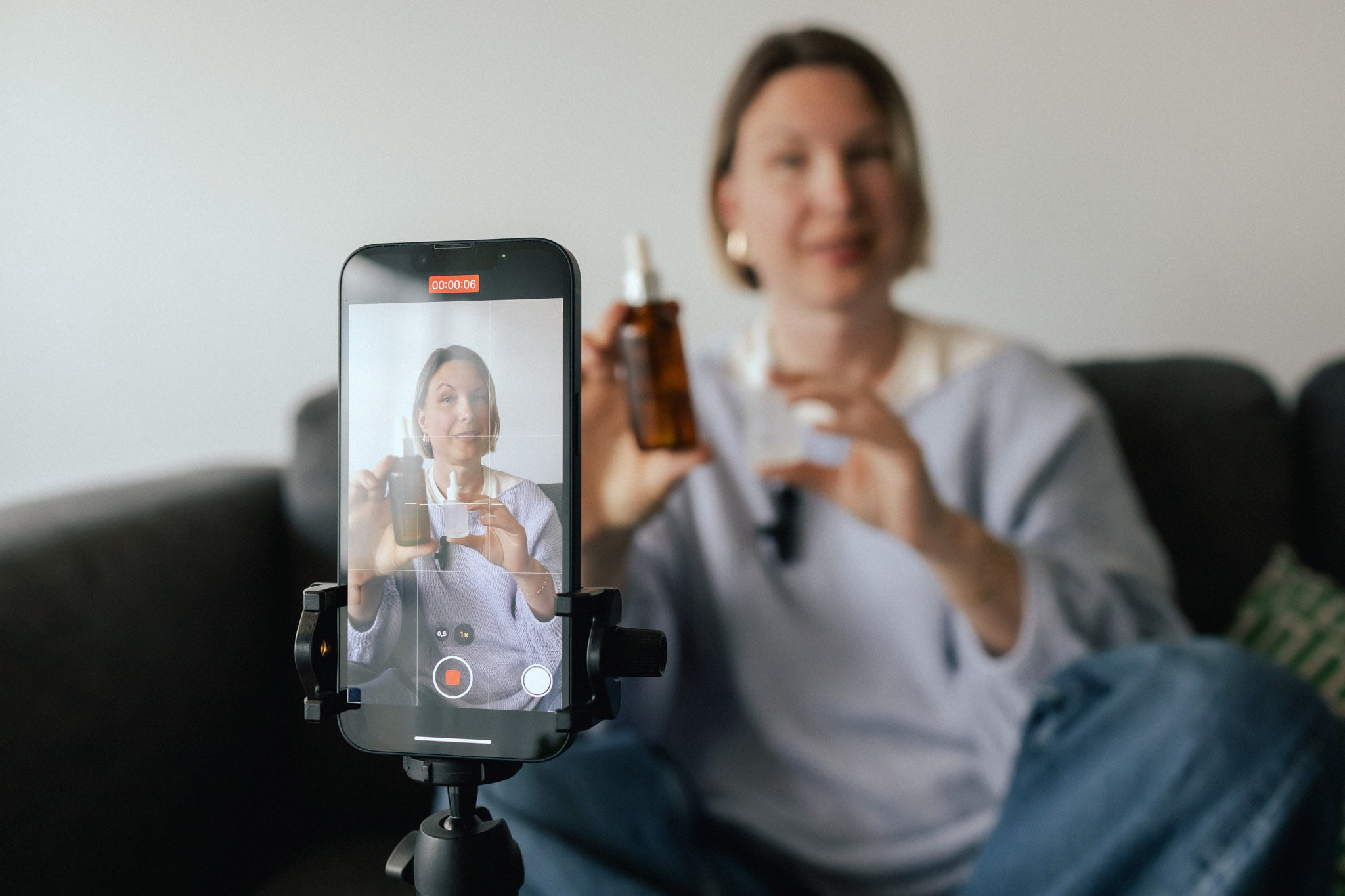
Video for social media follows a different set of rules than video made for a website or a TV screen. The frame is vertical, the sound is usually off, the first two seconds do most of the work, and every platform has its own quirks. Get the specs and best practices right and your video looks native and performs. Get them wrong and even great footage feels reformatted. This guide is the practical reference: the specs that matter, the formats that perform, and the best practices that separate video that gets watched from video that gets scrolled past.
It is the same reference we work from as a full-service video production company, and it supports our social media video service.
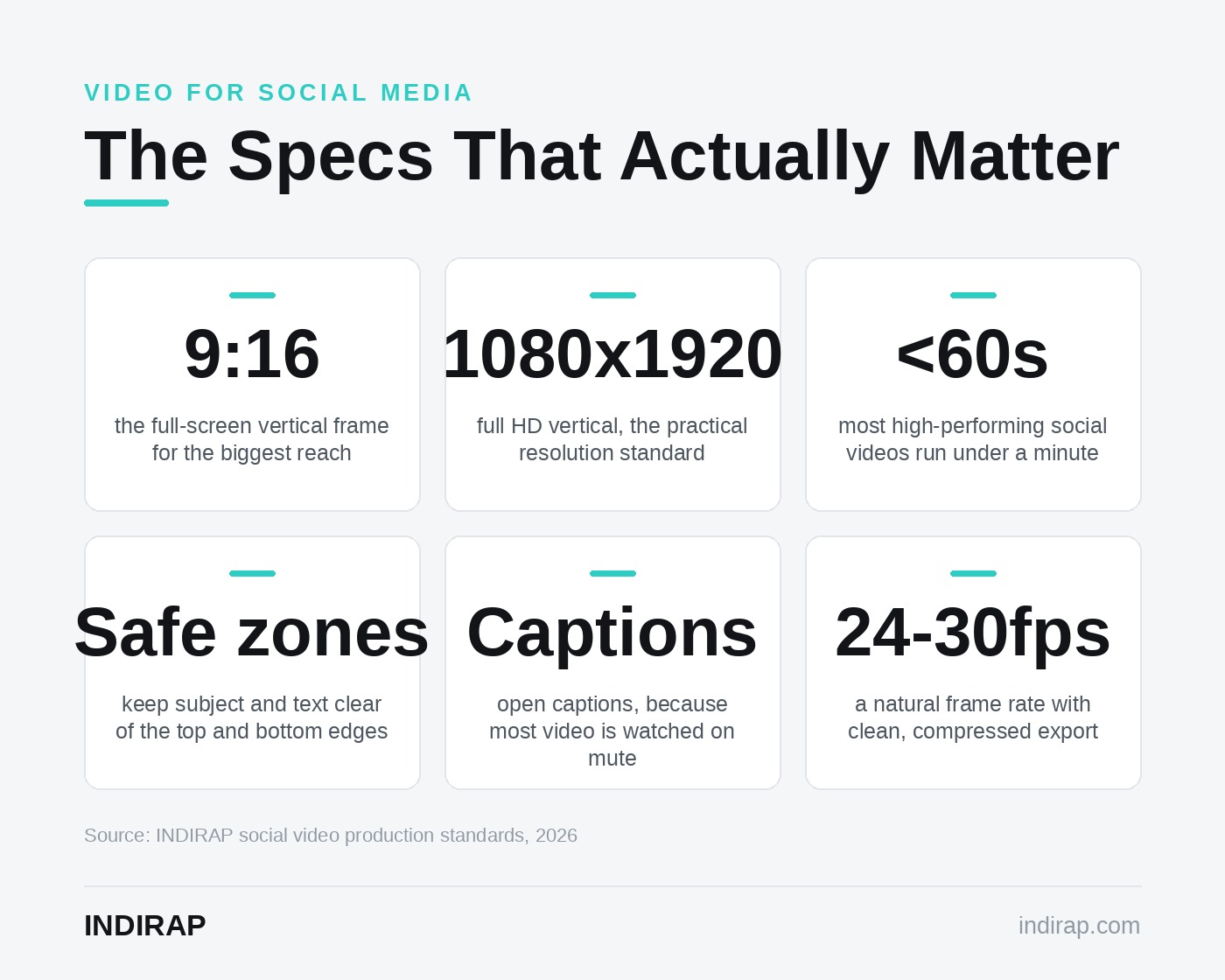
You do not need to memorize every guideline, but a handful of numbers carry most of the weight.
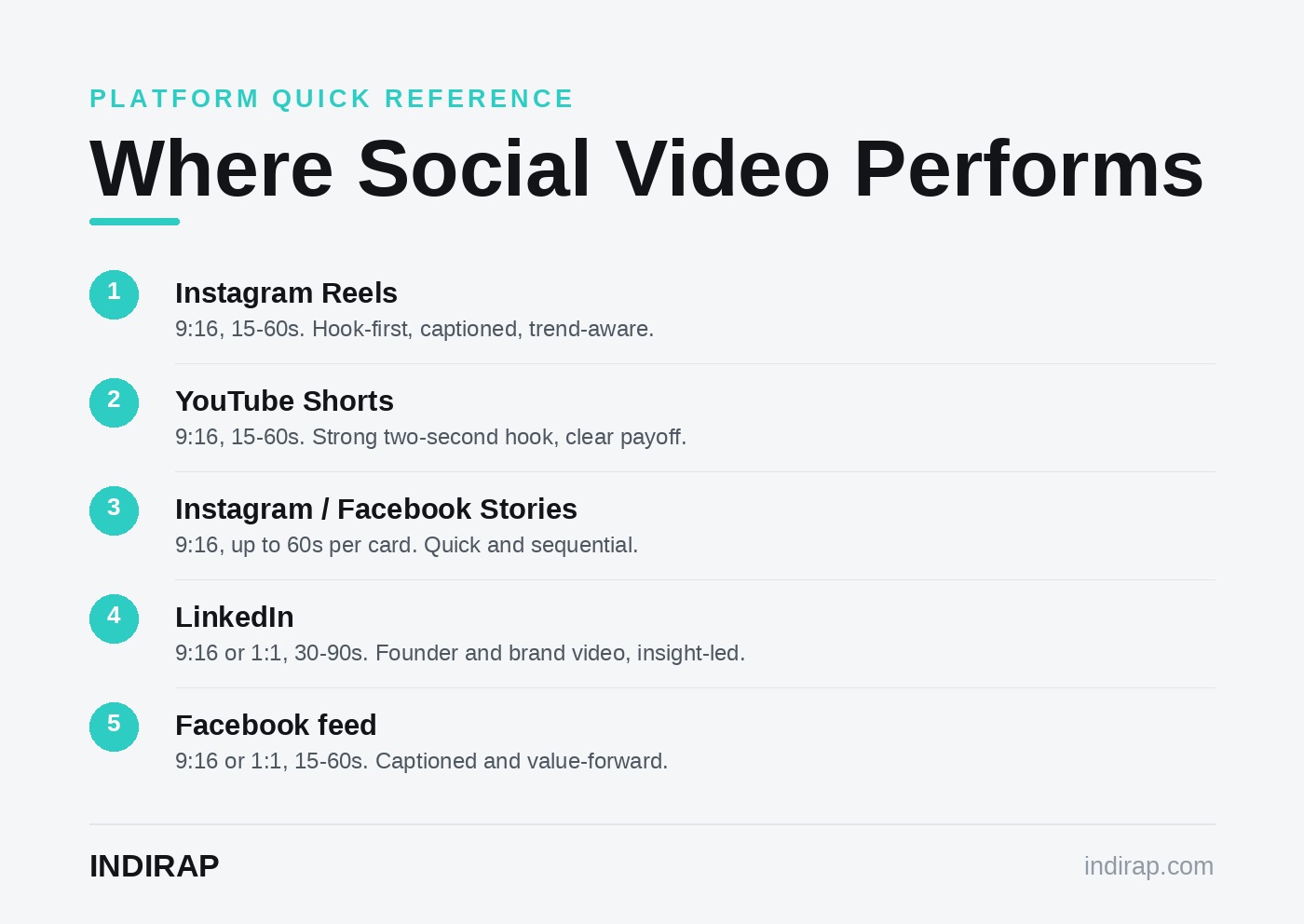
| Platform | Best aspect ratio | Sweet-spot length | What performs |
|---|---|---|---|
| Instagram Reels | 9:16 | 15 to 60 seconds | Hook-first, captioned, trend-aware |
| YouTube Shorts | 9:16 | 15 to 60 seconds | Strong two-second hook, clear payoff |
| Instagram / Facebook Stories | 9:16 | up to 60 seconds per card | Quick, sequential, casual |
| 9:16 or 1:1 | 30 to 90 seconds | Founder and brand video, insight-led | |
| Facebook feed | 9:16 or 1:1 | 15 to 60 seconds | Captioned, value-forward |
The details shift over time, but the constants hold: vertical frame, centered content, captions, and a hook up front.
Specs are the container. Formats are what you put in it. The types that carry most brand programs are hook-first brand clips for reach, product demos and explainers for consideration, founder and customer stories for trust, and UGC-style ads for conversion. Most of these are short and vertical at heart, which is why short-form video production and social video are so closely linked. A healthy presence runs a mix rather than betting on one format.
A handful of habits reliably improve results across every platform.
Lead with the hook. The first two seconds decide whether the rest gets seen. Open with motion, a claim, or the viewer's problem.
Design for silent viewing. Caption everything and make the story clear on mute, then reward the people who turn sound on.
Compose for the center. Because the edges carry interface, place your subject and text in the central band.
Cut with pace. Change the shot or angle every few seconds and cut on the beat. Movement holds attention.
Match the platform. The same core idea can become a Reel, a Short, a Story, and a LinkedIn video, each shaped for its home rather than posted identically everywhere.
Optimize for discovery. Titles, descriptions, captions, and thumbnails all help a video get found. Our guide to video SEO best practices goes deeper.
A few habits quietly hold brands back, and each has a simple fix.
Posting landscape video into a vertical feed leaves black bars and shrinks your presence, so shoot or reframe for 9:16. Skipping captions loses the majority who watch on mute, so caption every video. Burying the point past the first few seconds loses the swipe, so front-load the hook. Posting the same file everywhere ignores each platform's rhythm, so tailor the cut. And posting once and disappearing kills momentum, so commit to a steady cadence. None of these fixes are expensive. They are decisions.
Getting one video right is straightforward. Getting dozens right, consistently, is the real challenge, and it is a supply problem more than a creative one. The brands that keep up capture content in batches, then apply these specs and best practices in the edit to produce many finished videos from a single shoot.
That is the idea behind the INDIRAP Content Kit: one to three production days that yield a full library of platform-ready social video, correctly specced and formatted for each channel, so your feed stays active for months. It is how brands across industries, from financial and wealth management to manufacturing, keep a consistent, correctly built presence. For brand-anchor pieces, our corporate and brand video team leads the way.
Video for social media rewards the brands that respect the medium: a vertical 9:16 frame, centered content, open captions, a strong hook, tight pacing, and a cut tailored to each platform. Get the specs and best practices right, run a mix of formats, and produce it consistently, and your video will look native and perform.
If you want that done right and done consistently, get a free content review and we will map where social video can drive the most growth for your brand.
A 9:16 vertical frame at 1080 x 1920 pixels is the default for the feeds that drive the most reach, with square (1:1) useful in some feeds and landscape reserved for narrow cases. Keep content centered and captioned regardless of platform.
Both favor a 9:16 vertical frame at 1080 x 1920 pixels, typically 15 to 60 seconds, with a strong hook in the first two seconds and open captions. Keep key content away from the edges where the interface sits.
Most high-performing social videos run well under a minute. Pace matters as much as length, so lead with a hook and cut anything that does not earn its place.
Yes. Most social video is watched on mute, so open captions carry the message for the majority of viewers and improve completion. Design the story to read clearly with the sound off.
You can start from the same core idea, but the strongest results come from tailoring each cut to its platform's rhythm and length rather than posting one identical file everywhere.
By capturing content in batches and editing it into platform-ready cuts. A single planned production day can produce many correctly specced videos, which keeps every channel active without a weekly shoot.


Julian Tillotson is the Founder & CEO of INDIRAP, a full-service video production and creative strategy agency based in Chicago, IL. With 10+ years of experience, INDIRAP has delivered 20,000+ videos to 900+ clients across 40+ industries, making it one of North America's leading digital creative agencies.


.png)
.png)