Vertical video went from an accident to the default. A decade ago, holding your phone upright to film was the mark of an amateur. Today it is how nearly everyone watches, and the platforms that own attention are built around it. When your brand designs for the vertical frame on purpose, you meet your audience exactly where their attention already is, and you win the feed from competitors who are still cropping landscape clips and hoping for the best.
This guide covers what vertical video actually is, the specs that matter, why the 9:16 frame outperforms in social feeds, where it fits across a brand's content mix, and how to produce it well. It is the practical version, the same approach we use when we produce social-first video as a full-service video production company.
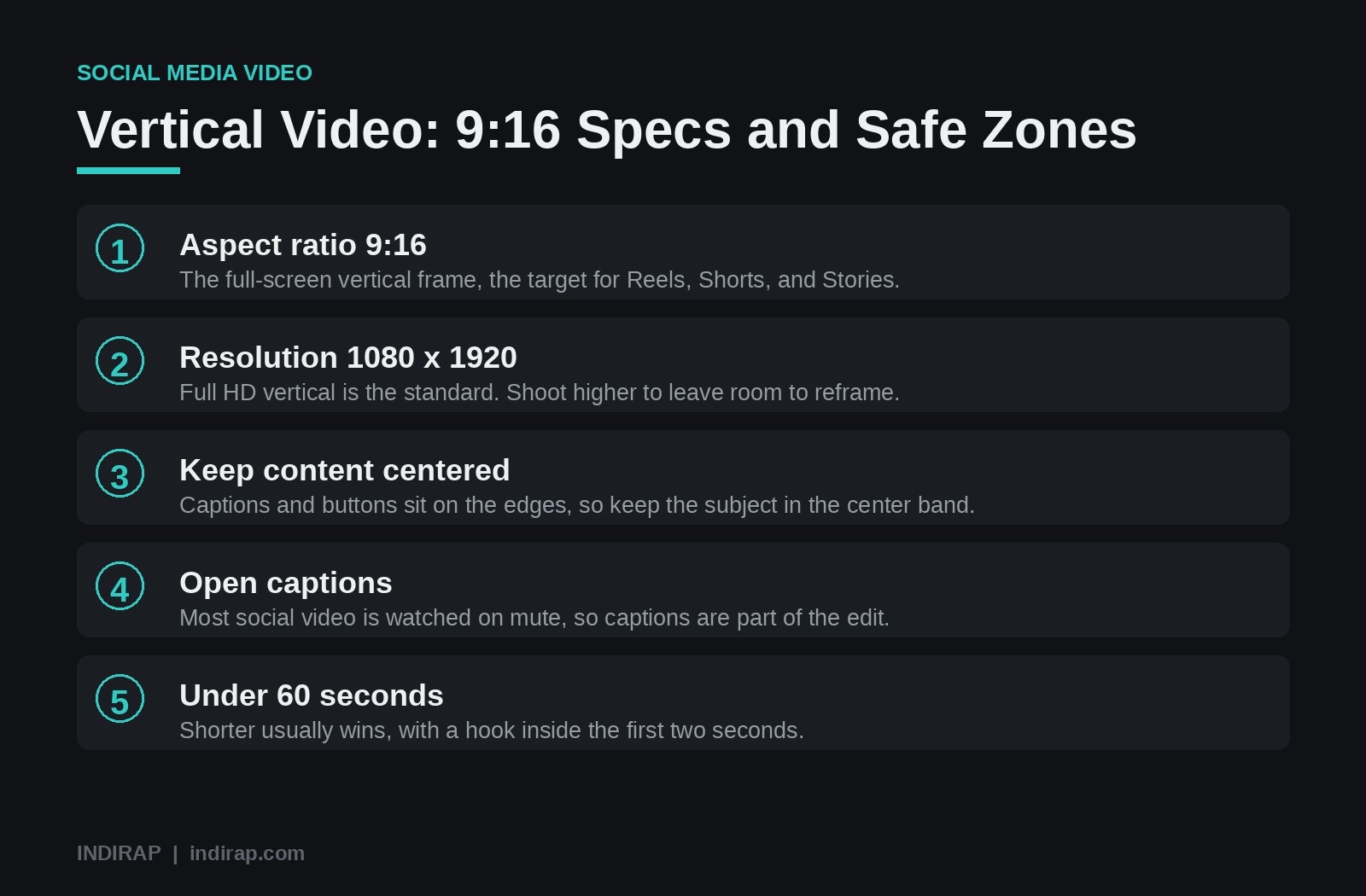
Vertical video is video shot and framed for a portrait orientation, taller than it is wide, to match how people hold their phones. The standard aspect ratio is 9:16, a full-screen vertical frame that fills a mobile display edge to edge.
That full-screen quality is the whole point. A vertical video occupies the entire phone with no black bars and no competing thumbnails, which means it commands the viewer's attention in a way a small landscape player never can. It is the native language of Instagram Reels, YouTube Shorts, Stories, and the vertical feeds inside nearly every major app, and it is the format most of your audience now watches by default.
It helps to separate two ideas that often get blurred. Vertical is the orientation, the shape of the frame. Short-form is the length. Most high-performing social video is both at once, but they are different choices, and understanding vertical as a framing decision is what lets you produce it deliberately rather than by accident.
You do not need to memorize every platform's guidelines, but a handful of numbers are worth knowing because they are the difference between video that looks native and video that looks reformatted.
| Platform | Aspect ratio | Sweet-spot length | Note |
|---|---|---|---|
| Instagram Reels | 9:16 | 15 to 60 seconds | Keep text clear of the right-side and bottom UI |
| YouTube Shorts | 9:16 | 15 to 60 seconds | Strong hook in the first two seconds holds the swipe |
| Instagram / Facebook Stories | 9:16 | up to 60 seconds per card | Built for quick, sequential storytelling |
| 9:16 or 1:1 | 30 to 90 seconds | Founder and brand video performs well in a professional feed |
The specifics shift over time, but the constant is simple: design for a full-screen vertical frame, keep the important content centered and captioned, and lead with a hook.
The case for vertical is not aesthetic preference, it is performance, and it rests on three things.
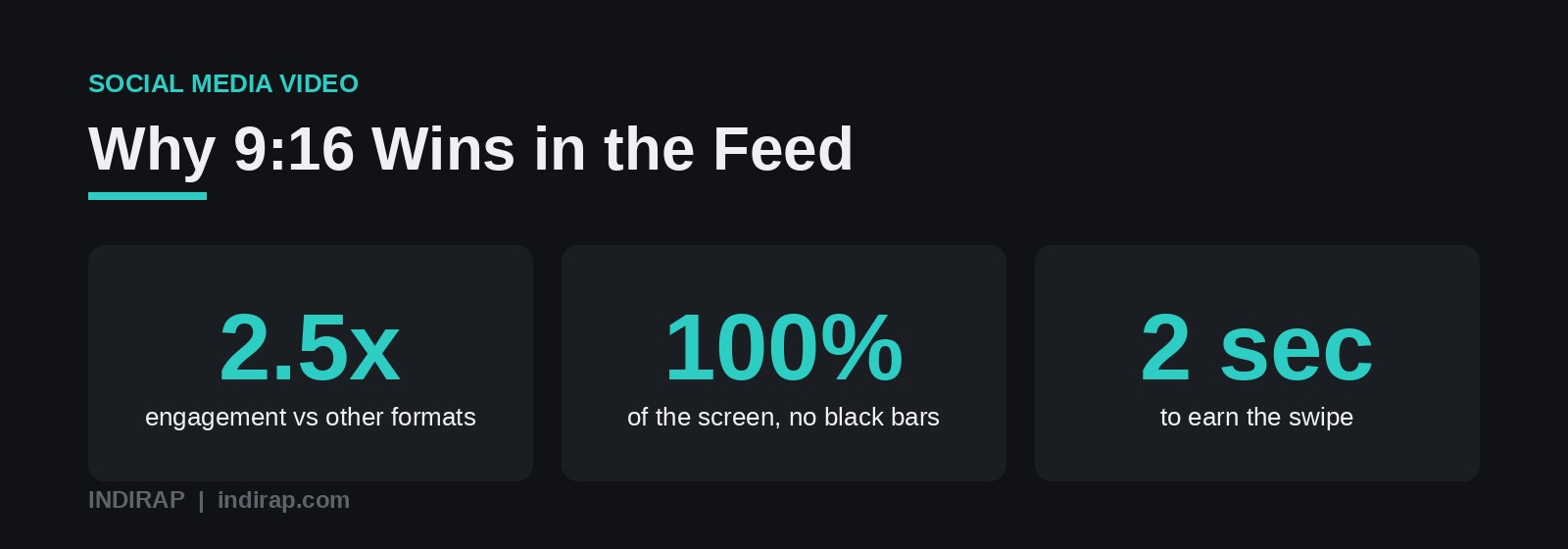
First, it matches behavior. People hold their phones upright, so a full-screen vertical video meets them without asking them to turn the device or squint at a small player. Less friction means more watch time, and watch time is the signal platforms reward with reach.
Second, it owns the screen. A vertical video fills the display completely, removing the surrounding thumbnails and buttons that pull attention away from a landscape clip. That immersion is a big part of why short-form vertical video earns roughly two and a half times the engagement of other formats in social feeds.
Third, it is where the algorithms push. Instagram Reels and YouTube Shorts are the formats the platforms are actively promoting in 2026, and both are vertical-first. Publishing vertical is how you get surfaced in the parts of each app that are still growing fastest.
The result is a format that consistently drives more reach, more completion, and more of the engagement that gets your brand found. That is also why vertical sits at the center of any serious social media video strategy.
Strong vertical video tends to share a structure. Understanding it turns "make a Reel" into a repeatable creative process.
The hook (0 to 2 seconds). The opening frames decide everything. A clear visual or a sharp line that names the viewer's problem or promise earns the next few seconds. Everything after depends on the hook doing its job.
The payoff (2 to 20 seconds). Deliver on what the hook promised. Show the product, tell the story, make the point. Movement, pattern changes, and on-screen text keep the eye moving so the viewer stays.
The proof or turn (the middle). A quick result, a demonstration, a reveal, or a moment of genuine personality that makes the video worth finishing and worth trusting.
The close (the final seconds). A light, clear next step. On social, that is often as simple as an idea worth saving or sharing, or a reason to follow. Hard calls to action work best when the value came first.
None of this requires a big budget. It requires intention, which is exactly what separates video designed for the vertical frame from video that was reformatted into it.
Vertical is not just for trends and dances. Brands use it across the funnel.
The strongest programs do not choose one lane. They run a steady mix across the funnel, and they feed it from a content library rather than a series of one-off shoots.
There are three ways to end up with vertical video, and they are not equal.
Crop a landscape video. The fastest and the weakest. Cropping a 16:9 video to 9:16 throws away most of the frame and often cuts off the subject. It reads as reformatted because it is.
Shoot landscape, frame for vertical. A middle path. Filming in high resolution with vertical in mind lets you reframe cleanly in the edit while keeping a landscape master. This is useful when a single piece needs to live in both orientations.
Shoot vertical natively. The best result. Composing for 9:16 from the start means the subject, the motion, and the on-screen text are all designed for the frame the viewer will actually see. This is what native, high-performing social video is made of.
Beyond the shoot, the edit is where vertical video is won: a hook in the first two seconds, captions for silent viewing, sound design that rewards the people who do turn it on, and pacing tuned to the platform. Getting the finished video optimized for search and discovery matters too, which is where our guide to video SEO best practices comes in.
A few habits reliably lift quality, and they are worth building into every shoot.
Compose for the center. Because the top and bottom of the frame carry interface, the strongest vertical shots place the subject in the central band where nothing gets covered. Design captions as part of the picture. Treat text as a visual element with rhythm and placement, not a transcript pasted on top. Keep motion purposeful. Small camera moves and cuts that land on the beat hold attention far better than a locked-off static shot. And plan the first frame the way a print designer plans a cover, because on a fast feed the first frame is the ad for the rest of the video.
The hardest part of vertical video is not making one, it is making enough. A brand that posts once and disappears will not build momentum. The efficient way to stay consistent is to capture a batch of content in a single well-planned production, then edit it into dozens of vertical cuts.
That is exactly how the INDIRAP Content Kit works: one to three production days that yield a full library of platform-ready vertical video, so your feed stays active for months without a shoot every week. It lowers your real cost per post and takes the weekly scramble off your plate. It is also how brands in demanding fields keep up, from technology and software to travel and hospitality, where a steady vertical presence compounds into real audience growth.
Vertical video is not a trend to wait out. It is how your audience watches, it is the format the platforms reward, and it is where discovery and trust increasingly happen. The brands winning attention in 2026 are the ones designing for the vertical frame on purpose: shooting natively, editing for silent full-screen viewing, and producing enough of it to stay consistent.
If you want that working for your brand, get a free content review and we will map where vertical video can drive the most growth for you.
Vertical video is video shot and framed in a portrait, taller-than-wide orientation, typically 9:16, to match how people hold their phones. It fills a mobile screen edge to edge, which is why it is the native format for Reels, Shorts, and Stories.
The standard is a 9:16 aspect ratio at 1080 x 1920 pixels. Shooting at a higher resolution gives you room to reframe cleanly in the edit while still delivering full HD vertical.
It matches how people hold their phones, it fills the whole screen without distractions, and it is the format Instagram Reels and YouTube Shorts actively promote. Short-form vertical video earns roughly 2.5x the engagement of other formats in the feed.
You can, and it is fine in a pinch, but it is the weakest option because cropping throws away most of the frame and often cuts off the subject. Shooting vertical natively, or at least framing for it during the shoot, produces far stronger results.
Shorter usually wins. The highest-performing social videos tend to run well under a minute, with a strong hook in the first two seconds to stop the scroll.
Yes. Most social video is watched on mute, so open captions should be part of every edit. They keep the message clear for silent viewers and improve completion.
Instagram Reels and YouTube Shorts drive the most reach in 2026, with Stories and LinkedIn strong for sequential and professional content. The right mix depends on where your audience already spends time.
Consistency matters more than any single video. A steady, sustainable stream beats an occasional big piece, which is why capturing content in batches and editing it into many cuts is the most reliable path to momentum.


Julian Tillotson is the Founder & CEO of INDIRAP, a full-service video production and creative strategy agency based in Chicago, IL. With 10+ years of experience, INDIRAP has delivered 20,000+ videos to 900+ clients across 40+ industries, making it one of North America's leading digital creative agencies.


.png)
.png)