
Social media video marketing is no longer a channel a brand can dabble in. It is where discovery, consideration, and trust increasingly happen, and it rewards the brands that show up consistently with video built for the feed. This playbook lays out how to do it well in 2026: the strategy, the formats, the content system that keeps you consistent, and the way to measure whether it is working.
It is the same framework we use as a full-service video production company when we build social video programs for brands across the country, and it pairs directly with our social media video service.
Social media video marketing is the practice of using video, built specifically for social platforms, to grow an audience, build authority, and drive measurable business results. The keyword is specifically. Marketing video for social is not a commercial trimmed to fit. It is designed from the first frame for a vertical screen, silent autoplay, a two-second hook, and a platform-native rhythm.
Done well, it works across the whole journey: short vertical video to earn reach, explainers and demos to build consideration, founder and customer stories to build trust, and creator-style ads to drive action. The goal is not viral moments. It is a steady, compounding presence that turns attention into pipeline.
The numbers make the case clearly. 85% of marketers call short-form video the single most effective social format. Short videos earn roughly two and a half times the engagement of other content in the feed. 73% of consumers say they prefer short video when researching a product or service. And budgets are following, with social video ad spend climbing year over year.
For a marketing team, that means video is where the reach is, where the engagement is, and increasingly where the buying research happens. A social strategy built on static posts alone is fighting the algorithm. One built on consistent video is working with it.
A strong program is not a pile of random clips. It follows a repeatable structure.
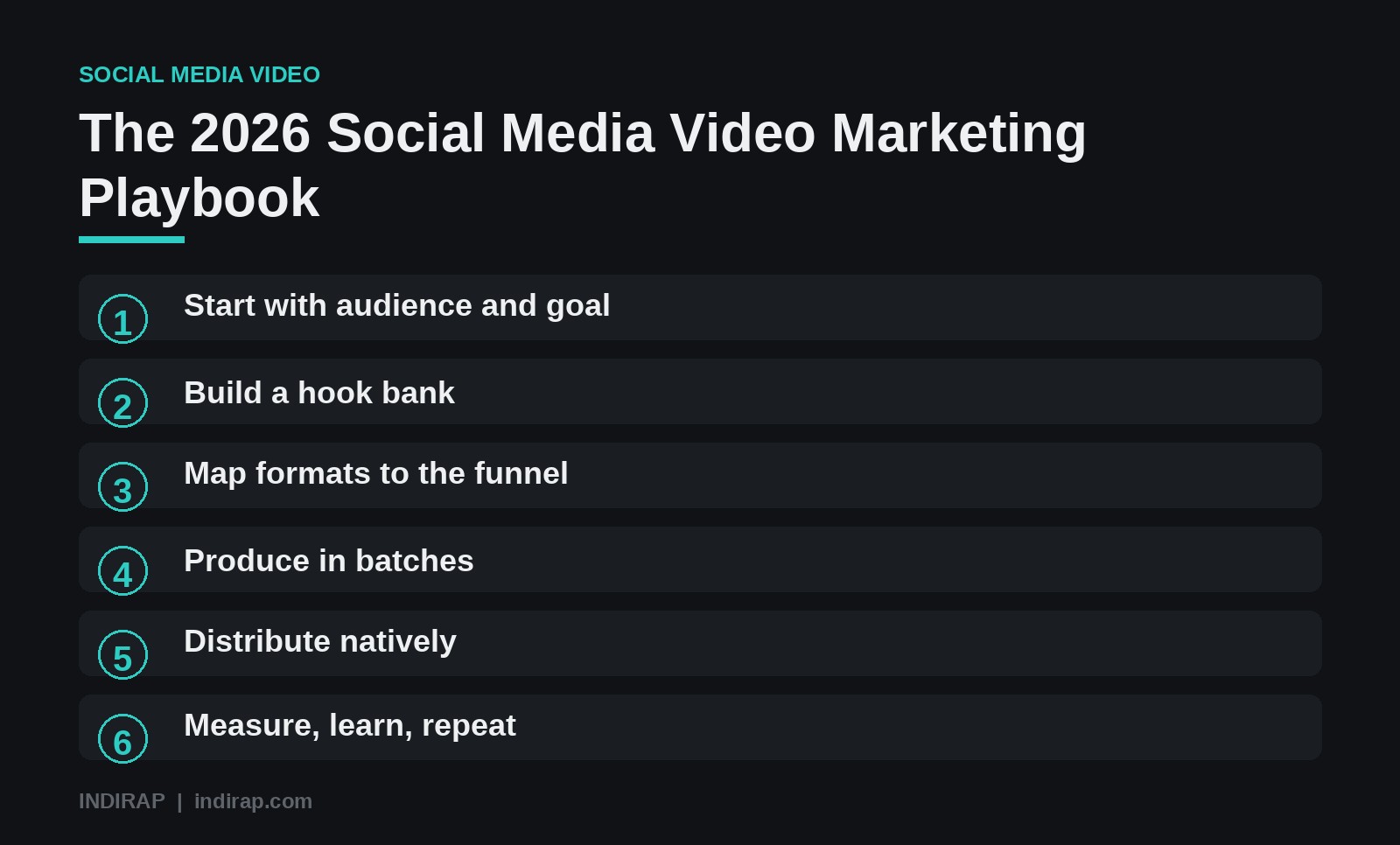
1. Start with the audience and the goal. Every effective video program begins with a clear picture of who you are trying to reach and what you want them to do. Awareness, consideration, and conversion each call for different video, so name the goal before you name the format.
2. Build a hook bank. Reach lives and dies on the first two seconds. The most productive teams keep a running bank of hooks and angles, so every shoot produces videos that earn the swipe.
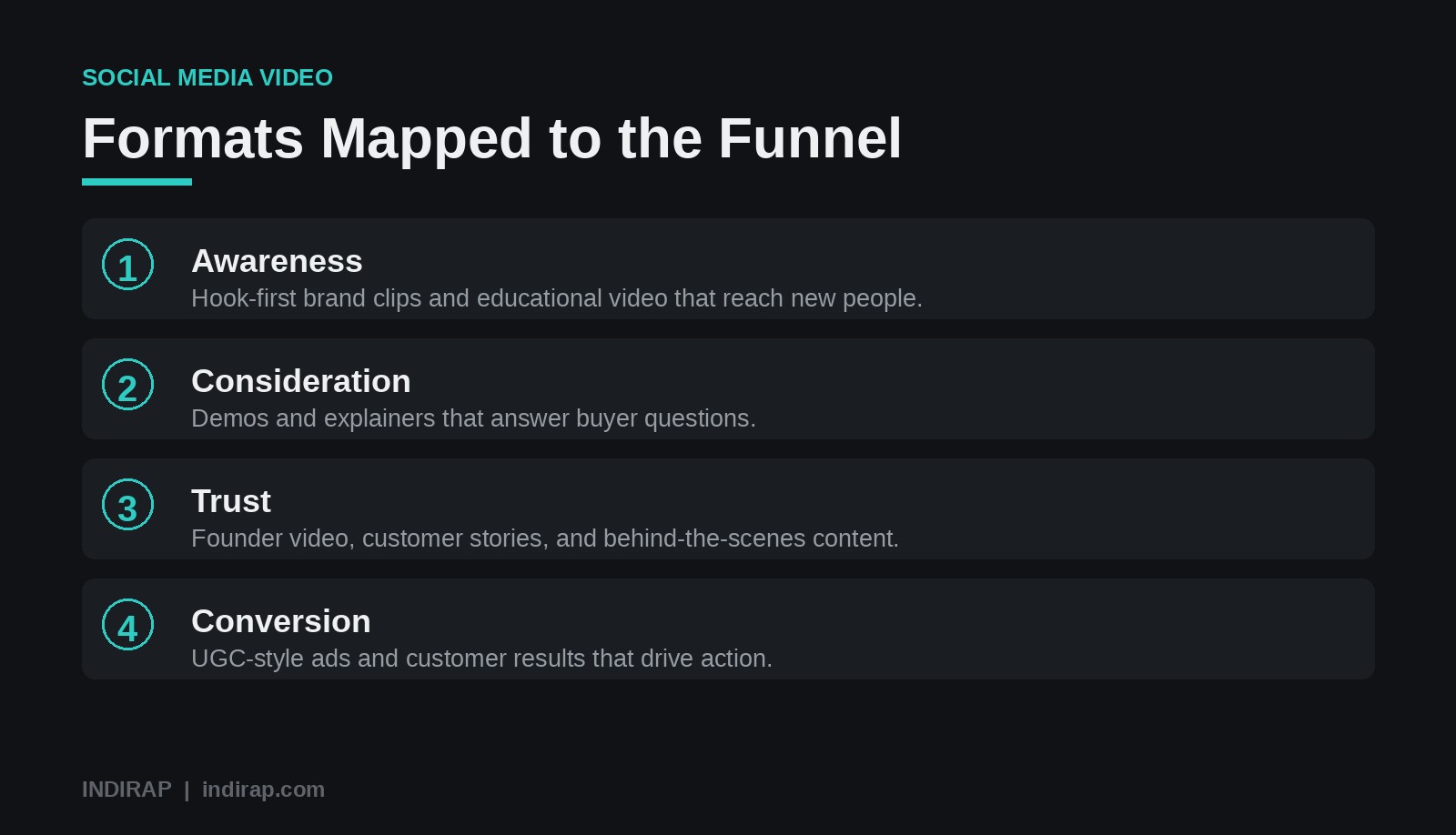
3. Map formats to the funnel. Use hook-first brand clips for awareness, demos and explainers for consideration, founder and customer stories for trust, and creator-style ads for conversion. A healthy feed runs a mix rather than betting on one.
4. Produce in batches. The teams that stay consistent do not shoot weekly. They capture a large batch of content in a planned production and edit it into many cuts, which keeps the feed alive for months.
5. Distribute natively. Post vertical, caption everything, and tailor each cut to the platform it lives on. The same core idea can become a Reel, a Short, a Story, and a LinkedIn video, each shaped for its home.
6. Measure, learn, repeat. Track the signals that matter, double down on the hooks and formats that perform, and feed those learnings back into the next batch.
Each of these is a short, vertical, caption-first video at heart. The difference is the job it does in the funnel.
The single biggest reason social video programs stall is supply. Producing enough video, week after week, is hard, and inconsistent posting kills momentum. The fix is a system, not more hustle.
The system that works is batched production. A brand captures a large set of content in one to three planned production days, then edits it into dozens of platform-ready cuts scheduled out over weeks. This spreads the cost of production across many videos, keeps quality and strategy consistent, and takes the weekly scramble off the team's plate.
That is exactly what the INDIRAP Content Kit is built to do: a campaign-ready library of social video captured in a focused sprint, so your calendar is covered for months. It is how brands in demanding fields, from technology and software to travel and hospitality, keep a steady video presence while running the rest of the business.
Video marketing earns its budget when it is measured. Focus on a few signals that map to real outcomes rather than vanity numbers.
Reach and impressions tell you how far the content is traveling. Watch time and completion rate tell you whether the hook and the story are holding attention, which is the signal platforms reward. Engagement (saves, shares, and comments) shows whether the content is resonating enough to spread. Profile actions and clicks show intent. And pipeline and conversions, tracked with links and UTM tags, connect the program to revenue.
The practical approach is to watch which hooks and formats drive completion and engagement, then produce more of what works. Over a few batches, that feedback loop is what turns a social presence into a growth channel. Getting each video optimized for search and discovery compounds the effect, which is where our guide to video SEO best practices comes in.
Social media video marketing in 2026 is won by brands that treat it as a system: clear goals, strong hooks, the right formats mapped to the funnel, batched production to stay consistent, and honest measurement to keep improving. Do those well and social video stops being a series of one-off experiments and becomes a compounding engine for reach, trust, and pipeline.
If you want that engine built for your brand, get a free content review and we will map where social video can drive the most growth.
Social media video marketing is the practice of using video built specifically for social platforms to grow an audience, build authority, and drive measurable results. It spans short vertical clips for reach, explainers for consideration, and creator-style ads for conversion.
Short-form video is the most effective social format, it earns about 2.5x the engagement of other content, and most consumers prefer short video when researching a product. Social platforms actively promote video, so it is where the reach and the buying research increasingly happen.
A mix works best: hook-first brand clips for awareness, demos and explainers for consideration, founder and customer stories for trust, and UGC-style ads for conversion. Each is a short, vertical, caption-first video shaped for its platform.
Batch your production. Capturing a large set of content in one to three planned shoot days and editing it into many cuts keeps a feed active for months without a weekly shoot, which is the most reliable way to stay consistent.
Track reach, watch time and completion, engagement such as saves and shares, profile actions and clicks, and pipeline tracked with links and UTM tags. Then produce more of the hooks and formats that drive completion and conversion.
It depends on volume, but the most cost-effective approach is batched production, where one to three shoot days yield a full library of videos and the cost per usable post drops sharply compared to booking one-off shoots.
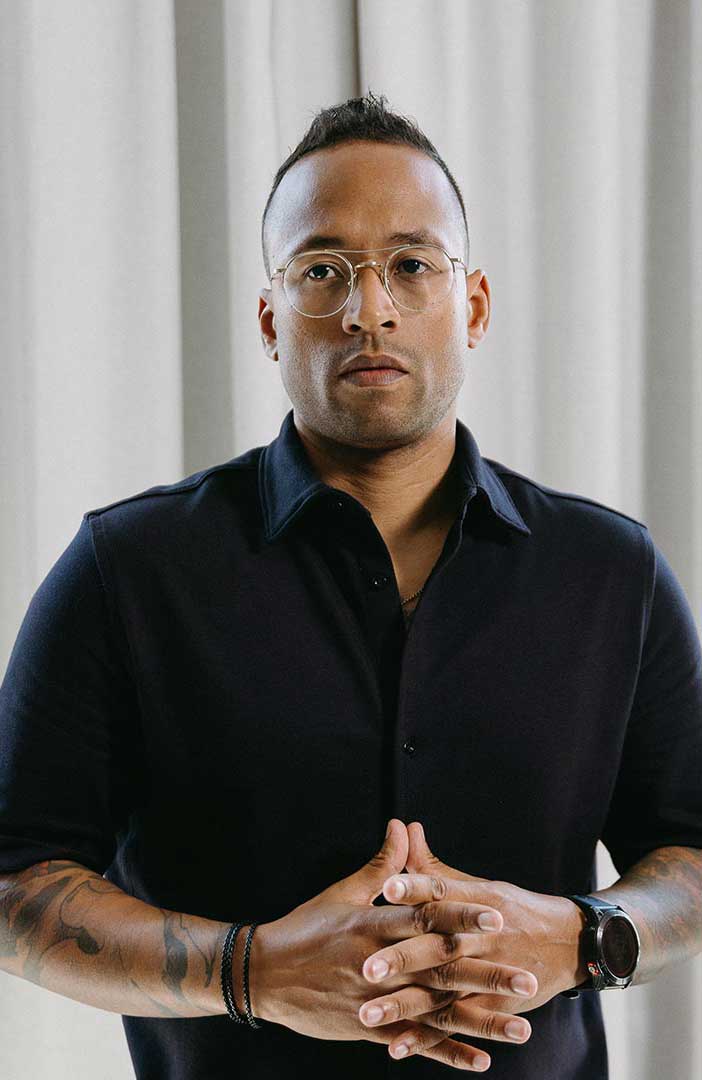

Julian Tillotson is the Founder & CEO of INDIRAP, a full-service video production and creative strategy agency based in Chicago, IL. With 10+ years of experience, INDIRAP has delivered 20,000+ videos to 900+ clients across 40+ industries, making it one of North America's leading digital creative agencies.


.png)
.png)