
Executive personal branding mistakes are rarely dramatic. Nobody posts something catastrophically wrong and watches their career collapse. The damage is quieter than that -- it is the prospective client who Googled you, saw nothing compelling, and booked a call with someone else instead. It is the deal you never knew was available because the decision-maker could not find a reason to reach out. These are the ten most common executive personal branding mistakes -- and what to do about each one.

Your LinkedIn profile is not a resume. A resume is a backward-looking document designed to get you an interview. An executive brand profile is a forward-looking statement designed to attract buyers, partners, and opportunities. The language, structure, and framing are entirely different.
What to do instead: Rewrite your headline to state who you help and the outcome you deliver -- not your job title. Rewrite your About section in first person, with a real story and a clear call to action. A resume documents where you have been. A strong executive profile explains why a prospective client should care and what they should do next.
In 2026, your profile photo is competing with thousands of professionally shot, well-lit executive images. A cropped group photo, a blurry conference snapshot, or a headshot from a decade ago signals immediately that you do not invest in your professional presentation. That is the exact opposite of the impression an executive personal brand should create.
What to do instead: Invest in a professional brand photography session and come away with a full library of images -- not just a headshot, but environmental portraits, working shots, and professional lifestyle images across multiple settings. One strong session produces enough visual assets to supply every platform you are active on for 12 to 18 months.
The most common executive LinkedIn mistake is publishing content that says nothing in particular. Generic industry observations, reshared articles with no commentary, "happy to announce" posts, congratulatory tags -- none of this builds a brand. Buyers scrolling their feeds cannot tell what you stand for, what you believe, or why they should pay attention to you specifically.
What to do instead: Every piece of content should express a specific, honest point of view. What do you believe that most people in your market get wrong? What approach do you take that most of your competitors do not? The executives with the strongest personal brands have the most specific opinions -- not the safest ones. If your content could have been written by anyone in your industry, it is not building your brand.
Showing up intensely for three weeks and then going dark for six weeks is worse than a consistent, modest cadence. When buyers visit your profile and see a month-old last post, they conclude one of two things: you have nothing to say, or you do not follow through on commitments. Neither is the impression an executive brand should create.
What to do instead: Use a content bucket system to plan posts in advance so you are never generating ideas from scratch. Commit to a cadence you can actually maintain alongside your other responsibilities -- two posts per week sustained over six months is worth far more than five posts per week for one month. Batch-create content in focused sessions so execution requires no creative energy in the moment.
Video is how B2B buyers vet executives before they agree to a meeting. It answers questions that a written profile cannot: what is this person like? Do they communicate clearly? Is their style compatible with how we work? Seventy-eight percent of B2B buyers say they prefer video when evaluating vendors. An executive with no video presence is leaving a critical pre-qualification tool unused.
What to do instead: Start with a simple talking-head format -- your perspective on a topic in your area of expertise, recorded in a reasonably quiet space with good light. Once you have established a video habit and identified what resonates with your buyers, invest in professional brand video production to produce a high-quality content library. A single well-planned production session generates 10 to 15 distribution-ready clips across LinkedIn, YouTube, and Instagram Reels.
For B2B executives, platform choice is not neutral. A founder spending most of their content energy on platforms where their buyers do not make professional decisions is investing time with no business return. Instagram without a B2B strategy is not executive personal branding -- it is personal expression, which is a different thing.
What to do instead: LinkedIn is the non-negotiable platform for B2B executive personal branding. Seventy-three percent of B2B buyers use LinkedIn to research vendors before engaging. YouTube is a strong secondary platform for executives who want to build long-form authority and search visibility. Instagram adds reach for visual industries and executive audiences who are active there. Your social media strategy should start with where your buyers are, not where you are most comfortable.
Some executives become so focused on thought leadership and insight content that they never clearly communicate what they actually offer. Their content performs well. Their profile gets visits. But because they never directly describe who they work with or how to engage them, interested buyers have no clear path to a conversation.
What to do instead: Mix service-context content into your content buckets. Client result posts, process stories, and behind-the-scenes content all demonstrate your work without feeling promotional. And once or twice a month, be direct: state who you work with, what problem you solve, and what someone should do if they want to explore working together. Buyers who have been following your content for weeks and still cannot figure out how to hire you are not a pipeline -- they are an audience.
A LinkedIn profile with an impressive list of past companies is not a brand. A brand has a narrative -- a throughline that explains who you are, what you have built, and what makes your perspective worth choosing. Without that narrative, all your content is a series of disconnected moments. With it, every post, every video, every speaking engagement is reinforcing the same compelling impression.
What to do instead: Build your four core stories -- your origin story, your point of view story, your client result stories, and your process story. The second post in this series covers executive brand storytelling in full. Start with your origin story. It is the most foundational piece of executive brand content you will produce, and the one that creates the most trust from a standing start.
Engagement metrics are easy to optimize for -- write something provocative or emotionally resonant and you will get likes and comments. But engagement does not pay invoices. The executives with the most influential personal brands are not necessarily the ones with the most engaging content -- they are the ones whose content consistently reaches the right people and gives those people a clear reason to reach out.
What to do instead: Track the metrics that connect to actual business outcomes. Profile views from relevant companies. Direct messages from prospective buyers. Discovery calls booked that cite LinkedIn or content as the source. Referrals that mention your thought leadership as the reason they came up. Design your content to move those numbers, not your engagement rate.
The most common and most damaging mistake: thinking that executive personal branding is something you do once and check off the list. Get some photos taken. Post for a few months. Call it done. The executives who treat it this way get temporary visibility and no compounding return. The ones who treat it as an ongoing practice -- a set of systems that run consistently over years -- build an asset that generates inbound deal flow indefinitely.
What to do instead: Build sustainable systems. A photography session every 12 to 18 months as your visual assets age out. A content plan that refreshes quarterly based on what is working. A video content library that grows over time. A publishing cadence you protect the way you protect other business development activities. The executives who lead their market are not the ones who tried the hardest -- they are the ones who kept going the longest.
This is Post 4 in INDIRAP's Executive Personal Branding series. Start at the beginning with what executive personal branding actually is, or explore what to produce first for your executive brand.
Watch + Learn
See the difference between a weak executive personal brand and one that generates inbound deals. INDIRAP breaks down real examples on YouTube, Reels, and Shorts.
▶ Subscribe on YouTube -- watch executive personal brand audits -- real profiles reviewed, real mistakes called out
▶ Instagram Reels -- see the before-and-after difference a professional brand photography session makes for executives
▶ YouTube Shorts -- fast breakdowns of executive personal branding mistakes -- spotted and fixed in under 90 seconds
The most costly mistakes are: an outdated or weak profile photo, posting without a specific point of view, inconsistent publishing cadence, no video presence, building on the wrong platforms for your buyers, and treating personal branding as a one-time project rather than an ongoing practice. Each of these creates an impression that undercuts the credibility the executive is trying to build.
Seventy-three percent of B2B buyers research vendors on LinkedIn before engaging. An executive's LinkedIn profile is frequently the first sales touchpoint in any deal cycle -- and it is the one most executives have never intentionally optimized. A strong executive LinkedIn presence pre-qualifies buyers, builds trust before the first call, and generates inbound activity that never appears in a CRM because it begins as organic interest.
Two to three times per week is the optimal cadence for most founders and executives. This frequency is sufficient to build algorithm favorability and stay visible to prospective buyers, while being sustainable alongside running a company. Consistency over six to twelve months matters far more than posting frequency in any single week.
Yes. A professional brand photography session is one of the highest-ROI investments in an executive personal brand. It produces a full library of images -- headshots, environmental portraits, working shots -- that supply every platform and format for 12 to 18 months. A weak or outdated photo actively undercuts the professional credibility the executive's content is trying to build.
A strong executive LinkedIn profile includes a professionally shot brand photo, a headline that states who you help and what outcome you deliver (not just a job title), an About section in first person with a real narrative and a clear call to action, a featured section with your best content or results, and a consistent stream of recent posts that demonstrate your specific expertise and point of view.
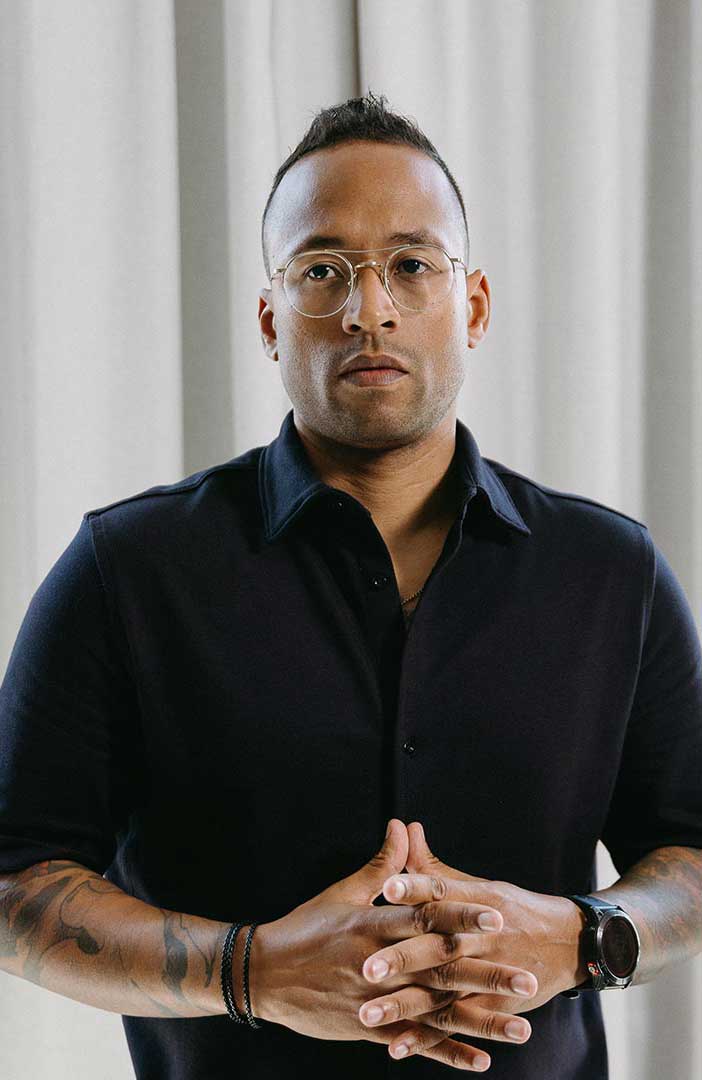

Julian Tillotson is the Founder & CEO of INDIRAP, a full-service video production and creative strategy agency based in Chicago, IL. With 10+ years of experience, INDIRAP has delivered 20,000+ videos to 900+ clients across 40+ industries, making it one of North America's leading digital creative agencies.


.png)
.png)