
Marketing teams often frame video as a choice: long-form or short-form, as if a brand has to pick a side. It does not. The two formats do different jobs, and the strongest brands use them together, each reinforcing the other. This guide compares long-form and short-form video, explains what each does best, and shows how to combine them into one system that builds both reach and depth.
It is the way we think about the format question as a full-service video production company, and it shapes how we build programs through our social media video service.
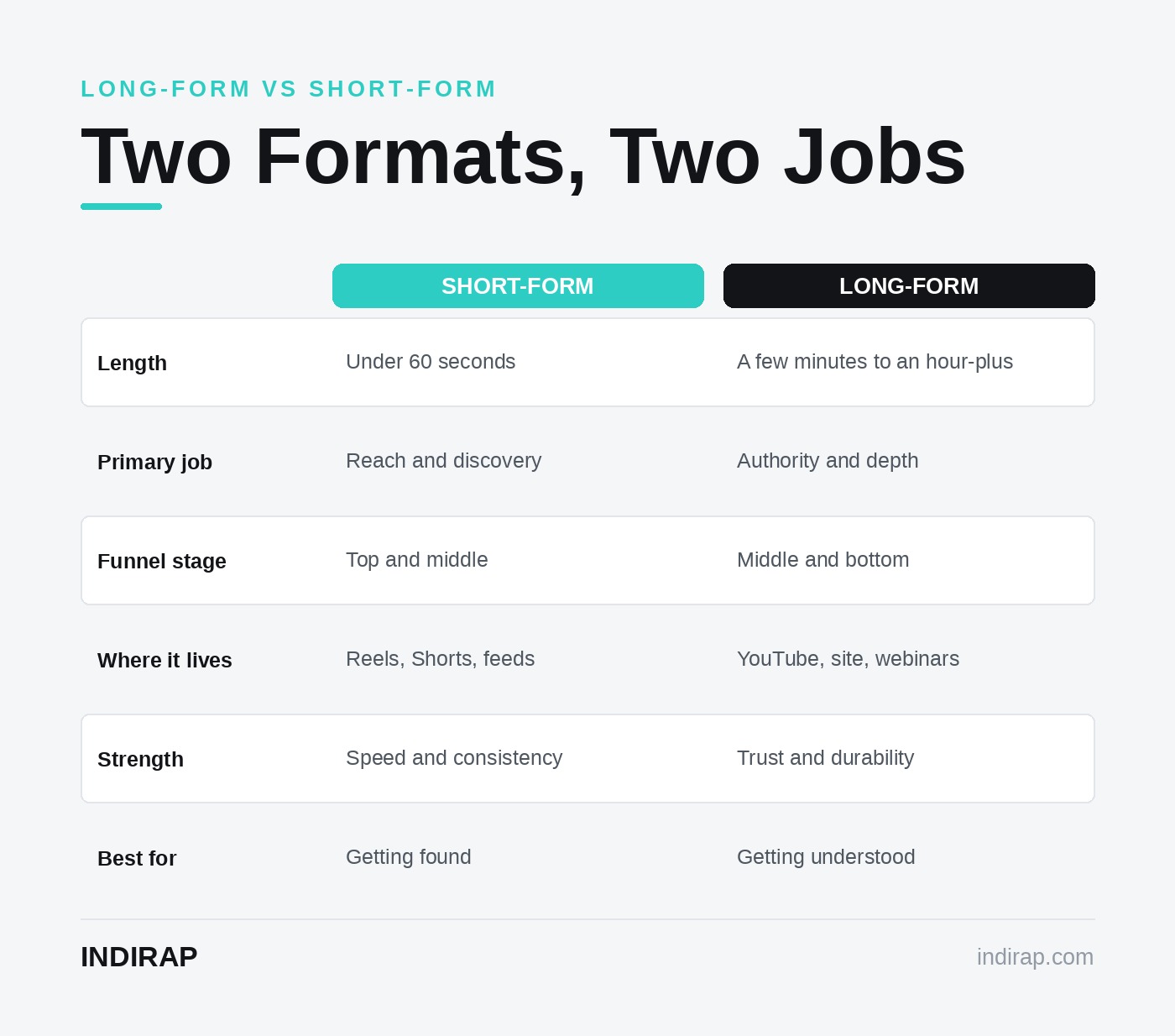
Short-form video is built to be watched quickly, usually under 60 seconds, and designed to earn attention in the feed. Long-form video runs longer, from a few minutes to an hour or more, and is built to hold attention once you have it. Short-form wins the scroll. Long-form deepens the relationship. One is a doorway, the other is a room.
Understanding that difference is what turns the either-or question into a both-and strategy. Short-form is where you get found. Long-form is where you get understood.
Short-form is the discovery engine. Its strengths are reach, speed, and consistency.
Reach. Short, vertical, hook-first video is what the platforms promote, so it puts your brand in front of people who do not follow you yet. It is the top of the funnel.
Speed. A short video is fast to watch and fast to produce, which makes a consistent cadence realistic.
Trust at a glance. A quick founder clip or customer result builds a first impression of credibility in seconds.
This is the domain of vertical video and short-form video production, and it is where most brands should start, because you cannot deepen a relationship with an audience you have not reached yet.
Long-form is the depth engine. Its strengths are authority, connection, and durability.
Authority. A detailed explainer, a webinar, a podcast episode, or an in-depth brand film demonstrates expertise in a way a 30-second clip cannot. It is how a brand earns real credibility.
Connection. Longer video gives a viewer time to connect with a founder, a story, or an idea, which builds the kind of trust that shortens sales cycles.
Durability. Long-form content, especially on YouTube, keeps getting discovered through search for months or years, and it becomes a library you can mine for short cuts.
Long-form is often where brand-level storytelling lives, which is why it pairs so closely with corporate and brand video.
Short-formLong-formLengthUnder 60 secondsA few minutes to an hour-plusPrimary jobReach and discoveryAuthority and depthFunnel stageTop and middleMiddle and bottomWhere it livesReels, Shorts, feedsYouTube, website, webinars, podcastsStrengthSpeed and consistencyTrust and durabilityBest forGetting foundGetting understood and chosen
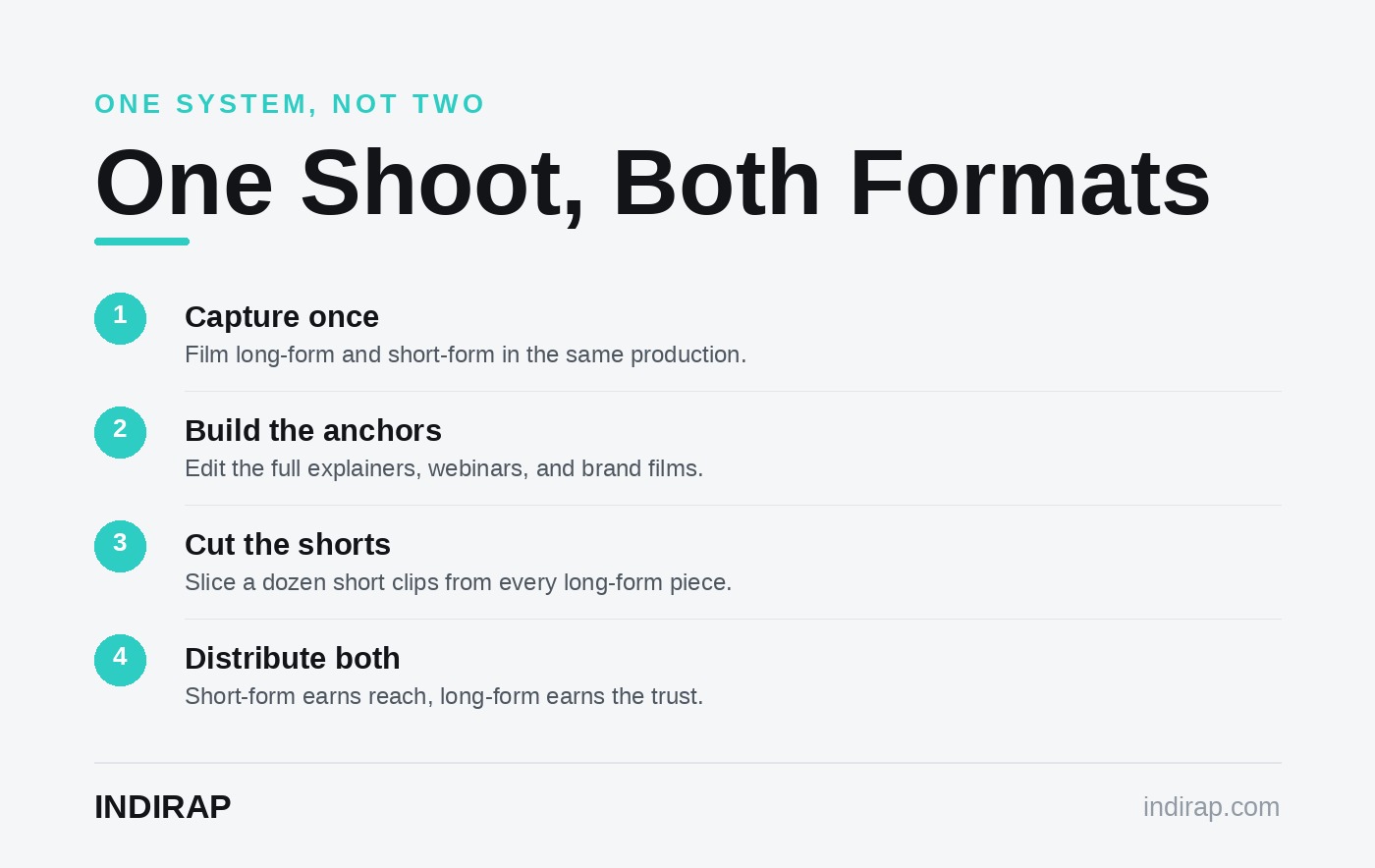
The real insight is that long-form and short-form feed each other. A single long-form video, a podcast episode, a webinar, or a detailed explainer, can be cut into a dozen short clips that drive reach, and each of those clips can point viewers back to the full piece. Short-form earns the attention, long-form earns the trust, and together they cover the whole journey from a first impression to a buying decision.
This is also the efficient way to produce both. Rather than treating them as separate efforts, brands capture long-form and short-form in the same production, then edit one shoot into a full mix. It is the idea behind the INDIRAP Content Kit: a library that includes both the anchor long-form pieces and the short cuts that distribute them, captured in one to three production days. It is how brands across industries, from technology and software to manufacturing, build reach and depth at the same time.
If your brand is early and needs to be found, start with short-form to build reach, then layer in long-form as you have an audience to deepen. If your brand already has attention but struggles to convert or to prove expertise, invest in long-form to build authority, and use short cuts of it to expand reach. Most brands should run both within a single system, weighted toward whichever gap is bigger right now. And whichever you lead with, optimizing for discovery multiplies the return, which our guide to video SEO best practices covers.
Long-form versus short-form is the wrong question. Short-form gets your brand found and keeps it consistent. Long-form gets your brand understood, trusted, and chosen. The brands that win use both as one system, capturing them together and letting each long-form piece fuel a stream of short cuts. Reach and depth are not a trade-off. They are two halves of the same engine.
If you want a video system that covers both built for your brand, get a free content review and we will show you the right balance to drive the most growth.
Short-form video is under about 60 seconds and built to earn attention and reach in the feed. Long-form runs from a few minutes to an hour or more and is built to hold attention, build authority, and deepen trust. Short-form gets you found; long-form gets you understood.
Neither is universally better, because they do different jobs. Short-form drives reach and consistency, while long-form builds authority and durability. Most brands should use both, weighted toward whichever gap is bigger right now.
If you need to be found, start with short-form to build reach. If you already have attention but need to prove expertise or convert, invest in long-form. Most brands run both within one system.
Yes, and it is the efficient approach. Capturing both in the same shoot lets you edit one production into anchor long-form pieces plus a dozen short cuts, which lowers cost and keeps every channel fed.
Short-form lives in Reels, Shorts, and social feeds. Long-form lives on YouTube, your website, webinars, and podcasts. Short cuts of long-form then distribute it back into the feed.
A long-form piece builds authority and can be cut into many short clips that drive reach, and each clip can point back to the full video. Short-form earns attention, long-form earns trust, and together they cover the whole buyer journey.


Julian Tillotson is the Founder & CEO of INDIRAP, a full-service video production and creative strategy agency based in Chicago, IL. With 10+ years of experience, INDIRAP has delivered 20,000+ videos to 900+ clients across 40+ industries, making it one of North America's leading digital creative agencies.


.png)
.png)