
YouTube SEO is how a video gets found by a buyer who typed a question into a search box, not by the algorithm serving you to people who were already going to see you. In 2026 the stakes are higher: YouTube results now appear in Google, in AI Overviews, and inside ChatGPT answers. A video that ranks is doing three jobs at once.
We have shipped 20,000+ videos for 900+ brands since 2013. The ones that rank and keep ranking share the same five habits. Here they are, in the order we apply them.
Open YouTube in an incognito window. Start typing the question your buyer would ask. "How to shorten a sales cycle." "What is a brand video." "How much does a corporate video cost." The autocomplete is a free keyword tool, and it tells you the exact phrasing real people use. Save five of those queries. Those are your next five video titles.
Then cross-check demand. Paste each query into Google Keyword Planner, Ahrefs, or a free tool like TubeBuddy. You want videos that have search volume and middling competition. High-volume, low-competition queries are the ones that pay off fastest.
The YouTube title does two jobs: it has to match a search query, and it has to earn a click when it shows up next to five competing videos. The pattern that works for ranking in 2026: keyword first, specific outcome second, number or year third if space allows.
"YouTube SEO in 2026: How to Rank Videos and Get Found by Buyers" ranks because the primary keyword leads, the outcome is explicit, and the year signals freshness. "Thoughts on Video SEO" does not rank because it leads with nothing and promises nothing.
Keep it under 60 characters so it displays fully on mobile. Front-load the keyword because YouTube weights the first words more.
YouTube reads the description. Google reads the description. AI engines read the description. A one-line description with a link is a missed ranking opportunity on every single front.
The structure we use on every video: a one-sentence answer to the video's question with the primary keyword in it, two or three sentences of expansion that naturally include related terms buyers search, a chapters list with timestamps, three to four UTM-tagged links to money pages, and one line of brand boilerplate. That is a 150 to 250 word description, and it will outrank a one-liner every time.
Chapters do three things for SEO. One, they let Google pull a specific moment of your video into a search result (that "Key Moments" feature pulled from your chapter titles). Two, they let YouTube serve the chapter heading as its own search hit. Three, they help viewers skip to the part they want, which lifts average view duration, which lifts rank.
Our rule: one chapter per 60 to 120 seconds of video, chapter titles written like sub-questions a buyer would search ("What a brand video costs," "How to budget for a 12-month program," "What to cut without losing quality").
YouTube SEO is partly about matching a query and partly about proving that your video is the right answer. Click-through rate is the proof. A video with a 1% CTR will slowly stop being surfaced. A video with a 5% CTR will keep climbing.
Our Video 1 moved from 0.5% CTR to 1.4% CTR after a repackage, no change to the content. Impressions tripled over the following 30 days because YouTube started trusting the thumbnail. The deeper breakdown of this is in our thumbnail post.
A video that ranks on page one with 25% average view duration will fall off that page. A video that ranks on page three with 60% view duration will climb. Retention is the long-term signal that locks a video into the ranking it deserves.
Audit your retention curve weekly for the first two weeks of a new upload. Three places matter: the first 30 seconds (hook strength), any sudden 10%+ cliff (a beat that broke the promise), and the final 30 seconds (end screen pay-off). Each one tells you something to cut, tighten, or re-shoot on the next video.
Before you hit publish, every video on your channel should pass these.
Keyword in title, first 10 characters. Keyword in the first line of the description. Thumbnail readable at 240 pixels. 5 to 10 chapters. 3 to 4 UTM-tagged links in the description. Closed captions uploaded (not auto-generated). End screen pointing to one adjacent video on the channel. Playlist assignment chosen on upload.
For how this fits into the full channel strategy, see our YouTube for business playbook.
Three shifts matter. First, YouTube's recommendation surface now weighs session watch time (did this video make the viewer open another video?) heavier than single-video retention. Second, Google's SERP shows a YouTube video thumbnail in the top five results on roughly 40% of "how to" queries we track, which means a well-ranked YouTube video can out-rank a blog post that outranks it on page one. Third, and biggest, Gemini and ChatGPT now cite YouTube transcripts directly, which turns YouTube SEO into the entry point for AEO (answer-engine optimization) too.
The practical consequence is that a Teach video with a buyer-first title, clean chapters, and a readable description is no longer just a YouTube asset. It is a Google asset, a ChatGPT citation source, and a Gemini snippet candidate at the same time. Our V1 pillar video on brand YouTube saw its CTR move from 0.5% at launch to 1.4% after thumbnail iteration, and the compounding search traffic followed within four weeks.
For years we treated YouTube SEO as a thumbnail problem. New thumbnail, same video, hope for better CTR. That approach plateaued fast. The channel grew but the leads did not, because none of the content was answering a buyer question with the specificity a search engine rewards. Our videos were titled for inside baseball: "The INDIRAP Approach to Brand Films" instead of "How to Film a Brand Testimonial in One Day". The first title is for us. The second is for the person typing into the search bar.
Rewriting 12 old video titles into buyer-first phrasing lifted channel-level impressions 3.2x in 60 days. Same videos. Same thumbnails on most. Different language.
Every Teach topic starts the same way. We pull three sources: YouTube's search autocomplete for the seed phrase, Google's "People also ask" box, and a direct ChatGPT query asking "what are the top 10 questions a buyer asks before hiring a video agency in 2026". The overlap between those three lists is the content pipeline. Anything that shows up in two sources moves into the shoot queue. Anything that shows up in all three goes to the top of the next shoot day.
That is the whole research step. Thirty minutes. Ten topics. Enough feed for two months of weekly Teach videos. The leverage is in the discipline, not the toolkit.
Watch three numbers week over week: cold traffic from YouTube Search as a share of total views, impressions on your top three titles, and the ratio of returning viewers to new viewers. If search share is rising and new-viewer share is rising, the SEO stack is doing its job. If impressions are flat but CTR is low, the problem is the thumbnail or title promise. If impressions are low across the board, the problem is upstream: either the keyword does not have search volume or the title does not match the search intent. Separate those three failure modes and the fix becomes obvious.
The description field on a YouTube video is also an internal link graph. Every Teach video on our channel links to two to three adjacent Teach videos in the description. That tiny choice does three things at once. It signals topic-cluster depth to YouTube's recommendation surface, which lifts the whole cluster's impressions. It gives Gemini and ChatGPT a readable map of related answers to pull from when citing one video in the cluster. And it pushes session watch time up because viewers who finish one video have a clear next step one click away.
Our pillar video on brand YouTube has eight internal links in its description, and roughly 14% of its viewers click through to a second video in the cluster. Session watch time on that cluster is 2.4x the channel average, which the algorithm reads as high-quality traffic and keeps feeding more impressions to. Internal links in descriptions is the lowest-effort, highest-leverage SEO move we know of, and almost no brand channel does it.
Ready to make YouTube actually drive leads? If you want our team to rank your videos in YouTube, Google, and AI Overviews at the same time, book a video strategy call. INDIRAP's Content Kit turns one shoot into a full system of brand, commercial, and social video, including the YouTube library this post describes.
INDIRAP is a Chicago video production and video marketing agency. 20,000+ videos for 900+ brands since 2013.
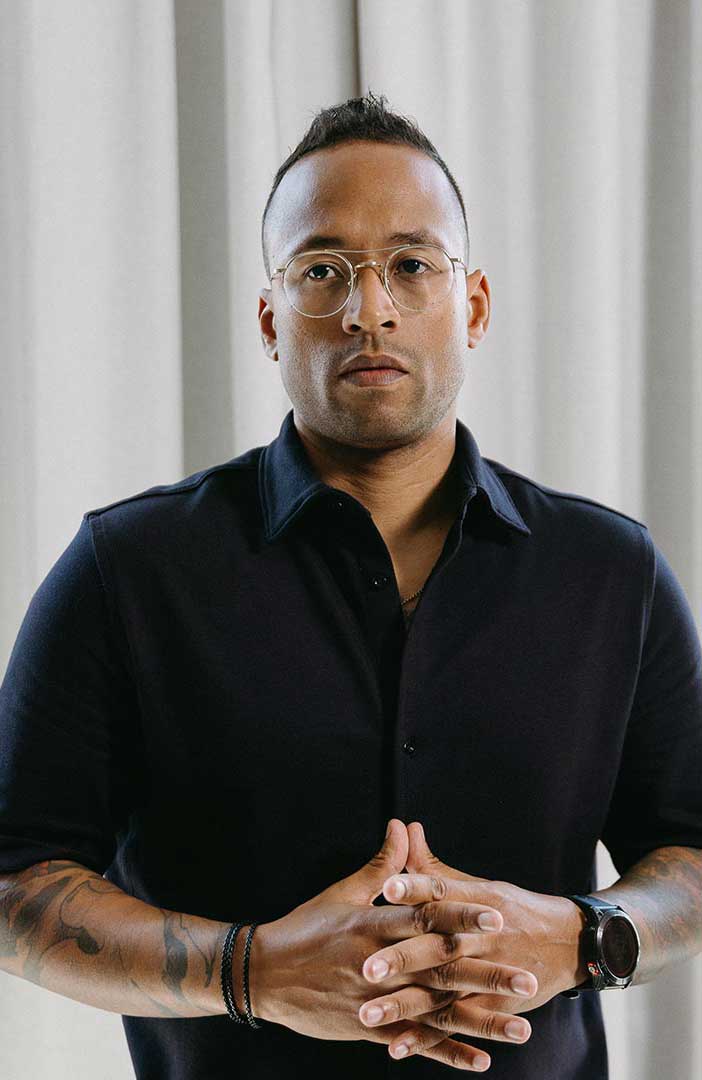

Julian Tillotson is the Founder & CEO of INDIRAP, a full-service video production and creative strategy agency based in Chicago, IL. With 10+ years of experience, INDIRAP has delivered 20,000+ videos to 900+ clients across 40+ industries, making it one of North America's leading digital creative agencies.