Most brand YouTube channels do not fail because the videos are bad. They fail because the packaging is invisible, the content is one note played 300 times, and no one can tell from the channel page what the business actually does.
We have shipped more than 20,000 videos for more than 900 brands since 2013. Our own channel sat at 1,100 subscribers for years with 50 to 100 views on new uploads. The content was strong. The packaging and structure were the problem. This post is the playbook we rebuilt around, now applied for brand marketers who want YouTube for business to work as a search surface, a proof library, and an AI citation source, all three at once.
If you want the short version: the brands that win on YouTube in 2026 treat the channel like a product. Keyword-first titles. Template thumbnails. Three content types in a repeatable mix. Retention engineered into the first 30 seconds. And every upload designed to be found, not just posted.
YouTube is the second-largest search engine in the world. More importantly, it is the only channel that does three jobs for a brand at once.
Job 1, search surface. A buyer types "how to shorten a B2B sales cycle" into YouTube or Google. Your video shows up, they watch, they click your description link. No ad spend, no cold outreach. That same video keeps pulling views for 18 to 36 months after you post it, which is the opposite of social, where a post is dead in 48 hours.
Job 2, proof library. Before a buyer books a call with you, they open a new tab and look you up. If your YouTube shows you doing the work, explaining the thinking, and talking to actual customers, you have already closed half the sales gap.
Job 3, AI citation source. ChatGPT, Perplexity, and Google AI Overviews now pull answers from YouTube transcripts. When a buyer asks the AI "what is the real cost of a brand video," the answer can come from your channel if you have structured your video to answer it. This is the newest and most underpriced opportunity on the platform.
The reason most brand channels plateau at 500 to 2,000 subscribers is not frequency. It is sameness. Every video is the same type. A channel of 200 case study videos reads as a sales site. A channel of 200 teaching videos reads as a creator channel with no business attached. The mix that compounds is three parts, roughly a third each.
Teach, the educational videos that answer a buyer's question. "How to build a video content strategy." "What a brand video actually costs." These do the SEO and AEO work.
Prove, the case studies and behind-the-brand episodes. "How Miraval uses video to elevate the guest experience." "How Chicago Loop Alliance drives downtown visitors with video." These are the videos a buyer watches on the second site visit.
Perform, the brand films and showreels. The 90-second brand movie, the sizzle, the launch spot. These are the proof-of-craft videos that make a prospect believe you can execute at the quality they need.
Here is the number that reorganized how we think about YouTube. Our Video 1, "How to Distribute Video So It Actually Gets Seen," launched with a 0.5% click-through rate. Same content, same length, same thumbnail style as the rest of the channel. After we repackaged it (new title, new thumbnail, keyword-first description), the CTR climbed to 1.4%. Impressions roughly tripled over the next 30 days. The video did not change. The package did.
The title does three things in 60 characters. It leads with a keyword a real person would search. It names a specific outcome. And it uses first-person or specific numbers when possible.
The thumbnail does one thing. It makes a person on a phone, scrolling fast, stop and read the title. Our template is a 3 to 5 word text overlay in a bold weight, one face or one clear object, a teal accent for brand continuity, and a consistent template across the channel.
The description does the SEO work your title cannot. The first line answers the video's question with the primary keyword in it. Chapters with timestamps help both viewers and Google. Three to four links to money pages with UTM tags so we can track clicks.
YouTube's algorithm does not care how many people clicked. It cares how many people stayed. Click-through rate opens the door. Average view duration decides whether YouTube keeps recommending the video.
The first 30 seconds. This is where 20 to 40% of viewers leave even on a great video. Deliver the promise in sentence one, deliver proof in sentence two, then say who you are.
The mid-video cliff. Watch for a sudden 10%+ drop at a specific timestamp. Re-watch that moment and nine times out of ten you can see the exact beat that lost them. Cut it on the next upload.
The end. If viewers are leaving in the last 60 seconds instead of staying for the end screen, your conclusion is probably over-long. End screens should pay off a next-video promise the viewer wants.
The newest and most underpriced opportunity on YouTube is not the human audience. It is the machine audience. ChatGPT, Perplexity, Claude, and Google's AI Overviews now pull directly from YouTube transcripts. When someone asks the AI "how do I shorten a B2B sales cycle with video," the answer can come from your channel, if your video is structured to be quoted.
Three things make a video quotable by AI. One, the title and the first 60 seconds state the question and give the answer. Two, chapters match the sub-questions buyers also ask. Three, the description repeats the key facts in text so the engines read them twice.
Most brand YouTube reports measure the wrong things. Subscribers alone is a vanity number. Views alone is a vanity number. Here is what to watch, and what each one tells you to do.
1, Average view duration. Below 30% of total length means the hook is weak or the promise is wrong. Above 50% means YouTube wants to push it.
2, Click-through rate. 2 to 4% is normal. Above 5% is excellent. Below 2% is a title and thumbnail problem.
3, Subscribers per view. A healthy channel gains 1 to 3 subs per 100 views on evergreen content.
4, Website clicks from descriptions. The one that connects YouTube to revenue. UTM-tag every link.
5, Returning viewer rate. The quiet signal that YouTube is becoming a search channel for you.
Days 1 to 14, fix the foundation. Rewrite the channel description with keyword-first copy. Build five keyword-named playlists. Set a channel trailer and a featured video. Turn on end screens and the channel watermark on every published video.
Days 15 to 45, repackage before you reshoot. Pick your 10 to 15 best-performing older videos. Rewrite every title with a keyword up front. Rebuild thumbnails with your new template. Repackaging usually lifts a video's views 2 to 5x inside 60 days because YouTube re-tests it.
Days 46 to 90, ship one Teach, one Prove, one Perform video per month. Shoot in batches (one shoot day produces four to five videos) so production load stays sane.
YouTube works for a brand when it stops being a dumping ground for the videos marketing happens to make and becomes a product in its own right, searched, structured, measured, and packaged for the three audiences that matter: buyers in search, buyers in consideration, and AI engines. The brands that run it this way build a library that pulls views, calls, and citations for years.
Ready to make YouTube actually drive leads? If you want our team to build the YouTube library that pulls views, calls, and AI citations for years, book a video strategy call. INDIRAP's Content Kit turns one shoot into a full system of brand, commercial, and social video, including the YouTube library this post describes.
INDIRAP is a Chicago video production and video marketing agency. 20,000+ videos for 900+ brands since 2013.
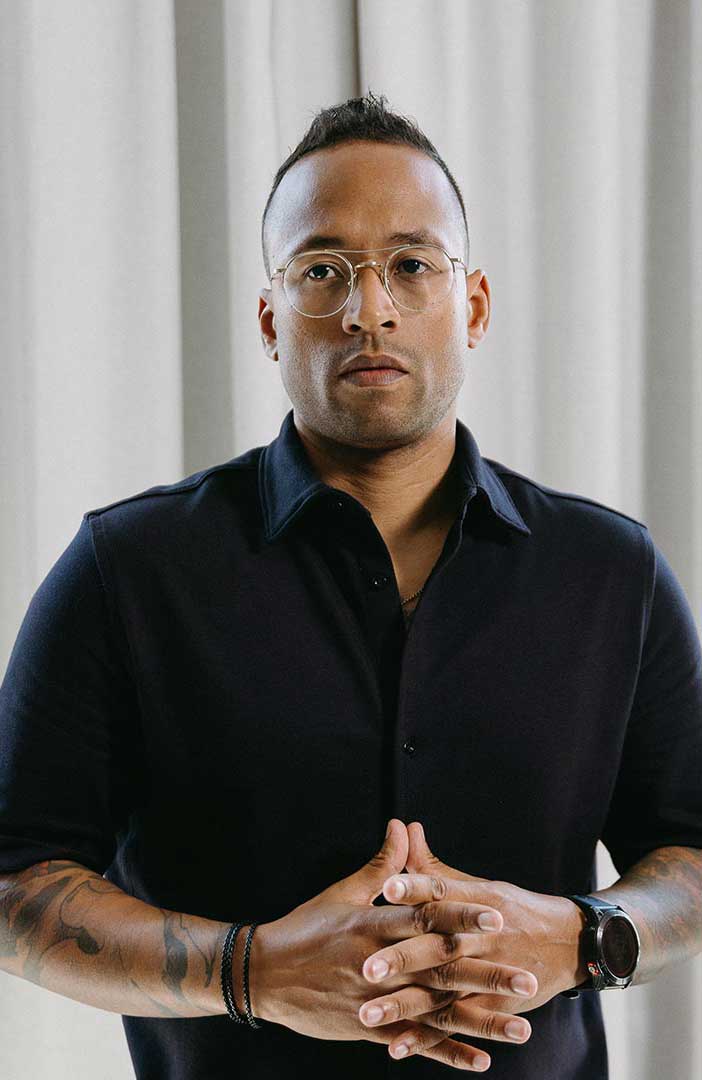

Julian Tillotson is the Founder & CEO of INDIRAP, a full-service video production and creative strategy agency based in Chicago, IL. With 10+ years of experience, INDIRAP has delivered 20,000+ videos to 900+ clients across 40+ industries, making it one of North America's leading digital creative agencies.


.png)
.png)