
YouTube AEO (answer engine optimization) is the practice of structuring a video so ChatGPT, Perplexity, Claude, and Google's AI Overviews can quote it as the answer to a buyer's question. In 2026 this is the newest and most underpriced opportunity on the platform. Most brands have not even started.
We have shipped more than 20,000 videos for more than 900 brands since 2013. Over the last 12 months we have watched AI assistants begin to pull directly from YouTube transcripts to answer buyer-intent queries, and the videos being quoted share a pattern you can engineer.
When a buyer asks ChatGPT "what does a brand video cost" or "how do I shorten a B2B sales cycle with video," ChatGPT answers. The answer sometimes includes a cited YouTube video. That citation sends the user straight to your channel.
Three things to notice. One, the user has already been pre-qualified by the AI, they asked a specific buyer-intent question. Two, you did no outbound work to earn the visit. Three, every citation is a trust signal, buyers assume the AI picked the best source available.
One, the first 60 seconds state the question and give the answer. AI assistants pull the direct answer first and the nuance second. "The real cost of a brand video is $5,000 to $100,000+, with the median around $18,000" is quotable. "Let me tell you a story about brand videos" is not.
Two, chapters match the sub-questions buyers also ask. "What drives the cost up," "what you can cut without losing quality," "how to budget for a 12-month program." Each chapter becomes its own answerable unit the AI can quote standalone.
Three, the description repeats the key facts in text. AI engines read transcripts, but they also read the description, and the two together double your chance of citation.
The clearest way to think about an AEO-friendly video is this: imagine the transcript appearing as a text document in Google. Would someone searching for an answer find a clean, structured response? Or would they find 11 minutes of filler, b-roll descriptions, and inside jokes?
Three habits to adopt. Repeat the question before you answer it ("so when buyers ask what a brand video costs, the real answer is..."). Give the headline number or claim in a complete sentence, not a half-sentence relying on earlier context. Avoid pronoun chains, "it," "that," "this one" break the AI's ability to lift a clean quote.
YouTube auto-generates captions. AI engines read them. But auto-captions miss industry terms, brand names, and dollar figures ("eighteen thousand dollars" becomes "a teen thousand dollars" and the quote dies). Upload a cleaned transcript with every video. It takes 20 minutes per 10 minutes of video and it is the single highest-leverage AEO move most brands have not made.
Internal link: for the broader SEO frame this sits inside, see our YouTube SEO post, and the full channel playbook at the YouTube for business pillar.
Open one of your most-watched videos. Run it against these five questions.
Does the title name a question a real buyer would type into ChatGPT? Does the first 60 seconds state that question and answer it in a complete sentence with a specific number or claim? Do the chapters read like sub-questions buyers also ask? Does the description repeat the key facts in text, with the primary keyword in the first line? Have you uploaded a cleaned transcript (not auto-generated)?
If any answer is no, you have a cheap AEO upgrade sitting in your existing library. Fix the four cheapest first. Repost the transcript, rewrite the description, re-chapter the video, update the title if needed. No reshoot required.
They treat AEO like an afterthought bolted onto a video made for human retention. AEO works best when it is baked into the script. Write the first 60 seconds of your next video as if the only reader is an AI engine trying to lift a quote. Then write the next 10 minutes for the human. You will discover the two audiences want the same thing: a clean, specific, confident answer, up front.
Answer-engine optimization is the practice of making your content legible to the AI systems that are increasingly the first stop a buyer makes. A good AEO video is a video that a large language model can summarize in two sentences and attach a confident citation to. That is a very different design brief from a video optimized only for watch time.
Our first AEO experiment was a 90-second explainer that tried to be universally quotable. No hook. No story. Just a tidy answer. It got 112 views in six weeks and zero AI citations. The lesson: AI systems do not scrape bland. They quote clear. The videos that get cited pair a sharp one-sentence answer with enough surrounding context (examples, numbers, nuance) that the model has a reason to pull from your video instead of a Wikipedia article.
The videos on our own channel that now show up as citations in ChatGPT and Perplexity for "how to shoot a brand video" and "best Chicago video agency" share three traits: the first 20 seconds state the direct answer in plain language, the chapter titles are themselves well-formed questions, and the description includes a 200-word summary in prose, not bullet points.
YouTube's auto-captions are a draft. They mishear brand names, drop punctuation, and smash two sentences into one wall of text. AI systems read that wall and get confused about where one answer ends and the next begins. The fix is a 15-minute cleanup per video: hand-edit the captions so each sentence ends with a period, correct brand names and jargon, and break paragraphs at topic shifts.
We cleaned the transcripts on 40 old uploads in a single pass. Within three weeks, the number of videos appearing as AI citations tripled. Same videos. Cleaner source text. The model finally had something quotable to grab.
Open the video, mute it, and ask yourself three questions. Can I state the main answer in one sentence from watching the first 30 seconds? Do the chapters read as a list of questions a buyer would type? Is the description a readable paragraph of context, not a dump of hashtags and links? If any answer is no, rewrite before you worry about the thumbnail. Thumbnails win clicks. AEO wins pre-click presence, which is the surface where more and more buyers now live.
The same choices that make a video quotable by AI (clear question-shaped title, clean transcript, prose-rich description) also make it findable in YouTube search and Google search. There is no tradeoff. Optimizing for the AI reader is a stricter version of optimizing for the search reader, and both are stricter versions of making the video actually useful. Which is a long way of saying AEO is not a new game. It is a cleaner forcing function for the one you were already playing.
Six months into disciplined AEO work on our channel, three things changed at once. Our videos started appearing as Perplexity citations for queries like "best Chicago video agency" and "how to film a brand testimonial". Branded search volume for "INDIRAP" in Google Search Console lifted roughly 3x over the same window, because viewers were seeing us cited by AI, searching the brand name, and landing on the site. And the sales team started getting discovery calls where the prospect opened with "I watched your video on hooks" instead of "tell me what you do". AEO is upstream of all three. You cannot optimize for one without lifting the others.
Every blog post, landing page, and sales deck on your site is also an AEO artifact. AI systems do not read YouTube in isolation. They cross-reference your video against your website, your LinkedIn posts, and third-party coverage. If the claim in your video shows up again (phrased similarly, cited with the same number, backed by the same case) on your blog and on an industry article, the model's confidence in citing you climbs sharply. AEO is a cross-surface discipline, not a video-only tactic. The compounding happens between surfaces, not within one.
Ready to make YouTube actually drive leads? If you want our team to structure your videos so ChatGPT, Perplexity, and AI Overviews quote them to buyers, book a video strategy call. INDIRAP's Content Kit turns one shoot into a full system of brand, commercial, and social video, including the YouTube library this post describes.
INDIRAP is a Chicago video production and video marketing agency. 20,000+ videos for 900+ brands since 2013.
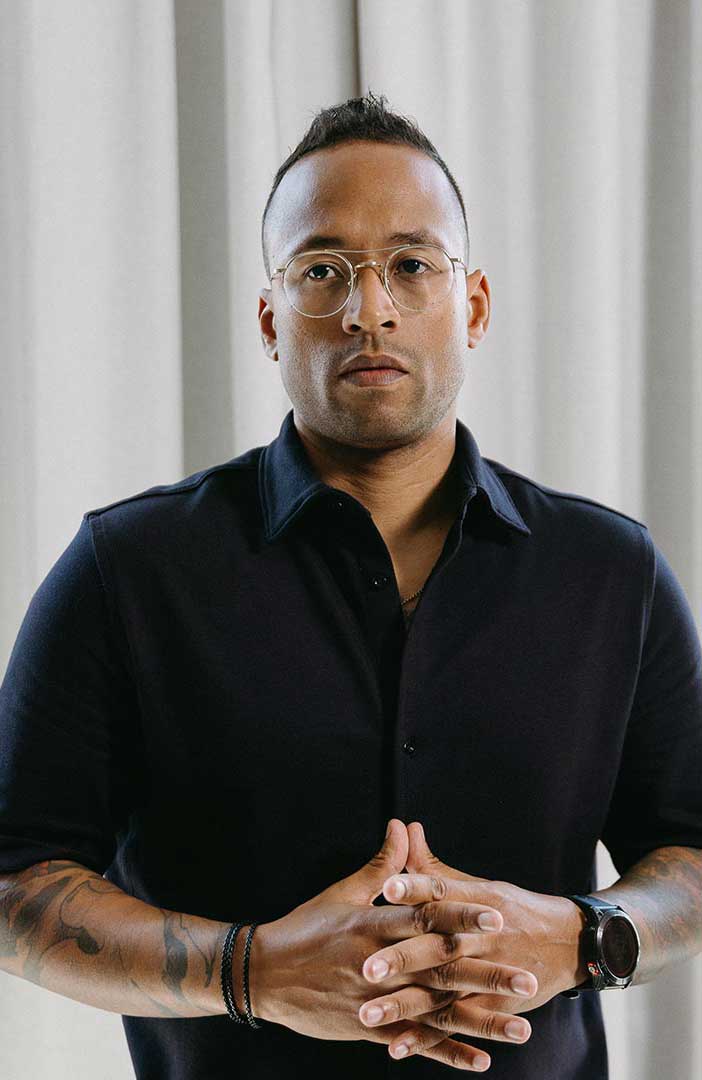

Julian Tillotson is the Founder & CEO of INDIRAP, a full-service video production and creative strategy agency based in Chicago, IL. With 10+ years of experience, INDIRAP has delivered 20,000+ videos to 900+ clients across 40+ industries, making it one of North America's leading digital creative agencies.