B2B YouTube marketing is the practice of using YouTube as a sales channel, with videos engineered to shorten the sales cycle, pre-handle objections, and give buyers the proof they need before a demo call. Done right, a YouTube channel becomes the hardest-working rep on the team, 24 hours a day, 365 days a year.
We have shipped 20,000+ videos for 900+ brands since 2013. The B2B channels that compound are the ones that stop thinking of YouTube as a brand channel and start thinking of it as a sales channel with a brand voice.
The average B2B buyer today completes 60 to 70% of their research before they ever contact sales. They read reviews, watch competitors, pull up LinkedIn posts, and (increasingly) sit through 10 to 30 minutes of YouTube from the vendors they are shortlisting. That window is where sales cycles are shortened or extended.
Three stats drive the point. B2B buyers watch video 2.3x more often than text when evaluating a vendor. Deals that include a YouTube pre-call touchpoint close 15 to 30% faster on average. And prospects who watched a case study video enter the first sales call 40% more informed, which lets reps skip discovery and go straight to fit.
1, the "what we do in 90 seconds" video. Pinned to the top of the channel, embedded on the homepage, and shared in cold outbound. This is the video that answers "what does this company actually sell" in 90 seconds, no fluff, no team shots, no music swell at the end.
2, the top three Teach videos targeting your top three buyer questions. Each one answers a specific objection or research question your sales team hears every week. "How to shorten a B2B sales cycle." "What a video program actually costs." "How to measure video ROI."
3, the signature case study. One Prove video that walks through the full customer journey from problem to measurable outcome, with the customer on camera. Not a montage, a full documentary-style walkthrough of 4 to 8 minutes. This is the video every rep sends after the first call.
Four places YouTube cuts time out of the funnel.
Pre-call education. Reps send a 6-minute "what we do and how we work" video as homework before the first meeting. Discovery questions get skipped. First calls go straight to fit.
Mid-cycle objection handling. When a buyer surfaces an objection ("your pricing feels high"), the rep sends a Teach video answering that exact objection. It arrives from the brand's voice, not the rep's, which gives it credibility a sales email cannot carry.
Internal champion enablement. Your champion inside the buying committee needs to sell your product to a CFO and an IT lead. A sharp 4-minute case study video is a better champion-enablement asset than a 60-page PDF.
Post-call reinforcement. After the demo, reps send a signature case study. The prospect watches it on their own time, and the deal re-enters the committee discussion with the proof already loaded.
Three habits turn a YouTube channel into a sales channel.
Habit 1, name a sales owner for every Prove video. Sales uses it, sales decides when it is sent, sales reports whether it closes. If marketing produces Prove videos nobody uses, you are making a reel.
Habit 2, build a video library inside the CRM. Reps need to find a video by use case in under 30 seconds. "Objection: pricing," "Objection: integration," "Vertical: healthcare," "Deal stage: committee review." A library organized by sales use case gets used.
Habit 3, track video-attributed deals. UTM-tag every video description link. Report monthly on which videos appear in closed-won deal paths. The videos that correlate with closes get more budget.
Realistic benchmarks for a brand new B2B channel with the strategy above running.
By day 30, the three Teach videos and one case study published. Sales has sent each one to at least five prospects. First attributed deal in the pipeline.
By day 60, two Shorts live per week, pulled from the long-form library. Monthly website click rate from descriptions hitting 2 to 4%. Sales starting to send Teach videos as objection responses in replies.
By day 90, 1 Teach, 1 Prove, 1 Perform rhythm established. Top video pulling 500 to 1,500 views (not viral, but relevant audience). First closed-won deal with a YouTube touchpoint in the activity log.
Four patterns we see across B2B channels that stall.
One, posting case studies with no Teach videos. The channel reads as a sales site, so cold audiences do rarely discover it, and SEO or AEO traffic stays flat.
Two, outsourcing production without owning strategy. An agency ships beautifully produced videos that answer no buyer question. The videos go on the channel and sit idle.
Three, treating the channel as a quarterly project. B2B YouTube compounds on a weekly cadence over 12 months. A six-week burst and then silence resets the whole clock.
Four, no sales involvement. The videos marketing makes are rarely the videos sales needs. Without a sales owner on every Prove video, the sales team often does not know the library exists.
For the full YouTube channel playbook this strategy sits inside, see the YouTube for business pillar. For the atomization model that keeps the content pipeline full, read our content atomization post.
Before you call your B2B YouTube channel a sales channel, make sure every one of these is true.
You have a 90-second "what we do" video pinned. You have at least three Teach videos answering top buyer questions. You have one signature case study with the customer on camera. Every Prove video has a named sales owner and a sales use case. UTM-tagged links in every description. Monthly report tying videos to closed-won deals in the CRM.
We treated our B2B channel like a corporate asset for the first two years. Case studies with logos. Executive interviews in boardroom chairs. Earnest voiceovers about transformation. The engagement data was unambiguous: 20-second average view duration, 0.3% CTR, zero inbound from the channel. B2B buyers do not watch brand brochures on YouTube. They watch Teach videos that answer the question they are about to google. The channel pivoted the moment we accepted that. Executive interviews moved off YouTube and onto a private sales library. The public feed became buyer-education first.
A new B2B channel does not need 15 videos. It needs five, and it needs them to answer the five questions a buyer asks before signing a contract. Week one, publish a 90-second channel welcome that names who you serve, how you work, and what the viewer will learn here. Weeks two through four, publish one Teach video per week on the three biggest pre-sales questions. Week five, publish a Prove video (a case study, but structured as "here is the problem, here is what we tried, here is what moved"). By week eight, you have five assets, each ranking for a different buyer query, and the sales team has an answer to send for every objection they used to repeat on calls.
Across the B2B clients we have run this playbook with, two numbers consistently move inside 90 days. Average time from first touch to signed contract drops roughly 20 to 35%. Average number of discovery calls to close drops from four to two. The mechanism is the same both times: prospects who watched two Teach videos before the sales call enter the first conversation already knowing what the brand believes, how it works, and what it costs in effort terms. The call becomes a fit conversation, not an education.
Every two weeks, the sales team drops the three most common objections and the three most common pre-sales questions into a shared doc. Those six items become the next month's Teach topics. Marketing does not have to guess. Sales does not have to repeat. The channel compounds specifically because its topic queue is sourced from the conversations the buyer is already having. That is the loop. Everything else (production, SEO, thumbnails) is downstream of that loop running cleanly.
Three failure modes repeat. First, trying to produce enterprise-quality video in-house with no system. The output is slow, inconsistent, and the channel starves. Second, outsourcing production without owning strategy. An agency ships beautifully produced videos that answer no buyer question. The videos go on the channel and sit idle. Third, launching with a cluster of six videos in week one and then publishing nothing for three months. YouTube's recommendation surface rewards consistency more than it rewards a strong launch. A channel that drops one Teach video a week for 12 weeks compounds past a channel that drops six videos at launch and goes silent, every single time.
Three production categories reliably fail in-house even at well-resourced B2B teams. Signature executive interviews, because the deliverable requires lighting and sound discipline that most in-house teams only hit on their third or fourth attempt. Case studies with customer travel, because the logistics eat weeks of a producer's time that is more valuable elsewhere. Short-form motion-graphics explainers, because the design toolchain is specialized and the in-house team rarely has time to maintain it. Everything else (BTS, process reels, Teach videos filmed in a controlled space, Shorts from existing long-form) is in-house friendly and worth building the capability for over time.
Ready to make YouTube actually drive leads? If you want our team to build the B2B YouTube library that shortens your sales cycle, book a video strategy call. INDIRAP's Content Kit turns one shoot into a full system of brand, commercial, and social video, including the YouTube library this post describes.
INDIRAP is a Chicago video production and video marketing agency. 20,000+ videos for 900+ brands since 2013.
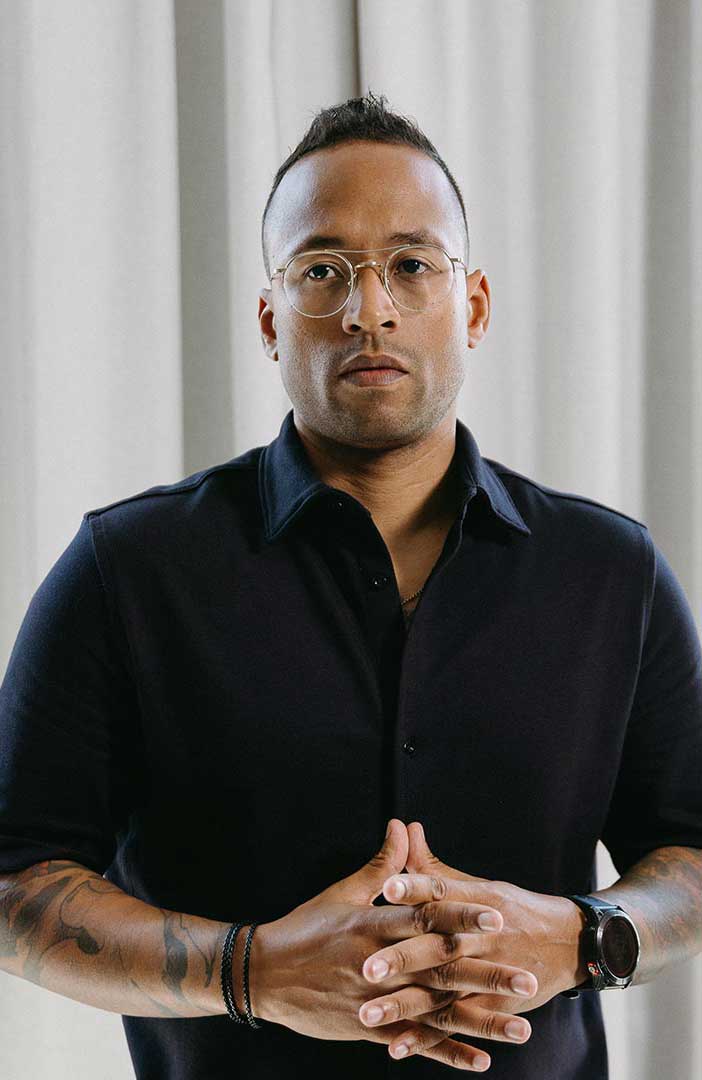

Julian Tillotson is the Founder & CEO of INDIRAP, a full-service video production and creative strategy agency based in Chicago, IL. With 10+ years of experience, INDIRAP has delivered 20,000+ videos to 900+ clients across 40+ industries, making it one of North America's leading digital creative agencies.