Video content atomization is the practice of turning one shoot day into a month of content across YouTube, LinkedIn, Instagram, email, and your website. Run it right and one afternoon of camera time produces 20 to 30 publishable assets. Run it wrong and you leave two-thirds of the value on the SD card.
We have shipped 20,000+ videos for 900+ brands since 2013. Every brand YouTube channel we have grown past 10K subscribers uses some version of the atomization model in this post.
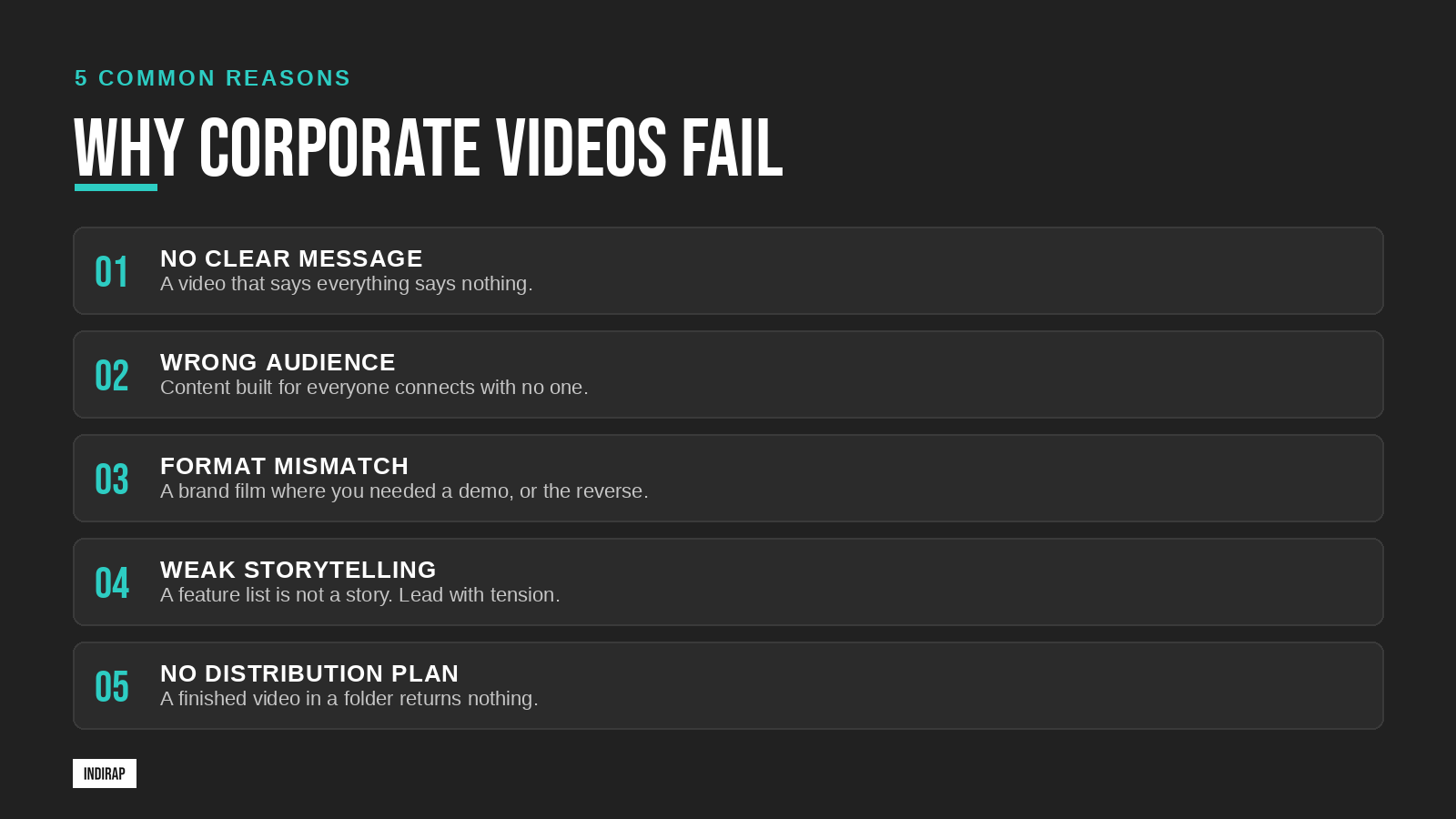
Most brand teams shoot one video, post it in one place, and move on. The cost of production is high and the yield is low. Every shoot day loses 70% of its possible return the moment you cut only the long-form. The b-roll goes unused, the talking-head moments stay locked in a timeline, the sidebar footage becomes a bin on a drive.
Atomization flips that math. You walk into a shoot day with a plan to produce one hero piece and 20+ supporting pieces from the same session. Same lighting, same host, same ideas, 10x the publishable output.
Here is the asset map we run for a typical shoot day with one host, three big ideas, and four hours of camera time.
1 hero long-form YouTube video. 8 to 14 minutes, keyword-first title, chapters, full description.
3 to 5 YouTube Shorts. 60 seconds each, pulled from the strongest moments in the long-form. Standalone hook, standalone payoff.
3 to 4 LinkedIn clips. 30 to 90 seconds, native video upload with keyword-forward captions.
3 to 4 Instagram Reels. Vertical, teal brand accent, overlay text, mix of talking-head and b-roll.
1 to 2 blog posts. Transcribed hero video, cleaned up and rewritten, embedded with the YouTube iframe. Two more posts if you break out individual chapters.
1 email newsletter. 150 to 300 words, teaser plus link to the hero video on YouTube.
1 sales enablement clip. 2 to 4 minutes, pulled from a Prove section, used by sales as pre-call homework for prospects.
Three habits make atomization work on the day.
Habit 1, write the Shorts list before the shoot. Pick five specific moments you want to extract: a number, a counterintuitive claim, a 60-second how-to, a crisp story, a direct question/answer. Shoot each one as a standalone take with a clean hook and payoff, so you have Shorts without having to rescue them from the long-form timeline.
Habit 2, shoot in blocks that match deliverables. Four hours produces more usable material if you break it into blocks: 60 minutes of long-form, 45 minutes of Shorts, 30 minutes of talking-head reaction clips, 30 minutes of b-roll.
Habit 3, capture both horizontal and vertical. Multi-cam setups with one 16:9 camera and one 9:16 camera (or a 4K wide crop) eliminate the "we have to crop everything" cost at edit.
Edit in this order and content ships weekly for a month.
Week 1, hero long-form published to YouTube. Blog post published same week. Email newsletter linking to the hero.
Week 2, first two Shorts and first LinkedIn clip. Second chapter-based blog post if you broke the hero into pieces.
Week 3, next two Shorts and Instagram Reels. Sales enablement clip delivered to the sales team.
Week 4, final Shorts and the hero video repackaged on LinkedIn as a native upload for a second life.
A single shoot day at agency rates costs roughly the same whether you walk away with one asset or 25. If a shoot costs $8,000 and produces one hero video, your cost per asset is $8,000. If the same shoot produces 25 assets, your cost per asset is $320. That is the arbitrage that lets lean brand teams out-ship much bigger competitors.
The brands we work with inside the Content Kit model shoot four times a year and publish weekly for 12 months. Four shoot days. 48 to 60 weeks of content. One consistent brand across every channel.
The hero long-form is the piece that compounds. Shorts drive discovery for new audiences on YouTube and feed subscribers to the main channel. LinkedIn and Instagram clips drive site traffic that converts. The blog post captures search traffic and embeds the hero video, so an SEO visitor becomes a YouTube viewer. Every output in the atomization map feeds the YouTube library eventually.
For how the atomization model fits inside a full YouTube content strategy, see our YouTube content strategy post, and the full channel playbook at the YouTube for business pillar.
Before your next shoot day, make sure the plan passes these five.
Named hero video (title + hook written in advance). Shorts list of 3 to 5 extracted moments, scripted as standalone takes. Multi-cam setup capturing both 16:9 and 9:16. Edit calendar mapping which asset ships in which week. Named owner for publishing each output on each channel.
For years our shoots produced one deliverable. A hero video. Beautiful. Expensive. Single-use. The client would post it once, maybe twice, and the asset would quietly die. The economics were brutal for both sides: we were producing craft for an audience of three, and the client was paying commercial production rates for one week of social reach. The atomization model fixed both halves at once. Same shoot day, same crew, same client time commitment, 20 to 30 deliverables across YouTube long-form, three Shorts, LinkedIn clips, Instagram Reels, email teasers, and a long-form blog embed.
Atomization fails when the shoot plan was built for one output and someone tries to retrofit social cuts in the edit. The plan has to be designed for the atomized outputs from the start. That means two things on the shoot day: capture every answer in both horizontal and vertical framings (we run two cameras), and ask every question in a way that produces a quotable 15-second clip in isolation, not just a long-form answer that depends on the previous question for context. Those two choices cost nothing on set and unlock the full 1 to 20 output map in post.
A traditional single-asset shoot runs $25 to $80k for one hero film. An atomized shoot at the same budget produces the hero film plus the full social library, which is 20 to 30 pieces of publishable content. The cost-per-asset falls from $25 to $80k to roughly $1,500 to $4,000. CMOs intuitively know this is better. CFOs see the shift the moment the comparison is drawn on a single slide: same budget, 20x the surface area, same production quality. That is the slide that unlocks the renewal.
The Shorts that come out of a shoot day are not just throwaway social fillers. They are a top-of-funnel discovery layer for the long-form YouTube asset. A viewer who stops on a Short, taps the channel, and sees the related long-form Teach video in the first row of uploads is 3 to 4x more likely to watch past the 30-second mark on that long-form than a cold-feed viewer. Our Shorts-to-long-form click-through sits around 2 to 3%, and the compounding effect on the long-form retention curve shows up within two weeks of a Short going live.
Early on we edited atomized shoots in the wrong order: long-form first, Shorts last. By the time the Shorts rolled around, the editor was tired, the client was eager to publish, and the Shorts came out as flat clips of the long-form video. We now edit Shorts first, long-form second. The Short has to stand alone. It has to have its own hook, its own payoff, and its own three-word captioned punchline. When the Short is sharp, the long-form inherits that sharpness because the key quotes have already been identified and tightened.
Atomization only pays off when the social cuts ship fast. Our rule: Shorts within 48 hours of the shoot wrap, LinkedIn clip within 72, long-form YouTube within 10 days, blog embed within 14. That cadence has two benefits. It compresses the production stress because nothing sits open for weeks. And it concentrates the publishing wave so the client sees meaningful channel velocity instead of a trickle. The 48-hour Shorts turn specifically catches the social momentum from the shoot day itself, which several of our clients post about on their own feeds, generating warm referral views the Shorts can then convert.
Ready to make YouTube actually drive leads? If you want our team to turn one shoot into a month of YouTube, Shorts, LinkedIn, and email assets, book a video strategy call. INDIRAP's Content Kit turns one shoot into a full system of brand, commercial, and social video, including the YouTube library this post describes.
INDIRAP is a Chicago video production and video marketing agency. 20,000+ videos for 900+ brands since 2013.
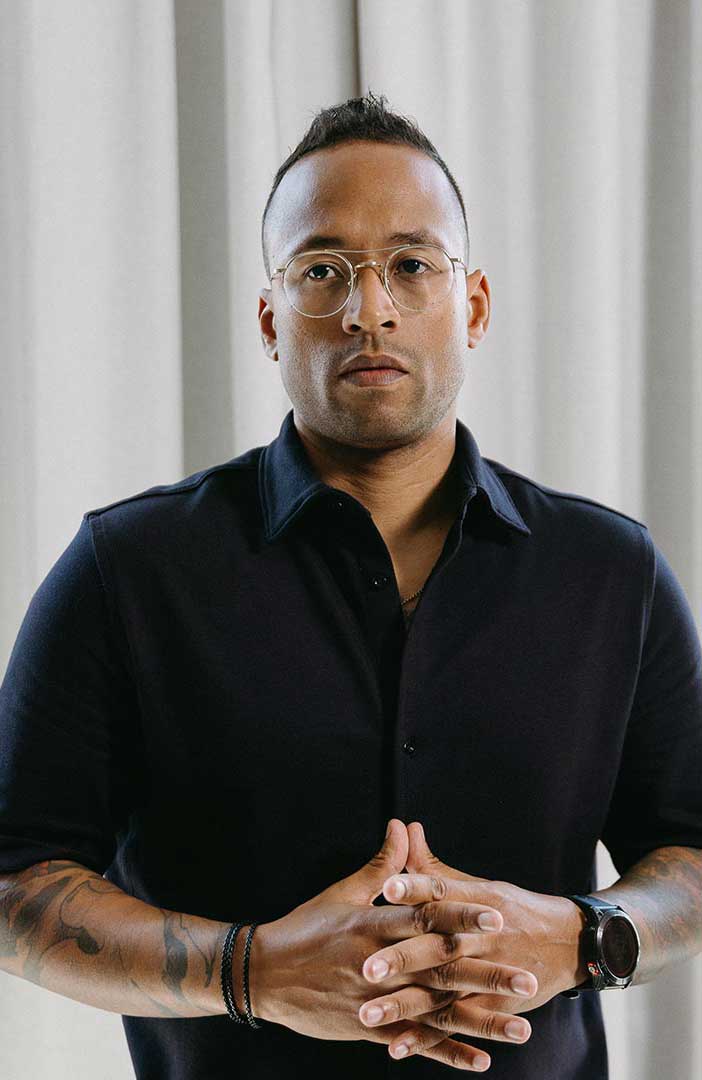

Julian Tillotson is the Founder & CEO of INDIRAP, a full-service video production and creative strategy agency based in Chicago, IL. With 10+ years of experience, INDIRAP has delivered 20,000+ videos to 900+ clients across 40+ industries, making it one of North America's leading digital creative agencies.