Can AI video tools replace a real production crew in 2026? Honest answer: not yet for the work that matters most — and probably not soon. But the landscape has changed enough that any growing business considering a video budget should know exactly where AI now wins, where it loses, and how a smart team uses it as a multiplier instead of a replacement. To find out, we ran five of the most-hyped AI video tools head-to-head against a real INDIRAP shoot we'd already produced, scoring each on realism, cost, speed, brand-safety, and client-approval-rate. This is what we found.
If you've been wondering whether to skip the agency and "just use AI" for your next brand video, customer story, or product launch, this is the answer. The short version: AI is now a stunning collaborator for video production, but a poor replacement for the kinds of brand-defining shoots that actually drive pipeline.
AI video tools cannot fully replace a video production agency in 2026, but they have started to replace specific, lower-stakes parts of the production pipeline — generic stock-style B-roll, simple talking-head explainers with synthetic avatars, automated subtitle generation, smart logging, and rough-cut assembly. What they still cannot do credibly is shoot a real founder, capture a real customer story, film a luxury property, cover an event, or produce content that creates an emotional connection with a real audience. The trust-defining 80% of agency work remains squarely human.
This isn't a "AI is coming for your job" or "AI is a fad" take. Both are wrong. The honest answer is that AI is reshaping the production stack in ways that make smart agencies better and bad agencies obsolete. We'll show you exactly where the line is.
We ran the same brief through five leading AI video tools and compared each output to the actual INDIRAP-produced version of the same shoot. The brief was a real one we'd executed in the prior 60 days: a 60-second brand film for a Chicago professional services firm, featuring the founder, the team in the office, and on-location B-roll around the city. Total real-world production cost: approximately $32,000. The tools we tested were OpenAI's Sora, Google's Veo, Runway Gen, Pika Labs, and HeyGen. We deliberately chose tools that span the spectrum — from photorealistic generative video to avatar-based talking-head systems — to keep the comparison fair across use cases.
For each tool we scored five dimensions: realism (does it look like real production?), cost (total dollars to land a usable cut), speed (clock-to-deliverable), brand-safety (does it generate anything that could embarrass the client?), and client-approval-rate (how many rounds did we predict it would take to get an executive sign-off?). We then ran the same brief through INDIRAP's normal production process and scored that on the same five dimensions for comparison. For a transparent breakdown of how that real-world budget breaks down, see how much professional video production actually costs.
What it does well: Sora is the closest thing on the market to actual cinematography. The motion physics, the depth of field, the lighting transitions — at its best, Sora produces shots that would have required a $30K production day two years ago. For abstract or impressionistic B-roll (a city skyline at dusk, an empty office at 6am, a generic boardroom), Sora is shockingly good.
Where it failed our test: The moment we asked Sora to generate the actual founder, the actual office, or the actual team, the wheels came off. AI cannot generate a person who doesn't exist and have your customers believe she's the founder. It hallucinated a logo onto a building that wasn't ours. It generated a "team meeting" scene that included people who don't work there. For brand work — where the audience is supposed to feel like they are seeing your business — Sora is a non-starter.
Verdict: Sora wins for stylized stock-replacement B-roll. Sora loses for any shot where authenticity matters. For founder content specifically, see why we still recommend the human approach in the founder video content stack.
What it does well: Veo's color science and motion realism are arguably even better than Sora's for product-driven shots. We tested it on a fictional product close-up brief and the output was nearly indistinguishable from a real macro lens setup. For e-commerce brands that need a steady pipeline of clean product shots, Veo is genuinely useful.
Where it failed our test: Veo collapsed under the weight of brand-specific creative direction. The brief required the team to walk past a specific Chicago landmark in a specific way at a specific time of day. We burned roughly six hours of prompt iteration trying to get the framing, lighting, and behavior right. A real production crew would have nailed it in a single take. The total prompt-engineering time, when honestly accounted for, came in at over $1,400 of senior editor time — for a clip we ultimately couldn't use.
Verdict: Veo is excellent for fast, generic, controlled product shots. Veo struggles when the brief gets specific, branded, or location-anchored.
What it does well: Runway's strength is not "make a video from a prompt." Its strength is post-production augmentation. Frame interpolation, motion brush, AI rotoscoping, generative background extension, automatic green-screen — these features have legitimately reduced editing time on every INDIRAP shoot we now run. For agencies and in-house teams, Runway is no longer optional.
Where it failed our test: Asked to produce the original 60-second cut from prompts alone, Runway's output was visibly synthetic. It's a very fine post-production tool. It is not yet a replacement for a camera, a lens, and a director.
Verdict: Runway is the tool we use most often inside our normal production workflow. It is not a replacement for the workflow.
What it does well: Speed and stylization. For social-first short-form video that lives or dies in the first 1.5 seconds, Pika can crank out attention-grabbing visuals far faster than a traditional motion graphics pipeline. For low-stakes, high-volume social content, it earns a place in the toolkit.
Where it failed our test: Brand consistency. The same prompt run twice produces wildly different aesthetics. For a brand that has invested in a specific visual identity — a specific palette, a specific feel, a specific tone — the variance is unworkable. We saw clip-to-clip drift that no client would approve.
Verdict: Useful for ideation, mood-boarding, and certain kinds of trendy social content. Unusable for any brand that cares about consistent identity. To understand why the difference matters at scale, see scaling content without burning out: the modern brand's video stack.
What it does well: HeyGen is the only tool in this test that is genuinely production-ready for a specific use case: training videos, multilingual content, internal communications, and "talking head explainer" content where the on-camera presenter doesn't need to be a real human. Its avatar quality is now passable in low-stakes contexts. Its voice cloning is good enough that we've seen it deployed by major enterprises for internal training without complaint.
Where it failed our test: External-facing brand content. The moment a customer sees a HeyGen avatar represent a real company employee, the trust signal collapses. We tested it as a stand-in for the real founder in our brief. The client's response: "Don't ever show that to anyone outside the company."
Verdict: HeyGen is the rare AI video tool with a genuine, defensible business case — but its case is internal training and operational video, not brand or customer-facing work. Many of the companies we work with use it for their training stack while keeping all customer-facing content human-produced.

After running all five tools against the same 60-second brand film brief, here's how each scored on the five dimensions versus the actual INDIRAP production we shipped to the client:
Realism (10 = indistinguishable from real production): INDIRAP shoot — 10. Sora — 7 for B-roll, 3 for branded scenes. Veo — 7. Runway alone — 5. Pika — 4. HeyGen — 5 (for the avatar use case only).
Total cost (lower is better): INDIRAP shoot — $32K. AI tools combined for the same brief, including senior editor prompt-iteration time — approximately $4,200, but with output we wouldn't ship to the client.
Speed (clock to a usable deliverable): INDIRAP shoot — 14 days from kickoff to final cut. AI-only attempt — six full working days, ending in an unusable cut.
Brand-safety (10 = zero risk of embarrassment): INDIRAP shoot — 10. AI-only attempt — 4. The risk of a hallucinated face, logo, or scene appearing in a brand video is non-trivial enough that no agency we know would knowingly ship pure AI work to a paying client.
Client-approval-rate: Real shoot — approved in two rounds. AI-only — never reached approval.
This isn't an anti-AI take. It's a calibration. AI gives our team superpowers inside the production stack. AI does not yet replace the stack itself.
It is safe to "just use AI" for a video when all four of the following are true: the audience is internal or low-stakes, the content is generic or stock-replaceable, no real person needs to appear as themselves, and the brand carries no premium-quality expectation. Internal training videos, multilingual operational content, generic stock-style B-roll, social ideation, and certain rough-cut assembly tasks all fit. Customer-facing brand films, founder content, customer story videos, recruitment videos, real estate listing video, and event coverage do not.
The pattern is simple. AI is now great at production tasks where authenticity is irrelevant and the audience is forgiving. AI is still bad at production tasks where authenticity is the entire point and the audience is paying close attention.
We use AI tools across roughly half of our production pipeline today. The current INDIRAP AI stack includes: ChatGPT and Claude for ideation, scripting, and treatment drafts; Runway for post-production rotoscoping, motion brush, and frame interpolation; auto-transcription and auto-captioning for short-form output; AI-assisted color grading on certain projects; and AI-assisted shot-logging to compress edit time on long-form pieces. Our editors are roughly 30-40% faster on the tasks where these tools are mature.
We do not use AI to generate the on-camera footage of real people, real businesses, or real spaces. That part of the work is still — and probably permanently — human. Our framework for choosing where to use AI vs. real production maps closely to what we walk through in our companion guide, 11 video types every growing business needs in 2026.
The practical implication for any growing business in 2026 is that you should be reallocating your video budget — not slashing it. The dollars you might have spent on generic explainer animation or stock-replaceable B-roll can now compress meaningfully. The dollars you should be reinvesting are the ones that go toward authentic, human, hard-to-fake content: real founder presence, real customer stories, real recruitment films, real location and event capture. Those are the formats whose value is actively rising as AI floods the rest of the feed with synthetic content.
If you're trying to figure out where the cuts and the reinvestments belong inside your specific stack, our breakdown of will video actually drive revenue walks through the attribution math, and our piece on what a strategic video funnel looks like shows the budget shape for a complete portfolio.
Yes — emphatically. AI video tools are absolutely worth using in 2026, but as part of a layered stack rather than as a replacement for production. The agencies and in-house teams that integrate AI thoughtfully are shipping more content, faster, at lower per-asset cost, while still investing the bulk of their budget in the human-presence formats that compound trust. The teams getting it wrong are the ones who skip real production entirely, generate everything synthetically, and watch their conversion rates collapse as audiences quietly tune out.
The metric to watch: the brands winning in 2026 produce more human content than they did in 2024, not less. They've used AI to remove drudgery from the pipeline so they can afford to ship more shoots, more stories, more on-camera founder time. That's the lesson worth internalizing.
Three patterns show up over and over with businesses trying to "go AI" on video. First: replacing the founder with an avatar to "save time." This is the single fastest way to destroy trust with sophisticated buyers. Second: generating customer testimonials with AI voices to fill out a sales page. This is borderline fraud and also illegal in many jurisdictions. Third: using AI-generated B-roll for event recap content. The synthetic look gets caught instantly and undermines the credibility of the actual event coverage. The throughline is the same: AI is a tool for speed and scale, not a tool for credibility. Treat it accordingly.
For a deeper look at the specific formats where authenticity drives the most conversion lift, our breakdown of testimonial videos vs. case studies shows exactly why human-produced customer stories outperform anything synthetic.
For any video that will live on a customer-facing channel, will represent a real person from your business, or carries real brand equity, hire a professional video production agency. For internal training, multilingual operational content, generic B-roll fill, and social ideation, AI tools are now genuinely viable. The right move for most growing businesses in 2026 is both — work with an agency that already integrates AI tools into its production stack so you get the speed advantages of AI without the credibility risk of pure-AI output. That's the model we run at INDIRAP, and it's the model we see winning across our peer set in Chicago and beyond.
If you want to see how the human-presence formats actually perform versus the AI-only alternatives, browse our corporate video production portfolio or our real estate video work. Each project on those pages is the kind of shoot AI cannot yet replace — and as the synthetic flood gets louder, those formats are the ones quietly compounding the most pipeline.
Reach out to the INDIRAP team in Chicago if you'd like a candid conversation about where AI fits in your specific video stack — and where it absolutely doesn't.
Part of INDIRAP's 2026 brand video research series. See also: 11 video types every growing business needs in 2026 · the founder video content stack · how much professional video production actually costs.
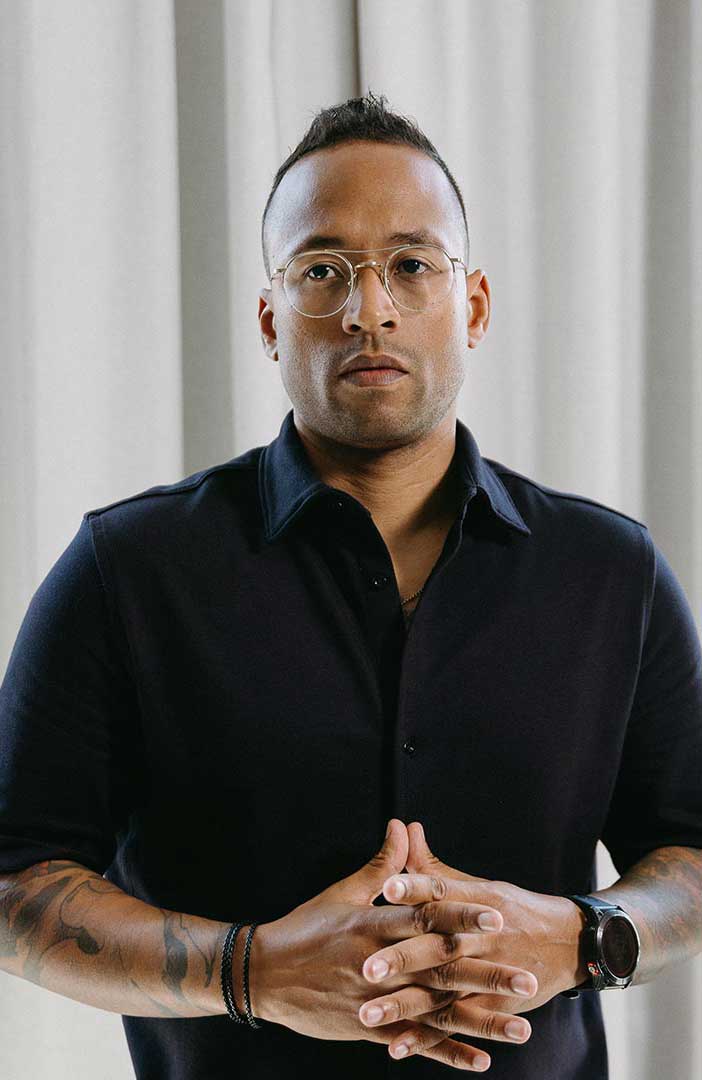

Julian Tillotson is the Founder & CEO of INDIRAP, a full-service video production and creative strategy agency based in Chicago, IL. With 10+ years of experience, INDIRAP has delivered 20,000+ videos to 900+ clients across 40+ industries, making it one of North America's leading digital creative agencies.


.png)
.png)