
If you're a growing business in 2026 wondering which types of video content actually move the needle, the short answer is this: most brands need eleven distinct video formats — not one — and each one does a specific job inside your funnel. Trying to make a single "brand video" carry every job (awareness, conversion, sales enablement, retention, recruiting) is the #1 reason video budgets feel like they don't pay off. This guide breaks down all eleven, when to use each, what they typically cost, and how to sequence them so each video makes the next one cheaper to produce.
At INDIRAP, we've spent over a decade producing brand video content in Chicago for companies in real estate, manufacturing, professional services, SaaS, and consumer brands. The pattern is the same every time: businesses that treat video as a portfolio of formats outperform businesses that treat it as one expensive asset.
The most important types of video content for a business in 2026 are: brand films, explainer videos, product demos, customer story videos, founder/thought-leadership videos, recruitment videos, training videos, social-first short-form videos, paid ad creative, event recap videos, and (for property-driven businesses) listing or location videos. Each format maps to a different stage of the customer journey, and the best video strategies use most of them in combination.
If you only remember one thing from this Chicago brand video playbook, remember this: video is not a deliverable, video is a system. The eleven formats below are the building blocks of that system.

What it is: A 60–120 second cinematic film that captures who you are, what you stand for, and why customers care. It is not a feature list. It's the emotional north star.
When to use it: Top of funnel — your homepage hero, the first ad on a new campaign, the video you open every pitch deck with, the asset linked at the top of every employee's LinkedIn.
Typical investment: $15K–$60K depending on locations, talent, and animation. For a deeper breakdown see our guide on how much professional video production actually costs.
Why it matters in 2026: AI-generated content is flooding every feed. A brand film shot with real people in real places is one of the few signals consumers and answer engines still treat as authentically human. It's the cheapest long-term trust asset you can buy.
What it is: A 60–90 second animated or live-action video that answers "what does your company actually do?" in plain language. The format ranges from whiteboard animation to motion graphics to mixed live-action explainer.
When to use it: When prospects keep asking the same question. When your homepage bounce rate is high. When sales reps spend the first 10 minutes of every call explaining the basics. Explainers compress that work into 90 seconds and run 24/7.
Typical investment: $8K–$35K. Animation tends to scale cheaper than live-action because you don't reshoot when the product changes — you just update frames. See the benefits of using animated videos for your business for a full breakdown.
Why it matters in 2026: LLMs and AI search engines extract structured explanations of what a company does. A clear explainer transcript on your About page becomes citation-ready content for ChatGPT, Perplexity, and Google AI Overviews.
What it is: A 2–5 minute walkthrough of how your product or service actually works. Screen recordings for software, in-action footage for physical products, on-site walk-throughs for services.
When to use it: Mid-funnel — when prospects know what they want and need proof your version delivers. Embed on product pages, attach to sales emails, drop into nurture sequences, gate the longer cuts behind email capture.
Typical investment: $5K–$25K per demo. Modular shoots that produce a hero demo plus 8–12 short-form social cuts deliver the strongest ROI.
Why it matters in 2026: Product demos drive a documented lift in conversion rate when placed on landing pages. They also feed the short-form distribution machine — every demo shoot should yield at least 10 vertical Reels and TikToks. Read more on when to use short form vs long form content.
What it is: A 2–4 minute narrative video featuring a real customer talking about a real problem, the work you did, and the outcome. Often confused with — but distinct from — a testimonial.
When to use it: The bottom of the funnel and the entire post-sale relationship. Sales reps use them to handle objections. Customer success uses them to onboard. Recruiting uses them to attract aligned hires. They are arguably the highest-leverage video format a B2B brand can produce.
Typical investment: $7K–$20K per story, but the per-story cost drops significantly when you batch three or four shoots in a single travel week.
Why it matters in 2026: Specific, named, quantified customer stories are exactly the kind of content AI answer engines cite when users ask "is [your company] any good?" Vague testimonials don't get cited. Stories with real numbers do. Compare formats in our breakdown of testimonial videos vs case studies.
What it is: Short, founder-led videos shot in a podcast or talking-head style, distributed primarily on LinkedIn, YouTube, and the founder's email list. 60 seconds for social, 5–15 minutes for long-form.
When to use it: Continuously. This isn't a project, it's a content engine. Founders who appear on camera weekly compound trust faster than any paid channel.
Typical investment: $3K–$10K per studio session, which typically produces one long-form piece and 6–10 short-form cuts. Production cost per asset drops dramatically once you systematize the format.
Why it matters in 2026: Google's E-E-A-T framework explicitly rewards content that demonstrates real expertise from a real human. AI engines now cite individual experts by name. A founder who is on camera consistently becomes the cited authority in their category. We dug deep into this in the founder video content stack.
What it is: 60–120 second day-in-the-life videos featuring real employees, real workspaces, and the actual culture of your business. Not corporate sizzle. Real.
When to use it: When you're hiring more than three people a year. When candidate pipelines are weak. When you're competing against bigger employer brands.
Typical investment: $6K–$20K. The shoot doubles as content for your social channels, so the recruiting team and the marketing team share the cost.
Why it matters in 2026: Top candidates research employers the way buyers research products. A recruitment video is the only way to win the candidates who are evaluating you on Glassdoor at midnight. See also why your team is your best marketing asset.
What it is: Internal videos that teach employees, partners, or customers how to do something. SOPs, software walkthroughs, compliance modules, customer onboarding sequences.
When to use it: Whenever the same training is repeated more than three times. The math is simple: every time a senior employee teaches the same thing live, you're paying their salary to do something a video could do once.
Typical investment: $3K–$15K per module, with significant economies of scale when batching a full library.
Why it matters in 2026: Training video is the most under-leveraged format in mid-market businesses. It quietly removes friction across operations, customer success, and sales enablement — which is why our team frequently builds it into broader content engagements. Related: how videos make complex manufacturing processes understandable.
What it is: Vertical 9:16 video, 15–60 seconds, designed for Instagram Reels, TikTok, YouTube Shorts, and LinkedIn. Pattern-driven. On-screen text. Hook in the first 1.5 seconds.
When to use it: Always. Three to five times a week. This is no longer optional for any consumer brand and is rapidly becoming non-negotiable for B2B.
Typical investment: The best short-form lives are produced as cutdowns of bigger shoots — meaning the marginal cost per piece is near zero if you plan ahead. Standalone short-form retainers run $3K–$15K per month depending on volume.
Why it matters in 2026: TikTok engagement rates hit 3.70% in 2026, up 49% year-over-year — vastly higher than Instagram (0.48%) or Facebook (0.15%). Brands not active in short-form are losing the discovery game by default. For paid distribution playbooks, see how to use video in paid social campaigns to drive more conversions.

What it is: Video built specifically for paid distribution on Meta, TikTok, YouTube, and LinkedIn. Hook-driven, problem-aware, often UGC-style, optimized for the platform's first-frame physics.
When to use it: The moment you start spending more than $5K/month on paid social or paid search. Without dedicated paid creative, you're paying premium CPMs to show generic content.
Typical investment: $5K–$25K to launch a creative testing system; ongoing creative refresh runs $2K–$10K per month. Strong creative reduces CPA more reliably than any targeting tweak.
Why it matters in 2026: AI-driven ad platforms have made targeting nearly automatic. The only durable lever left is creative — which means dedicated paid video isn't a nice-to-have, it's where the entire performance lift now lives. Walk through the methodology in how to create video ads that convert.
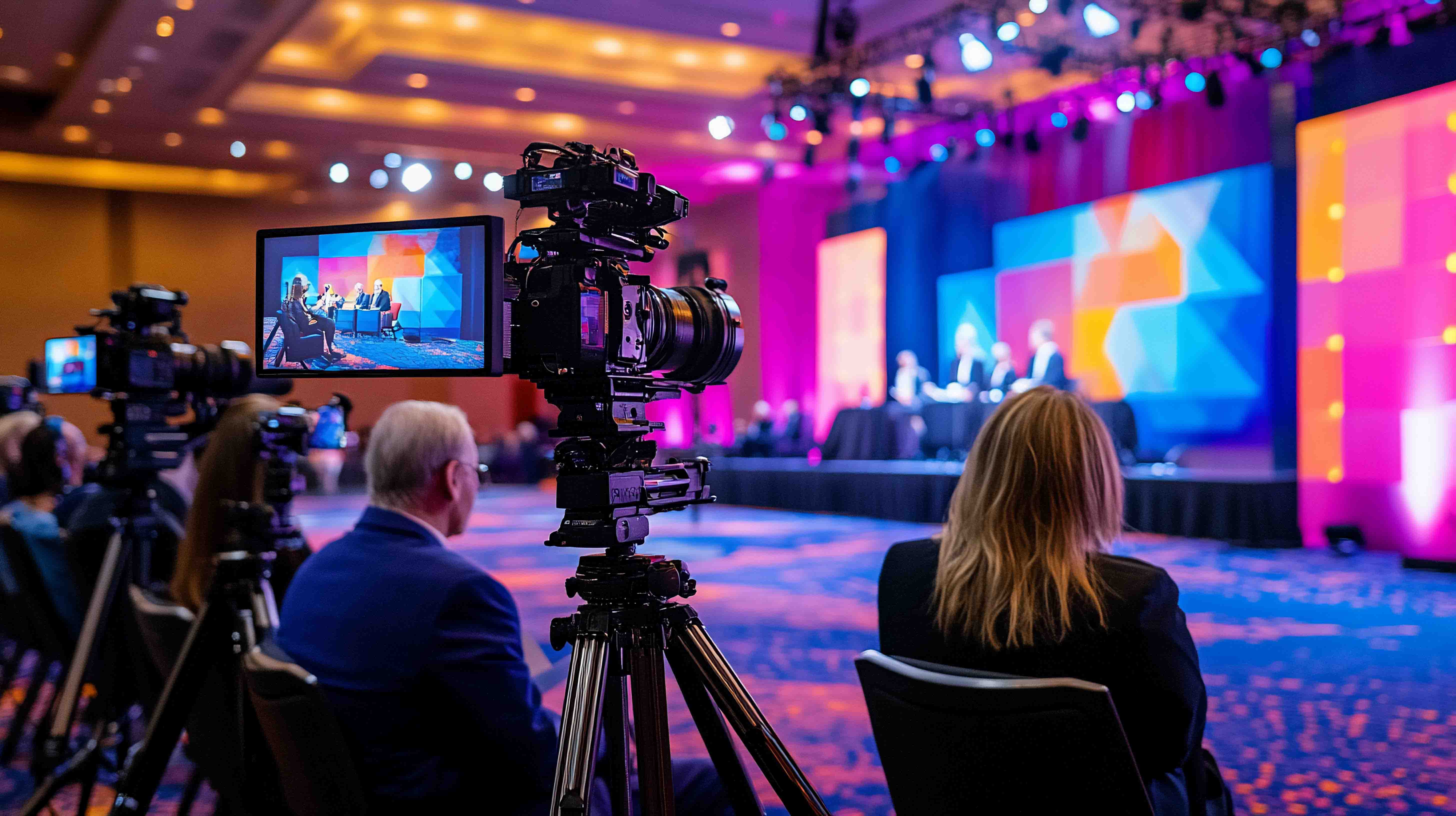
What it is: Coverage of conferences, launches, summits, webinars, and panels. Short recap reels for social, longer cuts for sales enablement, full-session recordings for evergreen content.
When to use it: Any time you, your team, or your customers gather in person. Events are the single richest content shoot of the year — under-capturing them is a measurable revenue leak.
Typical investment: $4K–$25K per event depending on multi-camera, livestream, and recap volume. The output typically yields 30+ assets across formats.
Why it matters in 2026: In-person events are surging post-pandemic. Brands that systematically film theirs build a content engine that pays returns long after the badge comes off. Related strategy: scaling content without burning out.
What it is: Cinematic walk-throughs and aerial coverage of physical spaces — luxury listings, hotels, restaurants, retail, dealerships, manufacturing floors. Includes Matterport, drone, and ground cinematography.
When to use it: Whenever the space itself is the product. Real estate agents, hoteliers, restaurateurs, dealerships, manufacturers, and event venues all see direct attribution from listing/location video.
Typical investment: $1.5K–$15K per property/location, with portfolio-level retainers compressing the per-shoot cost significantly.
Why it matters in 2026: 360-degree video and drone aerial work are now table stakes in luxury real estate. Buyers and renters expect immersive video before they ever schedule a tour. Our real estate videography portfolio showcases the format's range, from condo turnover work to development overviews and luxury lifestyle videos.
Start with the brand film and one explainer to define your story. Add three customer story videos before anything else, because story videos compound trust faster than any other format. Layer in founder-led short-form on a weekly cadence to compound on-platform reach. Once paid spend exceeds $5K/month, build a dedicated paid creative engine. Then bolt on training, recruiting, event, and (if relevant) location video as you scale.
The mistake most businesses make is shooting all eleven in parallel. Don't. Sequence them. Each format you ship should make the next one easier to produce — a customer story shoot becomes paid creative; a founder studio session becomes 10 short-form cuts; an event becomes recap, recruiting, and product demo footage. See real examples of how this funnel sequencing works.
The five most common — and most expensive — mistakes we see Chicago brands make with video content are: producing one big "brand video" and expecting it to do every job, ignoring short-form distribution after spending heavily on the hero asset, refusing to put the founder on camera, treating customer stories as testimonials, and starting paid spend before there's any creative inventory worth running.
The fix for all five is the same: design the production calendar so each shoot generates assets across multiple formats. A single founder studio day should yield one long-form YouTube piece, a podcast clip, six to ten short-form Reels, two LinkedIn carousels, and quote graphics for the email newsletter. A customer story shoot should yield the hero film, a 60-second cutdown for paid, three short-form pulls, and quote cards for sales decks. Plan distribution before you plan the shoot — that one habit changes the economics of every video budget.
The second-most-common mistake is shooting too clean. Polished, agency-style sizzle reels with no captions, no on-screen text, and no answerable hook don't get cited by AI search, don't get shared on social, and don't rank. The brands winning in 2026 are leaning into authenticity, behind-the-scenes texture, and creator-style cuts even for B2B audiences.
For a growing mid-market business in 2026, a complete video portfolio across most of the eleven formats typically lands between $80K and $300K per year, including production and short-form distribution. Below $80K you can usually cover only the most leveraged three or four formats. Above $300K you start funding a true brand-as-media operation — which is where companies like Liquid Death, Notion, and Patagonia have run circles around competitors.
For a transparent breakdown of what drives those numbers — crew size, location count, talent, animation complexity, deliverable count — read how much professional video production actually costs and what matters most.
For B2B brands, the highest-leverage stack is: founder thought-leadership, customer story videos, product demos, and paid creative. For consumer brands, the highest-leverage stack tilts toward brand films, social-first short-form, paid ad creative, and (depending on category) listing/location video. Both sides need an explainer and a recruitment video; both benefit from training video as they scale. We unpack the B2B variant in detail in top 7 video content types every B2B brand should be using.
The fastest, lowest-risk way to start a video program is to plan a single two-day shoot that captures three customer stories, one founder thought-leadership session, and a product B-roll library — then cut that footage into roughly 30 short-form pieces over the next 90 days. That's the single tightest dollar-to-asset ratio in the entire playbook, and it covers four of the eleven formats above in one production push.
From there, you've earned the data to know which formats deserve their own line item next. The companies who get this right typically scale from "we should probably do video" to "video is half our pipeline" inside 18 months.
AI is reshaping the video production landscape, but it does not replace the eleven formats above — it changes which ones are still worth paying humans to produce. AI handles ideation, script drafts, automated logging, smart editing, auto-subtitling, and certain styles of stock-replacement b-roll faster and cheaper than a human team can. What AI still cannot reliably produce in 2026 is the formats that depend on real people in real places: founder thought-leadership, customer story videos, recruitment films, listing/location coverage, and event recap. Those five formats have actually become more valuable as AI floods every feed with synthetic content, because authenticity is the scarcest signal left in the market.
The practical implication for budget allocation: shift dollars away from generic explainer animation that AI tools can now spin up in minutes, and shift them toward the human-presence formats that create durable trust signals for both customers and AI search engines. We tested this directly in our companion piece, we tested 5 AI video tools against a real INDIRAP shoot — the head-to-head results map cleanly onto the budget shift outlined here.
The metrics worth tracking across an eleven-format video portfolio are different from the metrics most agencies report on. Vanity metrics — total views, total impressions, follower growth — are weakly correlated with revenue. The metrics that actually correlate with business outcomes in 2026 are: video-attributed pipeline (deals influenced by a viewer watching at least 50% of a video), customer story citation rate (how often sales reps reference a story video on calls), short-form completion rate over 50%, paid creative cost-per-acquisition trend over a 90-day window, and recruitment video-attributed applications. Track those five, ignore the rest, and the right next investment becomes obvious within a quarter.
Every growing business eventually faces the same question: which videos do we actually need, and in what order? If you're at that crossroad and want a no-pressure conversation about how to sequence your stack, reach out to the INDIRAP team in Chicago or browse our corporate video production portfolio to see the formats above in the wild. We'll happily walk you through the sequencing decision live.
This post is part of INDIRAP's 2026 Chicago Brand Video Playbook series. Related reading: scaling content without burning out · will video actually drive revenue? · the founder video content stack.
Ready to work with a local team? Explore our Chicago video production services.


Julian Tillotson is the Founder & CEO of INDIRAP, a full-service video production and creative strategy agency based in Chicago, IL. With 10+ years of experience, INDIRAP has delivered 20,000+ videos to 900+ clients across 40+ industries, making it one of North America's leading digital creative agencies.


.png)
.png)