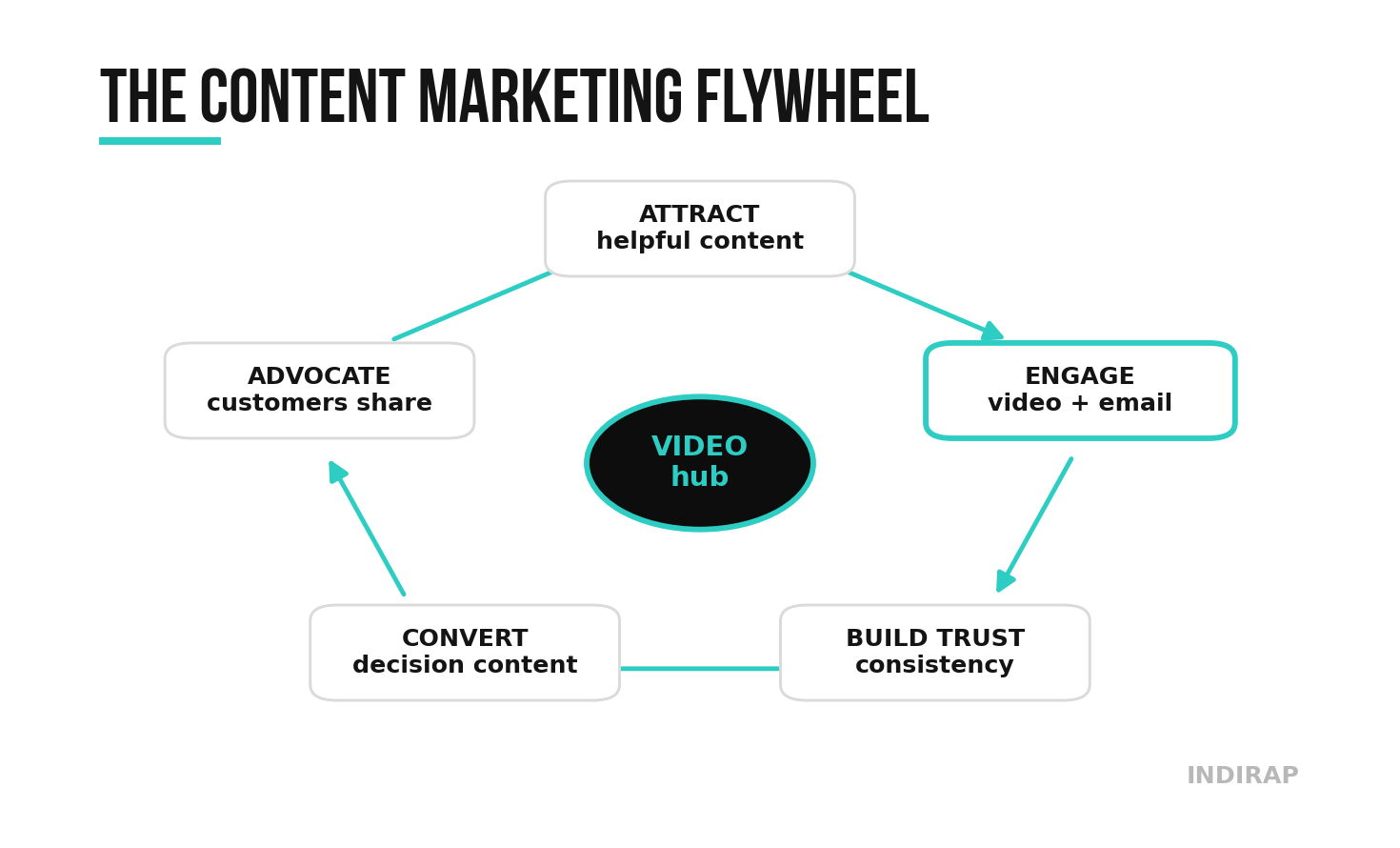
Content marketing is the practice of creating and distributing valuable, relevant content to attract a clearly defined audience, earn their trust, and turn that trust into profitable customer action. Instead of interrupting people with a pitch, you draw them in by being genuinely useful, building a library that compounds and keeps generating leads for years.
Every brand is a media company now. The ones that win attention in 2026 are not the ones that shout the loudest. They are the ones that consistently answer the questions their future customers are already asking. That is the whole idea behind content marketing, and it is why a single well-built library of content can keep generating leads for years after it is published.
This guide covers what content marketing actually is, why it works so well, the formats that matter most this year, and a step-by-step way to build a strategy that compounds. Because video now drives the majority of internet traffic and the highest engagement of any format, we will pay special attention to where video fits, and how to turn a content library into a system that produces pipeline instead of just page views.
Content marketing is the practice of creating and distributing valuable, relevant content to attract a clearly defined audience, earn their trust, and turn that trust into profitable customer action. Instead of interrupting people with a pitch, you draw them in by being genuinely useful.
The distinction that matters is value. A promotional email that only talks about you is advertising. A guide that helps your buyer solve a real problem, and happens to show what you can do, is content marketing. When you become the source people rely on for good answers, becoming the source they rely on for products and services is a natural next step.
Content marketing shows up in many forms: blog posts and guides, videos, email newsletters, podcasts, webinars, original research, case studies, social posts, and infographics. What unites them is intent. Each piece is built to serve the audience first, which is exactly why it earns the attention that advertising has to pay for.
Content marketing works because it matches how people actually buy. Buyers research quietly, on their own terms, long before they ever talk to a salesperson. By the time they raise their hand, they have already formed opinions. Content is how you shape those opinions in your favor while the competition is still waiting for the lead form to fire.
A few reasons it keeps outperforming:
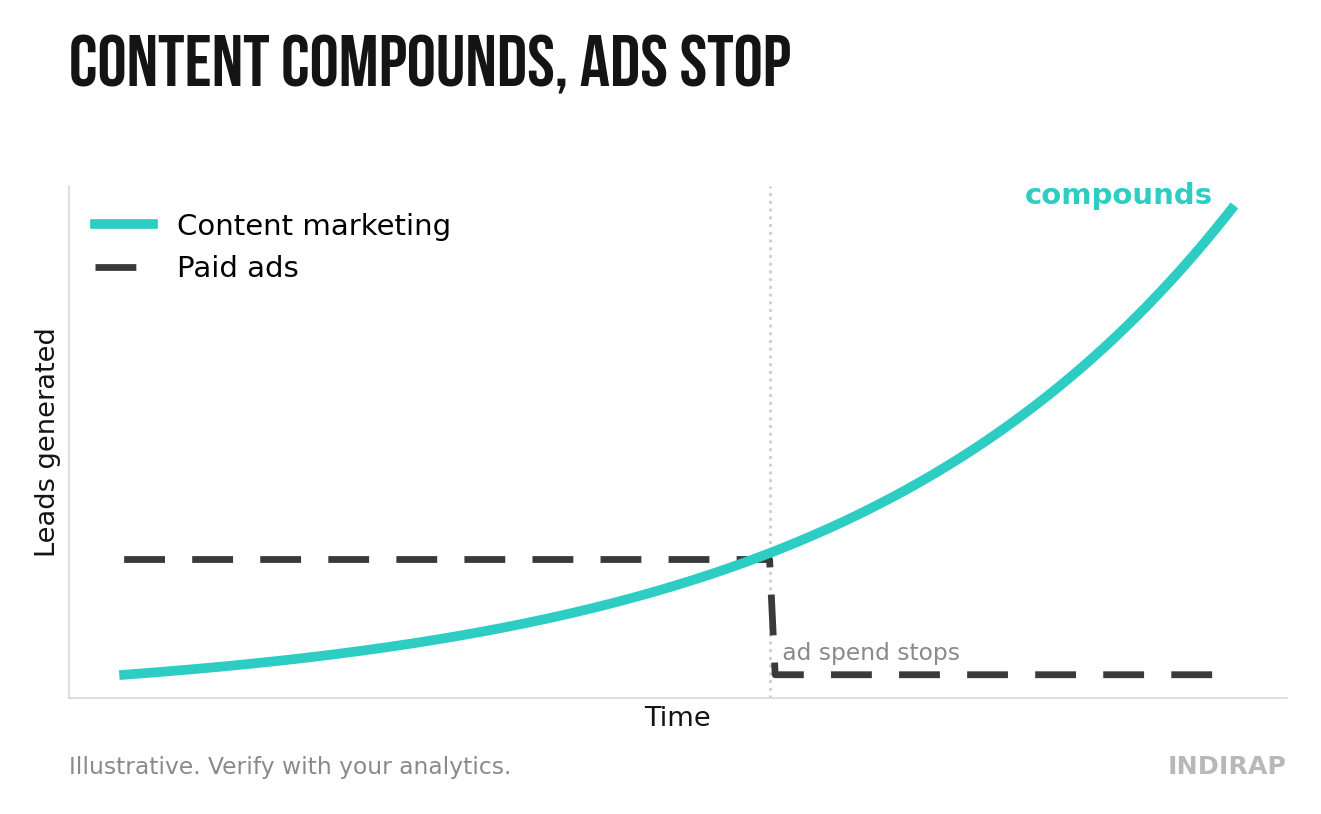
It compounds. A paid ad stops working the moment you stop paying. A strong guide, video, or piece of research keeps ranking, keeps getting shared, and keeps generating leads month after month. The library you build this year becomes an asset that lowers your cost per lead every year after.
It builds trust at scale. People buy from brands they believe understand them. Helpful content is proof of expertise that a claim in an ad can never be. When your content makes the audience feel seen, your solutions feel like the obvious choice.
It feeds every other channel. Content is the raw material for SEO, email, social, sales enablement, and paid distribution. One strong asset can become a blog post, a video, a dozen social clips, an email, and a sales one-pager. That is why the brands that treat content as a system, rather than a series of one-off posts, pull ahead.
It is how you show up in AI answers. Search now includes AI overviews and answer engines that summarize the best content on a topic. Brands with clear, well-structured, genuinely helpful content are the ones getting cited. Being the best answer is the new being on page one.
The takeaway for 2026 is simple. Attention is more fragmented than ever, and trust is harder to earn. Content marketing is the most durable way to build both.
Content marketing is a toolkit, and the right mix depends on your audience and goals. The most common formats include blog posts and SEO guides, video, email newsletters, podcasts, webinars, original research and data, case studies, and social content. Each plays a different role across the buyer journey, and the strongest programs use several together so one asset feeds the next.
For a full breakdown of each format and when to reach for it, see our guide to the types of content marketing. If you want to see these formats in action, our roundup of content marketing examples shows how leading brands put them to work.
If content marketing is about earning attention and building trust, video is the format that does both fastest. People retain far more of what they watch than what they read, and video keeps audiences engaged longer than any other content type. It also travels: a single shoot can produce a hero brand film, a set of social cuts, testimonial clips, and explainer segments that power your funnel for a year.
Video also carries an advantage that text cannot match. Your audience gets to see the people behind the brand, hear their tone, and feel their energy. That human signal is what turns a passive reader into someone who trusts you enough to buy. It is also something AI-generated filler struggles to replicate, which makes authentic, well-produced video a lasting competitive edge.
This is why the smartest content programs are built with a video spine. Instead of treating video as an occasional splurge, they plan it as the centerpiece and let written and social content orbit around it. Our video content marketing guide breaks down exactly how to build that spine, and our own video production work shows what the finished assets look like.
A content library only compounds when it is built on a strategy. Here is the framework in brief. For the full step-by-step version, see our guide on how to build a content marketing strategy.
1. Set a clear goal. Awareness, leads, and retention call for different content. Decide what this program is for before you create anything.
2. Know your audience deeply. Go past demographics. What are they struggling with, what do they search for, and where do they spend time? Your best content answers questions they are already typing into Google and asking AI assistants.
3. Map content to the funnel. Awareness content earns attention, consideration content builds the case, and decision content closes. Mapping formats to each stage keeps your library balanced. Our content marketing funnel guide shows how to do this.
4. Choose a sustainable cadence. Consistency beats intensity. A steady rhythm you can maintain for months will outperform a burst of content followed by silence.
5. Lead with your highest-leverage format. For most brands in 2026, that is video, supported by SEO content and repurposed social clips.
6. Measure and refine. Track traffic, engagement, leads, and revenue influence. Double down on what works and prune what does not.
Small teams do not need to do all of this at once. Our content marketing for small business playbook shows how to start lean, and B2B teams can find their version in our B2B content marketing guide.
Content marketing earns its budget when you can show what it returns. Track a layered set of metrics: reach and traffic at the top, engagement and time-on-content in the middle, and leads, pipeline, and revenue influence at the bottom. For video, watch completion rate and social shares as early signals, then follow the assisted conversions that content contributes to over time.
The mistake to avoid is judging content by last-click alone. Content marketing usually works upstream of the sale, shaping the buyer before they ever click a paid ad or fill out a form. For a deeper look at proving return, see our guide on how to maximize ROI from your video content.
Brands that commit to content marketing build a durable moat. They lower their cost per lead over time, shorten the sales cycle because buyers arrive already informed, earn organic visibility that competitors have to pay for, and create a library that keeps working while they sleep. For the full case, including the numbers, see the benefits of content marketing.
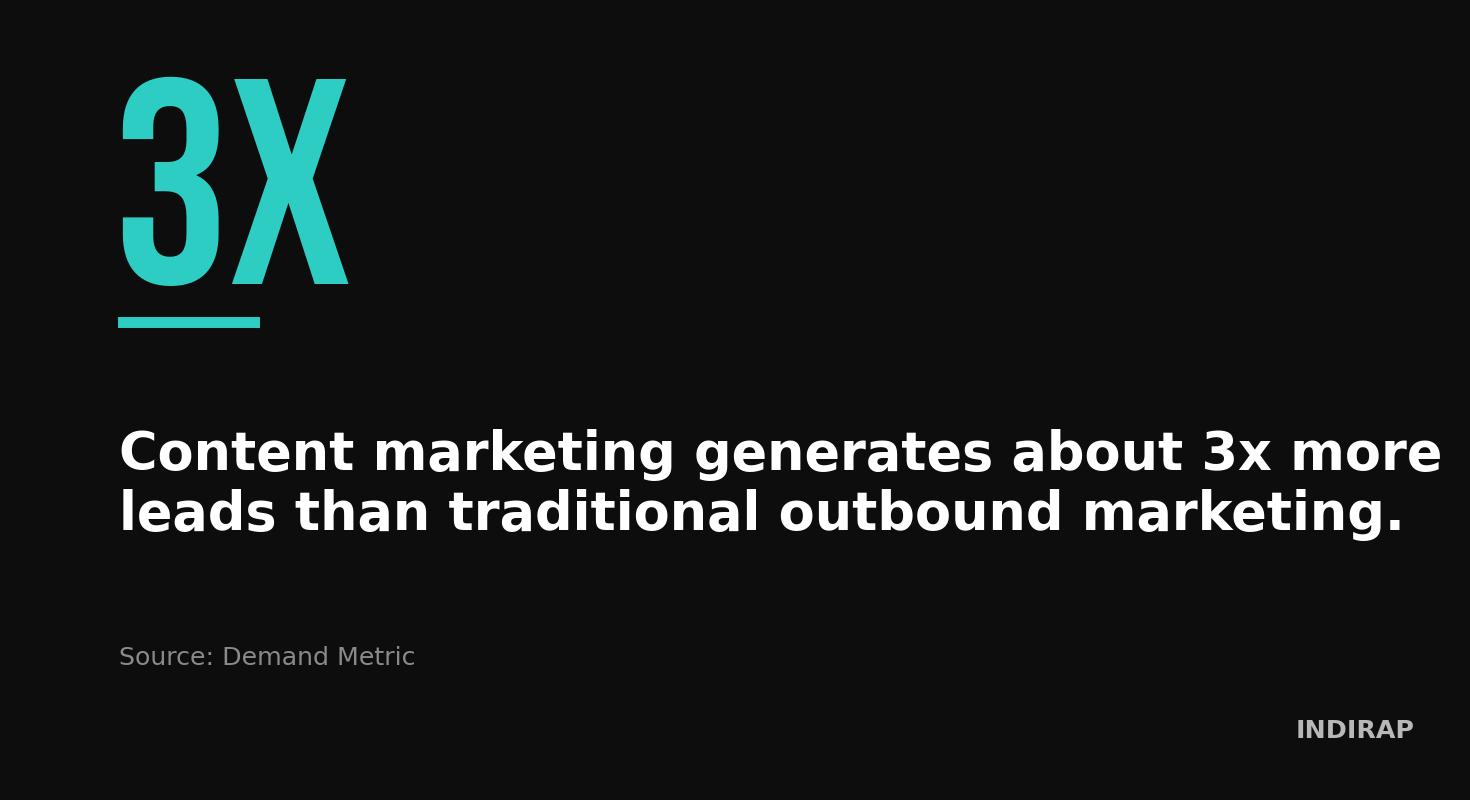
Most brands do not have a content problem. They have a systems problem. They create good pieces here and there, but without a spine to connect them, the library never compounds.
INDIRAP builds that spine. As an award-winning Chicago video production company and full-funnel content partner, we help brands turn creative strategy and paid distribution into content that earns attention and drives pipeline. Our Content Kit gives growing brands a done-for-you engine of video and content built to compound.
When you are ready to turn scattered posts into a system that produces leads, book a strategy call with our team.
Content marketing is creating helpful, relevant content, such as guides, videos, and newsletters, to attract an audience and earn their trust, so that when they are ready to buy, they choose you. Instead of interrupting people with ads, you draw them in by being useful.
Content marketing matches how people actually buy in 2026. Buyers research on their own long before they talk to sales, and content shapes their opinions in your favor. It compounds over time, builds trust at scale, feeds every other channel, and is how brands show up in AI-powered search results.
The core formats are blog posts and SEO guides, video, email newsletters, podcasts, webinars, original research, case studies, and social content. Most strong programs combine several, often with video as the centerpiece because it drives the highest engagement.
Yes. Video is one of the most effective content marketing formats because it earns attention quickly, builds trust through a human connection, and can be repurposed into many smaller assets. Many brands now build their entire content strategy with a video spine.
Content marketing is a compounding play, not an instant one. Paid distribution can drive results quickly, while organic content typically builds over three to six months and keeps growing from there. The library you build becomes an asset that lowers your cost per lead over time.
Track a layered set of metrics: traffic and reach at the top, engagement in the middle, and leads, pipeline, and revenue influence at the bottom. Because content usually works upstream of the sale, look at assisted conversions rather than last-click alone.
Video production services: Video Production · Corporate & Brand Video · Business Video · Real Estate Video · Social Media Video · Content Kit
By video type: Brand · Explainer · Product · Case Study · Marketing · Training
By industry: Technology · Financial · Medical · Travel & Hospitality
Keep reading: Content Marketing Examples · Video Content Marketing · Types of Content Marketing · Content Marketing for Small Business · Benefits of Content Marketing · How to Create a Video Content Strategy · How to Maximize ROI From Your Video Content
Book a free strategy call or get a free content review with our team.


Julian Tillotson is the Founder & CEO of INDIRAP, a full-service video production and creative strategy agency based in Chicago, IL. With 10+ years of experience, INDIRAP has delivered 20,000+ videos to 900+ clients across 40+ industries, making it one of North America's leading digital creative agencies.


.png)
.png)