Video Marketing Strategy for SaaS: Complete Guide for B2B Growth [2026]

Somewhere between the quarterly planning deck and your last failed video experiment, something went wrong. You know video works because about 91% of businesses use video as a marketing tool, according to Wyzowl’s Video Marketing Report. But most SaaS brands treat video like a science project.

Make a demo, post it, and wait for leads. Three months later, you have 200 views, zero pipeline, and a CMO asking why you spent $15K on content nobody watched.

That's not video marketing. That's hope with a production budget. This guide shows you how to build video programs that actually bring in leads and close deals. 

Why SaaS Companies Need a Video Marketing Strategy (Not Just Videos)

So here's the thing about selling SaaS. Your product doesn't exist in any tangible way. Like, at all.

Nobody can pick it up, kick the tires, or take it for a test drive. It's just out there, floating in the cloud somewhere, waiting for someone to trust you enough to punch in their credit card.

And that's a problem.

Because how do you convince someone to spend $50K a year on something they can't see, touch, or experience until after they've already committed? You show them. And video is how you do that. They boost engagement, enhance retention, increase conversions, and build trust. 
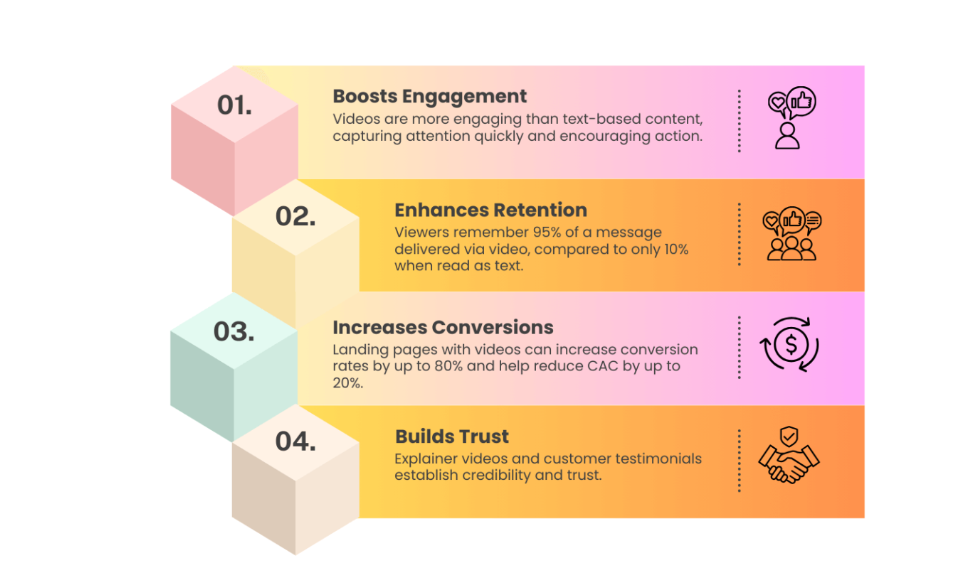
Video marketing for SaaS benefits

But most companies get this completely wrong. Someone in a meeting says, "Hey, we should probably make a product demo." So you hire an agency, spend $12K, post it on your homepage, and share it once on LinkedIn. Three months later, you're wondering why that video brought in exactly zero deals.

Here's why. You treated the video like a checkbox. Make a video. Check. Move on.

Strategic companies treat video differently. Every video has a job. Every video knows where it lives, who sees it, and what happens next. That's the difference between projects and programs. One produces content. The other produces revenue.

And listen, your buyers aren't making snap decisions here. They're researching for weeks. They're pulling in the CFO, who wants proof of ROI. They're looping in IT who needs security docs. They've got end users asking if the interface will make them want to throw their laptop out a window.

Each of those people needs different information at different times. That's why a video marketing strategy for SaaS means developing creatives that convert by mapping content to each buying committee member and their specific questions at every stage.

The video isn’t usually the problem. The absence of everything around that video is the problem.

The 5 Stages of a High-Performing SaaS Video Marketing Strategy

Most SaaS companies skip straight to production because they know they need video, so they just start filming. That's backwards.

Strategy comes first, then production follows. These five stages create the foundation for a video marketing strategy for SaaS that actually drives business outcomes instead of just filling content calendars.

Stage 1: Strategic Foundation and Goal Setting

Before you film anything, connect the video to actual business metrics your CFO cares about. 

Are you trying to lower customer acquisition cost? Boost conversion rates? Speed up deals? Pick one specific outcome and use SMART goals to measure it.

Common goals include lead generation, sales enablement, and customer retention, but you need to get specific about what success looks like with numbers attached.
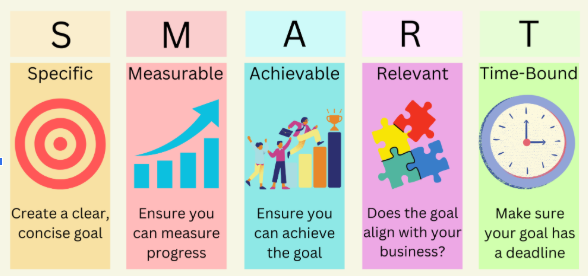
SMART goals for video marketing

Stage 2: Audience Research and Buyer Journey Mapping

Your buyer isn't one person making a solo decision. It's a committee where the economic buyer needs ROI proof, technical buyers want security details, and end users need to see the interface in action.

Map your video content across the entire journey from awareness to consideration to decision to retention. Each stage demands different videos because the questions people ask change as they get closer to buying.

Stage 3: Content Strategy and Production Planning

Different video types serve different funnel stages.

Brand films build awareness while product demos support decision-making, and customer testimonials overcome late-stage objections. Balance evergreen content that stays relevant for months against timely content like feature releases.

For production, build simple formats, such as social clips, in-house for speed, but partner with a SaaS video production company for complex storytelling where quality impacts credibility.

Stage 4: Distribution and Amplification

Distribution matters as much as production. Start with owned channels like your website and email, then add paid amplification through LinkedIn targeting and retargeting strategies.

Sales enablement changes everything when you equip reps with shareable video assets for every common objection.

Stage 5: Measurement and Optimization

Track metrics that matter like engagement rates, conversion impact, and which deals interacted with which videos. Run A/B tests on thumbnails and placement, then review performance quarterly to kill underperforming assets and double down on what works.

Building Your SaaS Video Content Library: What to Create First 

Budget constraints mean you can't build everything at once. Video production for SaaS requires prioritization. Professional video production services also help prioritize which assets deliver the most ROI.

So where do you start?

Foundation assets that serve multiple purposes across your entire funnel, then scale into growth assets that support specific use cases. This approach builds momentum instead of spreading your resources so thin that nothing works.

Foundation Assets (Must-Have)

Look, these three videos are non-negotiable. You need them before you do anything else.

  • Company/Product Explainer (2-3 minutes): This is your homepage hero and what sales reps send when introducing your company to cold prospects. SaaS explainer video production should focus on clarity over creativity. The goal is to answer "What is this and why should I care?" in under three minutes. 
  • Product Demo Video (3-5 minutes): Stop making your sales team do live demos for every prospect who's just kicking tires. Record a walkthrough that shows your product in action so prospects can watch on their own time. Measure how many demo requests convert to trials.
  • Customer Testimonial/Case Study (2-3 minutes): Late-stage prospects need social proof from someone like them who took the risk, and it paid off. About 9/10 people trust what a customer says about a business more than what that business says about itself. That’s why customer testimonials beat any sales pitch because they showcase outcomes from real buyers facing similar challenges. Track whether deals with testimonial engagement close faster than those without.

Growth Assets (Scale Phase)

Once you've nailed the foundation, these assets help you scale without adding headcount.

  • Feature Deep-Dives (1-2 minutes each): Think of these as self-service education for technical evaluators and existing customers who want to squeeze more value from your product. 
  • Thought Leadership Series (5-10 minutes): Your CEO has opinions about where the industry is headed. Put them on camera. These videos build executive brand presence and establish category authority.
  • Social-First Content (30-90 seconds): LinkedIn wants native video. Give it to them. Quick tips, micro-stories, stat graphics that stop the scroll. The goal is to build brand familiarity through repeated exposure in feeds where your buyers already spend time.

Allocate your budget roughly like this: 40% to foundation assets, 35% to growth assets, 25% to distribution and paid amplification. As your program matures, shift more toward growth and distribution while refreshing foundation pieces periodically.

Choosing the Right SaaS Video Production Partner

We know that a video works because 93% of marketers see solid ROI from it, according to Wyzowl. But here's what they don't tell you: that number crashes hard when you pick the wrong SaaS video production company.

And most SaaS companies do exactly that because they don't know what to look for beyond a slick portfolio and reasonable pricing. Here’s how to choose the right SaaS video production partner. 
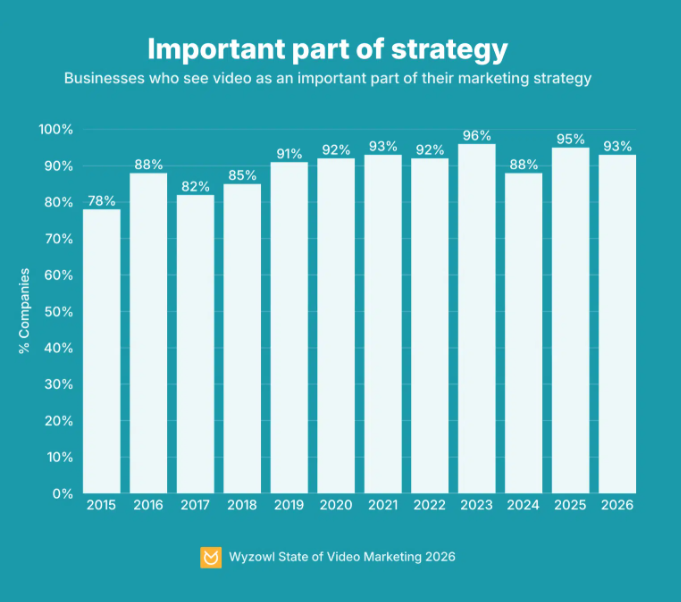
Wyzowl Video Marketing Report

Experience with Complex B2B Storytelling

Consumer agencies are allergic to technical depth. They want emotion, quick cuts, and brand vibes. That works great if you're selling sneakers.

But video production for SaaS?

You're explaining workflows, integrations, and security protocols. That requires a completely different skill set.

A video can increase time on page by 88%. That's massive. But only if your SaaS video production partner can take something complicated and make it clear without turning it into baby talk. You need agencies that get technical storytelling, not just pretty visuals.

When you're looking at portfolios, ask yourself: Can I actually understand what the product does after watching this?

If the answer is "sort of" or "I think so," that's your red flag. Especially with SaaS explainer video production. If every video in their portfolio is just slow-mo shots and inspiring music with zero product clarity, run.

Strategic Capabilities Beyond Production

Here's how you spot the difference between vendors and actual partners. Vendors wait for you to hand them a script.

Partners ask why you need the video in the first place. Do they facilitate strategy workshops? Help with audience research? Challenge your messaging when it's off?

Users form an opinion about your brand in 0.05 seconds. That's how fast first impressions happen.

Your video partner needs to understand this pressure and help you map content strategically to each stakeholder in the buying committee, not just execute whatever brief you send over. 

Because when multiple decision-makers are evaluating your product, each one needs different proof points delivered at the right moment.

Scalability and Ongoing Partnership Model

One-off projects look cheaper upfront. But retained relationships with SaaS video production experts who learn your product deeply, deliver better ROI long-term.

Look for video production services with the capacity to handle 4-8 videos per quarter when you scale.

Project-based pricing works for testing. Retainers make sense once you've proven video drives results and need consistent production capacity without the overhead of hiring internally.

Budgeting for SaaS Video Marketing Strategy: Investment Framework

Your CFO wants numbers. Not vague promises about "brand awareness" or "engagement." Actual numbers that connect video spend to closed deals.

So let's talk budgets, production costs, and how to prove ROI without the corporate jargon that makes everyone's eyes glaze over.
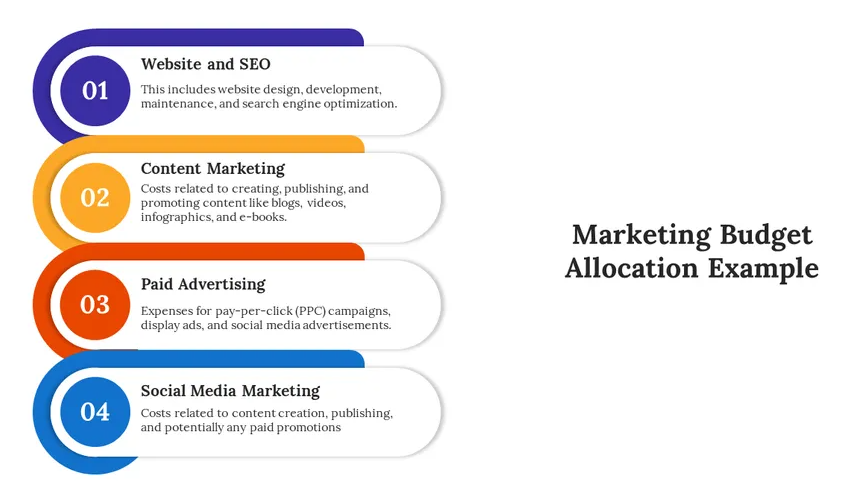
Marketing budget for SaaS video marketing

Industry Benchmarks

Mature SaaS video programs drop 8-12% of their marketing budget on video. Starting out? Most companies begin at 5-6% and scale up once they prove it works.

Production costs? They're all over the place.

These are estimates, not gospel.

Explainer videos run $5,000-$15,000, depending on how fancy you want the animation. Customer testimonials cost $3,000-$8,000 when you factor in travel and editing. Thought leadership series hit $4,000-$10,000 per episode. Social content runs $1,000-$3,000 per piece.

Build vs. Buy Analysis

In-house works when you need volume and speed. Social clips, screen recordings, quick internal stuff. Build it yourself.

External agencies make sense when quality directly impacts whether someone trusts you enough to buy. Brand films, customer stories, flagship explainers. This is where amateur work kills your credibility.

Most successful companies run a hybrid. Handle social internally. Partner with SaaS video production experts for the stuff that matters.

Calculating Video Marketing ROI

So the formula is: (Revenue Generated from Video - Total Video Costs) ÷ Total Video Costs × 100

Here's the math.

You spend $50K on video production and distribution. That video influences $400K in the pipeline. Your close rate is 20%. The average deal size is $100K (not $400K; that was the pipeline).

Pipeline influenced: $400K Close rate: 20% Closed revenue from that pipeline: $400K × 20% = $80K

ROI calculation: ($80K revenue - $50K costs) ÷ $50K × 100 = 60% ROI or 1.6x return
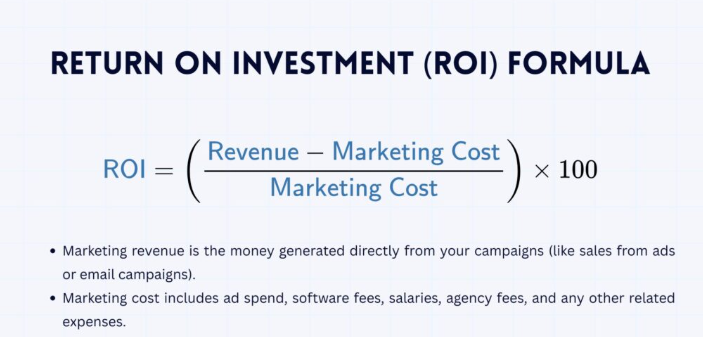
ROI formula for video marketing 

Attribution gets messy because buyers watch multiple videos before converting. First-touch works for awareness. Multi-touch for demand gen. Time-decay weights recent interactions more heavily.

LinkedIn Marketing Solutions publishes B2B video benchmarks you can compare against. Track it all through video marketing analytics so you know which videos actually drive revenue and which ones just rack up vanity metrics.

Distribution Strategies That Maximize Video Impact

You just spent $15K on a killer product demo. Now what? Most companies post it on YouTube, share it once on LinkedIn, and call it done.

Three months later, they wonder why 200 views didn't move the needle.

Creating great videos means nothing if nobody sees them. This is where a video marketing agency separates itself from basic production shops: it builds distribution strategies, not just videos.
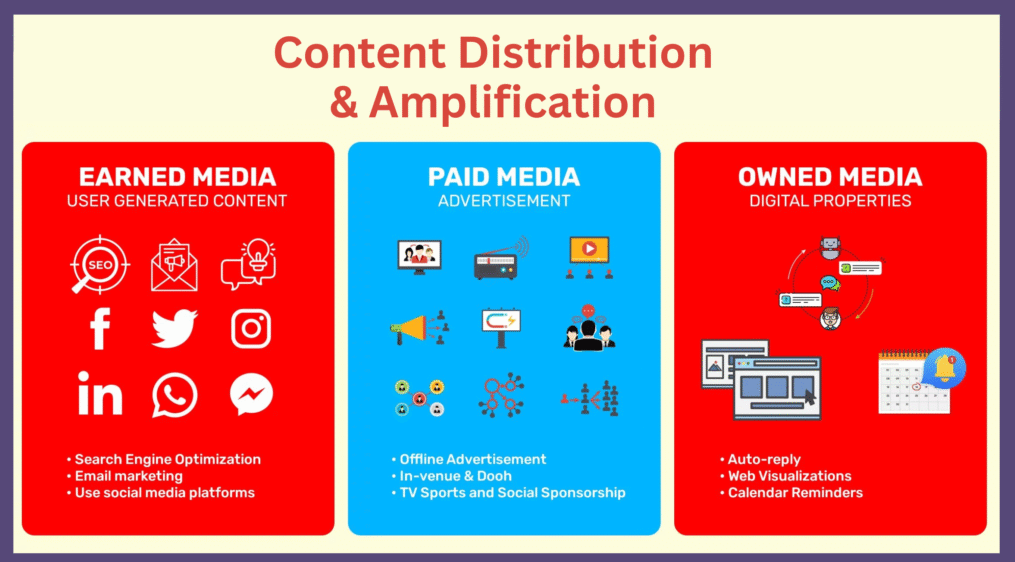
Content distribution channels for SaaS video marketing

Owned Channels

Start with your website. Homepage gets the explainer. Product pages get feature demos. The pricing page needs ROI videos addressing the "is this worth it?" question. Case study pages demand customer testimonials.

Email is where videos really shine. Drop explainers into onboarding sequences so new users know what they signed up for.

Nurture campaigns use educational content to move prospects closer to demos. Sales follow-ups include relevant videos that address specific objections raised during calls.

Video hosting?

YouTube maximizes organic reach and SEO value, but gives you less control. Wistia and Vidyard provide better analytics and gating options for lead gen, but lack YouTube's discovery algorithms. Most SaaS video production companies run both YouTube for awareness and Wistia for conversion-focused assets.

Earned and Shared Distribution

LinkedIn video strategy for B2B? Native uploads crush link shares because the algorithm favors content that keeps users on-site. Optimal length sits between 30-90 seconds for organic posts, though longer content works in Sponsored placements when targeting is tight.

Sales enablement changes everything. Make it stupid simple for reps to find and share the right video. Create templates. Add tracking so you see which videos prospects actually watch. That data tells you what's working.

Paid Amplification

LinkedIn Sponsored Content with video performs best when targeting specific job titles at companies matching your ICP. YouTube pre-roll lets you target people watching competitor content, so you steal attention when they're actively researching solutions.

Retargeting gets interesting when you serve different videos based on engagement. Someone watched 75% of your explainer? Show them the product demo. Watched the demo? Hit them with customer testimonials.

Pro tip: Create a video distribution checklist for each asset before production even starts. Map out where it lives, how it gets promoted, and what success looks like. Don't let SaaS explainer video production investment go to waste because you forgot to plan distribution.

Common SaaS Video Marketing Mistakes (And How to Avoid Them)

Mistakes compound when you don't catch them early. We've seen SaaS companies hire the wrong video marketing agency and blow through six-figure budgets. Let's fix that.

Mistake 1: Creating Videos in Isolation

Your marketing team makes a product explainer. Sales is pitching a completely different value proposition. Your CEO just launched a campaign theme that nobody told the video team about. Now you've got a beautiful video that contradicts everything else your company is saying.

The fix: Integrate video planning into quarterly marketing planning. Every video brief should reference the campaign it supports. Sales should review scripts before production. When building an effective video sales funnel, alignment across teams isn't optional.

Mistake 2: Neglecting Video SEO

You posted your product demo to YouTube with the title "Product_Demo_Final_v3.mp4" and a description that says "Check out our product." Four months later, it has 47 views. All from your team.

The fix: Optimize titles with keywords people actually search. Write descriptions that explain what the video covers. Add transcripts for accessibility and searchability. Create supporting blog content that embeds the video and targets related search queries. Finding the right video production company means partnering with teams who understand video SEO, not just filming.

Mistake 3: Insufficient Distribution Budget

You spent $12K producing an amazing explainer video. Then you allocated exactly $0 for promotion. Organic reach brought in 200 views. Nobody converted.

The fix: Plan 40% of your video budget for distribution and promotion. If production costs $10K, allocate $4K to $6K for paid amplification, email campaigns, and sales enablement. Distribution drives results, not just production quality.

For more mistakes to avoid, check out the 7 most common mistakes companies make with video marketing.

Building Your 90-Day Video Marketing Implementation Plan

A video marketing strategy for SaaS means nothing without an execution plan. This 90-day roadmap takes you from audit to optimization, breaking the process into manageable phases that build momentum while producing tangible results each month.

Phase 1: Weeks 1 to 4 (Foundation)

Audit everything you've got. What videos exist? What metrics do you have? Most companies discover they have more video content than they realized, scattered across platforms without a clear purpose or tracking.

Map your buyer journey and identify gaps. Where do prospects get stuck? What questions do sales reps answer repeatedly? These gaps become your production priorities.

Establish your measurement framework now. Set up video hosting with analytics enabled, configure UTM tracking, and create the dashboard template you'll use monthly.

Brief your production partner or internal team with clear context. Share buyer personas, key messages, competitive positioning, and success metrics. Video editing techniques matter, but strategic direction matters more.

Phase 2: Weeks 5 to 8 (Production)

Produce 2-3 priority assets that fill identified gaps. Start with foundation pieces such as an explainer video, a product demo, or a customer testimonial, rather than trying to build the entire library at once.

Set up distribution infrastructure while videos are in production. Configure video hosting platforms. Create email templates for video distribution. 

Build landing pages where videos will live. Create internal enablement materials so your team knows how to use new assets. Sales needs one-sheets explaining when to share which videos.

Phase 3: Weeks 9 to 12 (Launch & Optimize)

Launch videos across owned, earned, and paid channels. Don't just post and hope, but actively promote through email campaigns, social posts, paid amplification, and sales outreach.

Train your sales team on video usage. Show reps how to find relevant videos quickly, how to share them in conversations, and what results to expect. Sales adoption determines whether video becomes a revenue driver or a marketing vanity project.

First performance review happens at day 90.

What worked? What flopped? Which videos drove engagement? Use these insights to optimize existing content and inform future production priorities.

Develop the Best Video Marketing Strategy for SaaS Brands with INDIRAP

Here's what separates SaaS companies that perform better with video from those that waste budgets: strategy. Not bigger budgets. Not fancier cameras. Strategy.

You need videos mapped to each stage of your buyer journey. A SaaS video production company that challenges your thinking, not just executes briefs. Metrics that prove revenue impact, not vanity numbers that make executives feel good in Monday meetings.

Start with the three foundation assets. Build distribution plans before you film anything. Track what actually closes deals.

Ready to stop burning budget on random videos? INDIRAP helps B2B SaaS brands build video programs that generate revenue, not just views. Schedule a strategy session, and let's talk about turning your video marketing into a growth engine.

Frequently Asked Questions

What is the difference between SaaS video production and general video marketing?

SaaS video production focuses on explaining complex, invisible products to multiple decision-makers in a buying committee. Unlike consumer video marketing, it requires technical storytelling that simplifies workflows, integrations, and security protocols without dumbing them down. General video marketing prioritizes emotion and brand vibes, while SaaS video balances clarity with credibility to move prospects through longer B2B sales cycles.

What should a video marketing strategy for SaaS include?

A video marketing strategy for SaaS needs five core elements: foundation videos (explainer, demo, testimonials), audience mapping to different buying committee members, distribution plans across owned and paid channels, sales enablement so reps actually use the videos, and measurement tied to revenue metrics. Skip any of these, and you're just making random content. Strategic programs map every video to a specific funnel stage and business outcome.

What types of videos do B2B SaaS buyers actually watch?

B2B buyers engage most with explainer videos that answer "what is this and why should I care," product demos showing the interface in action, and customer testimonials from companies like theirs. Economic buyers need ROI-focused content, technical buyers want security and integration details, and end users need to see the actual user experience. Map your video library to these different personas and buyer journey stages for maximum impact.

How long should a SaaS explainer video be?

Keep it under 90 seconds for your homepage hero video. Prospects decide in the first 10 seconds whether to keep watching, so front-load your value proposition. Product demos can run 3-5 minutes since viewers at that stage are actively evaluating solutions. Customer testimonials work best at 2-3 minutes. Match length to where prospects are in the buying journey.

Related Articles
video marketing strategy for SaaS
February 16, 2026

Video Marketing Strategy for SaaS: Complete Guide for B2B Growth [2026]

blog
Show all

Somewhere between the quarterly planning deck and your last failed video experiment, something went wrong. You know video works because about 91% of businesses use video as a marketing tool, according to Wyzowl’s Video Marketing Report. But most SaaS brands treat video like a science project.

Make a demo, post it, and wait for leads. Three months later, you have 200 views, zero pipeline, and a CMO asking why you spent $15K on content nobody watched.

That's not video marketing. That's hope with a production budget. This guide shows you how to build video programs that actually bring in leads and close deals. 

Why SaaS Companies Need a Video Marketing Strategy (Not Just Videos)

So here's the thing about selling SaaS. Your product doesn't exist in any tangible way. Like, at all.

Nobody can pick it up, kick the tires, or take it for a test drive. It's just out there, floating in the cloud somewhere, waiting for someone to trust you enough to punch in their credit card.

And that's a problem.

Because how do you convince someone to spend $50K a year on something they can't see, touch, or experience until after they've already committed? You show them. And video is how you do that. They boost engagement, enhance retention, increase conversions, and build trust. 

Video marketing for SaaS benefits

But most companies get this completely wrong. Someone in a meeting says, "Hey, we should probably make a product demo." So you hire an agency, spend $12K, post it on your homepage, and share it once on LinkedIn. Three months later, you're wondering why that video brought in exactly zero deals.

Here's why. You treated the video like a checkbox. Make a video. Check. Move on.

Strategic companies treat video differently. Every video has a job. Every video knows where it lives, who sees it, and what happens next. That's the difference between projects and programs. One produces content. The other produces revenue.

And listen, your buyers aren't making snap decisions here. They're researching for weeks. They're pulling in the CFO, who wants proof of ROI. They're looping in IT who needs security docs. They've got end users asking if the interface will make them want to throw their laptop out a window.

Each of those people needs different information at different times. That's why a video marketing strategy for SaaS means developing creatives that convert by mapping content to each buying committee member and their specific questions at every stage.

The video isn’t usually the problem. The absence of everything around that video is the problem.

The 5 Stages of a High-Performing SaaS Video Marketing Strategy

Most SaaS companies skip straight to production because they know they need video, so they just start filming. That's backwards.

Strategy comes first, then production follows. These five stages create the foundation for a video marketing strategy for SaaS that actually drives business outcomes instead of just filling content calendars.

Stage 1: Strategic Foundation and Goal Setting

Before you film anything, connect the video to actual business metrics your CFO cares about. 

Are you trying to lower customer acquisition cost? Boost conversion rates? Speed up deals? Pick one specific outcome and use SMART goals to measure it.

Common goals include lead generation, sales enablement, and customer retention, but you need to get specific about what success looks like with numbers attached.

SMART goals for video marketing

Stage 2: Audience Research and Buyer Journey Mapping

Your buyer isn't one person making a solo decision. It's a committee where the economic buyer needs ROI proof, technical buyers want security details, and end users need to see the interface in action.

Map your video content across the entire journey from awareness to consideration to decision to retention. Each stage demands different videos because the questions people ask change as they get closer to buying.

Stage 3: Content Strategy and Production Planning

Different video types serve different funnel stages.

Brand films build awareness while product demos support decision-making, and customer testimonials overcome late-stage objections. Balance evergreen content that stays relevant for months against timely content like feature releases.

For production, build simple formats, such as social clips, in-house for speed, but partner with a SaaS video production company for complex storytelling where quality impacts credibility.

Stage 4: Distribution and Amplification

Distribution matters as much as production. Start with owned channels like your website and email, then add paid amplification through LinkedIn targeting and retargeting strategies.

Sales enablement changes everything when you equip reps with shareable video assets for every common objection.

Stage 5: Measurement and Optimization

Track metrics that matter like engagement rates, conversion impact, and which deals interacted with which videos. Run A/B tests on thumbnails and placement, then review performance quarterly to kill underperforming assets and double down on what works.

Building Your SaaS Video Content Library: What to Create First 

Budget constraints mean you can't build everything at once. Video production for SaaS requires prioritization. Professional video production services also help prioritize which assets deliver the most ROI.

So where do you start?

Foundation assets that serve multiple purposes across your entire funnel, then scale into growth assets that support specific use cases. This approach builds momentum instead of spreading your resources so thin that nothing works.

Foundation Assets (Must-Have)

Look, these three videos are non-negotiable. You need them before you do anything else.

  • Company/Product Explainer (2-3 minutes): This is your homepage hero and what sales reps send when introducing your company to cold prospects. SaaS explainer video production should focus on clarity over creativity. The goal is to answer "What is this and why should I care?" in under three minutes. 
  • Product Demo Video (3-5 minutes): Stop making your sales team do live demos for every prospect who's just kicking tires. Record a walkthrough that shows your product in action so prospects can watch on their own time. Measure how many demo requests convert to trials.
  • Customer Testimonial/Case Study (2-3 minutes): Late-stage prospects need social proof from someone like them who took the risk, and it paid off. About 9/10 people trust what a customer says about a business more than what that business says about itself. That’s why customer testimonials beat any sales pitch because they showcase outcomes from real buyers facing similar challenges. Track whether deals with testimonial engagement close faster than those without.

Growth Assets (Scale Phase)

Once you've nailed the foundation, these assets help you scale without adding headcount.

  • Feature Deep-Dives (1-2 minutes each): Think of these as self-service education for technical evaluators and existing customers who want to squeeze more value from your product. 
  • Thought Leadership Series (5-10 minutes): Your CEO has opinions about where the industry is headed. Put them on camera. These videos build executive brand presence and establish category authority.
  • Social-First Content (30-90 seconds): LinkedIn wants native video. Give it to them. Quick tips, micro-stories, stat graphics that stop the scroll. The goal is to build brand familiarity through repeated exposure in feeds where your buyers already spend time.

Allocate your budget roughly like this: 40% to foundation assets, 35% to growth assets, 25% to distribution and paid amplification. As your program matures, shift more toward growth and distribution while refreshing foundation pieces periodically.

Choosing the Right SaaS Video Production Partner

We know that a video works because 93% of marketers see solid ROI from it, according to Wyzowl. But here's what they don't tell you: that number crashes hard when you pick the wrong SaaS video production company.

And most SaaS companies do exactly that because they don't know what to look for beyond a slick portfolio and reasonable pricing. Here’s how to choose the right SaaS video production partner. 

Wyzowl Video Marketing Report

Experience with Complex B2B Storytelling

Consumer agencies are allergic to technical depth. They want emotion, quick cuts, and brand vibes. That works great if you're selling sneakers.

But video production for SaaS?

You're explaining workflows, integrations, and security protocols. That requires a completely different skill set.

A video can increase time on page by 88%. That's massive. But only if your SaaS video production partner can take something complicated and make it clear without turning it into baby talk. You need agencies that get technical storytelling, not just pretty visuals.

When you're looking at portfolios, ask yourself: Can I actually understand what the product does after watching this?

If the answer is "sort of" or "I think so," that's your red flag. Especially with SaaS explainer video production. If every video in their portfolio is just slow-mo shots and inspiring music with zero product clarity, run.

Strategic Capabilities Beyond Production

Here's how you spot the difference between vendors and actual partners. Vendors wait for you to hand them a script.

Partners ask why you need the video in the first place. Do they facilitate strategy workshops? Help with audience research? Challenge your messaging when it's off?

Users form an opinion about your brand in 0.05 seconds. That's how fast first impressions happen.

Your video partner needs to understand this pressure and help you map content strategically to each stakeholder in the buying committee, not just execute whatever brief you send over. 

Because when multiple decision-makers are evaluating your product, each one needs different proof points delivered at the right moment.

Scalability and Ongoing Partnership Model

One-off projects look cheaper upfront. But retained relationships with SaaS video production experts who learn your product deeply, deliver better ROI long-term.

Look for video production services with the capacity to handle 4-8 videos per quarter when you scale.

Project-based pricing works for testing. Retainers make sense once you've proven video drives results and need consistent production capacity without the overhead of hiring internally.

Budgeting for SaaS Video Marketing Strategy: Investment Framework

Your CFO wants numbers. Not vague promises about "brand awareness" or "engagement." Actual numbers that connect video spend to closed deals.

So let's talk budgets, production costs, and how to prove ROI without the corporate jargon that makes everyone's eyes glaze over.

Marketing budget for SaaS video marketing

Industry Benchmarks

Mature SaaS video programs drop 8-12% of their marketing budget on video. Starting out? Most companies begin at 5-6% and scale up once they prove it works.

Production costs? They're all over the place.

These are estimates, not gospel.

Explainer videos run $5,000-$15,000, depending on how fancy you want the animation. Customer testimonials cost $3,000-$8,000 when you factor in travel and editing. Thought leadership series hit $4,000-$10,000 per episode. Social content runs $1,000-$3,000 per piece.

Build vs. Buy Analysis

In-house works when you need volume and speed. Social clips, screen recordings, quick internal stuff. Build it yourself.

External agencies make sense when quality directly impacts whether someone trusts you enough to buy. Brand films, customer stories, flagship explainers. This is where amateur work kills your credibility.

Most successful companies run a hybrid. Handle social internally. Partner with SaaS video production experts for the stuff that matters.

Calculating Video Marketing ROI

So the formula is: (Revenue Generated from Video - Total Video Costs) ÷ Total Video Costs × 100

Here's the math.

You spend $50K on video production and distribution. That video influences $400K in the pipeline. Your close rate is 20%. The average deal size is $100K (not $400K; that was the pipeline).

Pipeline influenced: $400K Close rate: 20% Closed revenue from that pipeline: $400K × 20% = $80K

ROI calculation: ($80K revenue - $50K costs) ÷ $50K × 100 = 60% ROI or 1.6x return

ROI formula for video marketing 

Attribution gets messy because buyers watch multiple videos before converting. First-touch works for awareness. Multi-touch for demand gen. Time-decay weights recent interactions more heavily.

LinkedIn Marketing Solutions publishes B2B video benchmarks you can compare against. Track it all through video marketing analytics so you know which videos actually drive revenue and which ones just rack up vanity metrics.

Distribution Strategies That Maximize Video Impact

You just spent $15K on a killer product demo. Now what? Most companies post it on YouTube, share it once on LinkedIn, and call it done.

Three months later, they wonder why 200 views didn't move the needle.

Creating great videos means nothing if nobody sees them. This is where a video marketing agency separates itself from basic production shops: it builds distribution strategies, not just videos.

Content distribution channels for SaaS video marketing

Owned Channels

Start with your website. Homepage gets the explainer. Product pages get feature demos. The pricing page needs ROI videos addressing the "is this worth it?" question. Case study pages demand customer testimonials.

Email is where videos really shine. Drop explainers into onboarding sequences so new users know what they signed up for.

Nurture campaigns use educational content to move prospects closer to demos. Sales follow-ups include relevant videos that address specific objections raised during calls.

Video hosting?

YouTube maximizes organic reach and SEO value, but gives you less control. Wistia and Vidyard provide better analytics and gating options for lead gen, but lack YouTube's discovery algorithms. Most SaaS video production companies run both YouTube for awareness and Wistia for conversion-focused assets.

Earned and Shared Distribution

LinkedIn video strategy for B2B? Native uploads crush link shares because the algorithm favors content that keeps users on-site. Optimal length sits between 30-90 seconds for organic posts, though longer content works in Sponsored placements when targeting is tight.

Sales enablement changes everything. Make it stupid simple for reps to find and share the right video. Create templates. Add tracking so you see which videos prospects actually watch. That data tells you what's working.

Paid Amplification

LinkedIn Sponsored Content with video performs best when targeting specific job titles at companies matching your ICP. YouTube pre-roll lets you target people watching competitor content, so you steal attention when they're actively researching solutions.

Retargeting gets interesting when you serve different videos based on engagement. Someone watched 75% of your explainer? Show them the product demo. Watched the demo? Hit them with customer testimonials.

Pro tip: Create a video distribution checklist for each asset before production even starts. Map out where it lives, how it gets promoted, and what success looks like. Don't let SaaS explainer video production investment go to waste because you forgot to plan distribution.

Common SaaS Video Marketing Mistakes (And How to Avoid Them)

Mistakes compound when you don't catch them early. We've seen SaaS companies hire the wrong video marketing agency and blow through six-figure budgets. Let's fix that.

Mistake 1: Creating Videos in Isolation

Your marketing team makes a product explainer. Sales is pitching a completely different value proposition. Your CEO just launched a campaign theme that nobody told the video team about. Now you've got a beautiful video that contradicts everything else your company is saying.

The fix: Integrate video planning into quarterly marketing planning. Every video brief should reference the campaign it supports. Sales should review scripts before production. When building an effective video sales funnel, alignment across teams isn't optional.

Mistake 2: Neglecting Video SEO

You posted your product demo to YouTube with the title "Product_Demo_Final_v3.mp4" and a description that says "Check out our product." Four months later, it has 47 views. All from your team.

The fix: Optimize titles with keywords people actually search. Write descriptions that explain what the video covers. Add transcripts for accessibility and searchability. Create supporting blog content that embeds the video and targets related search queries. Finding the right video production company means partnering with teams who understand video SEO, not just filming.

Mistake 3: Insufficient Distribution Budget

You spent $12K producing an amazing explainer video. Then you allocated exactly $0 for promotion. Organic reach brought in 200 views. Nobody converted.

The fix: Plan 40% of your video budget for distribution and promotion. If production costs $10K, allocate $4K to $6K for paid amplification, email campaigns, and sales enablement. Distribution drives results, not just production quality.

For more mistakes to avoid, check out the 7 most common mistakes companies make with video marketing.

Building Your 90-Day Video Marketing Implementation Plan

A video marketing strategy for SaaS means nothing without an execution plan. This 90-day roadmap takes you from audit to optimization, breaking the process into manageable phases that build momentum while producing tangible results each month.

Phase 1: Weeks 1 to 4 (Foundation)

Audit everything you've got. What videos exist? What metrics do you have? Most companies discover they have more video content than they realized, scattered across platforms without a clear purpose or tracking.

Map your buyer journey and identify gaps. Where do prospects get stuck? What questions do sales reps answer repeatedly? These gaps become your production priorities.

Establish your measurement framework now. Set up video hosting with analytics enabled, configure UTM tracking, and create the dashboard template you'll use monthly.

Brief your production partner or internal team with clear context. Share buyer personas, key messages, competitive positioning, and success metrics. Video editing techniques matter, but strategic direction matters more.

Phase 2: Weeks 5 to 8 (Production)

Produce 2-3 priority assets that fill identified gaps. Start with foundation pieces such as an explainer video, a product demo, or a customer testimonial, rather than trying to build the entire library at once.

Set up distribution infrastructure while videos are in production. Configure video hosting platforms. Create email templates for video distribution. 

Build landing pages where videos will live. Create internal enablement materials so your team knows how to use new assets. Sales needs one-sheets explaining when to share which videos.

Phase 3: Weeks 9 to 12 (Launch & Optimize)

Launch videos across owned, earned, and paid channels. Don't just post and hope, but actively promote through email campaigns, social posts, paid amplification, and sales outreach.

Train your sales team on video usage. Show reps how to find relevant videos quickly, how to share them in conversations, and what results to expect. Sales adoption determines whether video becomes a revenue driver or a marketing vanity project.

First performance review happens at day 90.

What worked? What flopped? Which videos drove engagement? Use these insights to optimize existing content and inform future production priorities.

Develop the Best Video Marketing Strategy for SaaS Brands with INDIRAP

Here's what separates SaaS companies that perform better with video from those that waste budgets: strategy. Not bigger budgets. Not fancier cameras. Strategy.

You need videos mapped to each stage of your buyer journey. A SaaS video production company that challenges your thinking, not just executes briefs. Metrics that prove revenue impact, not vanity numbers that make executives feel good in Monday meetings.

Start with the three foundation assets. Build distribution plans before you film anything. Track what actually closes deals.

Ready to stop burning budget on random videos? INDIRAP helps B2B SaaS brands build video programs that generate revenue, not just views. Schedule a strategy session, and let's talk about turning your video marketing into a growth engine.

Frequently Asked Questions

What is the difference between SaaS video production and general video marketing?

SaaS video production focuses on explaining complex, invisible products to multiple decision-makers in a buying committee. Unlike consumer video marketing, it requires technical storytelling that simplifies workflows, integrations, and security protocols without dumbing them down. General video marketing prioritizes emotion and brand vibes, while SaaS video balances clarity with credibility to move prospects through longer B2B sales cycles.

What should a video marketing strategy for SaaS include?

A video marketing strategy for SaaS needs five core elements: foundation videos (explainer, demo, testimonials), audience mapping to different buying committee members, distribution plans across owned and paid channels, sales enablement so reps actually use the videos, and measurement tied to revenue metrics. Skip any of these, and you're just making random content. Strategic programs map every video to a specific funnel stage and business outcome.

What types of videos do B2B SaaS buyers actually watch?

B2B buyers engage most with explainer videos that answer "what is this and why should I care," product demos showing the interface in action, and customer testimonials from companies like theirs. Economic buyers need ROI-focused content, technical buyers want security and integration details, and end users need to see the actual user experience. Map your video library to these different personas and buyer journey stages for maximum impact.

How long should a SaaS explainer video be?

Keep it under 90 seconds for your homepage hero video. Prospects decide in the first 10 seconds whether to keep watching, so front-load your value proposition. Product demos can run 3-5 minutes since viewers at that stage are actively evaluating solutions. Customer testimonials work best at 2-3 minutes. Match length to where prospects are in the buying journey.

Don't forget to share this post!