
Video Content Strategy for B2B Brands in 2026: A Playbook to Grab More Attention

When was the last time you willingly watched a B2B video all the way through? Not because your boss asked you to, or it autoplayed while you were half-scrolling LinkedIn. We mean, actually watched it, with sound on and attention present. Exactly. 

With 91% of businesses using it as a marketing tool, we’re living in a time where video is everywhere. And yet, most B2B videos still feel like that overly enthusiastic salesperson who won’t take the hint. They’re so polished you can practically see your reflection (right before you scroll past). 

The thing is, B2B buyers are still people. Tired people. Busy people. People who’ve seen a hundred “game-changing solutions” before their second cup of coffee. 

So, if your video doesn’t feel like it gets them in the first few seconds, it’s game over. Video content strategy for B2B in 2026 requires you to be smart without sounding smug and human without trying too hard. Stick around to see what a winning video marketing strategy looks like!

Why a Solid Video Content Strategy Matters for B2B Brands In 2026

In 2026, your B2B buyer isn’t some mythical suit reading whitepapers in peace. They’re juggling Slack notifications and three tabs on Chrome, trying to figure out if that “revolution-in-a-box” is worth their time. Video is the one thing that can cut through the noise. Here’s why it matters. 

B2B buyers now self-educate through video first. 86% of B2B buyers have already picked a vendor before your sales team even says hello. They’re self-educating by binge-watching videos and scrolling through demos to decide who’s worth their time. Not targeting them with video content essentially means being invisible.  

Videos shorten sales cycles by answering objections upfront. Instead of waiting for a 45-minute call just to answer the same questions over and over, videos can do the heavy lifting upfront. They clear doubts and show buyers why you’re the right choice. So, by the time your sales team joins, the deal’s already halfway there. 

Trust is built faster through faces. “Humans are wired to look to faces to understand the person’s intentions,” says Todorov, an assistant professor of psychology at Princeton University. Literally, it’s how we read honesty and credibility. In the B2B world, that means a smiling expert on videos signals it’s safe to engage with you. One authentic face can replace ten pages of slides because now you’re not an unknown vendor anymore, but someone they can trust.     

Search algorithms now prioritize video. Content with video is reported to be 50 times more likely to appear on Google’s first page compared to plain text. Even platforms like LinkedIn that were previously text-only are pushing and boosting video content, because that’s what users now want to see. No wonder video posts are shared 20x more than any other content. Not using them doesn’t mean you’re handing eyeballs over to someone else who gets it. 

AI has lowered production costs but raised quality expectations. Thanks to AI, producing videos is practically table stakes. But just because it’s easier to make doesn’t mean you can coast. Buyers in 2026 can smell low-effort content a mile away. They’ve seen slick AI-powered videos from competitors, and their expectations have skyrocketed. So, nothing will get you ignored faster than mediocrity. 

Planning Your B2B Video Strategy

A solid B2B video marketing strategy involves knowing who you’re talking to, what questions they secretly have, and how to answer them before they even ask. Below, we share how to do that. 

Define Clear Business and Revenue Objectives

Your revenue won’t magically spike by throwing up a bunch of videos. A French writer, Antoine de Saint-Exeupery once said, “A goal without a plan is just a wish.” So, step one is to figure out what success looks like for you. 

Are you trying to generate leads, shorten sales cycle, drive demo-sign-ups, or get your product in front of C-level executives who have a budget? Be specific. 

Take your top business goals and ask yourself, “How can video move the needle here?” For example: 

  • If your goal is more leads, your video should educate first and pitch later (with a clear CTA to capture information) 
  • If it’s shortening the sales cycle, make videos that answer objections upfront – think FAQs or case studies.
  • If thought leadership is your aim, focus on insights that make your brand memorable.

Also, don’t stop at “we want more revenue” as an objective. Break it down into numbers and actions. How many leads? How many demo requests? Which stage in the funnel? That’s how you define a video content strategy that works. 

Understand Your B2B Buyer Personas

B2B buyers aren’t people who vaguely like your product.

You need to know what keeps them up at night and what questions they whisper to themselves before hitting “book a demo.” That’s your gold. 

Once you understand your personas, only then can you create videos that speak their language and answer their hidden objections. Here’s an example framework to help you define your B2B buyer personas and use them to drive your video content strategy.  

Persona 1: Decision Maker

Job Title / Role: VP of Marketing

Pain Points: Needs measurable ROI, time-poor, risk-averse

Goals / What They Care About: Quick wins, vendor reliability, and high ROI campaigns

Where They Hang Out: LinkedIn and Industry Forums

Persona 2: Technical buyer

Job Title / Role: IT Manager

Pain Points: Integration headaches, security concerns

Goals / What They Care About: Smooth implementation and technical credibility

Where They Hang Out: YouTube, Reddit, Tech blogs

Persona 3: Influencer

Job Title / Role: Team Lead / Specialist

Pain Points: Wants efficiency and team alignment

Goals / What They Care About: Tools that make their life easier

Where They Hang Out: Slack communities, LinkedIn, and YouTube

Persona 4: Economic Buyer

Job Title / Role: CFO / Finance Lead

Pain Points: Budget constraints + cost justification

Goals / What They Care About: Cost savings and predictable ROI

Where They Hang Out: LinkedIn, webinars, industry newsletters 

Map B2B Video Strategy to the Buyer’s Journey

One of the biggest mistakes B2B brands make is showing up with the wrong video at the wrong time. You’re talking pricing when they’re still figuring out the problem. You’re pushing demos when they’re trying to understand if this is even worth caring about. 

Consider the buyer’s journey like a conversation that happens over time. Early on, they’re just poking around and trying to put a name to their problem. 

Later, they’re comparing options, weighing trade-offs, asking, “Okay, but will this actually work for us?” And only at the end are they ready to talk about details, budgets, and next steps. 

Your job isn’t to rush them but to meet them where they are.

That’s where mapping video to the buyer’s journey comes in. Gartner explains that you should ideally focus on “creating ‘buyer enablement’ content that helps buyers complete critical buying tasks along their path to purchase.”

  • Awareness-stage videos should feel like a helpful nudge. 
  • Consideration videos should answer the questions they’re too polite to ask out loud
  • Decision-stage videos are confidence-builders that say, “You’re making a smart call.”

Choose the Right Video Format

A CFO doesn’t watch videos the same way a Head of Marketing does. Likewise, a first-time visitor doesn’t want the same thing as someone who’s already halfway to booking a demo. 

Yet B2B marketing video strategy often serves the same format to everyone, hoping it works. But it doesn’t! 

Don’t start with “What video should we make?” Start with “Who is this for, and what do they need right now?”

Here are some formats to consider during video content planning.

B2B Thought Leadership Video Clips

Best for: Senior decision-makers (CEOs, CMOs, VPs)

These are quick, insight-led videos that show you understand the bigger picture. Gary Vaynerchuk’s short-form videos related to business and marketing are an example.  
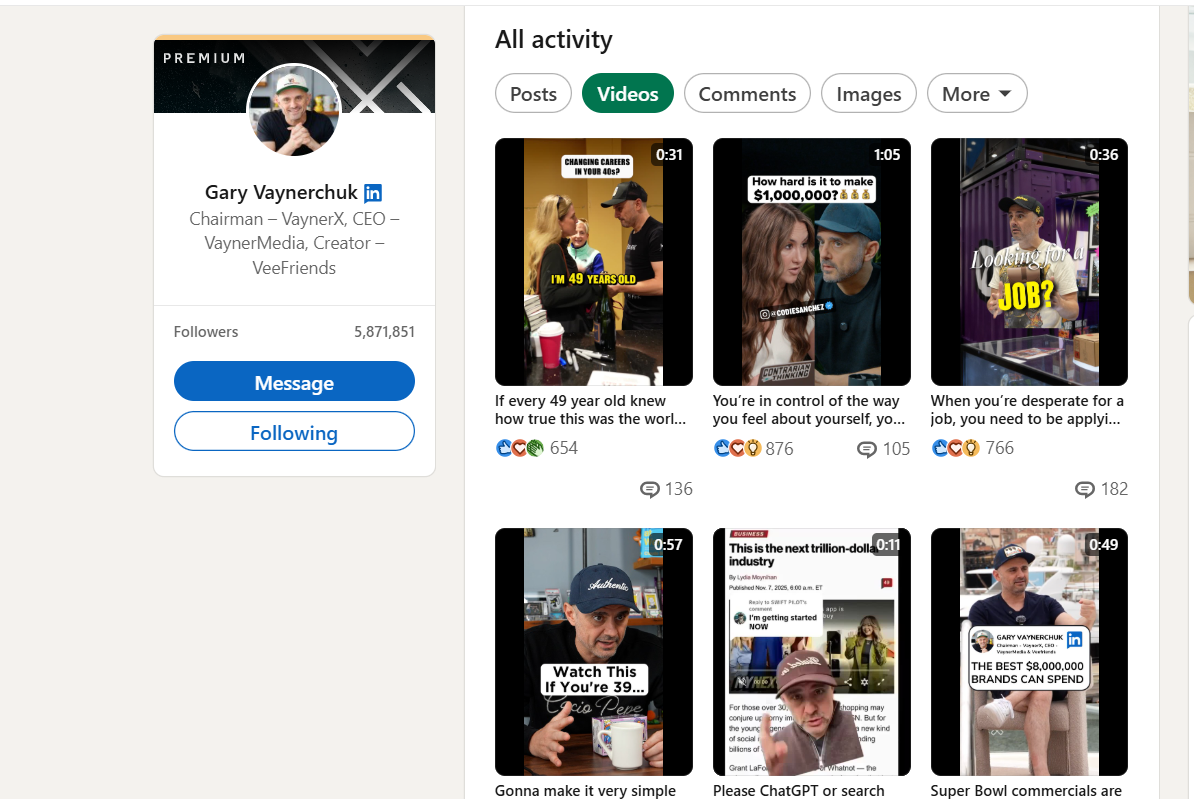
Video content strategy for LinkedIn

Explainer Videos

Best for: Early-stage buyers and internal champions

Perfect when someone is still trying to understand the problem or explain it internally. Take a page from Slack’s explainer video, “What is Slack?” 

Product Demos and Walkthroughs

Best for: Technical evaluators and operations leaders

This is where you show, not tell. Show how it works, where it fits, and what to expect. Here’s an example video from Notion explaining Notion AI and how it works. 

Customer Stories

Best for: Economic buyers and final decision-makers

Nothing builds confidence like seeing someone else succeed. Keep it real and focus on outcomes over testimonials. NetSuite, a Business Management Software, has a dedicated playlist featuring customer stories. 

Objection Handling Videos 

Best for: Buyers in the consideration stage

These videos remove friction. They answer the questions – about pricing, timelines, and risks – buyers are already Googling without forcing a sales call.

How-Tos and onboarding videos

Best for: End users and post-purchase audiences

These videos make adoption smoother and reduce friction after the deal closes. Bonus: they also reduce pressure on your support team.

Select Distribution Channels 

You could have Spielberg-level production, but if it’s posted in the wrong place, nobody will see it. And besides, B2B buyers don’t hang out everywhere the way consumers do. 

Your video strategy framework should, therefore, include a clear plan for where your audience exists and how you consistently show up there. 

LinkedIn

Who You Reach: Decision makers, influencers, and economic buyers

Why It Works/ Tips: People are scrolling for ideas, industry trends, and credible insights. Keep it professional and snackable.

YouTube

Who You Reach: Technical evaluators, internal champions, end users

Why It Works/ Tips: People search here for solutions. It’s great for longer demos and explainer content. Make sure you optimize titles and descriptions to make your content strategy for B2B discoverable. 

Email Campaigns/Newsletters

Who You Reach: Nurture leads, internal champions

Why It Works/ Tips: Great for guiding prospects along the funnel without feeling pushy.

Company Website/Landing Pages

Who You Reach: All buyers and prospects

Why It Works/ Tips: Every video should have a home where prospects can self-educate, explore deeper, and convert at their own pace.

Webinars or Live Sessions

Who You Reach: Consideration and decision-stage buyers

Why It Works/ Tips: Perfect for buyers wanting deeper insights before signing off

Internal Social / Slack Communities

Who You Reach: End-user influencers

Why It Works/ Tips: Helps adoption post-purchase and builds internal champions who sell your solution internally.

Budgeting and Resource Planning for Video Production

You can have the best idea in the world, but without a plan for who’s doing what, when, and for how much, it’s bound to crash. Budgeting and resource planning make your video content strategy sustainable. 

You don’t want to burn your team out or blow the budget on one shiny product that disappears into the void. So, take these things into consideration. 

  • Know your total spend. Make sure you include production, editing, animation, scripting, and distribution. Don’t forget to add licensing or stock footage. Tiny overlooked costs have a nasty habit of creeping up.
  • Not every video needs a Hollywood budget. Invest more in content for high-value personas or critical funnel stages and keep awareness-stage content lighter (but still polished). 
  • 60% of video marketers measure ROI through vanity metrics. However, ideally, you should focus on video attribution B2B, which means tracking which videos drive leads and shorten the sales cycle. The goal is to maximize ROI from your video content, so every dollar spent earns its keep. 

Executing Your B2B Video Marketing Strategy

You can have the cleanest B2B video strategy doc and a perfectly color-coded content calendar, but execution is where B2B video either comes alive or falls apart. Here are some things to consider. 

Assign Clear Ownership Across Teams

When everyone owns the B2B video strategy, no one really owns it. B2B video almost always sits at the crossroads of marketing, sales, leadership, and sometimes product. Which means if you don’t clearly decide who’s responsible for what, things can get messy. 

The fix is simple. Make sure you assign clear ownership. A practical way to do this: 

  • One owner for the overall video content strategy (usually marketing)
  • Clear contributors from sales, product, or leadership for insights and validation
  • Defined reviews with boundaries (what they can comment on, and what’s out of scope)
  • Sales as users (videos shouldn’t slow them down, but rather empower them). 

Use AI to Scale Execution

AI helps you scale content without burning out. 75% of marketers say AI helps speed up their manual tasks so they can focus more on the creative side of things. However, you’ll still need humans in the loop as AI can’t spot subtle messaging issues or know what will actually resonate with your buyers. So, while it’s great at scaling the work, humans make sure it hits the mark. Here are some tools to optimize your video execution. 

  • Jasper and ChatGPT help you draft scripts and topic outlines. But you’d need to tweak for tone and relevance. 
  • Tools like Descript or Wisecut are great for trimming and removing captions. Let humans finalize for pacing and style, though.
  • Create short clips out of long webinars with Pictory and Lumen5
  • Use Canva AI for visuals and thumbnails. It’s great for suggesting designs, but humans decide it’s on-brand and attention-grabbing. 

Test and Optimize Based on Buying Signals

If, for instance, your goal is to get more demo requests from decision-makers, try two versions. Use one highlighting ROI and high-level outcomes, and the other showing technical features. After a couple of weeks, check the numbers. 

Say Version A gets 1200 views, a 4.5% click-through on the demo CTA, and 54 requests, while Version B gets 1100 views, 2.8% CTR, and 31 requests. That tells you which messaging resonates with your audience. So, tweak the underperforming version for a different persona and keep iterating. 

Best Practices to Consider for B2B Video Marketing

Before you hit record or upload your next video, here are a few best practices worth keeping in your back pocket. 

Design Videos for Decision-Makers, Not Just Viewers. Views are nice, but influence is better. Your real audience isn’t “anyone who watches” but the person who can say yes, sign off, or push it forward internally. A whopping 95% of B2B buyers say that videos play a critical role in their buying journey. Therefore, video content marketing for B2B should answer the question decision-makers care about the most: “Why should I care, and why now?” If it doesn’t help them make or defend a decision, it won’t work. 

Treat Every Video as a Sales Enablement Asset. Even if marketing makes it, sales will live with it. Your videos should be designed for video sales enablement – easy for the sales team to share and drop into conversations without explanation. If a rep can’t send it to a prospect and say, “This explains it better than I can,” you’re missing a huge opportunity. Here’s what you can do to implement it: 

  1. Sit with a sales rep for 10-15 minutes
  2. Ask them to list the top 3 questions that slow deals down (pricing confusion, implementation effort, ROI, “how are you different?”)
  3. Create a short video (2-3 minutes) for each question
  4. Title the video exactly like the question (for example, “How long does implementation actually take?”)
  5. Give sales the link and tell them, “Use this whenever this question comes up.” 

That way, salespeople won’t need to explain the context, and buyers would feel the video was made for them, which will likely move the deals faster. 

Build for Silent, Skimmed, and Scrubbed Viewing. Most people aren’t watching your videos the way you imagine. Around 69% are on mute, and others are skimming captions; no wonder adding them can increase view time by 12%. The rest might be dragging the playhead to see if it’s worth their time. Make sure you design for that reality. Strong hooks and clear on-screen text make your video work even when it’s barely watched. Here’s an example video from Sony. Even without sound, the clip communicates its core message because it leans on clean visuals. 

Here’s one from BuzzFeed. The video features clear on-screen text and is simple enough for anyone to understand, even on mute.

Strategic Considerations for 2026 

2026 isn’t going to be like 2025 or any year before it. B2B buyers are now smarter and more pickier than ever, and the digital space keeps shifting under your feet. Make sure you design your video content strategy keeping these things in mind.

AI Will Design Distribution Before Humans Do

Back in the day, video distribution mostly relied on educated guesses and limited data, with A/B testing stretched across weeks (or months). Today, AI has changed the game. 

Machine learning algorithms look at past performance for similar videos and audiences, then predictive modeling estimates which content strategy for B2B is most likely to reach the right audience. 

An AI tool, for example, might notice that decision-makers engage more with 90-second B2B video marketing ROI clips on LinkedIn between 10-11 am, while technical evaluators prefer in-depth demos on YouTube in the evenings. You can take that insight and prioritize your content calendar accordingly.  

Short-Form Will Drive Discovery, Long-Form Will Close Deals

Think in terms of short form vs long form content because each serves a different purpose in your buyer’s journey. Most B2B buyers don’t have time to watch a 10-minute demo on their first scroll. That’s where you can target them with short-form content – quick tips or 60-90 second ROI highlights that spark curiosity can work as discovery-stage content. 

But attention alone doesn’t close deals, and that’s where long-form content earns its keep. Detailed demos and in-depth customer success stories give buyers the information they need to evaluate and decide. 

Owned Distribution Will Matter More than Platforms

Relying on someone else’s algorithm is risky because you’re basically building your house on someone else’s land. That’s why owned media, like your website, email lists, newsletters, internal portals, and Slack communities, will matter more. 

These are the spaces you control. You can track who watched, how long they stayed, and what actions they took next. 

Harvard Business Review Professor Sunil Gupta shares that owned media is the only form of media that can work at all stages of the funnel.” 

It boosts brand discovery at the top of the funnel and drives more conversions at the mid and lower stages through a persuasive, relevant content strategy for B2B. Ideally, use platforms to boost your reach, but always lead back to your owned channels.

Design Video Content Strategy with the Best Video Production Agency 

B2B video content strategy often fails because it’s designed for yesterday’s buyers. People don’t consume the information the same way anymore. They self-educate and skip anything that feels generic. If your video marketing strategy isn’t built for how buyers behave in 2026, they’ll be swiped past before you even get a chance to measure impact. 

You’ve got to match video format to each stage, use AI smartly, consider owned channels to control your reach, and create content that drives decisions. Every frame and every second should have a purpose and a path to results. 

At INDIRAP, a leading video production company in Chicago, we help B2B brands do exactly that. From strategy to production to execution, we make videos that are meant to perform (and outperform your competitors). Our team makes sure your content connects with the right people in a way they actually consume it. 

Schedule a call today to make sure your B2B video strategy is ready for the future. 

Related Articles
video content strategy for B2B
February 9, 2026

Video Content Strategy for B2B Brands in 2026: A Playbook to Grab More Attention

blog
Show all

When was the last time you willingly watched a B2B video all the way through? Not because your boss asked you to, or it autoplayed while you were half-scrolling LinkedIn. We mean, actually watched it, with sound on and attention present. Exactly. 

With 91% of businesses using it as a marketing tool, we’re living in a time where video is everywhere. And yet, most B2B videos still feel like that overly enthusiastic salesperson who won’t take the hint. They’re so polished you can practically see your reflection (right before you scroll past). 

The thing is, B2B buyers are still people. Tired people. Busy people. People who’ve seen a hundred “game-changing solutions” before their second cup of coffee. 

So, if your video doesn’t feel like it gets them in the first few seconds, it’s game over. Video content strategy for B2B in 2026 requires you to be smart without sounding smug and human without trying too hard. Stick around to see what a winning video marketing strategy looks like!

Why a Solid Video Content Strategy Matters for B2B Brands In 2026

In 2026, your B2B buyer isn’t some mythical suit reading whitepapers in peace. They’re juggling Slack notifications and three tabs on Chrome, trying to figure out if that “revolution-in-a-box” is worth their time. Video is the one thing that can cut through the noise. Here’s why it matters. 

B2B buyers now self-educate through video first. 86% of B2B buyers have already picked a vendor before your sales team even says hello. They’re self-educating by binge-watching videos and scrolling through demos to decide who’s worth their time. Not targeting them with video content essentially means being invisible.  

Videos shorten sales cycles by answering objections upfront. Instead of waiting for a 45-minute call just to answer the same questions over and over, videos can do the heavy lifting upfront. They clear doubts and show buyers why you’re the right choice. So, by the time your sales team joins, the deal’s already halfway there. 

Trust is built faster through faces. “Humans are wired to look to faces to understand the person’s intentions,” says Todorov, an assistant professor of psychology at Princeton University. Literally, it’s how we read honesty and credibility. In the B2B world, that means a smiling expert on videos signals it’s safe to engage with you. One authentic face can replace ten pages of slides because now you’re not an unknown vendor anymore, but someone they can trust.     

Search algorithms now prioritize video. Content with video is reported to be 50 times more likely to appear on Google’s first page compared to plain text. Even platforms like LinkedIn that were previously text-only are pushing and boosting video content, because that’s what users now want to see. No wonder video posts are shared 20x more than any other content. Not using them doesn’t mean you’re handing eyeballs over to someone else who gets it. 

AI has lowered production costs but raised quality expectations. Thanks to AI, producing videos is practically table stakes. But just because it’s easier to make doesn’t mean you can coast. Buyers in 2026 can smell low-effort content a mile away. They’ve seen slick AI-powered videos from competitors, and their expectations have skyrocketed. So, nothing will get you ignored faster than mediocrity. 

Planning Your B2B Video Strategy

A solid B2B video marketing strategy involves knowing who you’re talking to, what questions they secretly have, and how to answer them before they even ask. Below, we share how to do that. 

Define Clear Business and Revenue Objectives

Your revenue won’t magically spike by throwing up a bunch of videos. A French writer, Antoine de Saint-Exeupery once said, “A goal without a plan is just a wish.” So, step one is to figure out what success looks like for you. 

Are you trying to generate leads, shorten sales cycle, drive demo-sign-ups, or get your product in front of C-level executives who have a budget? Be specific. 

Take your top business goals and ask yourself, “How can video move the needle here?” For example: 

  • If your goal is more leads, your video should educate first and pitch later (with a clear CTA to capture information) 
  • If it’s shortening the sales cycle, make videos that answer objections upfront – think FAQs or case studies.
  • If thought leadership is your aim, focus on insights that make your brand memorable.

Also, don’t stop at “we want more revenue” as an objective. Break it down into numbers and actions. How many leads? How many demo requests? Which stage in the funnel? That’s how you define a video content strategy that works. 

Understand Your B2B Buyer Personas

B2B buyers aren’t people who vaguely like your product.

You need to know what keeps them up at night and what questions they whisper to themselves before hitting “book a demo.” That’s your gold. 

Once you understand your personas, only then can you create videos that speak their language and answer their hidden objections. Here’s an example framework to help you define your B2B buyer personas and use them to drive your video content strategy.  

Persona 1: Decision Maker

Job Title / Role: VP of Marketing

Pain Points: Needs measurable ROI, time-poor, risk-averse

Goals / What They Care About: Quick wins, vendor reliability, and high ROI campaigns

Where They Hang Out: LinkedIn and Industry Forums

Persona 2: Technical buyer

Job Title / Role: IT Manager

Pain Points: Integration headaches, security concerns

Goals / What They Care About: Smooth implementation and technical credibility

Where They Hang Out: YouTube, Reddit, Tech blogs

Persona 3: Influencer

Job Title / Role: Team Lead / Specialist

Pain Points: Wants efficiency and team alignment

Goals / What They Care About: Tools that make their life easier

Where They Hang Out: Slack communities, LinkedIn, and YouTube

Persona 4: Economic Buyer

Job Title / Role: CFO / Finance Lead

Pain Points: Budget constraints + cost justification

Goals / What They Care About: Cost savings and predictable ROI

Where They Hang Out: LinkedIn, webinars, industry newsletters 

Map B2B Video Strategy to the Buyer’s Journey

One of the biggest mistakes B2B brands make is showing up with the wrong video at the wrong time. You’re talking pricing when they’re still figuring out the problem. You’re pushing demos when they’re trying to understand if this is even worth caring about. 

Consider the buyer’s journey like a conversation that happens over time. Early on, they’re just poking around and trying to put a name to their problem. 

Later, they’re comparing options, weighing trade-offs, asking, “Okay, but will this actually work for us?” And only at the end are they ready to talk about details, budgets, and next steps. 

Your job isn’t to rush them but to meet them where they are.

That’s where mapping video to the buyer’s journey comes in. Gartner explains that you should ideally focus on “creating ‘buyer enablement’ content that helps buyers complete critical buying tasks along their path to purchase.”

  • Awareness-stage videos should feel like a helpful nudge. 
  • Consideration videos should answer the questions they’re too polite to ask out loud
  • Decision-stage videos are confidence-builders that say, “You’re making a smart call.”

Choose the Right Video Format

A CFO doesn’t watch videos the same way a Head of Marketing does. Likewise, a first-time visitor doesn’t want the same thing as someone who’s already halfway to booking a demo. 

Yet B2B marketing video strategy often serves the same format to everyone, hoping it works. But it doesn’t! 

Don’t start with “What video should we make?” Start with “Who is this for, and what do they need right now?”

Here are some formats to consider during video content planning.

B2B Thought Leadership Video Clips

Best for: Senior decision-makers (CEOs, CMOs, VPs)

These are quick, insight-led videos that show you understand the bigger picture. Gary Vaynerchuk’s short-form videos related to business and marketing are an example.  

Video content strategy for LinkedIn

Explainer Videos

Best for: Early-stage buyers and internal champions

Perfect when someone is still trying to understand the problem or explain it internally. Take a page from Slack’s explainer video, “What is Slack?” 

Product Demos and Walkthroughs

Best for: Technical evaluators and operations leaders

This is where you show, not tell. Show how it works, where it fits, and what to expect. Here’s an example video from Notion explaining Notion AI and how it works. 

Customer Stories

Best for: Economic buyers and final decision-makers

Nothing builds confidence like seeing someone else succeed. Keep it real and focus on outcomes over testimonials. NetSuite, a Business Management Software, has a dedicated playlist featuring customer stories. 

Objection Handling Videos 

Best for: Buyers in the consideration stage

These videos remove friction. They answer the questions – about pricing, timelines, and risks – buyers are already Googling without forcing a sales call.

How-Tos and onboarding videos

Best for: End users and post-purchase audiences

These videos make adoption smoother and reduce friction after the deal closes. Bonus: they also reduce pressure on your support team.

Select Distribution Channels 

You could have Spielberg-level production, but if it’s posted in the wrong place, nobody will see it. And besides, B2B buyers don’t hang out everywhere the way consumers do. 

Your video strategy framework should, therefore, include a clear plan for where your audience exists and how you consistently show up there. 

LinkedIn

Who You Reach: Decision makers, influencers, and economic buyers

Why It Works/ Tips: People are scrolling for ideas, industry trends, and credible insights. Keep it professional and snackable.

YouTube

Who You Reach: Technical evaluators, internal champions, end users

Why It Works/ Tips: People search here for solutions. It’s great for longer demos and explainer content. Make sure you optimize titles and descriptions to make your content strategy for B2B discoverable. 

Email Campaigns/Newsletters

Who You Reach: Nurture leads, internal champions

Why It Works/ Tips: Great for guiding prospects along the funnel without feeling pushy.

Company Website/Landing Pages

Who You Reach: All buyers and prospects

Why It Works/ Tips: Every video should have a home where prospects can self-educate, explore deeper, and convert at their own pace.

Webinars or Live Sessions

Who You Reach: Consideration and decision-stage buyers

Why It Works/ Tips: Perfect for buyers wanting deeper insights before signing off

Internal Social / Slack Communities

Who You Reach: End-user influencers

Why It Works/ Tips: Helps adoption post-purchase and builds internal champions who sell your solution internally.

Budgeting and Resource Planning for Video Production

You can have the best idea in the world, but without a plan for who’s doing what, when, and for how much, it’s bound to crash. Budgeting and resource planning make your video content strategy sustainable. 

You don’t want to burn your team out or blow the budget on one shiny product that disappears into the void. So, take these things into consideration. 

  • Know your total spend. Make sure you include production, editing, animation, scripting, and distribution. Don’t forget to add licensing or stock footage. Tiny overlooked costs have a nasty habit of creeping up.
  • Not every video needs a Hollywood budget. Invest more in content for high-value personas or critical funnel stages and keep awareness-stage content lighter (but still polished). 
  • 60% of video marketers measure ROI through vanity metrics. However, ideally, you should focus on video attribution B2B, which means tracking which videos drive leads and shorten the sales cycle. The goal is to maximize ROI from your video content, so every dollar spent earns its keep. 

Executing Your B2B Video Marketing Strategy

You can have the cleanest B2B video strategy doc and a perfectly color-coded content calendar, but execution is where B2B video either comes alive or falls apart. Here are some things to consider. 

Assign Clear Ownership Across Teams

When everyone owns the B2B video strategy, no one really owns it. B2B video almost always sits at the crossroads of marketing, sales, leadership, and sometimes product. Which means if you don’t clearly decide who’s responsible for what, things can get messy. 

The fix is simple. Make sure you assign clear ownership. A practical way to do this: 

  • One owner for the overall video content strategy (usually marketing)
  • Clear contributors from sales, product, or leadership for insights and validation
  • Defined reviews with boundaries (what they can comment on, and what’s out of scope)
  • Sales as users (videos shouldn’t slow them down, but rather empower them). 

Use AI to Scale Execution

AI helps you scale content without burning out. 75% of marketers say AI helps speed up their manual tasks so they can focus more on the creative side of things. However, you’ll still need humans in the loop as AI can’t spot subtle messaging issues or know what will actually resonate with your buyers. So, while it’s great at scaling the work, humans make sure it hits the mark. Here are some tools to optimize your video execution. 

  • Jasper and ChatGPT help you draft scripts and topic outlines. But you’d need to tweak for tone and relevance. 
  • Tools like Descript or Wisecut are great for trimming and removing captions. Let humans finalize for pacing and style, though.
  • Create short clips out of long webinars with Pictory and Lumen5
  • Use Canva AI for visuals and thumbnails. It’s great for suggesting designs, but humans decide it’s on-brand and attention-grabbing. 

Test and Optimize Based on Buying Signals

If, for instance, your goal is to get more demo requests from decision-makers, try two versions. Use one highlighting ROI and high-level outcomes, and the other showing technical features. After a couple of weeks, check the numbers. 

Say Version A gets 1200 views, a 4.5% click-through on the demo CTA, and 54 requests, while Version B gets 1100 views, 2.8% CTR, and 31 requests. That tells you which messaging resonates with your audience. So, tweak the underperforming version for a different persona and keep iterating. 

Best Practices to Consider for B2B Video Marketing

Before you hit record or upload your next video, here are a few best practices worth keeping in your back pocket. 

Design Videos for Decision-Makers, Not Just Viewers. Views are nice, but influence is better. Your real audience isn’t “anyone who watches” but the person who can say yes, sign off, or push it forward internally. A whopping 95% of B2B buyers say that videos play a critical role in their buying journey. Therefore, video content marketing for B2B should answer the question decision-makers care about the most: “Why should I care, and why now?” If it doesn’t help them make or defend a decision, it won’t work. 

Treat Every Video as a Sales Enablement Asset. Even if marketing makes it, sales will live with it. Your videos should be designed for video sales enablement – easy for the sales team to share and drop into conversations without explanation. If a rep can’t send it to a prospect and say, “This explains it better than I can,” you’re missing a huge opportunity. Here’s what you can do to implement it: 

  1. Sit with a sales rep for 10-15 minutes
  2. Ask them to list the top 3 questions that slow deals down (pricing confusion, implementation effort, ROI, “how are you different?”)
  3. Create a short video (2-3 minutes) for each question
  4. Title the video exactly like the question (for example, “How long does implementation actually take?”)
  5. Give sales the link and tell them, “Use this whenever this question comes up.” 

That way, salespeople won’t need to explain the context, and buyers would feel the video was made for them, which will likely move the deals faster. 

Build for Silent, Skimmed, and Scrubbed Viewing. Most people aren’t watching your videos the way you imagine. Around 69% are on mute, and others are skimming captions; no wonder adding them can increase view time by 12%. The rest might be dragging the playhead to see if it’s worth their time. Make sure you design for that reality. Strong hooks and clear on-screen text make your video work even when it’s barely watched. Here’s an example video from Sony. Even without sound, the clip communicates its core message because it leans on clean visuals. 

Here’s one from BuzzFeed. The video features clear on-screen text and is simple enough for anyone to understand, even on mute.

Strategic Considerations for 2026 

2026 isn’t going to be like 2025 or any year before it. B2B buyers are now smarter and more pickier than ever, and the digital space keeps shifting under your feet. Make sure you design your video content strategy keeping these things in mind.

AI Will Design Distribution Before Humans Do

Back in the day, video distribution mostly relied on educated guesses and limited data, with A/B testing stretched across weeks (or months). Today, AI has changed the game. 

Machine learning algorithms look at past performance for similar videos and audiences, then predictive modeling estimates which content strategy for B2B is most likely to reach the right audience. 

An AI tool, for example, might notice that decision-makers engage more with 90-second B2B video marketing ROI clips on LinkedIn between 10-11 am, while technical evaluators prefer in-depth demos on YouTube in the evenings. You can take that insight and prioritize your content calendar accordingly.  

Short-Form Will Drive Discovery, Long-Form Will Close Deals

Think in terms of short form vs long form content because each serves a different purpose in your buyer’s journey. Most B2B buyers don’t have time to watch a 10-minute demo on their first scroll. That’s where you can target them with short-form content – quick tips or 60-90 second ROI highlights that spark curiosity can work as discovery-stage content. 

But attention alone doesn’t close deals, and that’s where long-form content earns its keep. Detailed demos and in-depth customer success stories give buyers the information they need to evaluate and decide. 

Owned Distribution Will Matter More than Platforms

Relying on someone else’s algorithm is risky because you’re basically building your house on someone else’s land. That’s why owned media, like your website, email lists, newsletters, internal portals, and Slack communities, will matter more. 

These are the spaces you control. You can track who watched, how long they stayed, and what actions they took next. 

Harvard Business Review Professor Sunil Gupta shares that owned media is the only form of media that can work at all stages of the funnel.” 

It boosts brand discovery at the top of the funnel and drives more conversions at the mid and lower stages through a persuasive, relevant content strategy for B2B. Ideally, use platforms to boost your reach, but always lead back to your owned channels.

Design Video Content Strategy with the Best Video Production Agency 

B2B video content strategy often fails because it’s designed for yesterday’s buyers. People don’t consume the information the same way anymore. They self-educate and skip anything that feels generic. If your video marketing strategy isn’t built for how buyers behave in 2026, they’ll be swiped past before you even get a chance to measure impact. 

You’ve got to match video format to each stage, use AI smartly, consider owned channels to control your reach, and create content that drives decisions. Every frame and every second should have a purpose and a path to results. 

At INDIRAP, a leading video production company in Chicago, we help B2B brands do exactly that. From strategy to production to execution, we make videos that are meant to perform (and outperform your competitors). Our team makes sure your content connects with the right people in a way they actually consume it. 

Schedule a call today to make sure your B2B video strategy is ready for the future. 

Don't forget to share this post!