To rank your videos on Google in 2026, make them machine-readable for multimodal AI: add VideoObject schema with timestamped key moments, embed a clean keyword-aligned transcript, and place the video above the fold with supporting copy. Then earn strong audience retention and engagement so Google treats your clip as the final answer.
We understand you spent three hours agonizing over the lighting, five hours editing out every single filler word, and another two hours picking the perfect thumbnail that makes you look expert yet approachable. But when you hit publish, it’s all crickets.
It’s 2026, and we’ve moved past the era of stuffing keywords into a description box and hoping for the best. Today, video SEO is driven by Multimodal AI.
Google’s latest algorithms now prioritize Proof of Life signals. This means the AI is transcribing your audio in real-time and identifying visual entities (like that specific product on your desk or the local landmark in your background) to verify you’re the real deal.
In fact, videos with VideoObject Schema, which essentially gives the AI a clear framework of your transcript, are seeing a massive jump in Answer Share of Voice in those new AI Overviews.
If you want to get your face in front of the right people, we need to talk about how to make your videos machine-readable without losing your human soul.
Video SEO is the process of optimizing your video content so search engines and platforms like Google and YouTube can understand it and rank it in search results.
To a search engine, your $10k brand film is just a heavy, opaque box it can’t open. Video search optimization is simply the act of poking holes in that box so the light gets through.
The problem is, most brands are currently suffering from Cinematic Vanity. They hire a crew, rent a RED camera, and obsess over the color grade, only to realize that Google is essentially blind. But a deeper dig reveals the real issue lies in strategy.
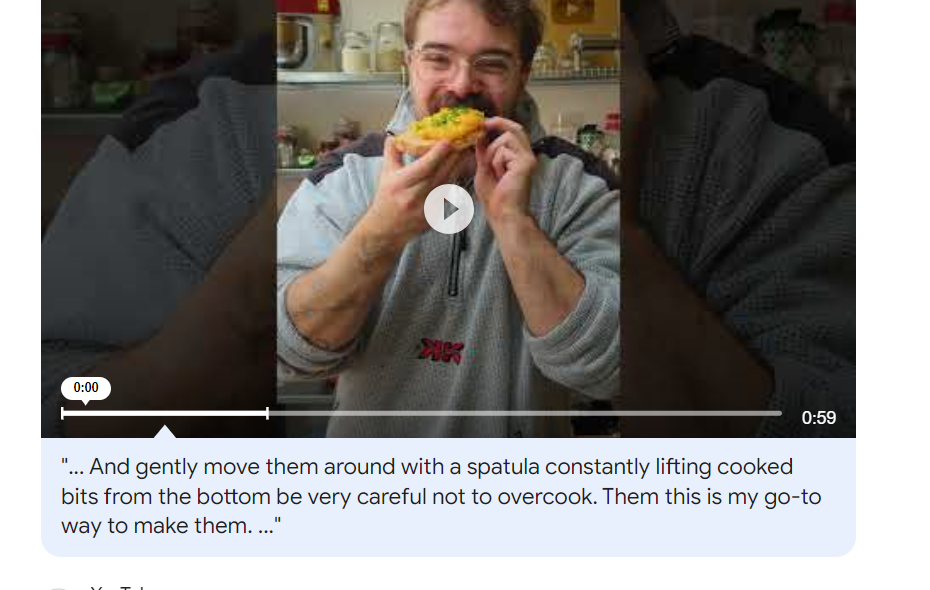
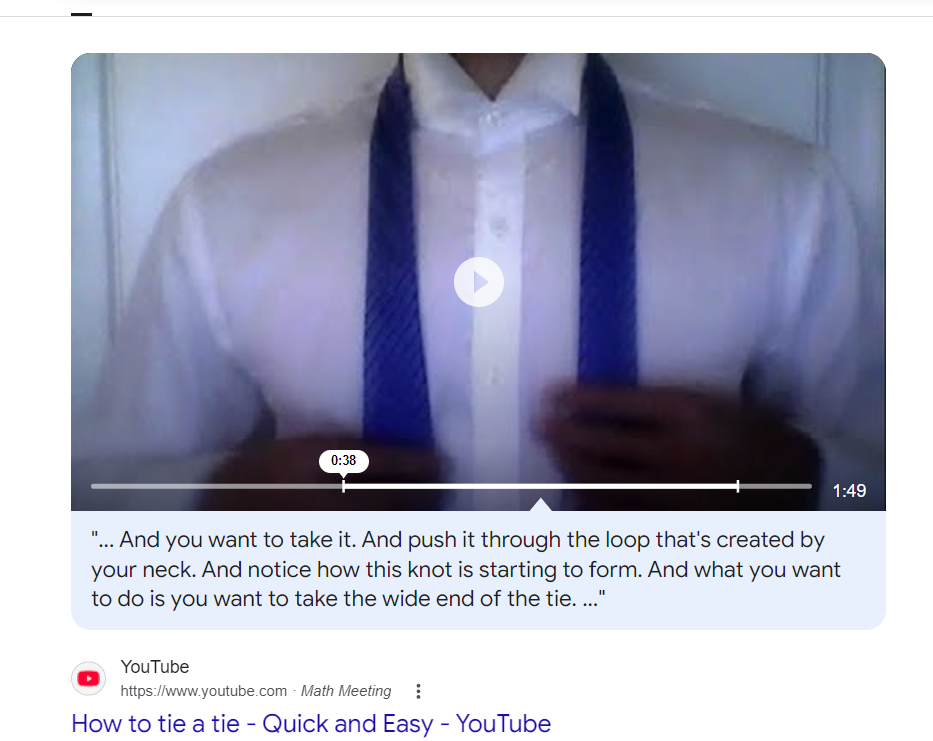
Video SEO for businesses gives the algorithm a pair of glasses so it can finally see you’re the expert it’s been looking for!
If you’re still thinking of video as a bonus result, you’re missing the fact that it’s now the primary way Google communicates complex answers. Knowing how to rank videos on Google is key, so here’s the 2026 breakdown of where your face is actually going to show up.
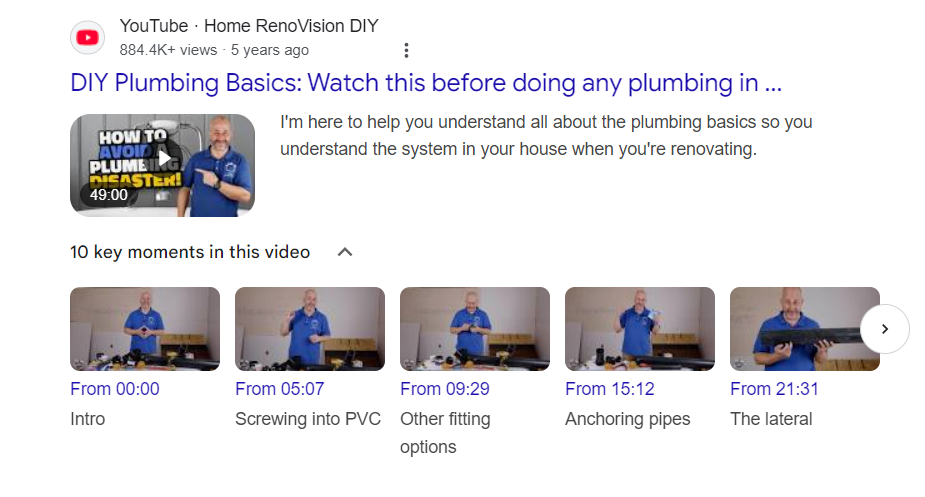
Today, the algorithm is cross-referencing what you say (your audio transcript), what you show (your on-screen entities), and how people react (your engagement velocity) to decide if you’re worth a spot in that 62% of search results that feature video.
If you’re curious how to rank videos on Google, here are five core signals that determine whether you land in the AI overview or get overlooked.
In the old days, a transcript was only for accessibility. In 2026, it’s a retrieval requirement. Google’s multimodal AI (like Gemini 2.5) now listens to your audio to identify semantic entities.
If you're a realtor in Austin, TX, and you mention The Domain or Zilker Park in your audio, Google indexes those as geographic entities. So, videos with clear, keyword-aligned audio transcripts are likely to see a significant boost in Answer Share of Voice because the AI can verify the specific expert claims you’re making in real-time.
This is the big one for video SEO strategy in 2026. To combat the flood of faceless AI videos, Google now prioritizes E-E-A-T signals through visual verification. The algorithm scans your background for real-world markers.
For a US-based business, filming with a recognizable local street sign or a specific regional landmark (like the Empire State Building or even a local Home Depot) tells the AI you are a physical, verifiable expert.
Engagement is now about Search Satisfaction. Google tracks if a user watches your video and stops searching. If they watch 15 seconds and then go back to the search results to find a different video, you’ve just sent a signal that your content didn’t solve the problem.
High Audience Retention tells Google your video is a final destination result, which is the fastest way to the top. Here’s a quick video explaining how audience retention works.
If you embed a video on your site, the text on that page must act as a supporting cast. In 2026, the Contextual Nuance signal measures the alignment between your video’s transcript and the surrounding blog or product copy.
For example, if your video is about Tax Strategy, but it’s sitting on a page with generic placeholder text, Google sees a disconnect.
Video schema markup is what gets your video past the bouncers and into the Google AI overviews. By adding Schema, you’re telling the bots exactly what’s happening at every timestamp, who’s talking, and why this specific clip is the perfect answer to a user’s 2:00 AM panic-search.
You start by wrapping your video in VideoObject Schema (JSON-LD). Inside the code, you use the hasPart property to define Clip Analysis.
This tells Google, “Hey, from 0:45 to 1:20, we’re specifically answering the ‘How to’ part of this query.”
Then, you take your Transcript (which should be a clean, speaker-labeled VTT file) and you embed it directly into the page HTML. This creates a Searchable Text Layer that mirrors your video’s audio.
Finally, you ensure the video is the main attraction of the page. We mean, if it’s buried at the bottom of a 2,000-word blog post, Google assumes it’s a secondary thought. By placing it ‘above the fold’ and surrounding it with a 100-word summary that uses the same keywords as your schema, you create a Semantic Loop.
This loop proves to the AI that your video, your text, and your code are all saying the exact same thing, which is exactly what you need.
If you want to know that Video SEO strategy is actually moving the needle, keep your eyes on these three spots:
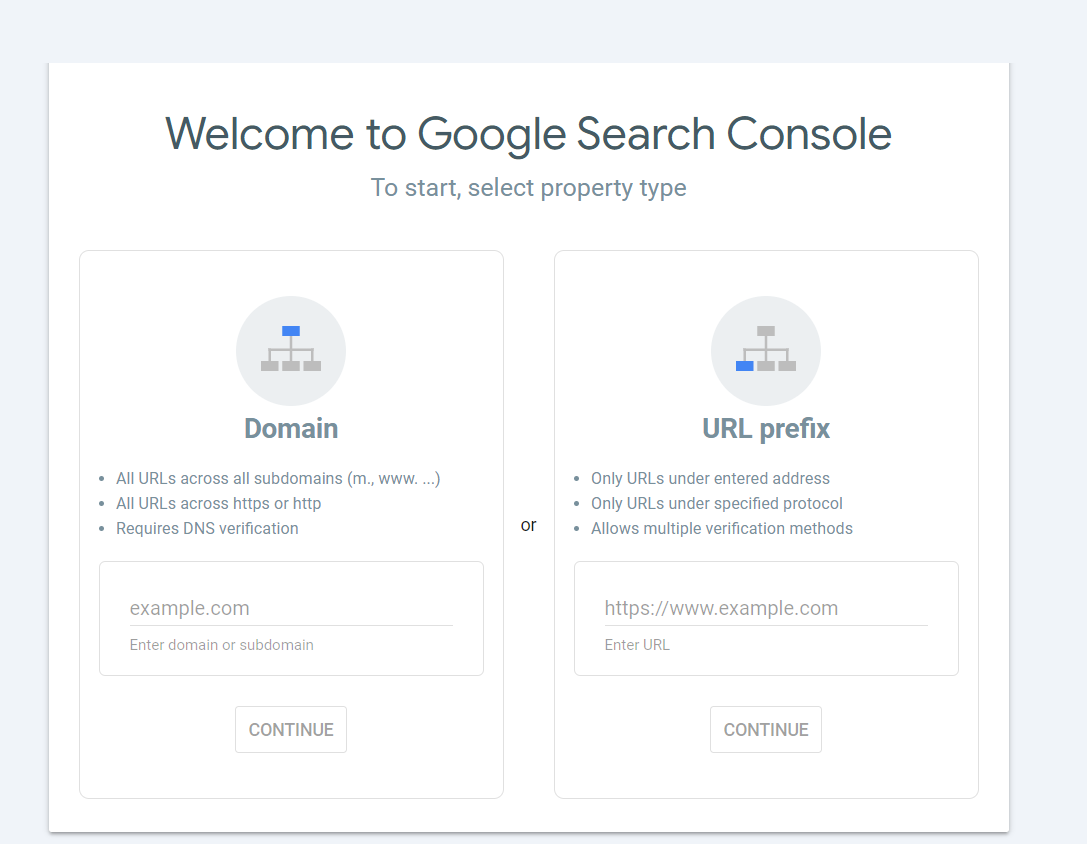
Now, you can’t expect video search optimization to work overnight. It happens gradually.
If you’re targeting a niche term like video SEO strategy (roughly a Keyword Difficulty of 9), you can usually see some serious movement in 6-8 weeks. But if you’re trying to take down the giants for a massive term like Video SEO (KD 59+), pull up a chair. You’re looking at 6-12 months of consistent optimization and backlink building to crack that top five.
For a full technical walkthrough, see our guide on how to optimize your video content for search.
In 2026, we’ve moved from Broad Awareness to Situational Relevance. Research tells us that 70% of B2B marketers now say SEO generates more sales than PPC.
s
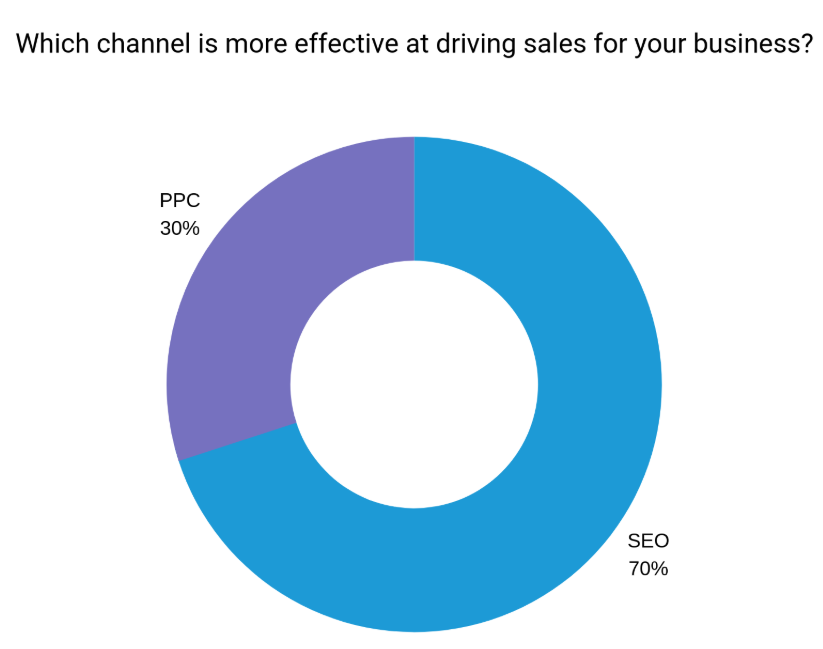
So, if you think YouTube is for influencers and unboxing videos and your firm doesn’t belong there, you’re wrong. Marketers today are chasing the 95-5 rule for a reason. This concept, popularized by the B2B Institute, reminds us that at any given time, only 5% of your market is looking to buy. The other 95%? They’re just researching.
And YouTube SEO for business is the perfect way to capture their interest. But you need to know what actually works with these video SEO tips.
You don’t need a million views from teenagers in their bedrooms; you need fifty views from CTOs with budget authority. In B2B, going viral is actually a bit of a distraction. In 2026, the real wins come from Search Intent Alignment.
This means ditching the clickbait and focusing on How-to explainer videos or Solution-based queries. If your video perfectly answers a high-intent question like “How to scale Kubernetes for mid-market SaaS,” Google will reward you with a top spot because you’ve solved a specific problem.
Google’s AI now looks for Topical Authority, which is where Topic Clusters come in. If you have one pillar video about, say, Supply Chain Resilience, you need four or five shorter videos deep-diving into sub-topics like “last-mile logistics” or “automated warehousing.”
By linking these together in a YouTube playlist and embedding them on the same blog hub, you tell the algorithm you’re a trusted source.
High Watch Time from unqualified accounts doesn’t carry as much weight as retention from verified professional profiles (thanks to Google’s deepened integration with professional data layers).
If your technical deep-dive keeps a specialized audience tuned in for 8 minutes, that’s a massive ranking signal!
Your YouTube SEO strategy shouldn't end on YouTube. The goal is to land in the Video Featured Snippet on the main Google search page. To do this, you need to use Chapter Markers effectively.
In other words, when you break your video into clear, labeled segments, Google can pluck a 30-second chapter and display it as the direct answer to a US-based search query. That way, your video becomes a series of mini-answers that live all over the web.
E-E-A-T (Experience, Expertise, Authoritativeness, Trust) is the name of the game in the B2B world. And Google looks for visual credentials.
This means having your CEO or a lead engineer (someone with a verifiable digital footprint) actually appearing on camera.
When the AI recognizes a known entity (a person Google already trusts as an expert in that field), your video gets an immediate credibility boost.
Video is a critical part of the marketing strategy for 93% of marketers for a reason. Pages with videos attract 41% more clicks than those with only text. Besides, videos are 50 times more likely than text-only content to appear on the first page of Google results.
Despite this, countless brands continue to ignore video SEO for businesses. Here are some video SEO tips to consider for your website.
In 2026, Google’s Page Experience signals for video are brutal. If your video doesn’t load instantly or it’s buried below three scrolls of fluff, it’s not ranking. You need a dedicated Video Hub or a blog post where the video is the undisputed star.
Pro tip: Ensure your OG (Open Graph) tags are set up so that when Google crawls the page, it sees a high-res thumbnail and a clear title immediately. This is how you snag that 62% of SERP real estate we talked about.
Google uses your website’s Dwell Time as a proxy for quality. If a user clicks your link, watches a four-minute video, and then leaves, Google doesn’t count that as a bounce. In fact, it counts it as a success.
High Watch Time on your embedded videos sends a massive Proof of Value signal back to the mothership, telling Google that your page satisfies the searcher's hunger.
This is where the money is made. When someone searches for “Cost of [Your Product]” or “[Your Product] vs. Competitor,” they’re looking for a quick, visual vibe check to see if you’re legit.
By embedding Solution Walkthrough or Case Study videos on your high-intent landing pages, you’re catching users at the exact moment they’re ready to pull out the credit card.
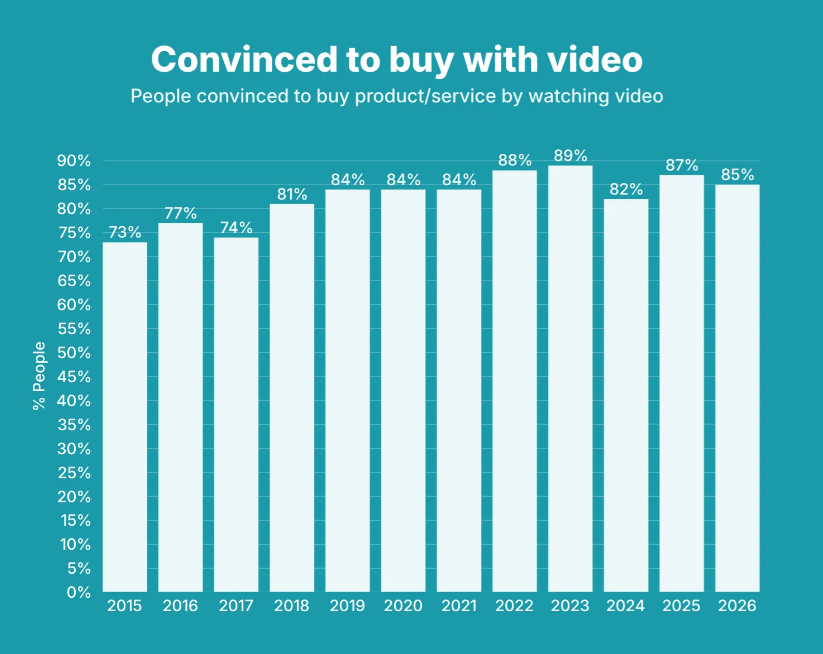
This is Conversion Optimization in disguise. 85% of consumers say they were convinced to buy a product or service after watching a video about it. This shows a strong influence of video content strategy for B2B brands on actual buying behavior!
If you’re chasing broad terms in 2026, you’re essentially paying for data to prove you’re invisible. Here’s how you dig up the gold your competitors are stepping over.
People often see a high view count and start celebrating. However, in 2026, qualified attention is the real currency. To see if your video SEO strategy is working, look at these specific performance metrics.
.gif)
Creating a video is only half the battle. The other half (the part that gets noticed and loved by Google) is Video SEO. It makes sure your shiny content doesn’t sit there collecting dust but drives conversions.
At INDIRAP video production company, we help you achieve that! We are in the business of high-performance video production services built from the ground up to be found and acted upon. Our team handles the heavy lifting of creating that Proof of Life content while incorporating the technical video SEO we discussed today.
So, instead of wondering if your next video is going to work, why don’t we make sure it’s the one Google can’t stop talking about? Book a discovery call today to see which one of your current pages has the highest potential for video search optimization.
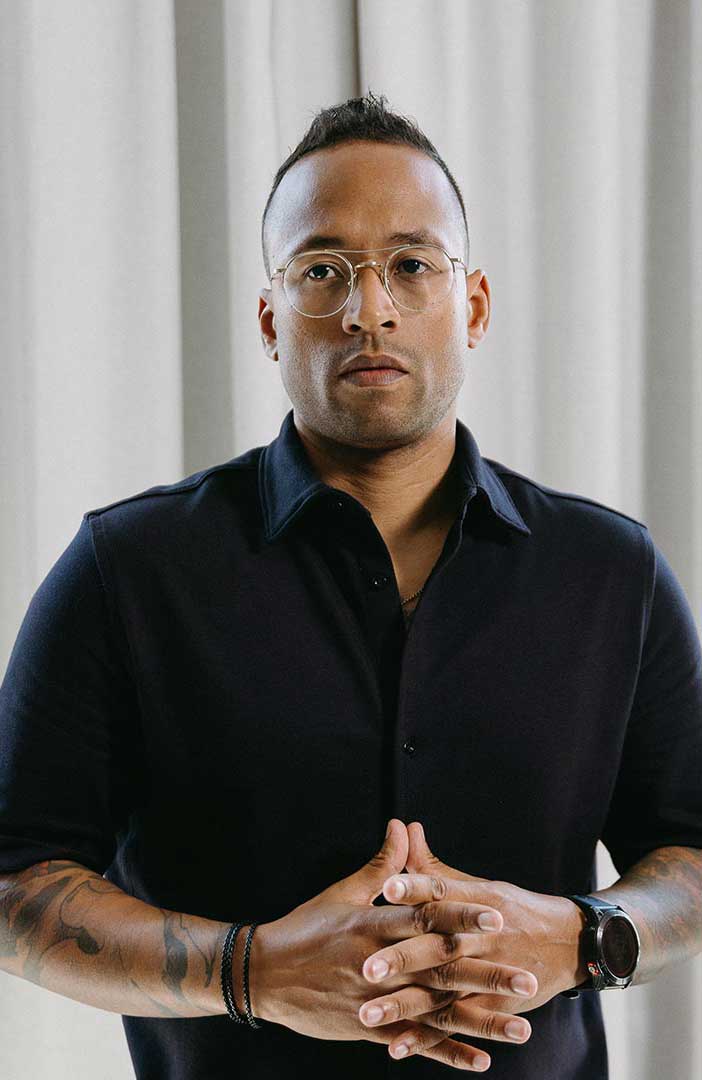

Julian Tillotson is the Founder & CEO of INDIRAP, a full-service video production and creative strategy agency based in Chicago, IL. With 10+ years of experience, INDIRAP has delivered 20,000+ videos to 900+ clients across 40+ industries, making it one of North America's leading digital creative agencies.


.png)
.png)