Video is the most engaging content you can make, and the most wasted. Most brands pour budget into production, publish the file, and then wonder why it sits at a few hundred views. The missing step is video SEO: the work that makes a video findable, both in traditional search and in the AI answer engines that now sit on top of it. This guide covers video SEO end to end, and the newer layer most teams are ignoring, answer engine optimization (AEO), which determines whether your video gets cited when someone asks AI a question instead of typing it into Google.
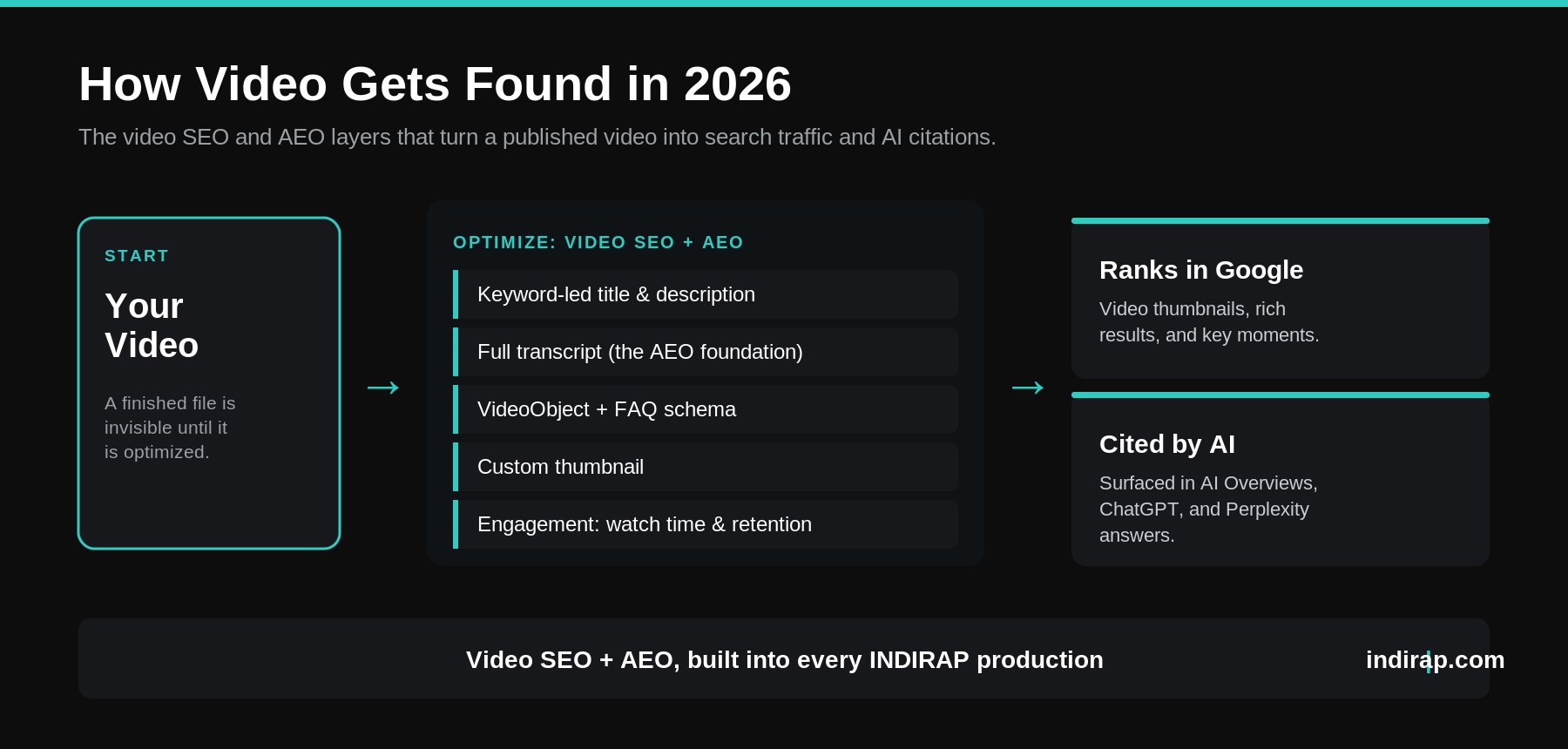
Video SEO is the practice of optimizing video content so it ranks in search results and gets surfaced to the right audience. It works on two fronts: ranking the video itself (in Google video results, on YouTube, and in the video carousel) and using video to lift the ranking of the page it lives on. Done well, a single optimized video can earn a thumbnail in search, keep visitors on the page longer, and feed the transcript and structured data that both Google and AI engines read to understand your content.
It is not a one-time setting. Video SEO is a repeatable checklist applied to every video you publish, the same way you would optimize any page. The brands that treat it as part of production, not an afterthought, are the ones that compound views over time.
Two shifts make video SEO more valuable than ever. First, search results are increasingly visual: Google surfaces video thumbnails, clips, and key moments directly in the results, and a video can occupy space that text alone cannot. Second, and bigger, search is no longer just ten blue links. AI Overviews and answer engines now summarize the web and cite sources, and video with clean transcripts and structured data is among the content they pull from. If your video is invisible to those systems, you are invisible in the fastest-growing part of search.
For brands investing in video production, SEO is what turns a finished asset into an ongoing source of traffic and leads rather than a file that gets watched once and forgotten.
These are the fundamentals that apply to almost every video, in roughly the order they matter:
1. Keyword-led titles and descriptions. Research what your audience actually searches, then put the primary phrase near the front of the title and naturally throughout the description. This is the single clearest signal of what the video is about.
2. A full, accurate transcript. Search engines and AI models cannot watch video, they read text. A transcript turns your spoken content into indexable, quotable text, and it is the foundation of both SEO and AEO. Never rely on auto-captions alone for important content.
3. VideoObject schema markup. Adding VideoObject structured data (name, description, thumbnail, upload date, duration, embed URL) tells Google exactly how to display your video and makes it eligible for video rich results and key moments. It is also one of the cleanest ways for AI engines to parse what your video contains.
4. A compelling custom thumbnail. The thumbnail drives the click, and click-through rate is a ranking input. A clear, high-contrast custom thumbnail beats an auto-generated frame every time.
5. Smart hosting and placement. Host the video where it serves the goal: YouTube for discovery and reach, an on-site player for conversion and on-page SEO. Embed it near relevant text, not buried at the bottom of the page.
6. A video sitemap and fast load. Make sure video pages are in your sitemap and that the player does not slow the page down, since page speed and crawlability both affect ranking.
7. Engagement signals. Watch time, retention, and shares all tell the platforms your video is worth surfacing. Strong creative and a clear hook are SEO, not just production value.
Answer engine optimization is video SEO adapted for AI. When someone asks ChatGPT, Google AI Overviews, or Perplexity a question, those systems assemble an answer from sources they trust and increasingly cite them. Getting your video into that answer is a different game from ranking a thumbnail, and it rewards structure.
The levers that matter most for AEO: a clean transcript written in clear, factual language; VideoObject and FAQ schema that spell out what the video answers; content organized around real questions, with direct answers near the top; and consistent entity signals (your brand, your expertise) across the page. In practice, the same transcript-plus-schema work that wins video SEO is what makes a video citable by AI, which is why we treat the two as one discipline rather than two projects.
These are related but not identical. YouTube SEO optimizes for YouTube's own search and recommendation engine, where titles, tags, watch time, and session duration drive reach. On-site video SEO optimizes the page your video lives on, where transcripts, schema, surrounding copy, and page authority do the work. A complete strategy uses both: YouTube for top-of-funnel discovery, your own site for conversion and for owning the search result. The good news is that one shoot, properly optimized, can win in both places.
Track the things that tie to business outcomes, not vanity metrics. Watch for impressions and clicks on video results in Search Console, rankings for your target video keywords, watch time and retention on the player, and, increasingly, whether your content appears in AI Overviews and answer-engine citations. Improvement is gradual: video SEO compounds as transcripts get indexed, schema gets trusted, and engagement signals accumulate.
Most teams can handle the basics, but the gap between a video that ranks and one that disappears usually comes down to consistency and the technical layer, transcripts, schema, and AEO structure applied to every asset, every time. As a full-service video production company, INDIRAP builds SEO and AEO into the production process, so the content we create is engineered to be found, not just watched. It is the same content-system thinking behind our Content Kit: produce once, optimize properly, and get found everywhere.
The fastest way to start is to audit what you already have. Most brands are sitting on videos that could rank with a transcript, schema, and better titles. A free content strategy review will pinpoint the quickest video SEO wins for your library, and you can explore how we build optimized content on our video production page.
Watch + Learn
See how we build content engineered to rank and convert.
▶ Subscribe on YouTube for video marketing and SEO breakdowns
▶ Instagram Reels for quick video strategy tips
Video SEO is the practice of optimizing video content so it ranks in search results and reaches the right audience. It covers ranking the video itself in Google and YouTube and using video to improve the ranking of the page it lives on, through titles, descriptions, transcripts, VideoObject schema, thumbnails, and engagement.
Start with keyword-led titles and descriptions, add a full transcript, implement VideoObject schema, use a custom thumbnail, host the video where it fits the goal, include it in your sitemap, and design for engagement. These steps make the video both rankable and citable by AI search.
Yes. Video can earn a thumbnail in search results, increase time on page, and provide transcripts and structured data that search engines and AI engines read. A well-optimized video both ranks on its own and lifts the page it is embedded on.
VideoObject schema is structured data that describes a video to search engines, including its name, description, thumbnail, upload date, duration, and embed URL. It makes the video eligible for video rich results and key moments and helps AI engines understand the content.
Answer engine optimization for video relies on a clean, factual transcript, VideoObject and FAQ schema, content organized around real questions with direct answers, and consistent brand and expertise signals. The same transcript-and-schema work that wins video SEO is what makes a video citable in AI Overviews and answer engines.
YouTube SEO optimizes for YouTube's search and recommendation engine using titles, tags, and watch time, while on-site video SEO optimizes the page a video lives on using transcripts, schema, and surrounding content. A complete strategy uses both.
This is part of INDIRAP's video marketing and SEO guide series.
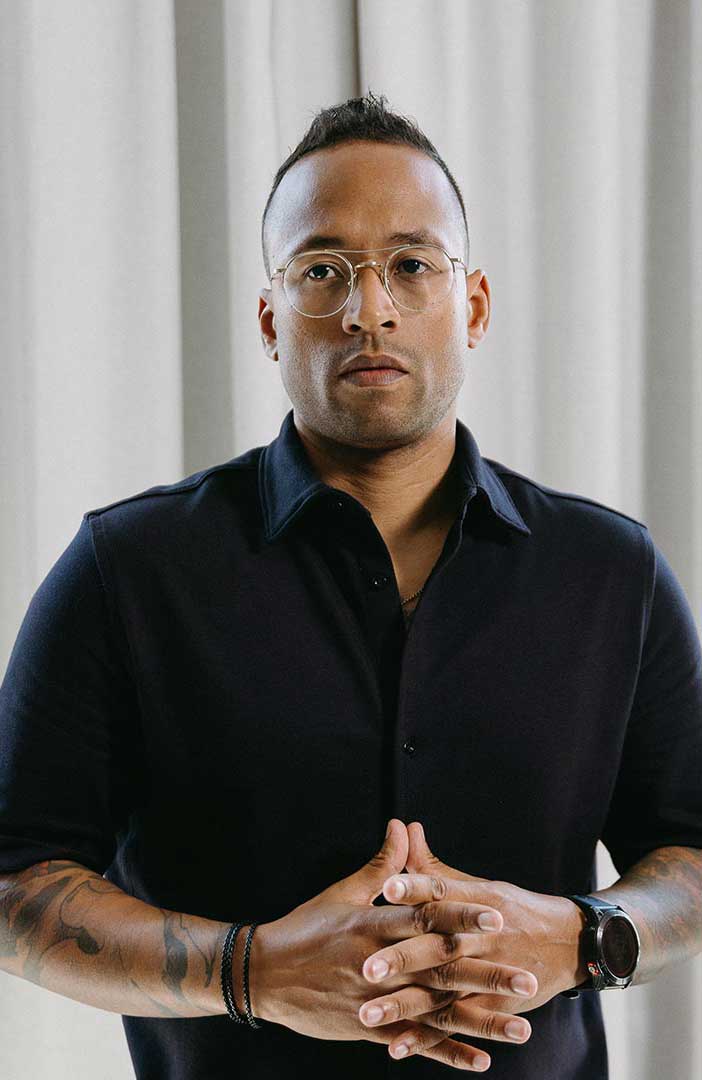

Julian Tillotson is the Founder & CEO of INDIRAP, a full-service video production and creative strategy agency based in Chicago, IL. With 10+ years of experience, INDIRAP has delivered 20,000+ videos to 900+ clients across 40+ industries, making it one of North America's leading digital creative agencies.


.png)
.png)