Promotional Videos: How Brands Use Them to Drive Sales

Although Liquid Death sells canned water, its videos look like low-budget horror movies or heavy metal music videos. The brand, in fact, released a country song out of people’s hate comments, which, by the way, went ridiculously well. 

Now, it might sound unusual, but you see, while every other bottled water brand is showing us slow-motion trickles of pure alpine springs (yawn), Liquid Death’s strategy is pure genius.

It’s 2026, and we’ve officially moved past the era where selling meant a guy in a suit talking at us from a TV screen. A promotional video should ideally follow the pattern interrupt – a creative jolt that snaps you out of autopilot and gets you paying attention. The whole idea is to shake people out of their everyday routine, so they notice what you’re doing (and why).

Given that 85% of consumers are convinced to buy a product after watching a video, it’s high time your promotional videos interrupt, reassure, and answer objections before they’re even fully formed. 

What Is a Promotional Video?

A promotional video is a piece of content designed to make someone care about your brand in the few seconds they’re willing to spare. 

It’s the art of storytelling with a very specific, underlying motive: to get someone to move. Whether that’s hitting a subscribe button, signing up for a newsletter, or finally pulling the trigger on those noise-canceling headphones, a promo video gives your audience just the right amount of nudge. 

There’s this fascinating idea called the Dual Coding Theory, which suggests that our brains process verbal and visual information through two different channels. 

When a brand hits you with a promo video, they are effectively double-tapping your brain’s processing power. You are seeing the lifestyle, feeling the rhythm of the edit, and subconsciously building a map of how that product fits into your world. 

This is exactly why research shows that viewers retain 95% of a message when they watch it in a video compared to a measly 10% when reading it in text. 

When brands use a compelling behind-the-scenes of their workshop or a quick, punchy teaser for a seasonal drop, you don’t feel like you’ve been lectured by a salesperson. Instead, you feel like you’ve just had a really enlightening thirty-second chat with someone who knows exactly what’s up. 

Here’s a recent promotional video from West Delaware you might want to check out. It doesn’t hit you over the head with salesy lines or dramatic shots, yet it gets the job done! 
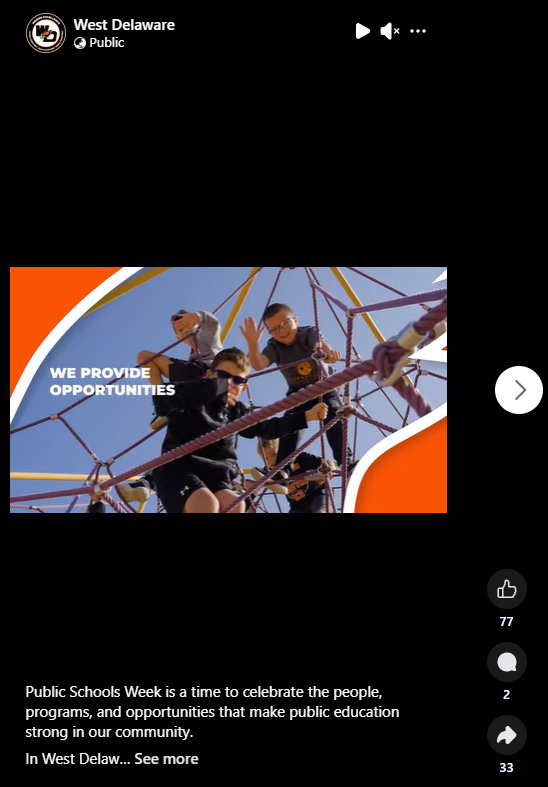
West Delaware promotional video reel

KMCH news highlights that it perfectly explains “who they are as a district, what they value, and the pride they share in serving their students and community.” 

Types of Promotional Videos That Drive Sales

Some promotional videos are meant to be that flashy billboard that catches the eye from a mile away, while others are the reassuring whisper that convinces your audience to finally enter their credit card details. 

Below, we share the common types to help you understand how each serves a very distinct purpose in making a sale. 

Product Launch Videos

Product launch videos are your chance to make a first impression so good that people remember your product before they even try it. The Zeigarnik Effect explains that our brains have to remember uncompleted or interrupted tasks better than completed ones. 

A truly stellar product launch video often plays with this by teasing bits and pieces of the product, building a tension that only clicking the Buy button can resolve. 

You see a sleek curve, a flash of a new feature, a hint of what it can do, and suddenly your brain is asking for the full picture. 

It’s why Apple’s launch films feel like a moment of pure awe, or why a gaming trailer can rack up ten million views before the game even has a release date. They are selling the future, wrapped in a thirty-second clip. 

Check out this introduction video for the iPhone 16e. It’s an example of how Apple teases key features and visuals to sell without selling

Narrative Brand Videos

Have you ever watched a video from a brand and totally forgot they were actually trying to sell you something? That is the sweet spot of a narrative brand video. These videos blend storytelling and sales in the best possible way. 

Research by neuroeconomist Paul Zak has shown that stories that are highly personal and emotionally driven cause the brain to release oxytocin (the same chemical that helps us bond with other humans). 

So, when a brand shares a narrative video about their humble beginnings or a cause they truly care about, they are literally chemically bonding with you and building a reservoir of trust that a 10% off coupon can’t touch.

Here’s an example video, Google | Loretta, where an elderly man uses Google Assistant to remember his late wife, Loretta. The narrative tells about human connection and memory, making it feel heartfelt. 

User-Generated Content

Think about the last time you bought something because a polished, million-dollar commercial told you it was revolutionary. Probably never, right? 

But if a random person on TikTok with messy hair and a genuine smile shows you a kitchen gadget that actually changed their life, you’re halfway to the checkout page before the video even loops. That is the unfiltered power of User-Generated Content, or UGC. 

Informational Social Influence explains that we often turn to others for guidance when we’re uncertain. So, when we’re not sure how to act or what to buy, we look to others, specifically people we perceive as our peers, to guide our behavior. 

No wonder consumers find UGC nearly 10 times more impactful than influencer content when making a purchase decision. 

TikTok UGC around the Dash Mini Waffle Maker is an example. Creators on TikTok filmed quick cooking videos using this affordable waffle gadget, showing how it makes tiny waffles. 
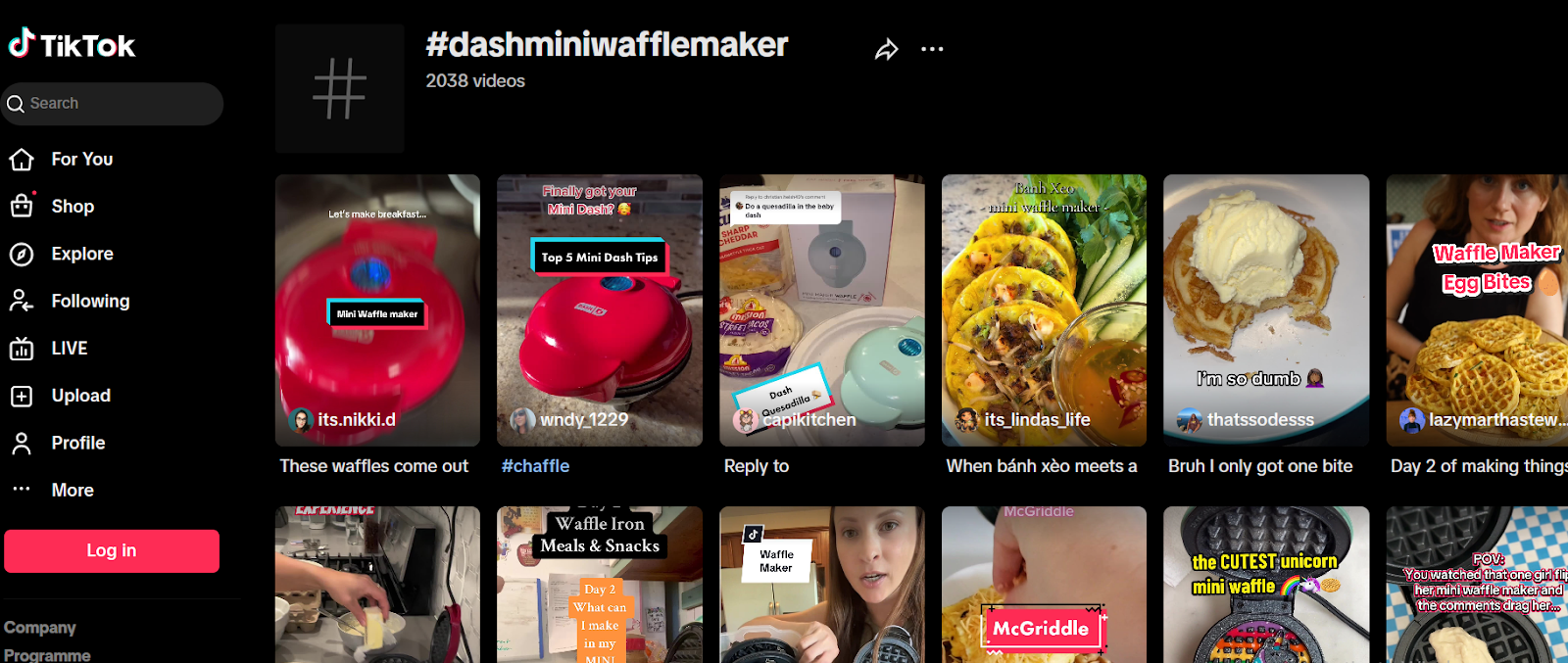
Dash Mini Waffle Maker promotional videos on TikTok

Behind-the-Scenes Videos

Most of us have developed perfection fatigue. We’re tired of the airbrushed, sanitized version of reality that brands usually serve on a silver platter. Behind-the-scenes (BTS) videos are the antidote to that. 

If you’ve ever found yourself obsessed with seeing the messy kitchen of a five-star restaurant or the literal nuts and bolts of how a sneaker gets glued together, perhaps you can relate. 

BTS videos let you peek behind the curtain to see the sweat, the mistakes, and the actual human beings pulling the levers, and nothing builds trust like seeing such content. The concept of Labor Illusion explains that when people see the effort that goes into creating something, they’re more likely to value the end result. 

Here’s a behind-the-scenes example promotional video by Apple. 

How-to Videos

When someone does something genuinely helpful for us, like teaching us how to perfectly poach an egg or fix a leaky faucet, we feel a natural, subconscious urge to give something back. 

For a brand, that “something back” is usually a purchase. By the time you’ve watched a three-minute tutorial on how to get the most out of a specific piece of software or a skincare routine, you’re already invested. And when someone helps you first, you’re far more likely to buy from them. 

Think about brands like Home Depot or Sephora. They have thousands of videos that aren't shouting Buy this! at the top of their lungs. Instead, they’re showing you how to tile a backsplash or blend a smoky eye. Here’s an example: 

They’re providing value upfront, for free, which lowers your guard and builds an incredible amount of authority. It’s the ultimate long-game sales move. 

Micro-videos for Social Commerce

If you’ve ever found yourself doomscrolling on Instagram Reels, only to realize you’ve just spent forty-five minutes watching people style oversized blazers or air-fry grapes, you’ve met the king of modern sales: the micro-video. 

These videos offer fifteen to sixty seconds of pure, concentrated energy. In a world where our attention spans are reportedly shorter than that of a goldfish (though that’s a bit of an urban legend, we’re actually just much more selective), brands have to hit the “why you need this” button before you can even think about flicking your thumb upward.

These videos thrive on what creators call the Hook-Meat-Payoff structure. You get a bold statement in the first three seconds to grab your brain by the lapels, a quick demonstration of the product, and a clear call to action. 

Brands like Duolingo have turned their entire social presence into a series of micro-moments that feel like entertainment first and a sales pitch second. Here’s an example: 

Promotional Video Marketing Tips to Boost Sales

You’ve got a few seconds, maybe less, to grab attention before thumbs start scrolling past. That means every frame, every word, and every sound has to pull its weight. 

Reverse Engineer Viral Hooks

Reverse engineering a viral hook involves opening a curiosity gap that the viewer feels physically compelled to close. It’s like starting a story right in the middle of a high-speed chase. 

Information Gap Theory explains that when we realize there’s a gap between what we know and what we want to know, it creates a literal sense of deprivation (like an itch you can’t scratch). A killer hook highlights that gap immediately.

Think of those videos that start with “I can’t believe this actually worked” or “Stop doing this one thing if you want better skin.” Your brain instantly goes, Wait, what worked? What am I doing wrong? And then suddenly, you’re locked in. 

To do this right, you have to flip the traditional script on its head. Instead of building up to the big reveal at the end, put the most visually arresting or emotionally charged moment right at the very beginning. 

This YouTube video on cracking viral mechanics starts with a compelling hook about viral success formulas and keeps viewers engaged by immediately promising insight many people don’t yet have.

Use Micro-Emotions Instead of Big Emotions

We’ve all seen those charity commercials with the soul-crushing music that makes you want to change the channel immediately because they’re just too much. That is the Big Emotion trap. In a promotional video, swinging for the fences with massive, cinematic weeping or over-the-top euphoria often feels fake. 

Brands that are actually killing it right now are playing with Micro-Emotions. These are those tiny, relatable flickers of feeling: the slight sigh of relief when a vacuum actually picks up the dog hair or the smirk of a life hack that works.

When you show a massive, sobbing breakdown, the viewer’s brain often hits a defensive cringe wall. But if your video marketing strategy shows a person subtly relaxing their shoulders because your app just organized their messy calendar, the viewer subconsciously relaxes too. That’s because you aren’t forcing a feeling on them but inviting them to share a moment. 

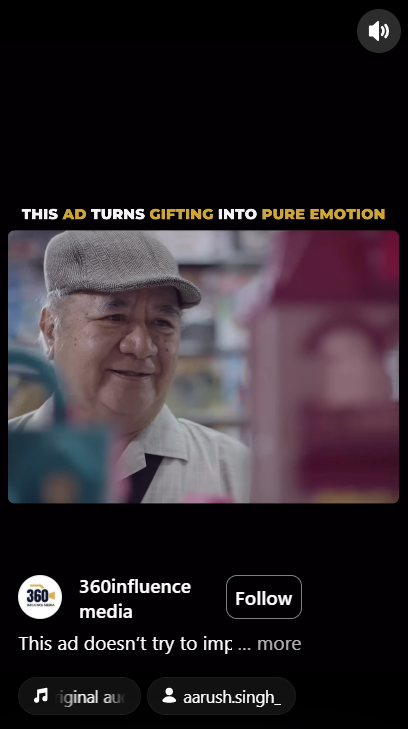
This Instagram Reel shows a video that uses subtle emotional storytelling, where your brain picks up that emotion before you even register the brand message.
360influence Media promotional videos

Negative-Space Marketing

Our brains are constantly bombarded with visual noise, which leads to cognitive fatigue. When we encounter a video that uses clean lines, simple compositions, and actual silence or ambient sound, our brains literally experience a micro-rest. 

It’s why high-end fashion brands or tech giants like Remarkable use so much white space and slow, deliberate pacing. 

When you strip away the clutter, you force the viewer to focus on the one thing that genuinely matters. You aren’t overwhelming their decision-making process but clearing the path for them. 

Leverage Cognitive Biases

We like to think we’re logical creatures making rational decisions, but we’re mostly just walking bundles of shortcuts. Brands that drive massive sales often use Cognitive Biases to bypass natural skepticism

If a video starts by talking about how most professional-grade cameras cost $5,000, and then reveals that their new model does the same thing for $900, that $900 suddenly feels like a steal. Your brain is anchored to the first number, making everything that follows seem like a bargain. 

Or consider the Scarcity Effect. When a promo video subtly mentions a limited batch or shows a countdown timer, it triggers a primal fear of missing out (FOMO). We don’t just want the product anymore; we want to win it before someone else does. 

Then there’s the Basking in Reflected Glory (BIRGing) effect, which explains why we love to associate ourselves with winners. This is why brands love to show their product being used by someone cool or successful. 

By watching, you subconsciously feel that by owning the product, you’re absorbing some of that person’s status or talent. 

When you layer these biases into your video, you’re creating a psychological storm that makes saying yes feel like the most natural thing in the world.

Common Mistakes that Kill Sales

Even the most creative promotional video can flop if you fall into a few all-too-common traps. Make sure you avoid these common video mistakes to keep your effort from going down the drain.  

  • Videos are too long. Look, we all love our own stories, but your audience has a short attention span. If you haven’t hooked them and delivered the value in the first eight seconds, they’re gone. If a video drags on like a three-hour director's cut, you’re creating a reason for them to exit the app.
  • Lack of clear CTA. You’ve entertained them and inspired them, and then you just... leave them hanging. Without a clear Call to Action (CTA), your viewer might leave without you benefiting from their view. So, tell them exactly what to do next. “Shop the Collection,” “Sign Up Now,” or “Grab the Deal” should be the obvious next step. 
  • Ignoring mobile optimization. Over 75% of all video consumption happens on mobile devices. If you aren’t filming for vertical or square formats, or if your text is too small to read on a five-inch screen, you’re telling the majority of your audience that you didn’t really design this for them. 
  • No data tracking setup. Flying blind is a great way to crash. You need to track where people drop off, which CTA buttons are getting clicked, or what the actual ROI is. Because without data, you can’t iterate, and if you can’t iterate, you’re just repeating the same expensive mistakes over and over.
  • Reusing content without adaptation. Every platform has its own language and vibe. Dumping the same raw video file across every social channel won’t work. Sure, some people might get the gist, but you’re going to miss all the nuances that actually make people want to talk back to you. 

Promotional Video Examples: Brands That Nailed It

Sometimes the best way to understand what makes a promotional video truly click is to see it in action. Here are some brand campaigns that got their video marketing strategy just right. 

Heinz – Unfakeable Social Videos 

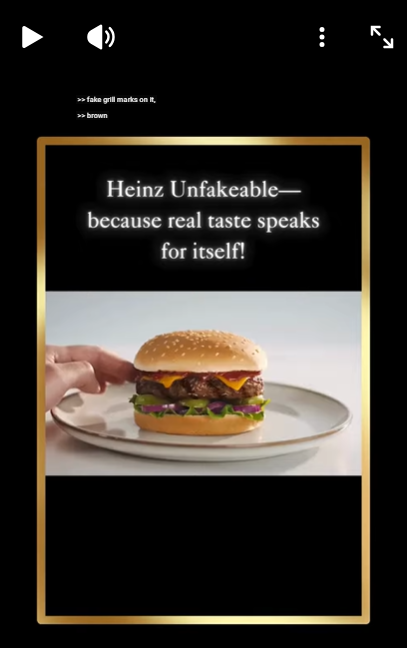
Heinz leaned into cultural trends on TikTok and YouTube with its Unfakeable campaign, where food stylists demonstrate that Heinz ketchup doesn’t need artificial tricks to look good on camera. It was a smart, modern promotional video strategy that resonated with millions of viewers.
Heinz promotional video campaign

Spotify – Year in Review

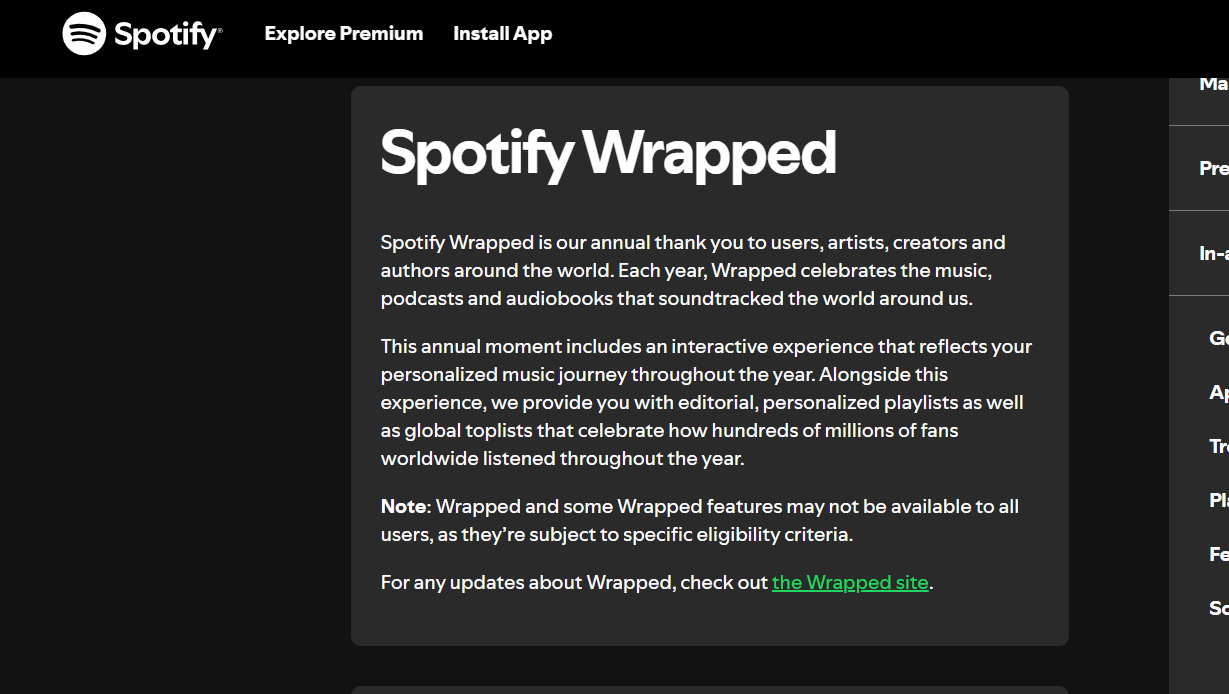
Spotify’s Year in Review (Wrap‑Up) videos are among the best promotional video examples. They give users a personalized recap of their listening habits. It’s emotionally engaging, and something users want to show off, which naturally boosts engagement and brand love without feeling like a traditional ad.
Spotify promotional strategy

Gap – Better in Denim 

Gap’s Better in Denim campaign became a viral cultural moment by combining fresh energy, music, choreography, and fashion, especially targeting Gen Z’s renewed interest in (and nostalgia for) Y2K denim styles. The campaign drove huge visibility and sales.

What’s Next In Promotional Video Marketing: 2026 Trends

We’re moving into a world where the gap between seeing something cool and owning it is basically zero. We’re talking about shoppable video production that makes every frame look like a digital storefront. It lets users click, choose, and check out without ever hitting pause. 

Thanks to AI-driven personalization, we’re also seeing videos that adapt on the fly. It’s like the video is winking at you, showing you the blue version of the jacket because it knows that’s your favorite color. 

Forbes highlights that AI-driven personalization offers “unparalleled insights and engagement opportunities with customers.” And while that’s happening, AR try-ons are letting us skip the “will this actually fit?” anxiety by allowing us to virtually wear the product right there in the app.

Live Stream Shopping is becoming common, too. Brands are now hosting Live Drops where you can watch a real human (maybe a founder or a lead designer) demo a product in real-time. You’re sitting there, chatting with other viewers, asking, “Wait, does that fabric stretch?” and getting an answer right then and there. 

INDIRAP Video Production Company Brings Your Brand to Life With High-Impact Promotional Videos

At the end of the day, we’re all looking for a connection, and your audience is no different. They don’t want to be marketed to. They’ve moved lightyears beyond the era of the loud, used-car-salesman aesthetic. 

Promotional video production warms up cold audiences. They answer objections without sounding defensive. And they make your brand look like that friend who just gave them a stellar recommendation.

This is exactly what we live and breathe at INDIRAP video marketing agency. Whether you need a cinematic brand story that gives people chills or a high-conversion product promo that clears your inventory, INDIRAP video production services build your visual legacy. 

The best time to start was yesterday. The second best time is right now (preferably in 4K). Reach out today and level up your brand with strategic promotional video services. 

FAQs

How do you make a promotional video?

Start with a clear goal. What do you want people to feel or do after watching? Then craft a short story or hook, film it (even your phone works these days), and add music or text to guide the viewer. Keep it focused and human. 

What do you say in a promotional video?

Say what matters to your audience. Show how your product or service solves a problem, and make it relatable. End with a clear nudge, like “Check this out” or “Grab yours today.” 

What is a good promotional video?

A good promo video grabs attention fast, keeps viewers interested, and makes them feel an emotion, whether that’s curiosity or trust. It makes the viewer care enough to take action.

What should be in a promotional video?

You want a hook that stops the scroll, a clear message about what the product or service does, maybe a tiny story or demo, social proof if possible, and a call-to-action that’s impossible to miss. 

Related Articles
Testimonial video
March 1, 2026

Promotional Videos: How Brands Use Them to Drive Sales

blog
Show all

Although Liquid Death sells canned water, its videos look like low-budget horror movies or heavy metal music videos. The brand, in fact, released a country song out of people’s hate comments, which, by the way, went ridiculously well. 

Now, it might sound unusual, but you see, while every other bottled water brand is showing us slow-motion trickles of pure alpine springs (yawn), Liquid Death’s strategy is pure genius.

It’s 2026, and we’ve officially moved past the era where selling meant a guy in a suit talking at us from a TV screen. A promotional video should ideally follow the pattern interrupt – a creative jolt that snaps you out of autopilot and gets you paying attention. The whole idea is to shake people out of their everyday routine, so they notice what you’re doing (and why).

Given that 85% of consumers are convinced to buy a product after watching a video, it’s high time your promotional videos interrupt, reassure, and answer objections before they’re even fully formed. 

What Is a Promotional Video?

A promotional video is a piece of content designed to make someone care about your brand in the few seconds they’re willing to spare. 

It’s the art of storytelling with a very specific, underlying motive: to get someone to move. Whether that’s hitting a subscribe button, signing up for a newsletter, or finally pulling the trigger on those noise-canceling headphones, a promo video gives your audience just the right amount of nudge. 

There’s this fascinating idea called the Dual Coding Theory, which suggests that our brains process verbal and visual information through two different channels. 

When a brand hits you with a promo video, they are effectively double-tapping your brain’s processing power. You are seeing the lifestyle, feeling the rhythm of the edit, and subconsciously building a map of how that product fits into your world. 

This is exactly why research shows that viewers retain 95% of a message when they watch it in a video compared to a measly 10% when reading it in text. 

When brands use a compelling behind-the-scenes of their workshop or a quick, punchy teaser for a seasonal drop, you don’t feel like you’ve been lectured by a salesperson. Instead, you feel like you’ve just had a really enlightening thirty-second chat with someone who knows exactly what’s up. 

Here’s a recent promotional video from West Delaware you might want to check out. It doesn’t hit you over the head with salesy lines or dramatic shots, yet it gets the job done! 

West Delaware promotional video reel

KMCH news highlights that it perfectly explains “who they are as a district, what they value, and the pride they share in serving their students and community.” 

Types of Promotional Videos That Drive Sales

Some promotional videos are meant to be that flashy billboard that catches the eye from a mile away, while others are the reassuring whisper that convinces your audience to finally enter their credit card details. 

Below, we share the common types to help you understand how each serves a very distinct purpose in making a sale. 

Product Launch Videos

Product launch videos are your chance to make a first impression so good that people remember your product before they even try it. The Zeigarnik Effect explains that our brains have to remember uncompleted or interrupted tasks better than completed ones. 

A truly stellar product launch video often plays with this by teasing bits and pieces of the product, building a tension that only clicking the Buy button can resolve. 

You see a sleek curve, a flash of a new feature, a hint of what it can do, and suddenly your brain is asking for the full picture. 

It’s why Apple’s launch films feel like a moment of pure awe, or why a gaming trailer can rack up ten million views before the game even has a release date. They are selling the future, wrapped in a thirty-second clip. 

Check out this introduction video for the iPhone 16e. It’s an example of how Apple teases key features and visuals to sell without selling

Narrative Brand Videos

Have you ever watched a video from a brand and totally forgot they were actually trying to sell you something? That is the sweet spot of a narrative brand video. These videos blend storytelling and sales in the best possible way. 

Research by neuroeconomist Paul Zak has shown that stories that are highly personal and emotionally driven cause the brain to release oxytocin (the same chemical that helps us bond with other humans). 

So, when a brand shares a narrative video about their humble beginnings or a cause they truly care about, they are literally chemically bonding with you and building a reservoir of trust that a 10% off coupon can’t touch.

Here’s an example video, Google | Loretta, where an elderly man uses Google Assistant to remember his late wife, Loretta. The narrative tells about human connection and memory, making it feel heartfelt. 

User-Generated Content

Think about the last time you bought something because a polished, million-dollar commercial told you it was revolutionary. Probably never, right? 

But if a random person on TikTok with messy hair and a genuine smile shows you a kitchen gadget that actually changed their life, you’re halfway to the checkout page before the video even loops. That is the unfiltered power of User-Generated Content, or UGC. 

Informational Social Influence explains that we often turn to others for guidance when we’re uncertain. So, when we’re not sure how to act or what to buy, we look to others, specifically people we perceive as our peers, to guide our behavior. 

No wonder consumers find UGC nearly 10 times more impactful than influencer content when making a purchase decision. 

TikTok UGC around the Dash Mini Waffle Maker is an example. Creators on TikTok filmed quick cooking videos using this affordable waffle gadget, showing how it makes tiny waffles. 

Dash Mini Waffle Maker promotional videos on TikTok

Behind-the-Scenes Videos

Most of us have developed perfection fatigue. We’re tired of the airbrushed, sanitized version of reality that brands usually serve on a silver platter. Behind-the-scenes (BTS) videos are the antidote to that. 

If you’ve ever found yourself obsessed with seeing the messy kitchen of a five-star restaurant or the literal nuts and bolts of how a sneaker gets glued together, perhaps you can relate. 

BTS videos let you peek behind the curtain to see the sweat, the mistakes, and the actual human beings pulling the levers, and nothing builds trust like seeing such content. The concept of Labor Illusion explains that when people see the effort that goes into creating something, they’re more likely to value the end result. 

Here’s a behind-the-scenes example promotional video by Apple. 

How-to Videos

When someone does something genuinely helpful for us, like teaching us how to perfectly poach an egg or fix a leaky faucet, we feel a natural, subconscious urge to give something back. 

For a brand, that “something back” is usually a purchase. By the time you’ve watched a three-minute tutorial on how to get the most out of a specific piece of software or a skincare routine, you’re already invested. And when someone helps you first, you’re far more likely to buy from them. 

Think about brands like Home Depot or Sephora. They have thousands of videos that aren't shouting Buy this! at the top of their lungs. Instead, they’re showing you how to tile a backsplash or blend a smoky eye. Here’s an example: 

They’re providing value upfront, for free, which lowers your guard and builds an incredible amount of authority. It’s the ultimate long-game sales move. 

Micro-videos for Social Commerce

If you’ve ever found yourself doomscrolling on Instagram Reels, only to realize you’ve just spent forty-five minutes watching people style oversized blazers or air-fry grapes, you’ve met the king of modern sales: the micro-video. 

These videos offer fifteen to sixty seconds of pure, concentrated energy. In a world where our attention spans are reportedly shorter than that of a goldfish (though that’s a bit of an urban legend, we’re actually just much more selective), brands have to hit the “why you need this” button before you can even think about flicking your thumb upward.

These videos thrive on what creators call the Hook-Meat-Payoff structure. You get a bold statement in the first three seconds to grab your brain by the lapels, a quick demonstration of the product, and a clear call to action. 

Brands like Duolingo have turned their entire social presence into a series of micro-moments that feel like entertainment first and a sales pitch second. Here’s an example: 

Promotional Video Marketing Tips to Boost Sales

You’ve got a few seconds, maybe less, to grab attention before thumbs start scrolling past. That means every frame, every word, and every sound has to pull its weight. 

Reverse Engineer Viral Hooks

Reverse engineering a viral hook involves opening a curiosity gap that the viewer feels physically compelled to close. It’s like starting a story right in the middle of a high-speed chase. 

Information Gap Theory explains that when we realize there’s a gap between what we know and what we want to know, it creates a literal sense of deprivation (like an itch you can’t scratch). A killer hook highlights that gap immediately.

Think of those videos that start with “I can’t believe this actually worked” or “Stop doing this one thing if you want better skin.” Your brain instantly goes, Wait, what worked? What am I doing wrong? And then suddenly, you’re locked in. 

To do this right, you have to flip the traditional script on its head. Instead of building up to the big reveal at the end, put the most visually arresting or emotionally charged moment right at the very beginning. 

This YouTube video on cracking viral mechanics starts with a compelling hook about viral success formulas and keeps viewers engaged by immediately promising insight many people don’t yet have.

Use Micro-Emotions Instead of Big Emotions

We’ve all seen those charity commercials with the soul-crushing music that makes you want to change the channel immediately because they’re just too much. That is the Big Emotion trap. In a promotional video, swinging for the fences with massive, cinematic weeping or over-the-top euphoria often feels fake. 

Brands that are actually killing it right now are playing with Micro-Emotions. These are those tiny, relatable flickers of feeling: the slight sigh of relief when a vacuum actually picks up the dog hair or the smirk of a life hack that works.

When you show a massive, sobbing breakdown, the viewer’s brain often hits a defensive cringe wall. But if your video marketing strategy shows a person subtly relaxing their shoulders because your app just organized their messy calendar, the viewer subconsciously relaxes too. That’s because you aren’t forcing a feeling on them but inviting them to share a moment. 

This Instagram Reel shows a video that uses subtle emotional storytelling, where your brain picks up that emotion before you even register the brand message.

360influence Media promotional videos

Negative-Space Marketing

Our brains are constantly bombarded with visual noise, which leads to cognitive fatigue. When we encounter a video that uses clean lines, simple compositions, and actual silence or ambient sound, our brains literally experience a micro-rest. 

It’s why high-end fashion brands or tech giants like Remarkable use so much white space and slow, deliberate pacing. 

When you strip away the clutter, you force the viewer to focus on the one thing that genuinely matters. You aren’t overwhelming their decision-making process but clearing the path for them. 

Leverage Cognitive Biases

We like to think we’re logical creatures making rational decisions, but we’re mostly just walking bundles of shortcuts. Brands that drive massive sales often use Cognitive Biases to bypass natural skepticism

If a video starts by talking about how most professional-grade cameras cost $5,000, and then reveals that their new model does the same thing for $900, that $900 suddenly feels like a steal. Your brain is anchored to the first number, making everything that follows seem like a bargain. 

Or consider the Scarcity Effect. When a promo video subtly mentions a limited batch or shows a countdown timer, it triggers a primal fear of missing out (FOMO). We don’t just want the product anymore; we want to win it before someone else does. 

Then there’s the Basking in Reflected Glory (BIRGing) effect, which explains why we love to associate ourselves with winners. This is why brands love to show their product being used by someone cool or successful. 

By watching, you subconsciously feel that by owning the product, you’re absorbing some of that person’s status or talent. 

When you layer these biases into your video, you’re creating a psychological storm that makes saying yes feel like the most natural thing in the world.

Common Mistakes that Kill Sales

Even the most creative promotional video can flop if you fall into a few all-too-common traps. Make sure you avoid these common video mistakes to keep your effort from going down the drain.  

  • Videos are too long. Look, we all love our own stories, but your audience has a short attention span. If you haven’t hooked them and delivered the value in the first eight seconds, they’re gone. If a video drags on like a three-hour director's cut, you’re creating a reason for them to exit the app.
  • Lack of clear CTA. You’ve entertained them and inspired them, and then you just... leave them hanging. Without a clear Call to Action (CTA), your viewer might leave without you benefiting from their view. So, tell them exactly what to do next. “Shop the Collection,” “Sign Up Now,” or “Grab the Deal” should be the obvious next step. 
  • Ignoring mobile optimization. Over 75% of all video consumption happens on mobile devices. If you aren’t filming for vertical or square formats, or if your text is too small to read on a five-inch screen, you’re telling the majority of your audience that you didn’t really design this for them. 
  • No data tracking setup. Flying blind is a great way to crash. You need to track where people drop off, which CTA buttons are getting clicked, or what the actual ROI is. Because without data, you can’t iterate, and if you can’t iterate, you’re just repeating the same expensive mistakes over and over.
  • Reusing content without adaptation. Every platform has its own language and vibe. Dumping the same raw video file across every social channel won’t work. Sure, some people might get the gist, but you’re going to miss all the nuances that actually make people want to talk back to you. 

Promotional Video Examples: Brands That Nailed It

Sometimes the best way to understand what makes a promotional video truly click is to see it in action. Here are some brand campaigns that got their video marketing strategy just right. 

Heinz – Unfakeable Social Videos 

Heinz leaned into cultural trends on TikTok and YouTube with its Unfakeable campaign, where food stylists demonstrate that Heinz ketchup doesn’t need artificial tricks to look good on camera. It was a smart, modern promotional video strategy that resonated with millions of viewers.

Heinz promotional video campaign

Spotify – Year in Review

Spotify’s Year in Review (Wrap‑Up) videos are among the best promotional video examples. They give users a personalized recap of their listening habits. It’s emotionally engaging, and something users want to show off, which naturally boosts engagement and brand love without feeling like a traditional ad.

Spotify promotional strategy

Gap – Better in Denim 

Gap’s Better in Denim campaign became a viral cultural moment by combining fresh energy, music, choreography, and fashion, especially targeting Gen Z’s renewed interest in (and nostalgia for) Y2K denim styles. The campaign drove huge visibility and sales.

What’s Next In Promotional Video Marketing: 2026 Trends

We’re moving into a world where the gap between seeing something cool and owning it is basically zero. We’re talking about shoppable video production that makes every frame look like a digital storefront. It lets users click, choose, and check out without ever hitting pause. 

Thanks to AI-driven personalization, we’re also seeing videos that adapt on the fly. It’s like the video is winking at you, showing you the blue version of the jacket because it knows that’s your favorite color. 

Forbes highlights that AI-driven personalization offers “unparalleled insights and engagement opportunities with customers.” And while that’s happening, AR try-ons are letting us skip the “will this actually fit?” anxiety by allowing us to virtually wear the product right there in the app.

Live Stream Shopping is becoming common, too. Brands are now hosting Live Drops where you can watch a real human (maybe a founder or a lead designer) demo a product in real-time. You’re sitting there, chatting with other viewers, asking, “Wait, does that fabric stretch?” and getting an answer right then and there. 

INDIRAP Video Production Company Brings Your Brand to Life With High-Impact Promotional Videos

At the end of the day, we’re all looking for a connection, and your audience is no different. They don’t want to be marketed to. They’ve moved lightyears beyond the era of the loud, used-car-salesman aesthetic. 

Promotional video production warms up cold audiences. They answer objections without sounding defensive. And they make your brand look like that friend who just gave them a stellar recommendation.

This is exactly what we live and breathe at INDIRAP video marketing agency. Whether you need a cinematic brand story that gives people chills or a high-conversion product promo that clears your inventory, INDIRAP video production services build your visual legacy. 

The best time to start was yesterday. The second best time is right now (preferably in 4K). Reach out today and level up your brand with strategic promotional video services. 

FAQs

How do you make a promotional video?

Start with a clear goal. What do you want people to feel or do after watching? Then craft a short story or hook, film it (even your phone works these days), and add music or text to guide the viewer. Keep it focused and human. 

What do you say in a promotional video?

Say what matters to your audience. Show how your product or service solves a problem, and make it relatable. End with a clear nudge, like “Check this out” or “Grab yours today.” 

What is a good promotional video?

A good promo video grabs attention fast, keeps viewers interested, and makes them feel an emotion, whether that’s curiosity or trust. It makes the viewer care enough to take action.

What should be in a promotional video?

You want a hook that stops the scroll, a clear message about what the product or service does, maybe a tiny story or demo, social proof if possible, and a call-to-action that’s impossible to miss. 

Don't forget to share this post!