.jpg)
A few years ago, McKinsey forecasted that the global social commerce market would grow to over $2 trillion by 2025. We're now seeing that happen in real time. Scroll through any social feed, and you'll see how quickly shoppable videos have made the whole purchase process.
E-commerce once leaned on static photos and long product pages. That habit feels dated now. People want to see fabric move, products used in real spaces, and colors shift under natural light. Shoppable videos meet this demand naturally by showing product details and pricing in just a few-second video.
In 2026, brands will have to treat video as their storefront, and not just a billboard (as in the past). When you do shoppable video production right, viewers stop scrolling and hit that buy button quickly. Let's show you how to use this video commerce strategy in 2026.
Shoppable video production means creating videos that let viewers buy products inside the video itself. The video does not send people off to hunt for links or open new tabs. Rather, the shopping action happens right where attention already sits. A viewer watches, taps, checks a price, and adds an item to the cart without breaking the flow.
At a practical level, this type of video includes interactive layers placed on top of the footage. Small clickable hotspots appear near products as they show up on screen. Product tags open short panels with names, prices, sizes, or colors. Some setups allow add-to-cart actions without leaving the video at all.
Don't confuse a shoppable video with a product demo video, though. A standard product demo looks similar on the surface, but works very differently. It shows how something works or looks. The viewer then decides what to do next.
For example, here's a demo video for IFB's Laundrimagic washing machine.
A shoppable video removes the extra step of the viewer having to go find the product on your website. It connects curiosity to purchase in the same moment. So, you can create product demos that are also shoppable videos, so that viewers can buy the product immediately if they're impressed by its function. Here's a video explaining how to do so.
In a more traditional setup, someone watches an ad or video, then must search for that product, open another page, click add to cart, and complete checkout. Shoppable video brings many of those steps into the same frame.
Fewer hops to purchase mean fewer chances for people to get distracted or drop off before they buy. Shorter paths like this have been linked with higher conversion rates for businesses that apply them. And in 2026, it's all about making the purchase decision as easy for the customers as possible.
We also have to account for the fact that more and more people are shopping on their mobile phones now. The revenue from mobile commerce was expected to reach $2.5 trillion in 2025, which is 63% of all retail e-commerce. Going forward, it will be even higher.
Shoppable videos target these shoppers since placing product tags and clickable elements right where thumbs already rest further speeds up the purchase process. Viewers can tap a price or product tag and go straight to buying without opening multiple pages or windows (which we all know is a struggle).
Interactive videos that contain shoppable elements also tend to hold attention longer than static images. That extra attention increases the chance they'll click on a product and take action right then.
Real examples from recent shoppable campaigns show what this looks like in practice. Many fashion and beauty brands have been adding interactive shopping points directly into video content for quite a while now. Sephora and Ted Baker are good examples here.
In 2026, using shoppable videos to drive sales might just be the norm. Eitan Koter, a top retail expert, explains how this will unfold in this video.
Shoppable video production needs to follow a few conventions. Here's what goes into making a shoppable video.
Every effective shoppable video begins with a simple question. What moment from real life fits this product? Some brands choose a quick problem-and-solution scene, while others show seasonal use or daily routines. The product should appear as a part of your customers' story.
Planning also includes deciding how many products belong in one video. Apparel brands often focus on a full outfit rather than a single item. Similarly, a home brand would show a room in which their product is placed rather than just an isolated item.
As for the script, it should resemble a conversation rather than a presentation. Each scene needs space for viewers to notice details before tags disappear.
In e-commerce video production, you should prioritize clear visuals over clever edits. Camera angles should match how people look at products in real life. If you're showing clothes, go for full-body shots. For smaller items, linger long enough in the close-ups to show texture and scale.
That's what Malandra does to show its jewelry.
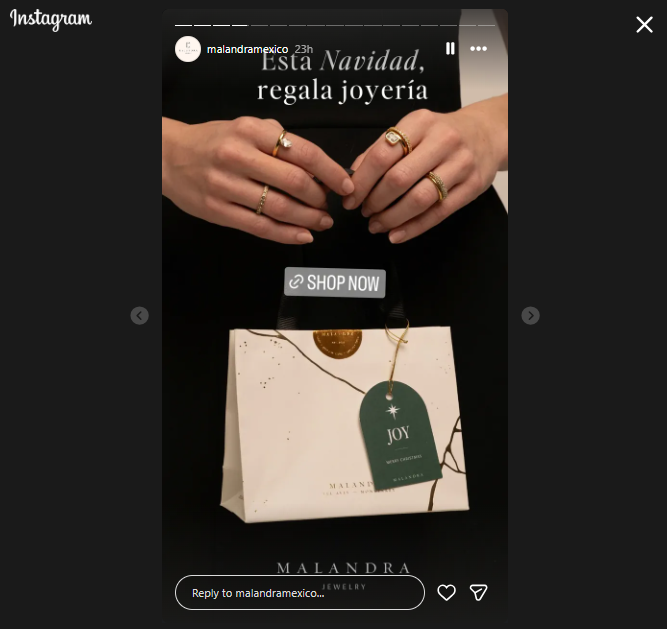
When it comes to locations, natural environments often work better than studios because products feel easier to imagine at home. Editing is also important in product video production. Make sure products stay centered when tags appear. Viewers should not have to guess which item a hotspot refers to.
When adding interactive elements in shoppable videos, it's important to focus on the timing. Tags appear after the product is fully visible, not as it enters the frame. Hotspots stay close to the product without blocking it, whereas overlays remain light in design so they do not pull focus from the scene.
You can also stagger interactions. One product appears, receives focus, then fades as another takes its place. Or, you may group related items so viewers can explore a look or setup at their own pace.
Call to actions (CTAs) for shoppable videos need to be as simple as possible. Something like "Shop Now" also works. That's what Tiffany & Co. uses on its website.

It's up to you to use early prompts, mid-video prompts, or end prompts. You may also show the CTA throughout the video, especially on platforms like Instagram.
Your video commerce strategy should include multiple video types. Some of them to adopt in 2026 are as follows.
We've already covered above how product demos can be made into shoppable videos. These are short demonstrations that answer one question at a time, such as a makeup video showing how a foundation applies in under a minute. Here's a good example from Dr. Dennis Gross.
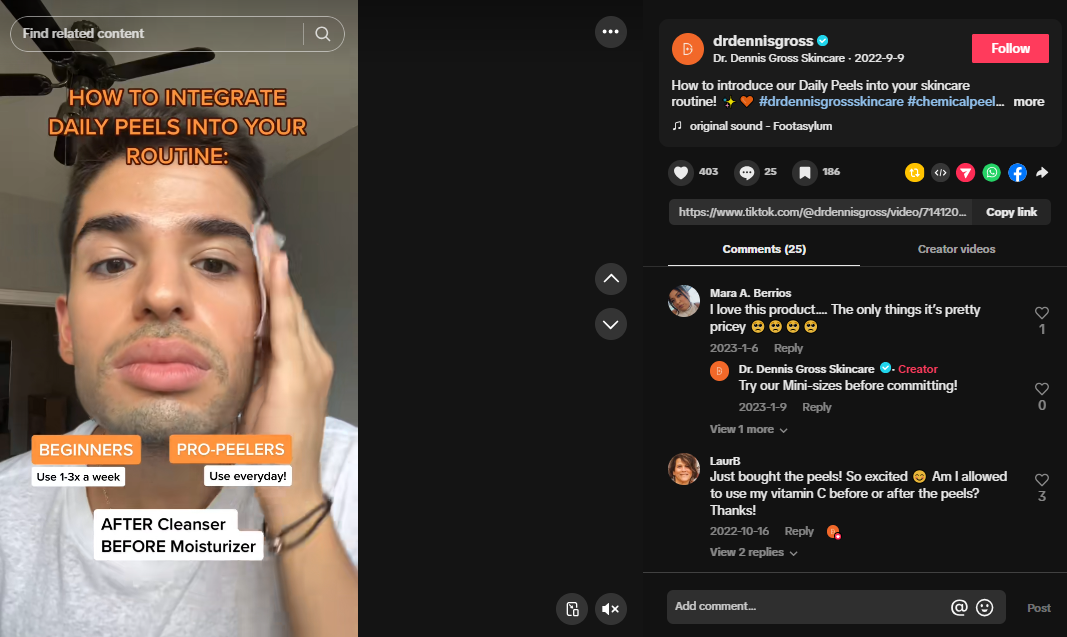
In a Wyzowl report, 93% of marketers said that video helps people understand their product or service better. So, these are the kind of videos you must make as a part of your video marketing sales funnel.
Click-to-cart points should appear once the product is clearly shown in use. Viewers can check the price or add the item without waiting for the video to end. You should create these videos for products that need explanation but still benefit from speed.
Short vertical videos dominate social feeds, and brands design shoppable content to match that pace. These clips often run under 30 seconds and feature quick cuts. While product tags are visible, they stay minimal. The goal here is fast recognition, not full education.
Fashion, beauty, accessories, and food brands use this format to catch impulse interest while scrolling. Performance improves when the product appears within the first few seconds rather than later.
Many brands use live video streaming because it feels closer to in-store interactions. The host can answer questions or show products from multiple angles. Interactive purchase options sit beside or below the stream so viewers can act without leaving.
The best time to use these videos is when you're launching a new item. You may also use these videos for seasonal promotions (perfect for the holiday season!) or limited drops.
Check out this video to find trends you must incorporate in your live shopping videos in 2026.
We already know that user-generated content is likely to be more sought-after in the future due to the audience's skepticism about brand-created marketing videos. Brands can now turn this content into shoppable assets by adding product tags and cart links.
For example, the UGC creator opens a package or a product and reacts honestly. They also show details up close that the viewers notice. The viewers can then buy the product right there from the video. These videos work best for lifestyle products and electronics.
Some products sell best through mood and setting rather than explanation. Narrative and lookbook videos place products inside everyday scenes. Ted Baker did a stellar job of this with their shoppable videos.
This format supports browsing behavior and suits higher-consideration purchases. Viewers explore pieces at their own pace and build intent through context rather than persuasion.
Shoppable video is not just a video with a store link. It is a video engineered around conversion and direct sales tracking. The steps below show how teams should build a shoppable video with a conversion mindset.
You want to use a shoppable video tool that supports interactive tagging and cart actions. Tools like Sharelo and Cinema8 let you upload video, place clickable elements, and connect those elements to your storefront's catalog or checkout flow. You also see metrics that show the number of purchases and clicks on your video.
Decide how the video will live in your e-commerce system. You can post these videos on your product pages, landing pages, social media, and emails.
Shoppable videos work best when every scene signals to the shopper what action they can take next. Your objectives may be:
During planning, map each product occurrence in your script to a specific clickable action. For example, in a demo sequence, plan exactly when and where a tag appears and what it links to: a specific SKU or a color variant.
Le Creuset focuses on color variants in its videos since that's what gets purchase decisions made among its audience.

Standard video production rules still apply, but you must think about where interactive elements will live in the frame. Some good practices are:
After shooting, upload your footage to the chosen video commerce platform. Then, place the clickable hotspots on each product.
Plan CTAs into the shot themselves. For example, "tap to buy" shows up when the product first appears. If a model is trying on an item, the CTA could be "see sizes.'' Similarly, for multiple products that you sell together, use the CTA "add this bundle."
Don't overload the video with text, though. Use short messages that relate to what's in frame.
Once your shoppable video is ready, embed it where buying intent is highest. Entrepreneur forecasts that shoppable and interactive videos will be big in 2026, so you need to make them common across your online presence.
Social media embedding is an obvious choice. But other than that, you can also post these videos in email campaigns and on landing pages. IKEA uses these videos on its home page to let visitors buy the whole catalog through an interactive walkthrough.
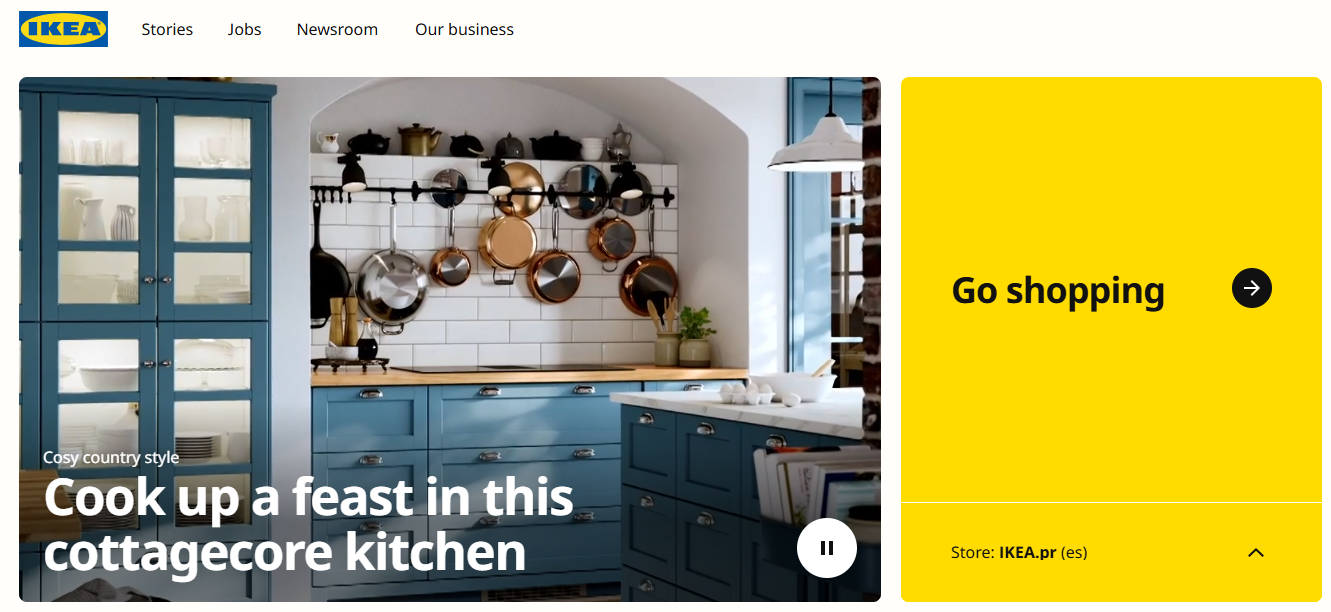
Test placements and compare revenue from pages with and without shoppable video. Some video metrics to focus on are click-through rate on product tags, add-to-cart from video, and direct revenue influenced by video interactions. These results will show how your ROI relates to the views-to-purchase approach that shoppable videos facilitate.
Shoppable video has become deeply tied to where people spend most of their online time: mobile screens and social feeds. Let's see what that means for e-commerce video production in 2026.
Short-form clips such as Reels, Shorts, and TikToks are now a preferred way to find products. TikTok Shop's gross merchandise value (GMV) being as high as $33 billion should be enough to prove the effectiveness of short-form video content.
Short clips with direct product tags or "buy now" buttons let viewers decide on purchases in the moment rather than switching between apps or screens. These videos also pair well with explainer video content. Short explainers embedded in social feeds keep product descriptions brief and clear while linking directly to purchase points.
TikTok and Instagram are central to this mobile-first shift because their interfaces support shopping without forcing users to exit the app. We've already talked about TikTok Shop above.
Instagram's shopping functions have grown, too. Users can shop from shoppable Reels, Stories, and live sessions where influencers or brand accounts tag products in the video itself. Interactive AR features on these platforms also let people try on products virtually before purchasing, which further increases purchase confidence. In fact, Exploding Topics forecasts that AR and VR video production will be a high-converting video production trend in 2026.
Not sure how to use AR on Instagram? The following video shows brands that have mastered it.
Mobile audiences act fast because the channel removes steps between seeing and buying. When a hotspot or product tag appears in a clip, a tap leads directly to product details or checkout. There are no new windows to load or links to hunt for, which limits drop-off and improves conversion potential.
The mobile and social context also supports discovery. People scroll feeds looking for entertainment and trends. When a product appears in that flow, along with a cue to act, many users respond in the moment rather than saving links or returning later. This immediacy brings in more sales.
Shoppable video production is not the same as producing a standard brand film or social clip. It's closer to sales infrastructure than pure creative. Every shot and interaction needs to guide viewers toward action while keeping the experience natural.
For many teams, it's not possible to bring this balance with in-house video production. A video production company, like INDIRAP, can make the process of creating shoppable videos a breeze. We understand where to add tags and how interactive elements should appear. Plus, we account for attributions, platform behavior, buying moments, and storytelling.
As your dedicated video production agency, we handle everything from creative strategy to adding interactive elements. Book a strategy call to learn more about our shoppable video production services.
Shoppable videos embed clickable elements directly in the video to let viewers purchase instantly. This ties views directly to sales, unlike traditional videos that require users to search for products afterward.
Most effective shoppable videos range between 30 seconds and two minutes. Short and concise videos maintain attention and highlight products clearly. At the same time, they also provide enough time for interactive hotspots without overwhelming the viewer.
Shoppable videos perform exceptionally well on mobile due to touch-friendly interactions and vertical formats that match scrolling behavior. Mobile users can tap products and complete purchases instantly, which helps reduce drop-off compared to desktop navigation.
Yes, they can, provided you're using the right tools. Platforms such as Flowbox or Cinema8 integrate with e-commerce systems to measure clicks, add-to-cart actions, and purchases. So, brands can link video engagement directly to revenue and refine campaigns based on performance metrics.
Products that benefit from visual demonstration, such as fashion, beauty, electronics, home goods, and lifestyle items, perform best in a shoppable format. Videos highlight features and usability to make interactive purchases easier for viewers.
Short explainer videos break down product features while embedding clickable tags or add-to-cart buttons. Viewers understand the product in seconds and can act immediately.


Julian Tillotson is the Founder & CEO of INDIRAP, a full-service video production and creative strategy agency based in Chicago, IL. With 10+ years of experience, INDIRAP has delivered 20,000+ videos to 900+ clients across 40+ industries, making it one of North America's leading digital creative agencies.


.png)
.png)