Best video production companies in Chicago 2026 - INDIRAP
September 20, 2026
100+ Video Marketing Statistics You Need to Know in 2026
blog
Show all
Published:
July 27, 2026
Video Marketing Statistics 2026: The Highlights
Short on time? Here are the headline numbers from this year's data. Every stat below links to its original source, so feel free to cite any of them with a link back to this page.
91% of businesses use video as a marketing tool in 2026, an all-time high. (Wyzowl)
85% of people say a video has convinced them to buy a product or service. (Wyzowl)
82% of video marketers report a positive return on investment from video. (Wyzowl)
Global digital video audiences have reached about 3.37 billion viewers. (Statista)
YouTube is the world's second-largest search engine, with roughly 2.7 billion monthly users and more than 200 billion daily Shorts views. (Hootsuite)
Video is LinkedIn's fastest-growing format, with uploads up about 34% year over year. (Hootsuite)
96% of B2B buyers watch a webinar or video content at least once a month. (OrangeOwl)
Shoppers who watch a product or explainer video are about 73% more likely to buy. (Levitate Media)
Last updated July 2026. Compiled by INDIRAP, a full-service video production company.
Video still pulls more attention than most other formats, with short social media clips and long explainers catering to use cases like brand awareness, engagement, education, onboarding, and training. Platforms now compete for attention across feeds, search results, inboxes, streaming apps, and shopping pages.
Phones dominate viewing hours while TVs reclaim space for longer sessions. Video marketing teams have to keep these video consumption trends in mind when creating content libraries.
The following guide contains a list of video marketing statistics for 2026 that you can use to rethink your budgets, pick suitable formats for audience behavior, and set goals rooted in facts rather than instinct.
Why Consult Video Marketing Statistics 2026
Numbers tell a story about where audiences are spending time and how businesses respond. When you look at video consumption trends, a few facts stand out. For example, video marketing statistics can tell you which platforms, formats, audience trends, and video elements to choose for your strategy. You can also see which kind of videos are performing best for other brands like you.
For B2B teams, the stats are equally revealing. A large share of buyers now prefer video when learning about products, and buyers are more likely to share video content internally than other types of materials.
So, you can use B2B video marketing statistics to see the efficiency of certain formats, like explainer videos. For example, you might find that audiences are increasingly watching explainer videos to learn about products and services.
What does this tell you? You need to do the same.
Similarly, short form video statistics 2026 show that clips under a minute are driving the highest engagement across social platforms. Reels, TikToks, and YouTube Shorts are often the first point of contact between a brand and its audience. Again, this is an indication that you need to follow suit.
In short, consulting video marketing statistics doesn't just mean looking at numbers. You're basically understanding your audience, seeing what works for others, and applying those lessons to your own campaigns.
General Video Marketing Statistics
Before we get into specific video marketing trends 2026, let's discuss general statistics to keep in mind. These stats cover viewing time, budget growth, platform reach, buying behavior, and format preferences across several markets. Let's start.
Global digital video audiences now total about 3.37 billion viewers, placing video among the most watched media formats worldwide. (Statista)
Around 92% of marketers plan to spend more or the same amount that they're spending right now on video marketing in 2026. (Wyzowl)
Brands poured roughly $176.63 billion into digital video ads across all markets this year, so there's definitely a continued appetite for screen-based promotion. (Statista)
When creating videos, 60% of organizations keep their objectives and goals in mind. Around 52% use product and service launches as the main motive, while 40% of video production campaigns are influenced by customer feedback and requests. (Wistia)
Around 46% of marketers spend 1/3rd of their budget on video, and 17% don't track their data, so they aren't sure how much they spend. (Wyzowl)
Globally, we use 14.4 billion kWh of energy on a monthly basis to feed our mobile video habits. (DataReportal)
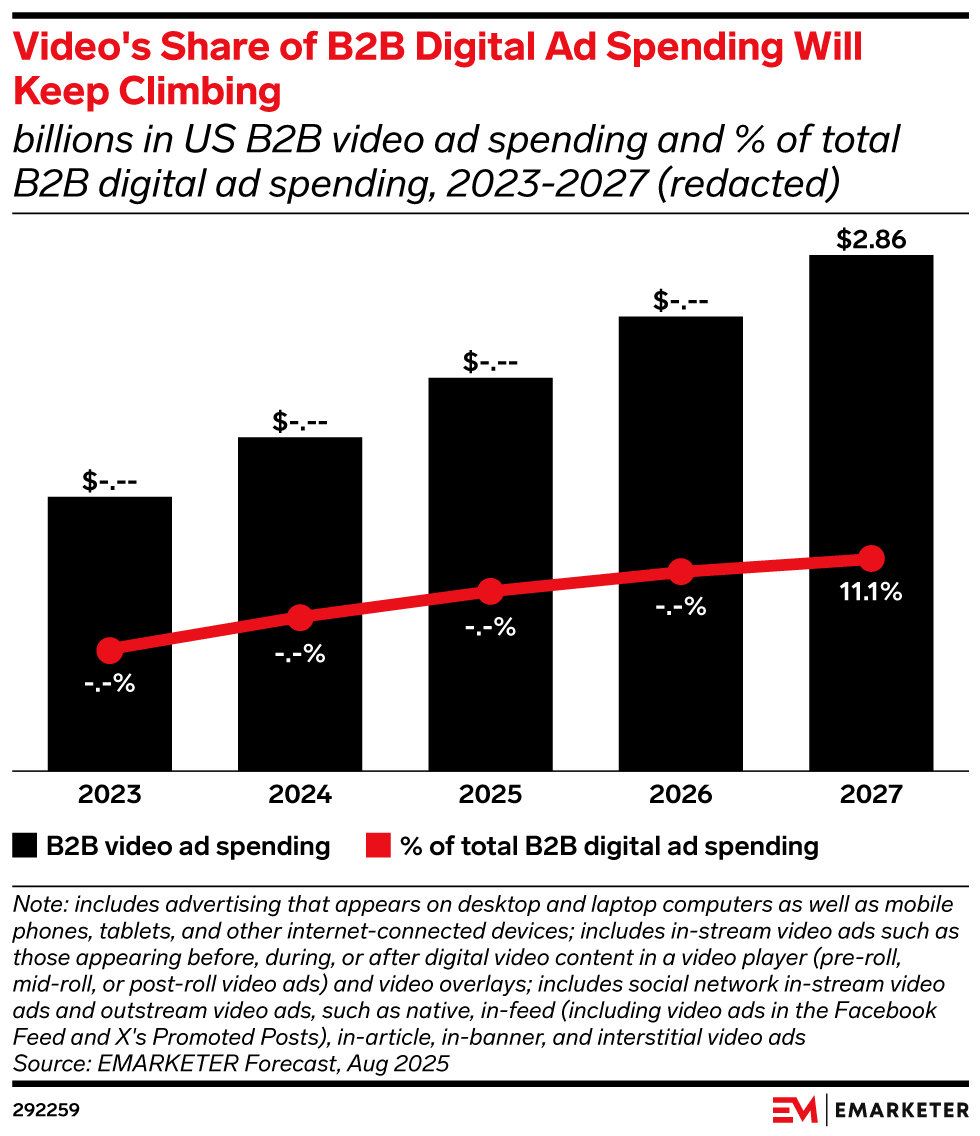
B2B budgets keep climbing. Projections point to $2.86 billion in B2B video ad spend in 2027, equal to 11.1% of total B2B digital advertising. (eMarketer)
B2B video marketing statistics
Adoption levels remain high, with 91% of businesses using video for marketing after a brief dip the year before. (Wyzowl)
41% of marketers spent more money on video advertising in 2025, an impressive increase from 36% in 2024. (Wyzowl)
Competitor activity influences video production in about 23% of organizations, while market trends and analysis impact the type of videos produced in 40% of companies. (Wistia)
Strategy still centers on video, as 93% of video marketers rate it as an important part of their plans even with a slight year-over-year softening. (Wyzowl)
Among companies skipping video, 24% say it feels unnecessary and another 24% cite cost concerns. (Wyzowl)
Around 19% of businesses that don't use video say packed schedules are the main obstacle. (Wyzowl)
Many marketers plan to take on video marketing, with 67% of those who skip video today expect to start during 2026. (Wyzowl)
More than 1 in 5 people who came across a video watched it. (Wistia)
As for types of video created, 51% mainly create live-action clips compared with 23% for animation and 19% for screen recordings. (Wyzowl)
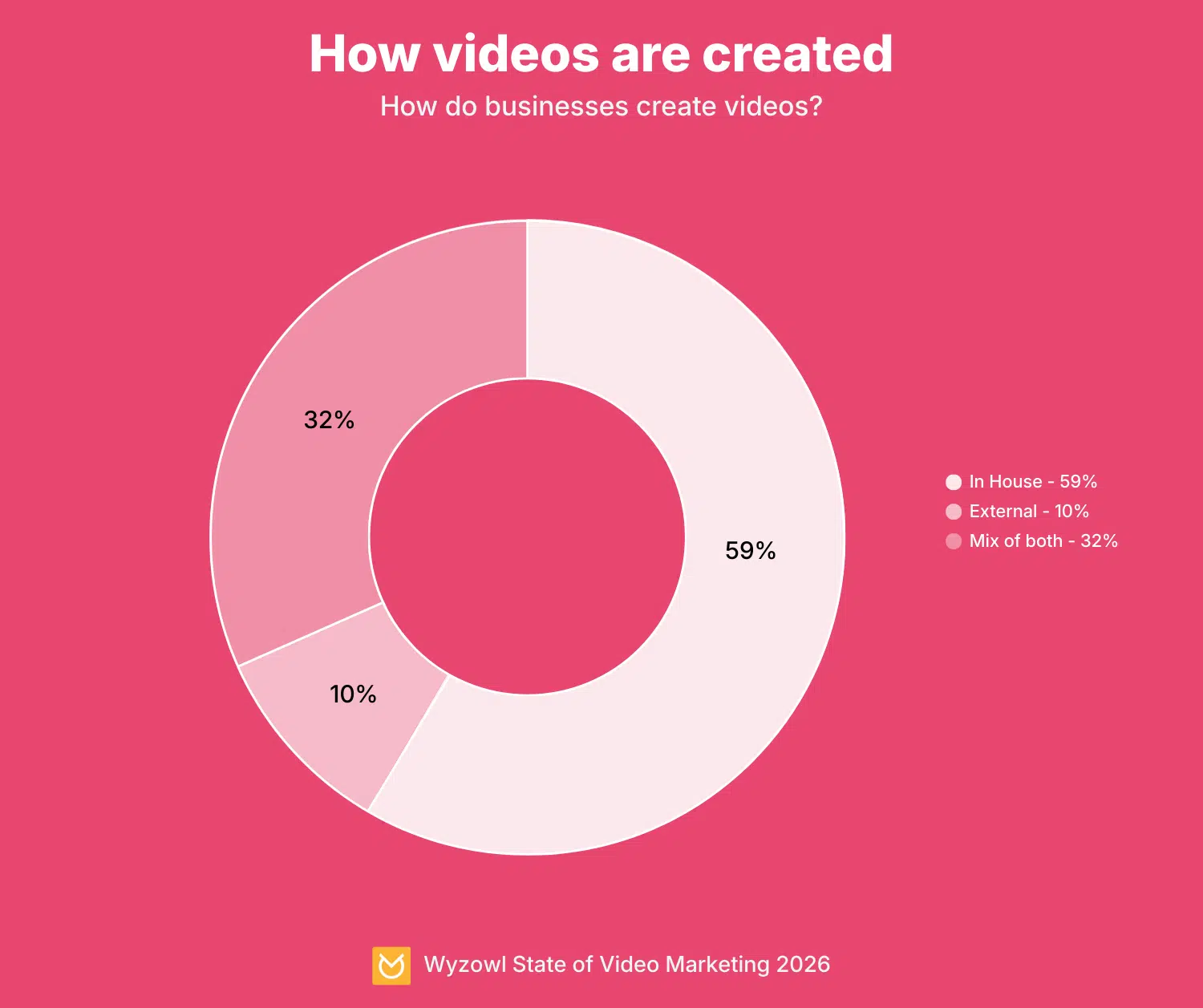
Most teams keep work under their own roof. 59% handle production internally, while 10% rely only on a video production company and 32% mix both routes. (Wyzowl)
Wyzowl video marketing statistics 2026
Video creation is a time-taking process, as 26% of marketers say that it takes them 2+ hours to create one video. Meanwhile, only 7% say it takes less than 30 minutes to take a video from ideation to publishing. (Jammy Digital)
In the same report, 40% of marketers said that they don't create videos because it takes too long, while 17% said they struggle with ideation. For 13%, the tech was too much to handle. (Jammy Digital)
About 16% of professionals say that they don't create videos because they don't have fresh ideas or stories, while 13% say that buy-in from team leaders creates a hurdle. (Wistia)
Video Marketing ROI Statistics
When we talk about ROI in video marketing, we mean the impact your videos have on real results. Besides views and shares, it's about how videos drive people to take action, like visiting a website or making a purchase.
Tracking ROI helps marketers see which content is worth the effort and investment. These numbers show what's working and what isn't, so you know the value video brings. The following video marketing ROI statistics show how different types of videos perform in various aspects.
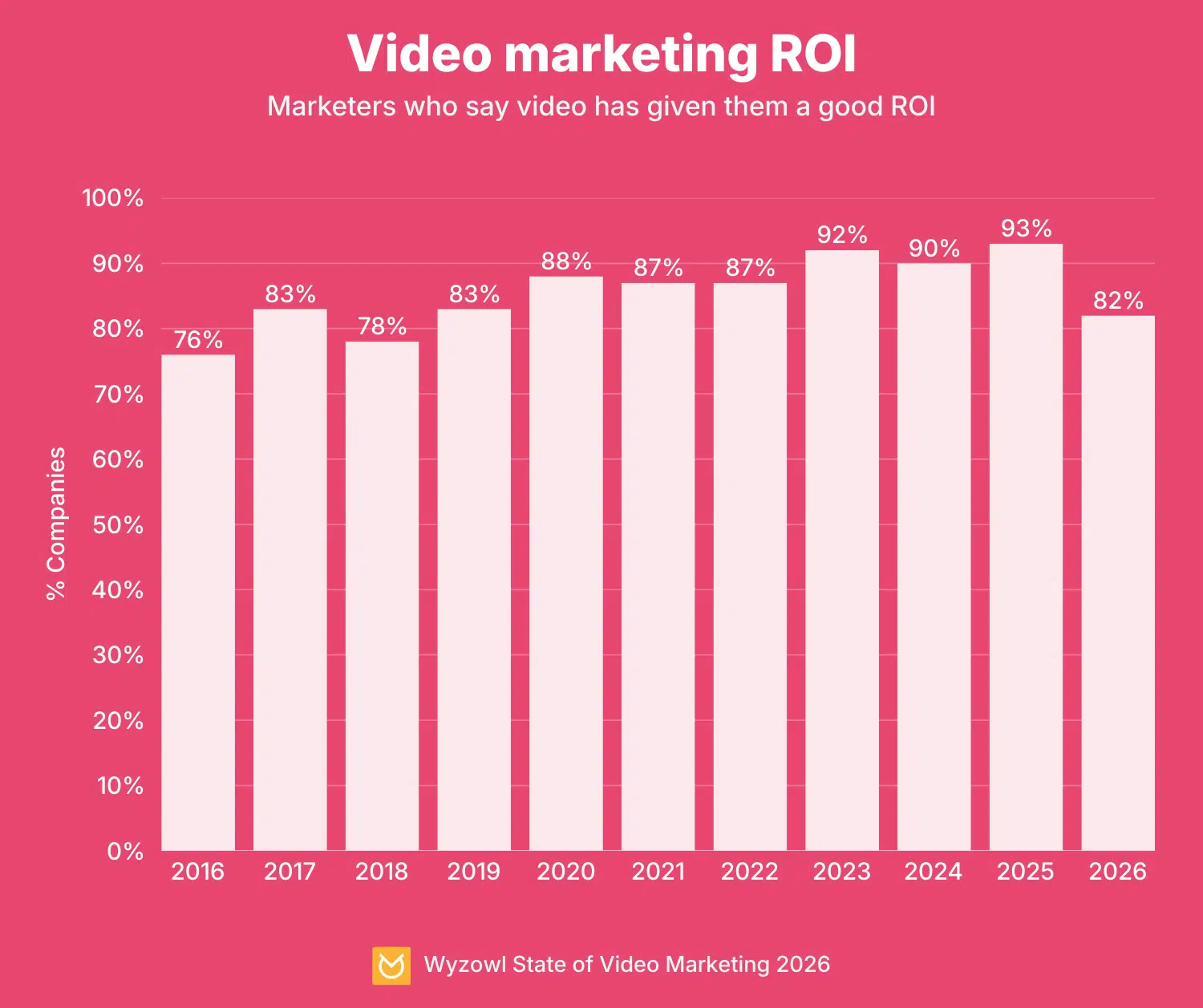
About 82% of marketers report getting a positive ROI from video. While it's a decline from 93% in 2025, it's still quite impressive. (Wyzowl)
Video marketing ROI statistics
How-to clips under 1 minute kept viewers watching 82% of total runtime, beating every other short-form category tracked on Wistia. (Wistia)
How-to videos between 1 and 30 minutes still held strong attention, with average completion staying above 50% across that entire range. (Wistia)
Company culture, educational series, original programming and product explainers under 5 minutes each kept viewers watching roughly halfway through. (Wistia)
Educational and how-to content tied for top performance in the 30 to 60 minute group, both reaching 26% average watch time. (Wistia)
As for platform efficiency, YouTube videos tend to be the most effective, as noted by 69% of marketers. It is followed by Instagram at 56%, Facebook at 50%, and LinkedIn at 50%. Only 8% of marketers report Snapchat to be effective at generating video ROI. (Wyzowl)
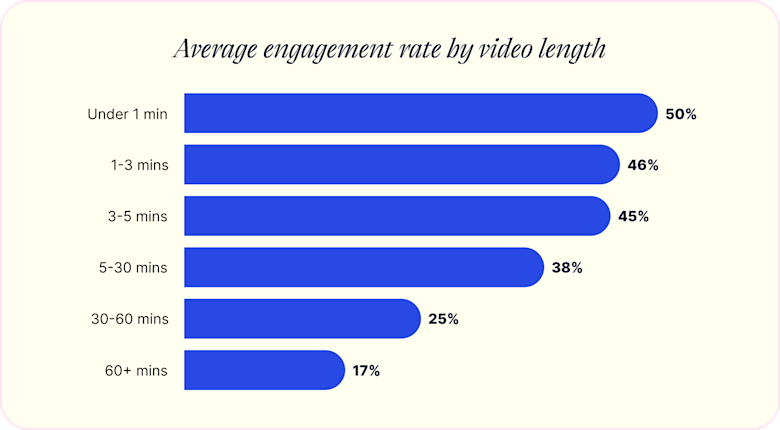
Videos shorter than 1 minute record the highest engagement overall, averaging 50% viewer retention from start to finish. (Wistia)
Average video engagement rate
Clips lasting 1 to 3 minutes follow closely behind, holding 46% average engagement across platforms measured in the dataset. (Wistia)
Mid-length productions between 5 and 30 minutes average 38% engagement, reflecting longer run times paired with selective audience attention. (Wistia)
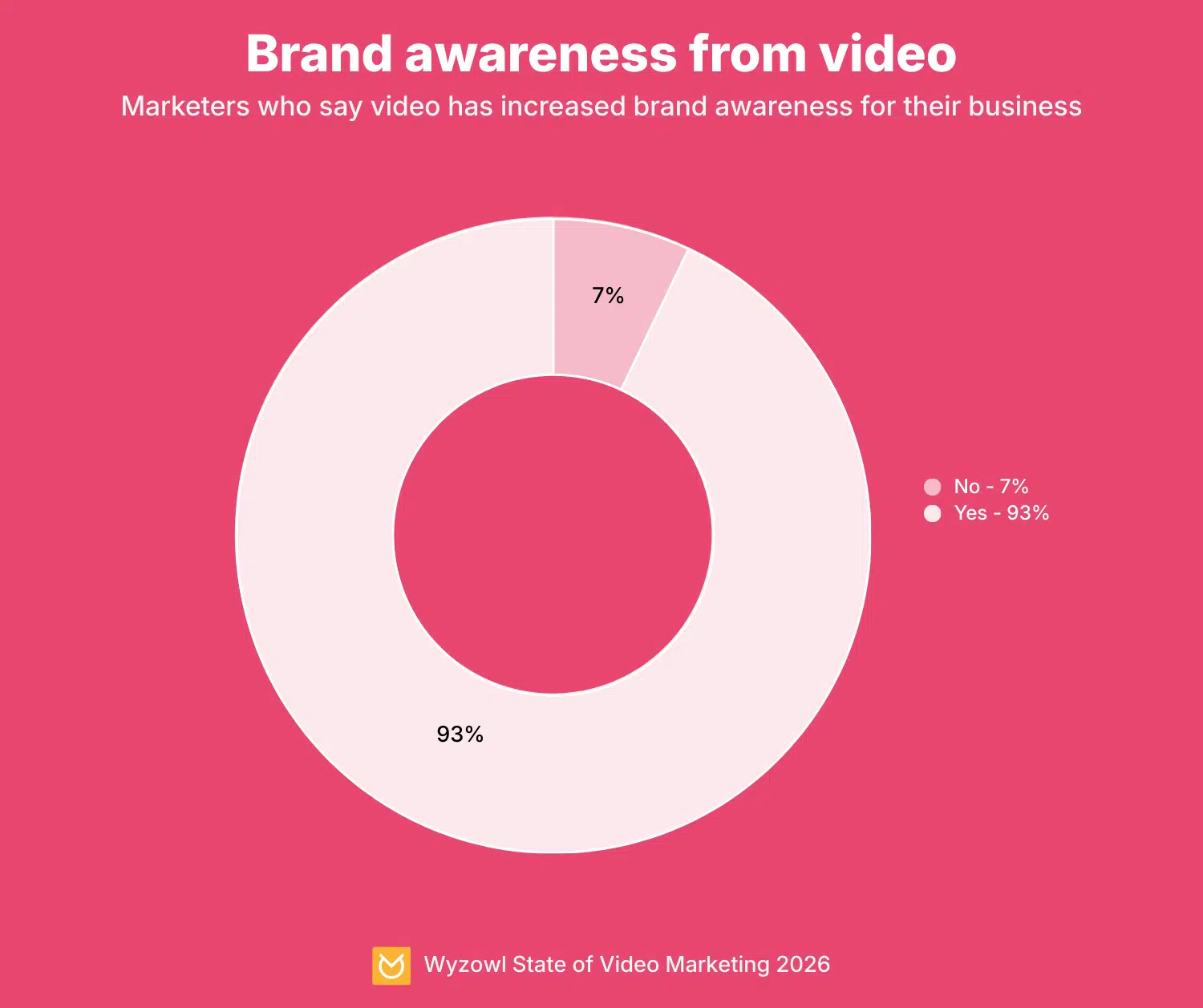
Meanwhile, 93% of marketers have increased brand awareness through video production, which is lower than 96% in 2025 but higher than 90% in 2024. (Wyzowl)
Brand awareness from video marketing
Lead gen forms at the end of 60+ minute videos post striking results, with conversion climbing as high as 65%. (Wistia)
Original video series and webinars drove the most conversions across formats, which mirrors longer runtimes paired with late-stage lead capture. (Wistia)
The way marketers measure the success of their video marketing campaigns differs vastly. Around 67% of them use views to measure ROI, 63% use video engagement, 52% use leads and clicks, 40% use customer engagement, 36% use brand awareness, and 32% use bottom line sales. (Wyzowl)
In the same report, 82% of marketers said that video helped them bring more traffic to their website, while 85% of them generated leads using video. (Wyzowl)
As for sales, 83% of marketers report seeing an increase in sales through video use. (Wyzowl)
Video also makes people stay longer on your website, as reported by 82% of video marketers. (Wyzowl)
Many businesses are also using video as a customer support channel, with 57% reporting fewer support queries with video use. (Wyzowl)
Video Consumption Statistics
Video consumption now stretches across nearly every part of daily media use, from casual scrolling on phones to long viewing sessions on connected televisions in the evening. Audiences jump between formats depending on mood and intent, favoring quick clips for discovery while settling into tutorials, live streams, or full episodes when time allows. The following video consumption trends and statistics can help you get the full picture.
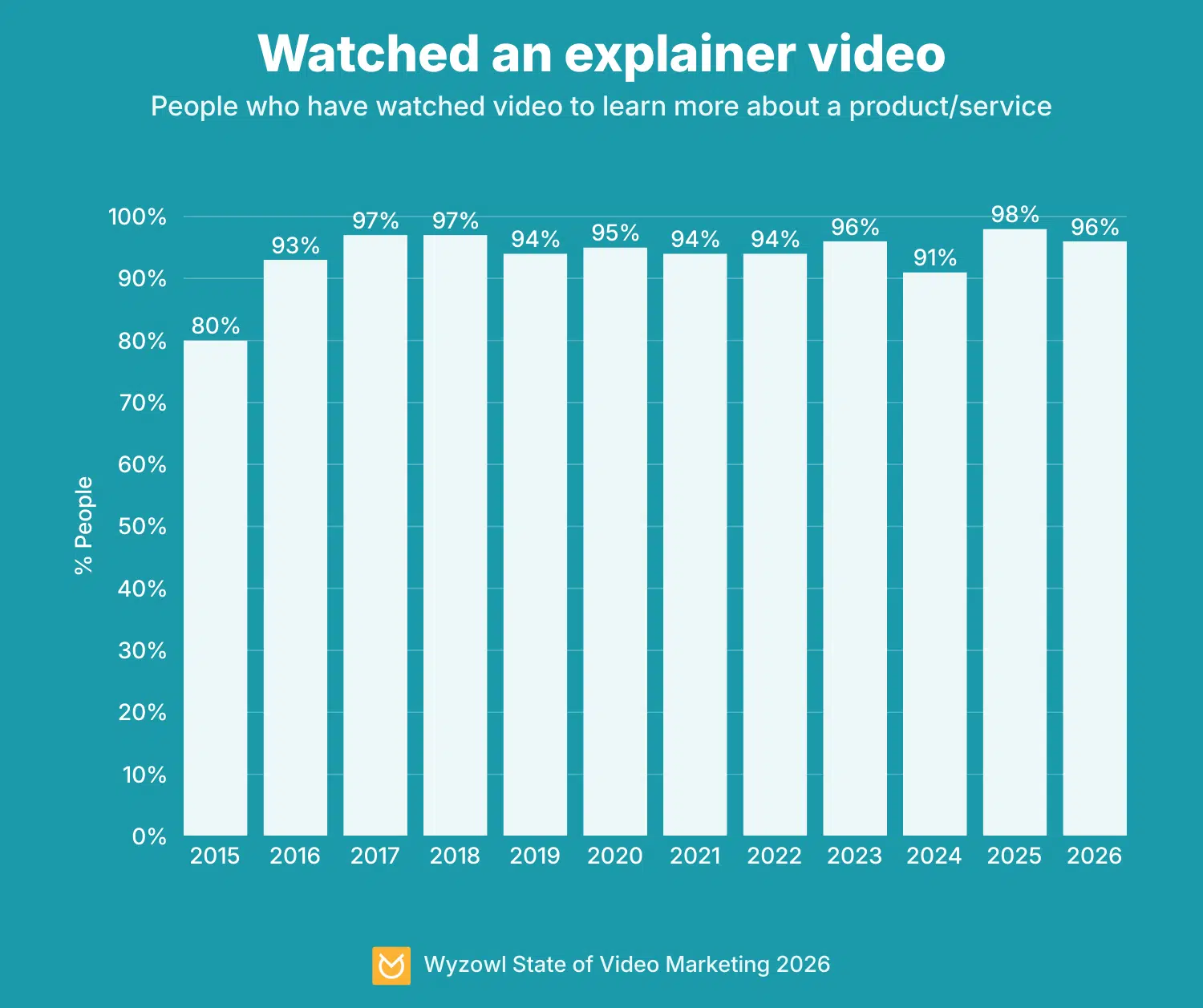
96% of people have watched an explainer video to get information about a product or service, showing how common this format is among consumers. (Wyzowl)
Explainer video consumption statistics
U.S. adults are projected to spend 60%+ of daily screen time watching digital video by 2026, so it won't be wrong to say that video is at the center of everyday media habits. (Statista)
85% of people say a brand's video has convinced them to buy a product or service, pointing to video's role in purchase decisions. (Wyzowl)
80% of viewers have used an app after watching related to it, so video has a strong influence on app adoption. (Wyzowl)
Most of the companies (82%) share their videos on social media, while 80% publish them on websites and blogs. Around 48% of organizations send videos through email. (Wistia)
Video marketing on platforms
On blogs, videos have an average play rate of 11%, which decreases to 8% when videos are used for case studies. (Wistia)
YouTube reached about 211 million U.S. viewers, keeping its lead among social video destinations through a mix of search-driven clips and long programs. Instagram drew roughly 143 million U.S. users who interacted with Reels and other visual posts. (Statista)
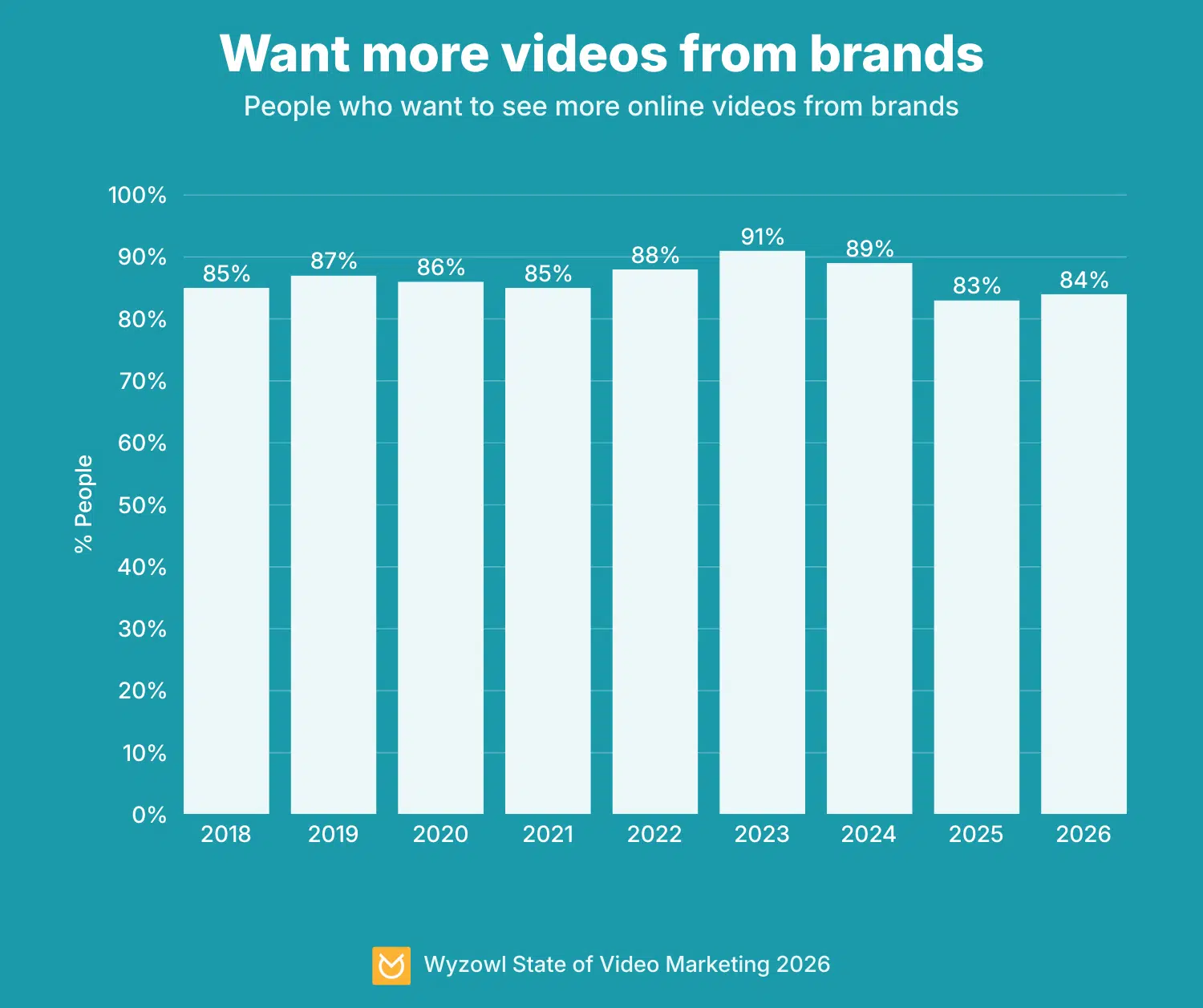
84% of consumers want brands to produce more video content in 2026, keeping demand high compared with past years. (Wyzowl)
Wyzowl video production statistics
According to 89% of consumers, a video's quality impacts how much they trust a brand. (Wyzowl)
When asked about preferred ways to learn about products or services, 63% of people choose short videos over other formats like text or manuals. (Wyzowl)
Compared with video learning at 63%, text-based articles are chosen by 12% of respondents, which suggests that video is far more popular for information gathering. (Wyzowl)
Daily social video use in the United States has reached close to 52 minutes per person. (Statista)
Short Form Video Statistics
Feeds refresh every second, and short clips make up most of that activity. Viewers swipe during breaks, late nights, commutes, and shopping sessions, often watching several creators in a row before moving on. Platforms push these formats hard, while brands test hooks, captions, music choices, and posting schedules to hold attention for a few more seconds.
The following short form video statistics 2026 focus on platform growth and response related to these clips. These figures explain why brief videos now drive so much daily viewing and why marketers track them with unusual care.
In a report, marketers reported Instagram to be the most important social media platform, while 46% of them said video is the most notable content type they make. (Social Media Examiner)
On average, YouTube Shorts are around 20 and 40 seconds in length. (Inflow Network)
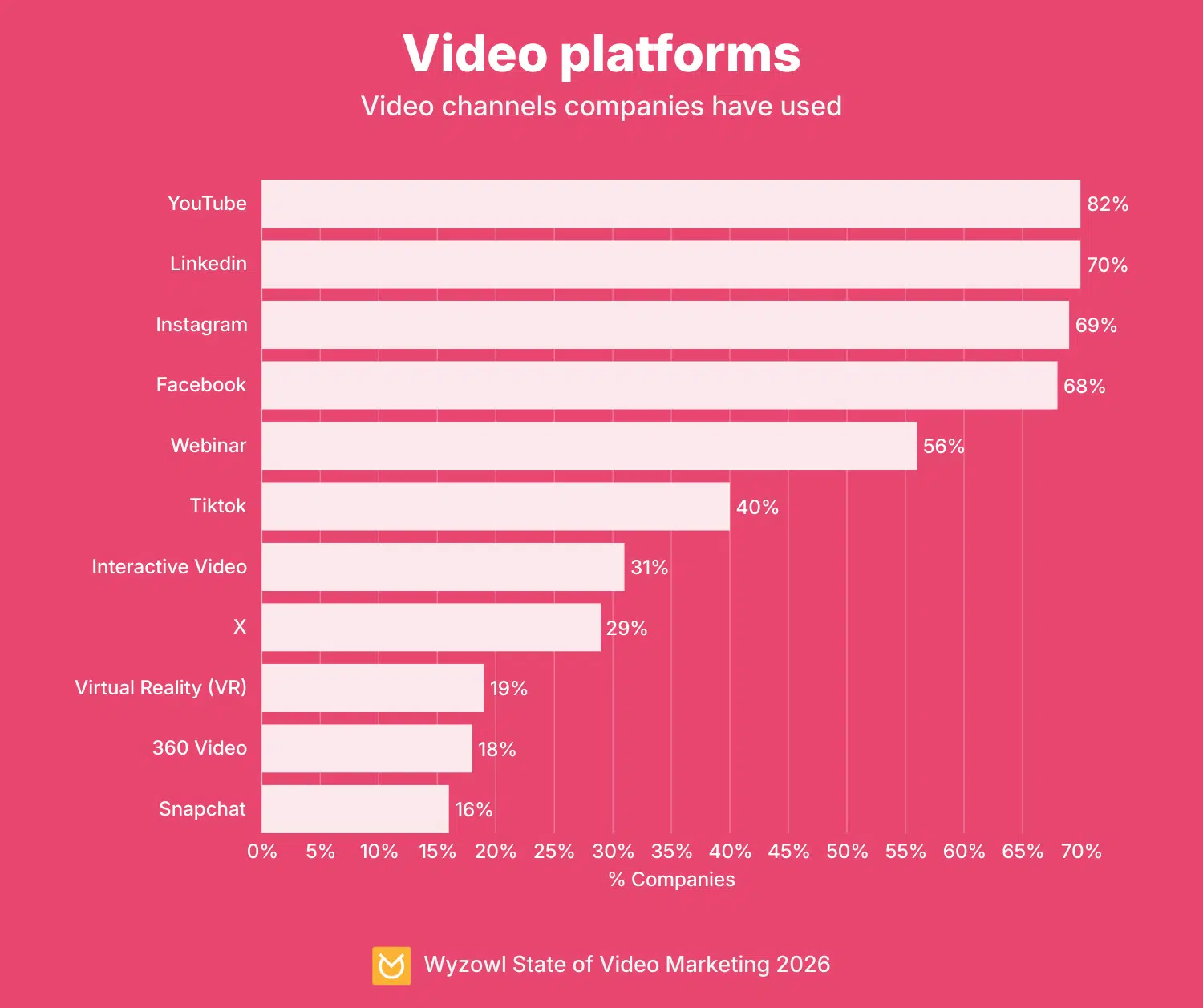
YouTube is still the most preferred channel for video publishing, with 82% of businesses using it. (Wyzowl)
Video marketing statistics
In comparison, 70% of marketers use LinkedIn to post videos, while 69% post on Instagram and 40% on TikTok. (Wyzowl)
The least widely used short-form video platform is Snapchat, which is only used by 16% of businesses. (Wyzowl)
Wistia reports that 58% of companies create social media videos. (Wistia)
However, the highest number of views are garnered by YouTube Shorts that are 50 to 60 seconds long. (Inflow Network)
On average, a TikTok video is 42.7 seconds long, which is an increase from 39 seconds a few years ago. (Statista)
Around 83% of marketers report that the best length for a short-form video is under 60 seconds. (HubSpot)
Generative AI Video Marketing Statistics
Generative AI is changing how videos are created and distributed, giving brands new ways to produce content quickly and at scale. With features like automated editing and AI-generated scripts, marketers can experiment with new tools to speed up video creation.
Recent data shows that businesses using AI-driven video campaigns see higher reach and interaction across social channels. Looking at video marketing trends 2026, it's clear that AI-powered approaches are becoming a central part of strategies, as these statistics show.
Around 63% of video marketers report using AI tools to create or refine marketing videos, leaving 37% who haven't adopted them yet. (Wyzowl)
Compared with last year, when only 51% were using AI in video production, adoption has grown steadily, and many marketers plan to start using AI within the next few months. (Wyzowl)
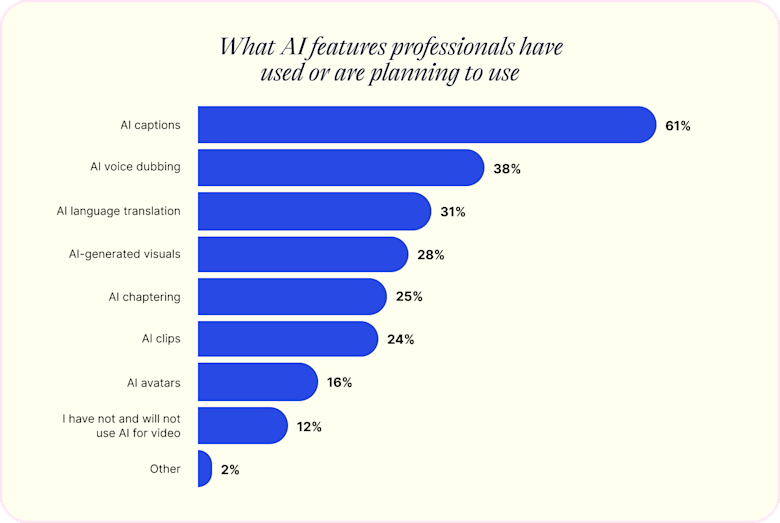
Among those using AI, 61% use it to write captions, 38% for voice dubbing, 31% for language translations, and 28% for AI-generated visuals. (Wistia)
AI use in video production statistics
Besides these use cases, 16% of marketers have created AI avatars, while 25% use AI for video chaptering. (Wistia)
The AI video production market is expected to be worth $1,489.486 million by 2028. That's a 22.37% growth from $362.500 million in 2021. (Yahoo Finance)
Unfortunately, 54% of people say that they don't really know how to use AI for video production, while 5% find it too complicated. (Jammy Digital)
Additional Video Marketing Statistics 2026
Video continues to dominate how people consume content, and keeping up with the latest numbers shows where attention is heading. Let's look at some additional video marketing statistics that don't fall under any of the categories we've covered above.
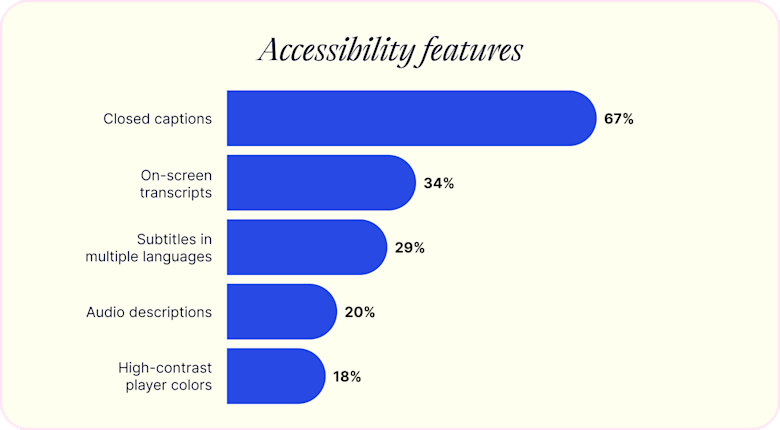
Accessibility has become a must-have in videos, with 67% of marketers adding closed captions to their videos. Similarly, 34% are adding on-screen transcripts, while 29% include subtitles in different languages. (Wistia)
Video accessibility features stats
Around 20% of marketers also use audio descriptions for their videos. (Wistia)
Only 12% of companies spend more than $20,000 on video production. Most of them (26%) spend less than $1,000 to create videos. (Wistia)
Interestingly, only 5% of organizations plan to reduce their video marketing budgets. In comparison, more than 50% plan to increase them. (Wistia)
As we've previously covered, video creation takes a lot of time. Wistia reports that 53% of organizations spend more time creating videos than actually promoting them, while 28% spend more time on promotions. (Wistia)
Previously, podcasts were for individuals. But now, more than 25% of companies have podcasts, and 10% plan to launch one. (Wistia)
Video SEO & Search Statistics
Search is one of the biggest reasons video earns its place in a modern content plan. A well-optimized video can rank on its own and lift the page it lives on, which is why video production and SEO increasingly go hand in hand.
YouTube is the world's second-largest search engine, reaching about 2.7 billion monthly users. (Hootsuite)
YouTube Shorts now generates more than 200 billion views every day worldwide. (Hootsuite)
Google returns a video result for close to 30% of all search queries, giving video an extra path to page one. (WPCreative)
More than 25% of search results now include a video snippet. (WorldMetrics)
Rich results that include video earn around 58% click-through, compared with 41% for non-rich results. (WorldMetrics)
Visitors spend roughly 2.6x more time on pages that contain video than on pages without it. (WPCreative)
Video is estimated to account for about 82% of all consumer internet traffic. (WPCreative)
Social Platform Video Statistics
Every major platform now rewards native video, and each one favors a slightly different format. These numbers help you decide where your social media video will earn the most reach.
Video is LinkedIn's fastest-growing content format, with uploads up about 34% year over year. (Hootsuite)
On LinkedIn, live video drives roughly 24x more comments and 7x more reactions than pre-recorded video. (Teleprompter)
Video creation on LinkedIn is growing about 2x faster than any other post format. (Hootsuite)
Video views on LinkedIn grew about 36% year over year. (Hootsuite)
Short clips like Reels and Shorts are the first point of contact between most brands and their audience. (Wyzowl)
Webinar & Live Video Statistics
Live and long-form video is where a lot of B2B pipeline actually gets built. For teams weighing corporate video production against other channels, the webinar numbers are hard to ignore.
96% of B2B buyers watch a webinar or video content at least once a month. (OrangeOwl)
About 81% of B2B marketers rank webinars among their highest-quality lead sources. (Contrast)
Roughly 73% of B2B webinar registrants convert into qualified leads. (OrangeOwl)
75% of marketers prefer hosting live webinars because of the immediate engagement they create. (OrangeOwl)
Webinars deliver an average cost per lead of around $72, well below many paid channels. (Contrast)
Webinar-sourced leads convert to closed deals at roughly 24%, well above the 9% typical of content-download leads. (Contrast)
Ecommerce & Shoppable Video Statistics
Video is moving closer to the point of purchase every year, turning passive viewers into buyers. This is where product and property video and shoppable formats pay off directly.
Shoppers who watch a product or explainer video are about 73% more likely to make a purchase. (Levitate Media)
85% of consumers say they have been convinced to buy a product or service after watching a video. (Wyzowl)
Shoppable video can lift site-wide conversion rate by roughly 17% to 33%. (Whatmore)
Shoppable video ads can generate up to 3.2x more conversions than standard video ads. (Whatmore)
The video commerce market is projected to reach about $55 billion by 2027. (Videowise)
Shoppable video can drive about 225% higher add-to-cart rates than static product pages. (Whatmore)
Video Conversion & Lead Generation Statistics
The clearest case for video is what happens after the view: more traffic, more leads, and more sales. These conversion numbers are the ones worth putting in front of a finance team.
87% of video marketers say video has increased traffic to their website. (Wyzowl)
86% of video marketers say video has helped them generate leads. (Wyzowl)
81% of video marketers say video has directly helped increase sales. (Wyzowl)
Adding a video to a landing page can lift conversions by up to 86%. (Levitate Media)
90% of consumers say video helps them make a purchasing decision. (Levitate Media)
70% of B2B marketers say video outperforms other content types for engagement. (OrangeOwl)
Put These Video Marketing Statistics 2026 to Use In Your Campaigns
Video marketing in 2026 is more important than ever. While short-form video content is definitely all the range, longer content, such as explainer videos and webinars are also important.
AI tools are increasingly used for video creation, captions, and personalization, helping marketers produce content faster and smarter. ROI remains strong, with videos boosting brand awareness, website traffic, lead generation, and sales. B2B teams also see clear benefits, as you must have noticed from the B2B video marketing statistics we've discussed above.
Going forward, your aim should be to keep these video marketing trends 2026 in consideration when you're designing your campaigns. However, that often requires assistance from a video production company such as INDIRAP. Since we always stay on top of video consumption trends and marketing reports, you can expect your video content to be at par with competitors and audience preferences.
Book a strategy call with INDIRAP today to build a video marketing plan for 2026.
Frequently Asked Questions
What are the top video marketing trends in 2026?
In 2026, short-form videos under 60 seconds do well on social feeds, as they capture attention quickly and drive engagement on TikTok, Instagram Reels, and YouTube Shorts. AI-powered video creation and editing tools are also being used to streamline production, generate captions, translate content, and create visuals. Similarly, mobile-first viewing, personalization, data-driven content, live streaming, interactive videos, and video accessibility features (captions, subtitles, transcripts) are becoming standard.
How does video marketing impact B2B businesses?
B2B marketers use explainer videos, product demos, and educational content to increase understanding. These videos also support buyer decisions and improve internal sharing.
What do video marketing statistics say about audience preferences?
Video marketing statistics show that most viewers prefer short videos under one minute. Audiences engage more with tutorials, explainers, and product demos. Plus, there's a demand for accessibility features. People also focus on video quality, as it allows them to trust a brand more.
How does AI improve video production?
AI tools streamline editing, generate captions, write scripts, create storyboards, generate voiceovers, create avatars, automate translations, create visuals, and speed up content production. So, marketers can use them to scale campaigns and personalize videos efficiently.
What types of video content drive the best ROI?
Short how-to videos, explainer videos, educational series, live-action clips, and webinars show strong engagement and conversions across both B2C and B2B campaigns. However, the right kind of video for your business will also depend on the audience and campaign goals.
What role does video accessibility play?
Including captions, transcripts, subtitles, and audio descriptions allows all viewers to engage with your videos. It helps improve user experience and strengthens brand credibility, with over 67% of marketers using basic accessibility features like closed captions.
How can marketers use video statistics to improve campaigns?
Marketers can analyze video statistics such as watch time, engagement, retention, and conversion rates to identify what works with different audiences. These insights guide content strategy, optimize formats, refine messaging, and focus efforts on platforms delivering the highest ROI. As a result, you spend your time and money on video strategies that are proven to work.
Where do these video marketing statistics come from?
These statistics are drawn from recognized industry sources, including Wyzowl, Statista, Wistia, DataReportal, eMarketer, Hootsuite, and published B2B webinar and shoppable-video benchmark reports. Each individual statistic links to its original source, so you can verify the figure and cite it directly.
What is the single most important video marketing statistic for 2026?
If you only remember one number, make it this: 91% of businesses now use video as a marketing tool and 82% report a positive return on investment. Video has moved from a nice-to-have to a baseline expectation, so the real question is no longer whether to use video, but how well you use it.
Can I cite or share these video marketing statistics?
Yes. You are welcome to cite any statistic on this page as long as you link back to it as the source. Each data point also links to the original report it came from if you need the primary reference.
Julian Tillotson is the Founder & CEO of INDIRAP, a full-service video production and creative strategy agency based in Chicago, IL. With 10+ years of experience, INDIRAP has delivered 20,000+ videos to 900+ clients across 40+ industries, making it one of North America's leading digital creative agencies.



.gif)



.png)
.png)