
There are over 1,300 billion-dollar unicorn startup companies in the world. Unfortunately, these are a rarity rather than a majority since the startup failure rate is quite high. Part of the reason startups don’t manage to take off as well as they’d want is poor market exposure and marketing. A solid startup video production strategy can minimize this risk.
Startups move fast, and video often gets pushed aside until someone on the team says the brand feels flat. Then, the scramble begins. A quick promo here, a product clip there, maybe a short founder message tossed together just to fill a gap.
It may work for a moment, but it rarely holds up once the company widens its reach across social media, paid ads, organic content, and email marketing. On the contrary, startups that create well-intentioned foundational video content set a stronger base. Even one good series can support sales calls, pitches, onboarding, recruitment, and community building.
Below, we discuss the ins and outs of video marketing for startups, so that you can set this base right off the bat. Once you do this, you can scale your brand by giving it a recognizable style and voice that customers remember.
We can go ahead and give you several reasons (and we will!) why startups need a proper video marketing strategy. But the main reason is that every other business you’re competing with likely has one.
Easy Marketing explains the importance of video marketing for businesses today.
Wyzowl’s 2025 State of Video Marketing report shows that 89% of businesses are using video for marketing. Even more important is the fact that 95% of marketers see it as an integral part of the overall marketing strategy.
Now that the most obvious reason is out of the way, let’s talk about startups falling into the habit of producing videos only when something feels urgent. It usually leads to clips that don’t connect or support each other. For example, a quick founder message recorded before a pitch can serve the purpose momentarily, but it doesn’t support your overall strategy.
Has your team ever looked at all your videos together and wondered why none of them share the same tone? That’s because you don’t have a proper strategy in place.
A scattered approach to startup video production carries a high cost. Hours get spent re-editing small details or fixing mismatched visuals when the team needs something polished for sales, recruiting, or investor outreach. Everyone has to work from scratch again and again, which is just as frustrating and cost-intensive.
Now, let’s flip the script. You create a startup-specific video production strategy that includes all video assets a new company needs to cement its presence in the market. What changes?
Teams spend less time chasing last-minute fixes and more time using the same library across fundraising, hiring, product education, email, and social channels. Over time, your audience also learns to associate the kind of videos you’re putting out with your brand’s style. That kind of recall is really helpful in building familiarity.
As a startup, you don’t need to create every type of video there is right from the beginning. Your focus should be on specific content that will get you on the audience’s radar and introduce your brand to them.
Stick to the following video types to stay within budget while making room for growth later.
This is often the first piece people look for when they want to understand the company. Investors want to know why the team cares, while new hires are interested in knowing more about your mission. As for the audience, they judge companies based on who is behind them.
Founder story videos add personality to your pitch deck and build trust in early sales calls. They also help the press write a more complete story about what your company offers. More importantly, these videos set the tone for future content.
Startups are understandably worried about resources. Here’s how to create a low-cost first version of founder-led videos:
Selfbook CEO, Khalid Meniri’s video is a good example of what to include in your founder story video.
A demo video often becomes the most useful asset a startup creates in its first year. It shows what the product does, how it works, and why someone should care.
You need a well-made explainer video to reduce friction across onboarding because viewers absorb information faster from simple visuals than long instructions. They also support landing pages, sales materials, performance ads, and customer support.
For example, Braintrust introduced its AI Recruiter with an explainer video. It was nothing fancy; just a person talking about the company. However, the video garnered over 700k views.
Real customers help a startup build trust faster than any pitch since they build a human connection. People want proof that someone like them solved a real problem.
A remote interview recorded on Zoom is often enough in the beginning. As long as the customer has decent lighting, the clip can feed sales outreach, website proof sections, nurture emails, retargeting ads, and partnership materials. Sometimes, all you need is a few strong sentences from a real user to show more results than long explanations from the team.
AcquityMD, a startup with an $18 million revenue in 2024, does a great job of using customer testimonials to build trust among users.
Teams grow quickly in early stages, and candidates want to know who they’re joining. Short culture clips show team energy, day-to-day moments, and the general vibe around the company.
You can use these clips on careers pages, hiring ads, social updates, internal newsletters, and onboarding materials. When applicants see these videos, they picture themselves on the team. These visuals often speed up hiring because people feel more comfortable reaching out.
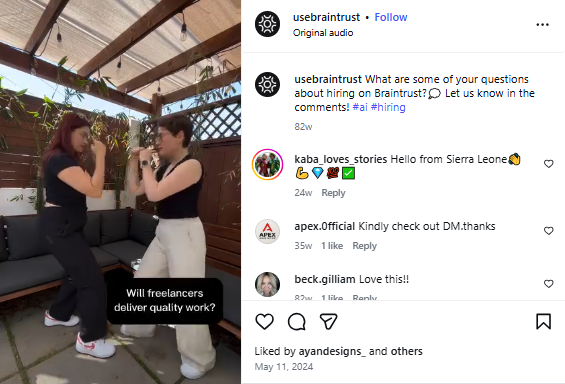
Braintrust does this wonderfully. They used an Instagram Reel to collect hiring questions candidates may have about the company’s recruitment process.
Vidico’s survey found that short-form videos (30 to 60 seconds) are the most effective among all video types. Reels, TikToks, and YouTube Shorts keep startups visible without demanding long production cycles. Cradlewise’s Reels are a good example here.
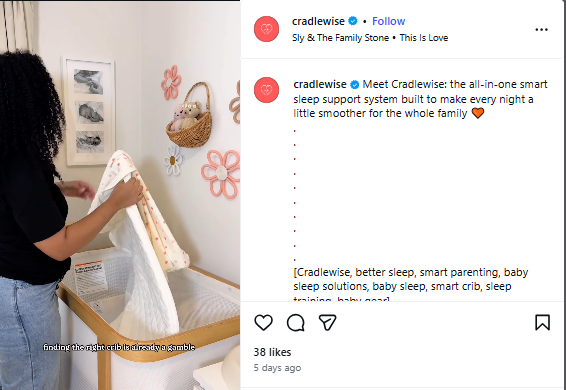
Founders can film short Q&A clips on a phone, create simple caption-led snippets, or record quick feature previews. Besides posting these clips on social media to boost engagement, you can also use them for event reminders or to run paid ads. They also help the team test messages before investing time in longer videos.
Startups go through several stages of development, and each of these phases requires different video types. A stage-gated plan helps a startup avoid overspending in the early months and still build the right assets at the right time.
You want to keep everything realistic and useful, not just flashy for the sake of it. Here’s how to prioritize.
Pre-seed teams usually have tight budgets, few hands, and a long list of tasks competing for attention. So, you don’t have a lot of time to spend on creating videos. Simply create videos that answer the basic questions investors, early users, early hires, and the media ask.
A workable pre-seed stack usually includes a basic founder story, one short demo, a landing page clip, and two quick social edits. These pieces cover first pitches and top-of-funnel interest. For example, Cradlewise had a short 1-minute-long introductory video that got them over 100k views.
https://www.youtube.com/watch?v=U84LToqvHmw
Cradlewise product demo video
Follow this checklist:
The ROI here shows up in trust and early traction. People understand the product faster, and you lose fewer leads on the landing page because the explainer video fills gaps the copy can’t.
When you reach this stage, you have early feedback from the public. The messaging is also more defined at this stage, so customer proof matters a lot here.
A short testimonial or use-case clip helps sales conversations land with more weight. Again, Cradlewise is a good example here because they use a combination of virtual demos and customer testimonials to tick two video types off the checklist.
Besides testimonials, create two product walkthroughs to give teams assets for onboarding, paid placements, and deeper feature education. You can also create a short investor pitch video to help founders scale outreach without repeating the same message across countless calls.
Here’s the checklist for this stage:
These videos will help strengthen your cold outreach and shorten sales cycles.
Once a startup enters Series A territory, expectations rise. Teams start to grow, and recruiting ramps up. At this stage, sales also need more than just foundational video content. The same goes for partners and investors, who now want stronger proof.
Here, polished pieces pay off. Ideally, work with a video product agency to create a refined corporate video for your business. A recruitment series coupled with long-form case studies also helps the company expand its message’s reach.
These pieces support large-scale hiring, outbound sales, partner calls, press kits, and deeper investor conversations. The important metrics to measure in this stage are:
A video marketing agency, such as INDIRAP, can assist you in creating professional videos that align with your brand’s tone and messaging. Learn more about our process in this video.
Most startups underestimate what video actually costs, while others assume it’s out of reach and default to low-effort posts that don’t really work. If you have a clear budget band, it helps you see what’s possible at each stage and what you can realistically produce.
Let’s look at three possible budget bands to choose from.
This is the “use whatever you already have” stage. Phones, webcams, ring lights, and screen recordings are simple tools that can help build a foundational set of purposeful assets.
A typical output in this band might include:
Even on a tiny budget, these assets set your video production strategy into motion. You get a shareable narrative for early users, a demo clip for landing pages, and repeatable cuts for social.
Once your product fosters a user base, it’s time to start focusing on product quality. You don’t need Hollywood-level polish, but your early customers expect some level of professionalism.
Within this budget, you can typically produce a few core assets, such as:
Browserbase’s video introducing one of its offerings is a good example of the type of content you can make at this stage. The background is simple, and there’s nothing fancy going on, but the quality and sound are decent.
The total cost of video production will depend on the number of assets you want to make. Similarly, the corporate video production services you use will also determine the cost since some agencies tend to be on the higher end, while others offer budget solutions.
This is where you move toward fully agency-level or in-house studio production. Now, you’re not just making videos, but full-fledged campaigns. These contain scripted narratives, multi-location shoots, animated explainers, and paid distribution.
When you work with a video production company, expect to pay $1,500 to $4,500 for short videos. Longer ones can cost anywhere from $5,000 to $15,000, depending on the amount of work involved. Our guide on the cost of video production covers this in detail.
Why stretch for this band?
Because at this stage, every percent lift in conversion is worth serious revenue. Professional storytelling creates brand trust, and strong production value helps you stand out in competitive categories. Meanwhile, paid distribution turns your best assets into repeatable revenue drivers. It’s a win-win across the board.
When you map out the first year of your startup video production strategy, the whole process becomes manageable alongside everything else startups have to keep up with. There’s one simple rule: create the minimum playable version, measure what it does, then iterate.
Start by creating your first core assets, including a short founder story, a product demo, a landing page clip, and a few social edits. Keep it simple with this workflow:
Test these videos immediately. Drop them on your landing page and social channels, and track metrics like watch retention and view-to-signup. Early feedback further guides video marketing for startups.
Add customer testimonials, an additional product walkthrough, and short repurposed clips for social and sales outreach. Follow the same production flow: script, shoot, edit, ship, measure.
Distribution windows now come into play. Spend one to two weeks testing new assets and make small adjustments based on feedback.
By now, video production should become a pipeline in your startup. Monthly cycles focus on creating new assets and refining older ones. Here’s how a typical month may look:
Collect input from sales, customer success, audience, and recruiting teams to improve messaging.
Along with following the monthly publishing cycle, you now have enough assets to reuse across channels. For example, the product demo can be repurposed to create a landing page embed, email snippet, social clips, screen-record tutorials, or a paid ad.
Vanessa Lau explains how to repurpose your long-form YouTube content for short-form channels.
Video marketing for startups works best when it’s stage-aware. Basically, every step should tackle one aspect of startup video production. Here’s a step-by-step guide to do this.
Prioritize four or more core assets that cover the most critical touchpoints. These typically include a founder story, product demo, customer testimonial, culture/recruitment clips, and short social cuts.
Early versions can be simple with webcam recordings, screen captures, or in-app clips. You may also edit them in-house.
Break your production into stages:
Determine what your startup can realistically spend. Bootstrap ($0 - $5k) covers webcam or phone shoots, basic edits, and a few social cuts, while Growth ($5k - $25k) allows a small crew, motion graphics, and multiple assets.
Scale ($25k+) supports agency-level production and paid distribution. In simple words, you can hire a video marketing agency to take over your foundational video content.
Early on in your journey, working with lean freelance creators, product-focused studios, or creators willing to co-promote can keep costs low while giving content authenticity. These partnerships often help your brand feel genuine to early users.
Think Media explains how to hire video editors on a budget.
Later, as production needs scale, hire a full video production agency or build an internal playbook with repeatable templates. This approach standardizes quality and speeds up output. Your video marketing agency partner can also support multi-channel distribution on your behalf.
A simple rule of thumb is to be present where your audience is, but if your viewers come from different sources, you’ll need a multi-channel approach.
YouTube works for long-form educational demos, LinkedIn for B2B case studies, Instagram or TikTok for short social clips, and your website or email for onboarding and sales assets.
Collect feedback from investors, users, and internal teams to tweak your startup video production strategy as you move along. Also, repurpose core assets across channels like social media, sales decks, landing pages, email, and paid campaigns to get maximum ROI. Over time, you’ll have a reusable library that grows with your startup.
.gif)
Video marketing for startups is most fruitful when you treat the process like an ongoing system rather than individual social media posts or product demos. As your dedicated video production company, Indirap builds full-funnel video and social ecosystems designed to grow brands.
When you work with INDIRAP, you don’t have to figure out anything. We handle the whole process from creative strategy to paid media campaigns. You get videos ready for pitch decks, landing pages, social channels, ads, and more.
Book a free call with Indirap to start building your video production strategy.
Startups should prioritize founder stories, explainer videos, case studies, product demos, customer testimonials, and short-form social media videos. They can show these videos on both online and offline channels.
Startups should work with a video production company when they need professionally-created video content or want to hand over the responsibility of continuous video creation to a reliable party for multi-channel distribution. Early-stage startups can use freelancers. Later, a professional agency helps scale production and maintain product quality plus brand consistency.
A video marketing agency handles strategy, scripting, content creation, editing, animation, motion graphics, and paid distribution. They turn foundational video content into a system that fuels brand growth.
You can start with $0 if you’re planning to use a phone or webcam footage. For intermediate-level quality, expect to spend anywhere from $5k to $25k. It can get you a small crew with advanced editing and motion graphics. For full-house campaigns, you can spend over $25k.
Foundational video content can be sliced for social media, embedded in emails, added to landing pages, or used in pitch decks. Startups can use the most impactful clips across channels for maximum impact without spending too much time and money.
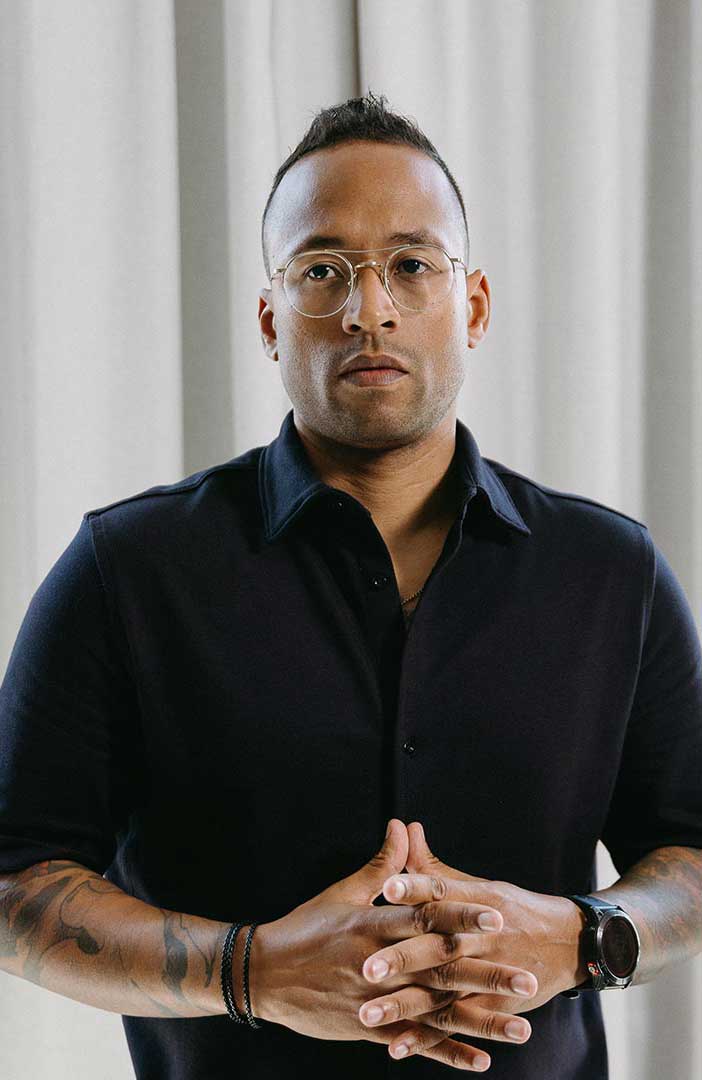

Julian Tillotson is the Founder & CEO of INDIRAP, a full-service video production and creative strategy agency based in Chicago, IL. With 10+ years of experience, INDIRAP has delivered 20,000+ videos to 900+ clients across 40+ industries, making it one of North America's leading digital creative agencies.


.png)
.png)