
A video marketing case study breaks down a real brand campaign, the strategy behind it and the measurable results it drove, so you can apply what works to your own videos. Below are 10 of the best video marketing case study examples of 2026, including standout YouTube ads and YouTube brand case studies from Cadbury, Coca-Cola, Pepsi, Nike, Airbnb, and Google Pixel.
A few years ago, we rounded up some of the best video marketing case studies from some of our favorite brands. A lot has changed since then, and so has what it takes to build a winning video ad campaign. Back then, 84% of marketers were using video marketing as a part of their strtegy, a number which has since increased to 91%.
The way marketers use video has also changed considerably, with AI and immersive experiences entering the picture. So, we decided to scour the marketing space once again and pull the most effective video ad campaign examples of 2026.
In 2026, video marketing has pulled in a lot of attention since your audience is more likely to watch than read. Short vertical clips remain dominant on mobile and social feeds, while interactive and shoppable content turns viewers into buyers directly inside the frame. Platforms like YouTube are adding tools that let creators generate Shorts with new AI features and blend photos into video stories.
Live formats now serve as community events where brands answer questions and show products in real time. Purchase actions and longer viewing are considered more important outcomes than mere play counts. So, each video marketing case study in this list reflects measurable influence on real corporate video results.
We specifically picked campaigns that incorporate smart use of trends, tools, a range of budgets, multiple platforms, and strategies. There’s something for everyone, so let’s get right in.
It’s usually bigger brands making waves when it comes to out-of-the-box marketing. They have higher budgets and smarter minds on deck. But in 2026, smaller brands are also doing impressive work.
Let’s look at some examples from brands of all sizes in different industries to give you inspiration for your own video marketing strategy.
Cadbury 5 Star’s “Destroy Valentine’s Day” campaign flipped what many brands do around February 14. It didn’t promote the romance tied to the holiday. Instead, the idea used humor and cultural observation to engage a younger audience weary of overly sentimental marketing.
Ogilvy India built a concept around a lighthearted insight: when older generations latch on to something, younger people often abandon it. Applying this logic, the campaign invited “uncles” to take over Valentine’s Day, flooding social platforms with their own spins on romance so that the celebration became uncool for others.
Viewers were encouraged to nominate or sign up uncles to join the movement. Selected participants received support for their outings and content creation, and the nominator earned a small commission.
A dedicated site and a central film propelled involvement across Instagram, YouTube, and Snapchat. Longer features ran on TV and partnered channels.
The campaign’s video performed strongly online. On YouTube alone, it racked up millions of views. Audiences joined the joke by sharing reactions and memes.
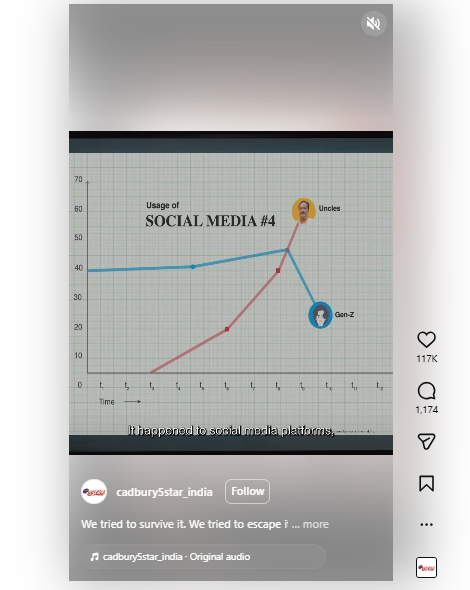
Discussion around the stunt on social networks multiplied reach beyond paid media. The website activation added an element of participation that kept people coming back after initial viewing.
Coca-Cola’s “The Last Customer” campaign highlighted people who work through the busiest part of the year, when most others are off celebrating. Rather than focusing on classic festive imagery, this story pulled viewers into the lived experiences of everyday workers who serve others while missing out on their own holiday time.
Scenes in the ad featured a gift wrapper, a supermarket bagger, and a restaurant employee. Throughout the busy day, each person stays late to serve “the last customer.” Near the end, those customers reveal that the big purchases were actually gifts for the workers themselves as a thank you for their hours of service.
This video marketing case study captured authentic moments and modest production in place of cinematic gloss. As one of the more memorable case study video examples in emotional holiday marketing, the campaign stayed aligned with the brand’s long history of relating Coca-Cola to togetherness during the holidays.
Pepsi renewed its long-standing creative partnership with David Beckham in a fresh chapter of the “Thirsty for More” video campaign. The central idea went against typical brand hype by focusing on simple human pleasures rather than big spectacles. Across social platforms and TV, the film showed people in everyday moments: gaming with friends, singing at a karaoke night, and taking spontaneous road trips.
Beckham narrated the tag line “If you love it, it’s never a waste,” encouraging viewers to embrace things they enjoy without question. The story played out in short video cuts, then extended into local activations across Europe, Asia, and Latin America.
This campaign also paid homage to decades of work with Beckham. He first appeared in Pepsi ads in the early 2000s in memorable spots such as a playful sumo match and a tongue-in-cheek Western duel.
Mentioning that heritage helped position the new spot as both familiar and forward-looking. So, audiences had something to talk about beyond the brand message.
Nike took a different route with its “Winning Isn’t Comfortable” campaign. The company built an honest narrative around running and the personal battles that come with it. Unlike the traditional triumphant visuals, this set of films showed the less glamorous parts of the sport, including the early morning dread, rain and wind, the ache of hitting a training wall, and the awkward shuffle down a flight of stairs after a marathon.
The message was simple: progress in running doesn’t feel easy, and that tension between effort and reward is part of what makes the experience meaningful for dedicated runners. There were four films in this series: Sunshine, Morning, Joy, and Stairs. Each one highlighted a different facet of the runner experience and was paired with music or sound that reflected the mood of the moment.
The campaign’s rollout was timed with marathon seasons in cities such as Chicago, New York, and Berlin. Nike amplified the work with outdoor ads and local activations around race day events to meet runners where they were.
In this video marketing case study, Life360 and Tile came together for the first time under a shared creative platform with “Family-Proof Your Family,” a campaign that showed the messier side of modern family life. The film focused on how small mishaps can spiral into chaos.
Lost coats, missed curfews, and broken door handles became exaggerated turning points, all told through dark humor and cinematic storytelling. The tone felt closer to a short film than a traditional tech ad, which helped the message land without sounding instructional.
The hero spot, Coat, followed a child whose parents argued over a misplaced jacket. That single moment snowballs across decades, with the character never removing the coat through school, adulthood, and major life milestones.
Supporting films took the same approach. Funeral pushed discomfort further by imagining an emergency misunderstood by an entire church, while Curfew explored parental panic turning into public embarrassment. Each scenario showed how miscommunication and lost items can create avoidable stress.
The campaign launched across television, digital video, out-of-home placements, and social feeds. It also coincided with Tile’s updated product line and deeper app integration with Life360.
Airbnb’s 2025 relaunch of Experiences marked a deliberate repositioning of the platform. The company showed what travel actually looks like on the ground.
The campaign centered on a 60-second film that reframed travel as discovery rather than logistics. It used an illustrated, storybook style to contrast old-world journeys with modern trips that feel overly planned. The narrative then opened into a more imaginative view of travel, where local hosts and culture take priority.
The media strategy mattered as much as the film itself. Airbnb planned the work as social-first, based on how people now search for trips through Instagram, TikTok, and YouTube instead of traditional search engines. Alongside the hero video, the brand produced city-specific social videos tied to destinations such as Paris, Tokyo, Seoul, and Mexico City.
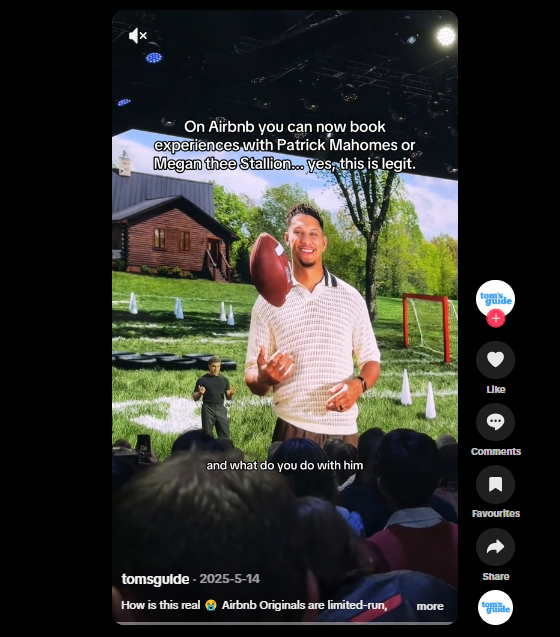
Each video connected directly to bookable experiences inside the app, shortening the path from inspiration to action. This campaign also built on Airbnb’s recent experiments with pop culture-driven experiences, expanding into Originals hosted by well-known figures.
Anthropic entered paid advertising for the first time with “Keep Thinking,” a campaign designed to position Claude as the AI preferred by people who enjoy hard problems. The core audience was clearly defined from the outset: developers, researchers, founders, and operators who stay up late working through ideas that refuse to let go.
The launch centered on a 90-second film released on YouTube, which makes this a solid video marketing case study example. This film avoided product demos and instead used pacing and atmosphere to show how real problem-solving feels in practice.
Media choices reinforced that positioning. Anthropic invested in premium placements during major sports broadcasts, high-visibility streaming titles, and respected print publications such as national business newspapers. Out-of-home executions featured real Anthropic researchers and independent creators who built projects using Claude.
Google Pixel’s latest cinema ad in the UK married high-production storytelling with clever product relevance. Running ahead of major films such as Wicked: For Good in late 2025, the campaign built on a two-year sponsorship of ODEON’s “Turn Your Phone Off” message.
Rather than giving a simple reminder to silence devices, this edition transformed that moment into a branded story featuring Pixel’s latest phone and its Gemini AI assistant. A cinema audience watches trailers when one viewer loudly asks, “Gemini, will Elphaba defeat the Wizard?”
The screens and crowd react, and an amused disruption starts.Then, the spot closes with a friendly note: you can ask powerful questions on your phone, just not inside the theatre.
Previous campaigns had positioned Pixel’s Audio Magic Eraser as a playful extension of the
“Turn Your Phone Off” message. This year’s creative took that a step further by embedding Google’s AI assistant directly into the theatre moment.
The three-month campaign ran across all major cinematic releases through the holiday season. Cinema ads like this reach audiences when they are captive and attentive, offering a rare chance for brands to tell a short story with a clear moment of impact.
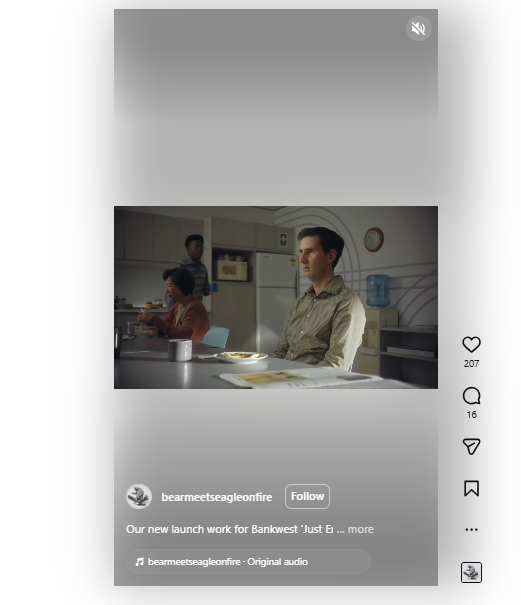
Bankwest’s latest brand work starts with a simple observation. Most people already have enough strange fixations, routines, and internal monologues. Banking shouldn’t crowd that mental real estate. From that idea came a campaign that blends dry humor with a faint sense of unease, landing somewhere between playful and unsettling.
The campaign uses short, wry films to dramatize how much mental energy people waste on money worries. Characters obsess over oddly specific thoughts and habits, while banking quietly looms in the background as another unnecessary burden.
Visually, the work is held together by a distinctive design system built around proportionality. On screen, numbers, text, and layouts reflect the idea of “just enough.” Nothing dominates the frame unless it deserves to. Here is the example:
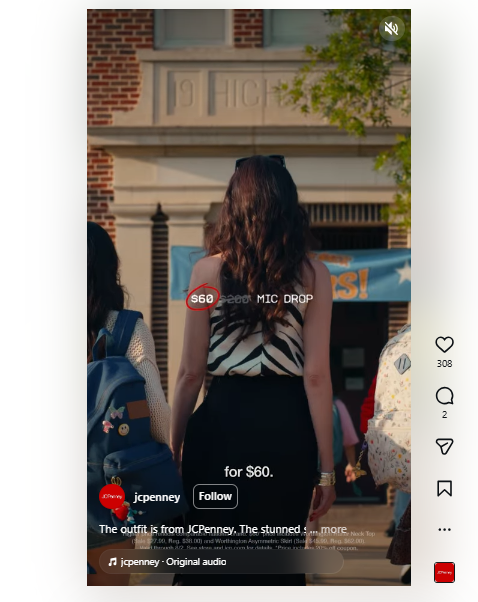
In one of the best video case studies from 2025, JCPenney attempted a comeback by asking consumers to look past the brand name and judge its fashion on its own merits. The campaign launched with a series of out-of-home ads that show stylish outfits without any branding, only a QR code.
When viewers scan the code, they are taken to a landing page that asks, “Would you have come here if you knew it was JCPenney?” The goal is to challenge preconceived notions about the retailer while proving that its value-based fashion can stand alongside trendier brands.
Out-of-home ads run in high-visibility locations including Times Square and Brookfield Place, giving the campaign maximum exposure. JCPenney also used the same approach on social media, especially Instagram.
These video marketing case study examples don’t just have flashy visuals or clever storytelling. They create a concept that sticks in the audience’s minds. From curiosity to QR codes, there are too many video marketing innovations and elements you can use in your campaigns.
If your brand is ready to launch a video ad campaign that is memorable and strategically designed to scale, INDIRAP can help. Our team builds full-funnel video ecosystems that will keep you on top of your audience’s minds.
Book a call with INDIRAP today, and let us help you create videos as amazing as these case study video examples.
.gif)
Case study videos prove performance by showing real results. They help potential clients understand the process, creative strategy, and measurable impact, making them more confident in choosing a video agency or marketing approach.
To make a successful marketing video, keep it short and hook the audience in the first 2 seconds. Focus on one clear message as short-form videos don’t have a lot of bandwidth for longer attention retention. Add strong visual storytelling and end with a direct call to action that drives corporate video results.
Some of the best video marketing case studies from 2025 include Nike’s “Winning Isn’t Comfortable” running series, Airbnb’s “Experiences” social-first relaunch, Anthropic’s “Keep Thinking” brand campaign, Google Pixel’s Wicked: For Good cinema spot, and Bankwest’s “Just Enough Bank” short-form video work. These examples show how brands used strong creative concepts and measurable strategies to drive corporate video results.
Social-first content meets audiences where they already spend time. It must grab attention fast and be designed for scrolling behavior. Shorter formats encourage repeat views, sharing, and faster audience growth than traditional long-form ads.
Tell a story that naturally includes the product as part of the solution using real-life situations, relatable characters, and a clear payoff. The product should feel earned, not forced, and the story should support the benefit.
Explore Our Services
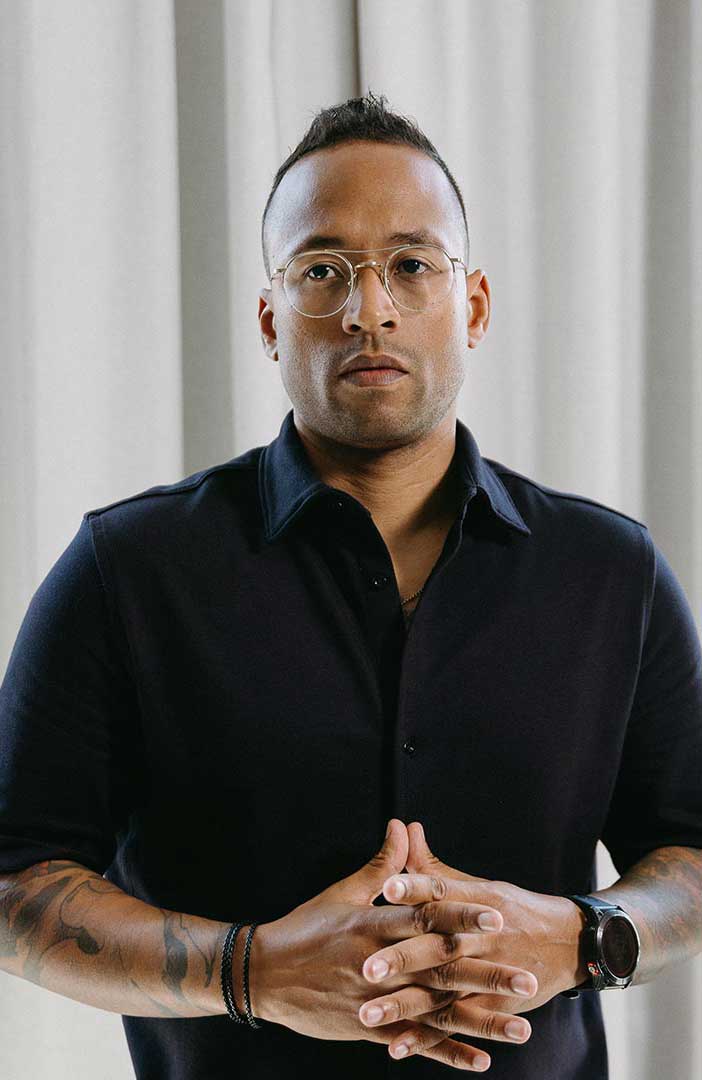

Julian Tillotson is the Founder & CEO of INDIRAP, a full-service video production and creative strategy agency based in Chicago, IL. With 10+ years of experience, INDIRAP has delivered 20,000+ videos to 900+ clients across 40+ industries, making it one of North America's leading digital creative agencies.


.png)
.png)